Community weeding – get involved

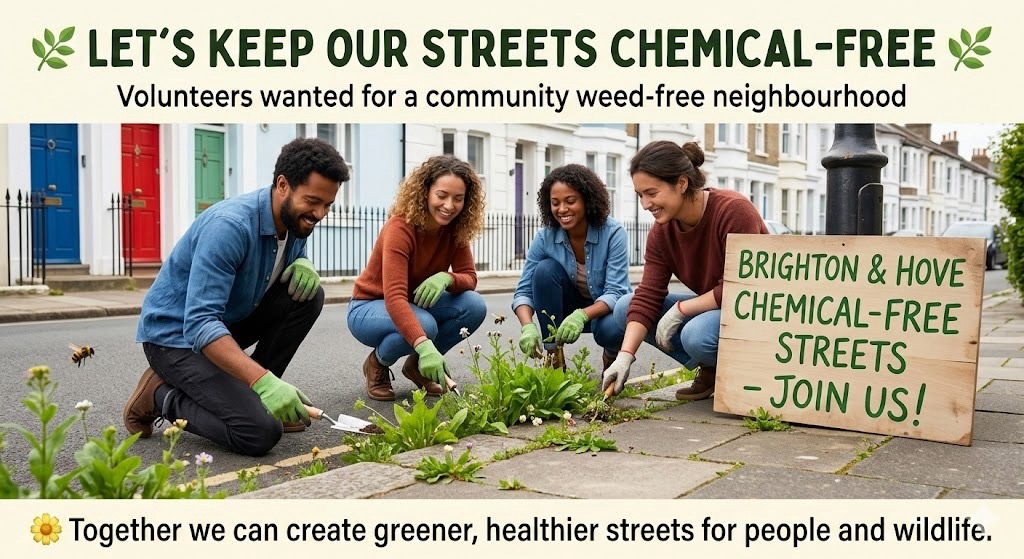
Brighton Council has offered opt-outs for the spraying of pavement weeds with the herbicide Glyphosate IF street residents can commit to community weeding three times a year. In our area of Brighton, around London Rd Station, there’s a groundswell of neighbours getting together to form weeding groups.

At LRSP, we’ve always been herbicide-free, and several of us have spent happy afternoons with a hoe removing weeds from the station forecourt in Shaftesbury Place. So we’re definitely part of the community effort to weed our streets; in fact, it’s our email address LRSP@hotmail.com that is now the central contact for neighbours in our area wanting to get involved in weeding their street. The Council asks each street to have a street co-ordinator, and around 1 volunteer for every 10 houses.

So far, it’s been a very positive initiative with over 40 people volunteering to help – and counting. Shaftesbury Place, Shaftesbury Road, Stanley Road and Lorne Road are already in a position to apply for an opt-out.

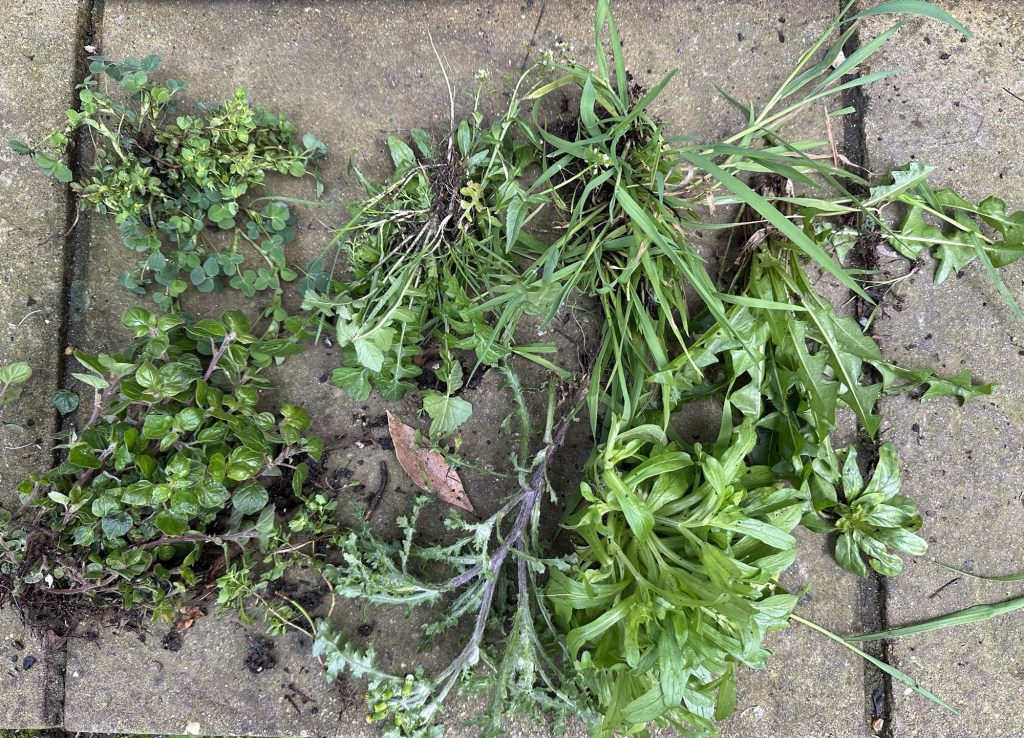
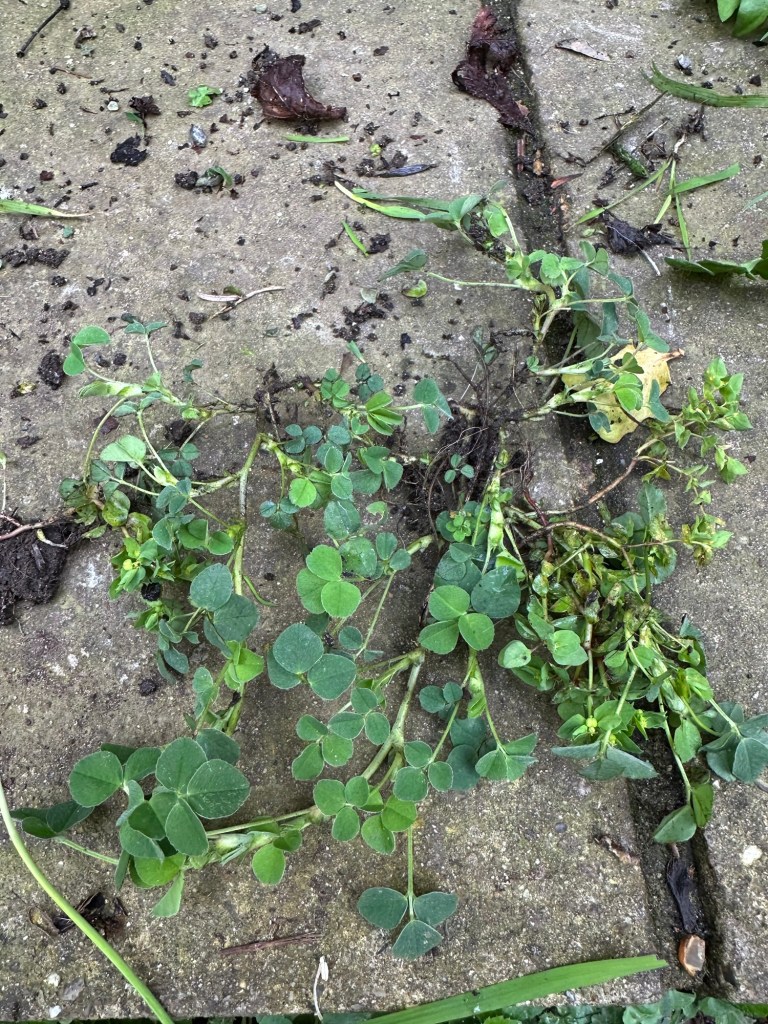
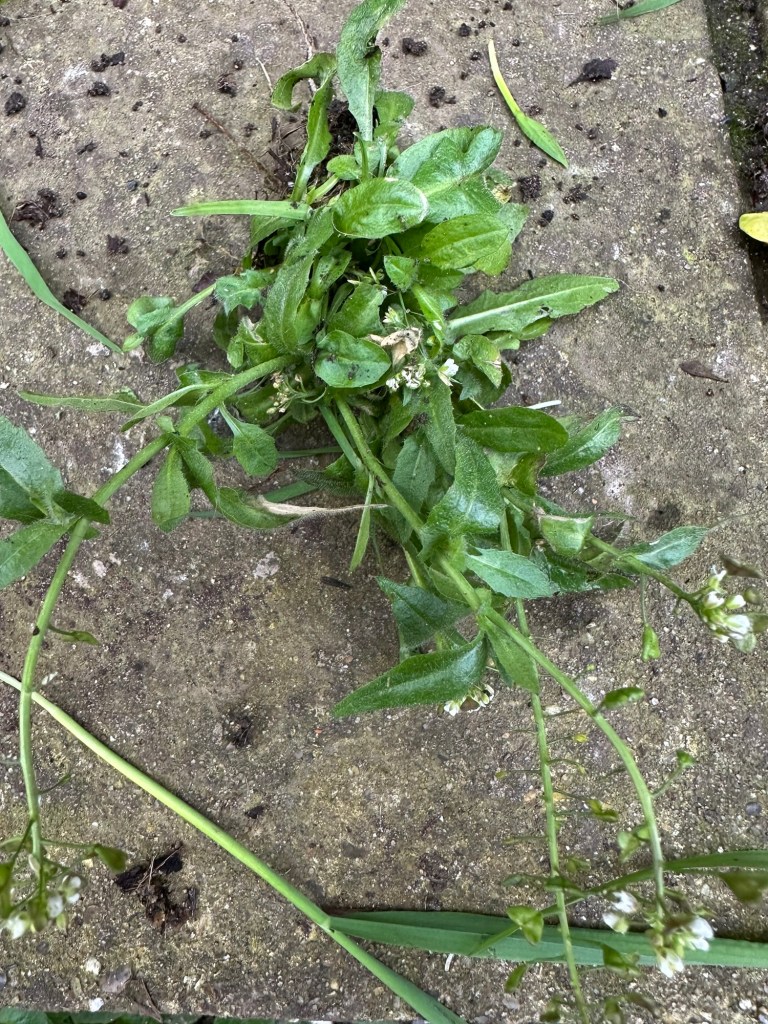
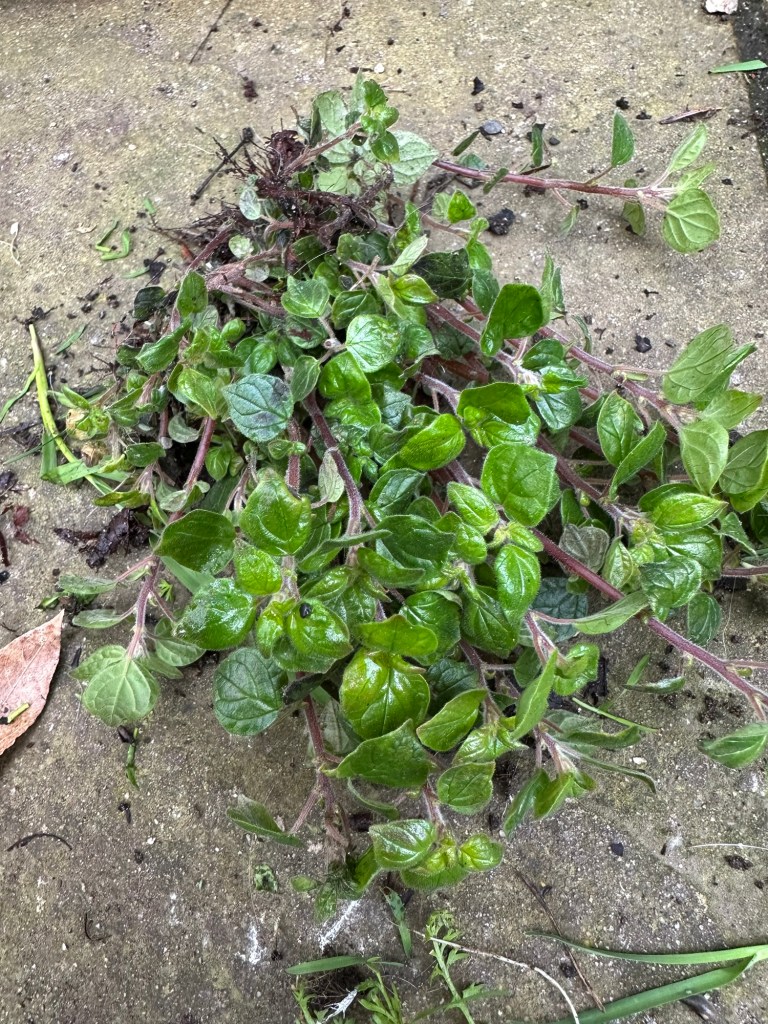
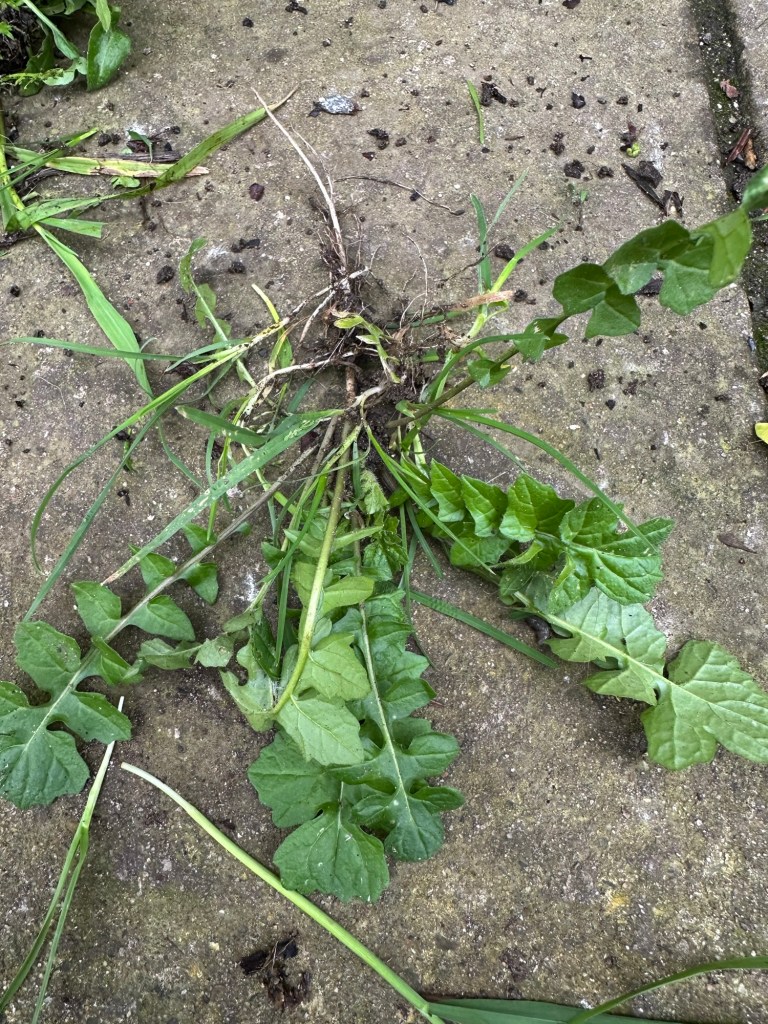
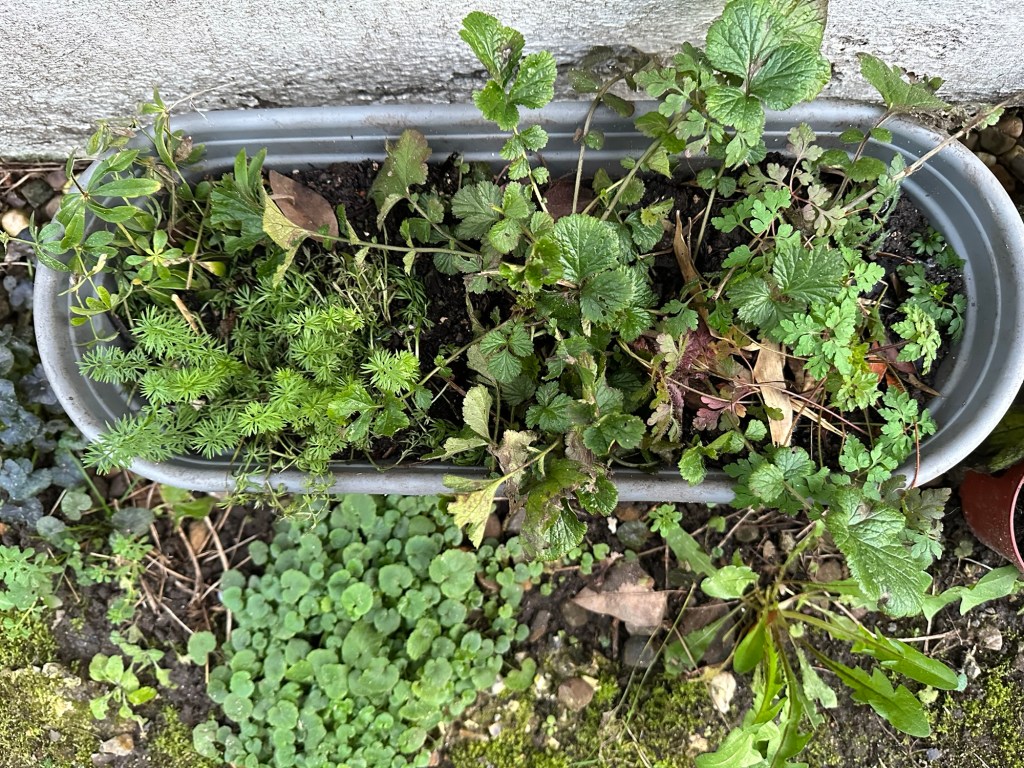
And just how hard is it to remove street weeds? Well, I thought I’d give it a go this morning. It took me 5 minutes to remove – by hand, no tools – all the weeds on the pavement outside my house. The ground is fairly wet, the weeds are young. It’s a great time to get rid of them.

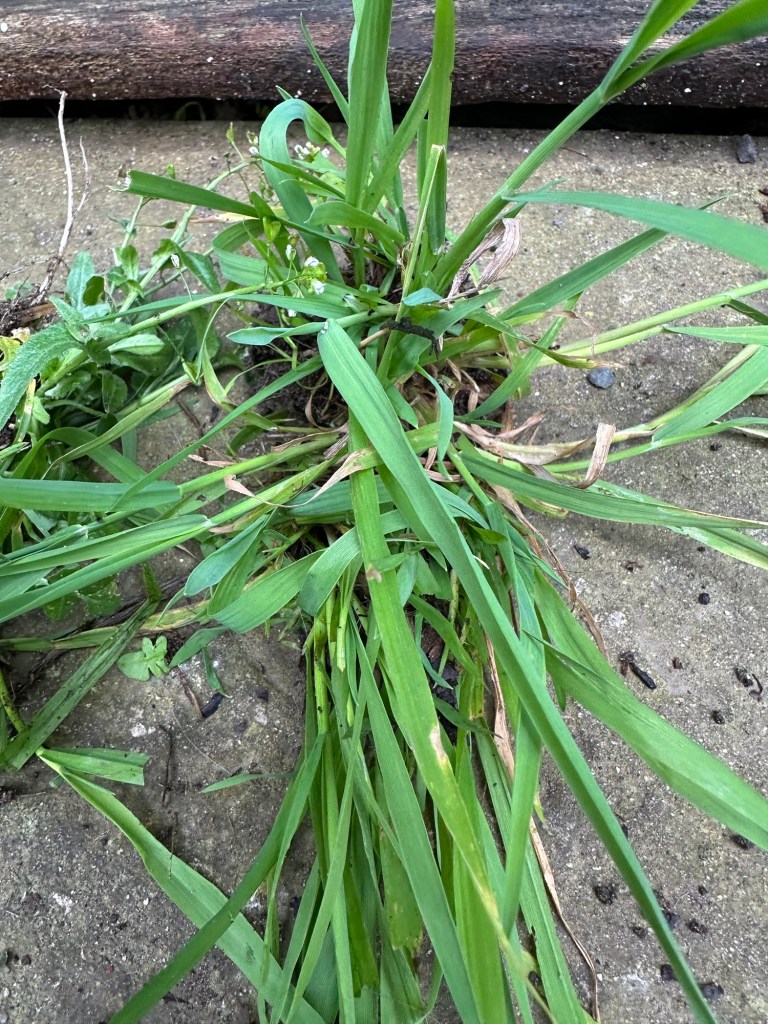
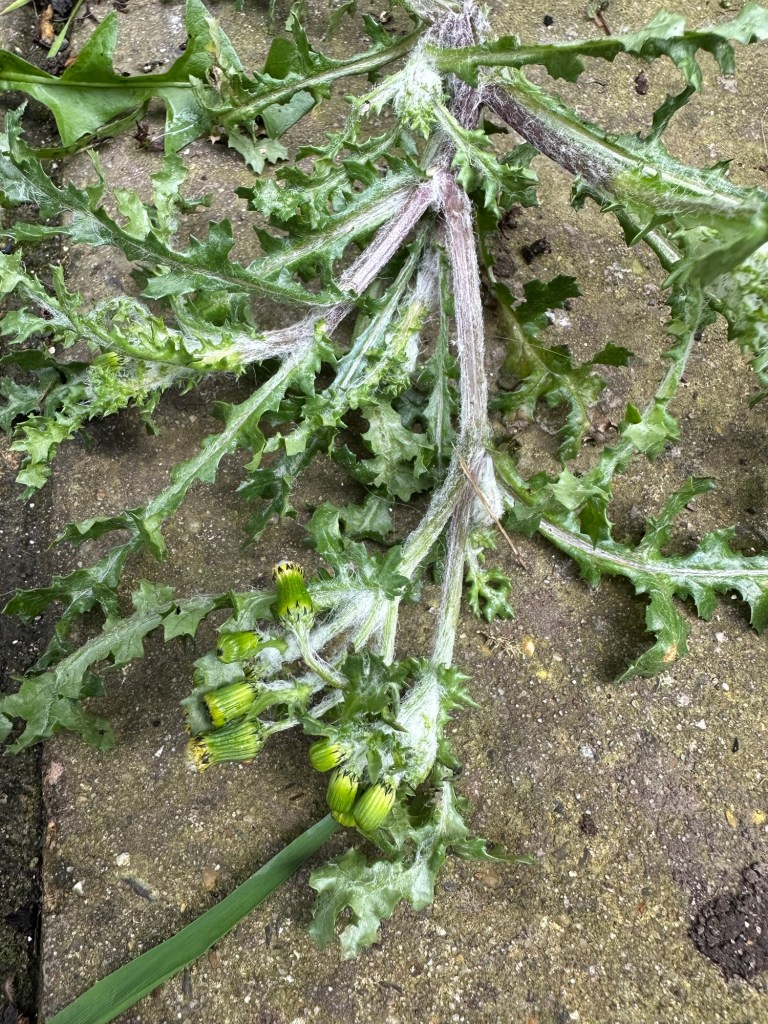
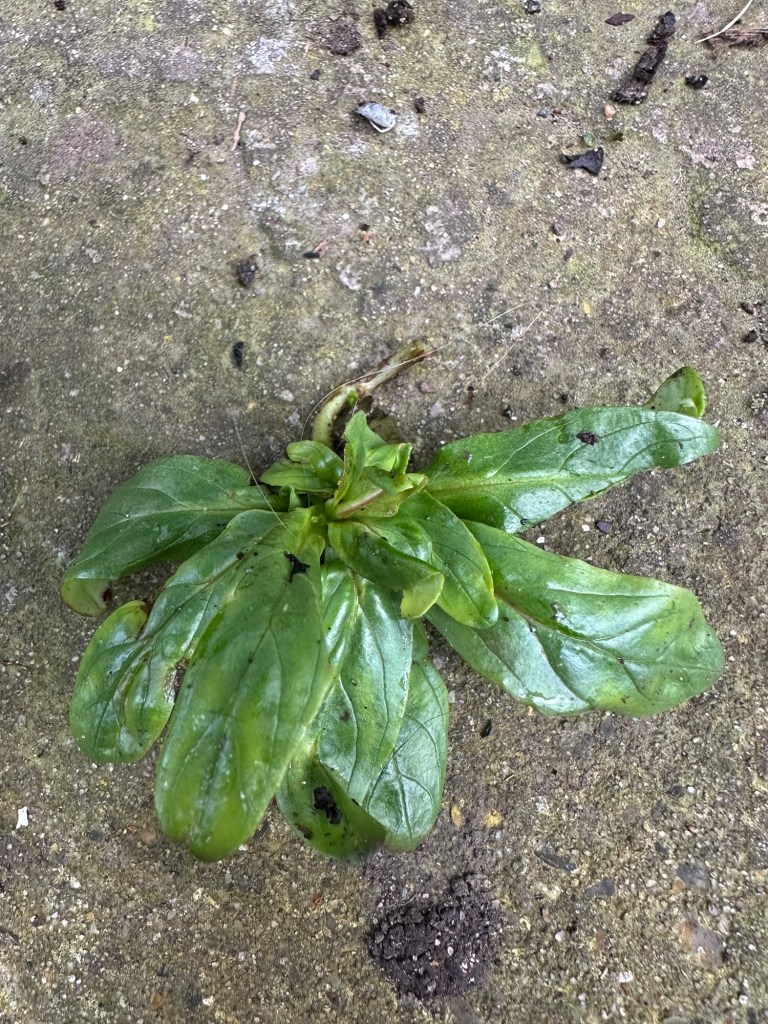
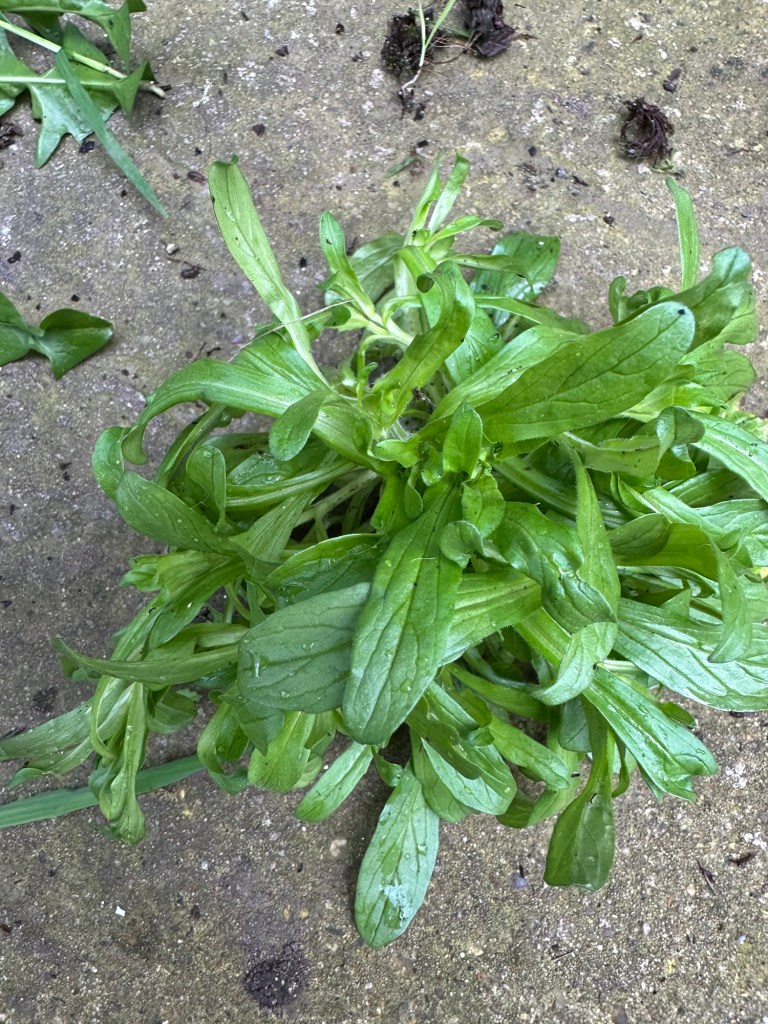
And in terms of biodiversity, it was quite a haul. What are weeds if not urban wildflowers? I think I identified eight different species, and that’s just outside one house. (I used my phone app and wildflower guides – there may be misidentification). They all have lovely common names and nerdy but useful Latin names. Here we go …

Black Medick Medicago lupulina (left), Petty spurge Euphorbia peplus
Shepherd’s purse Capsella bursa-pastoris
Spreading pellitory Parietaria judaica
Hedge mustard Sisymbrium
Couch grass Elymus repens
Groundsel Senecio vulgaris
Lamb’s lettuce Valeriana locusta

Trying to identify the plants does make weeding interesting, but also reminds us what we’re destroying; so … better our ‘knowing destruction’ than just blitzing with glyphosate?

Do get in touch (LRSP@hotmail.co.uk) if you live in the area of London Road Station, Brighton, and Ditchling Rise – and would like to join the weeding volunteers.

Posted in Uncategorized | Leave a comment

Spring …

Ok so spring officially starts on 21st March but the plant world is already waking up. We even saw some sunshine in Brighton last week.

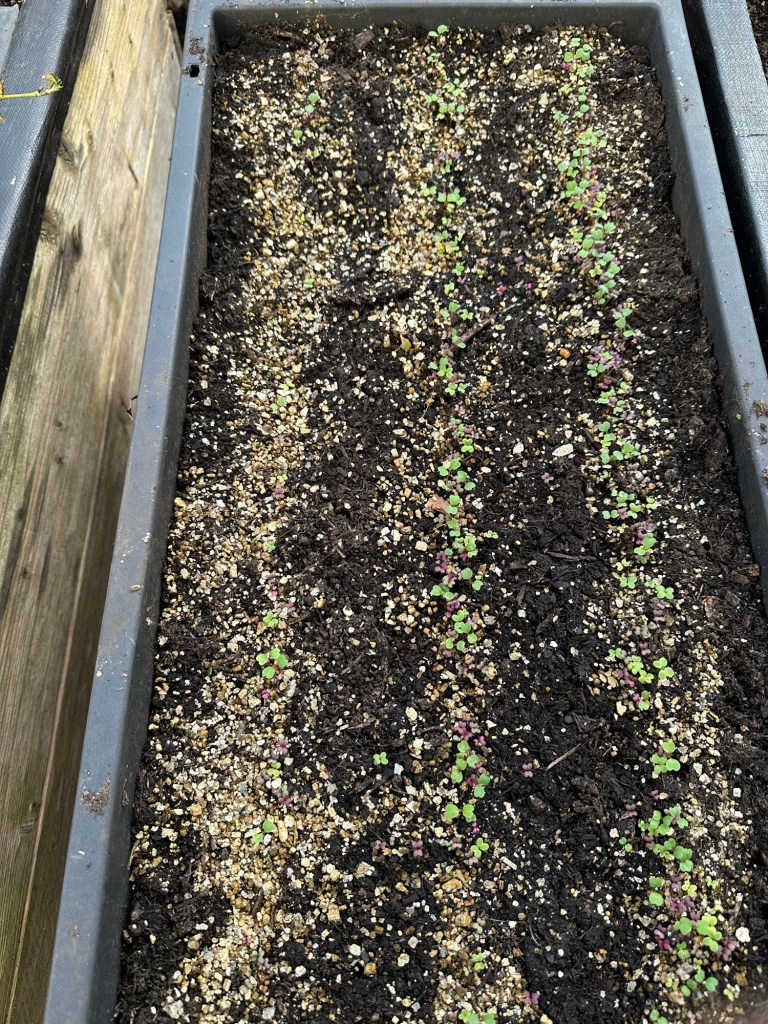
And small changes are evident in the London Road Station gardens. Lettuce seeds have germinated – woohoo! It doesn’t look like much but the little green and dark red dots will become tasty salad leaves very shortly.

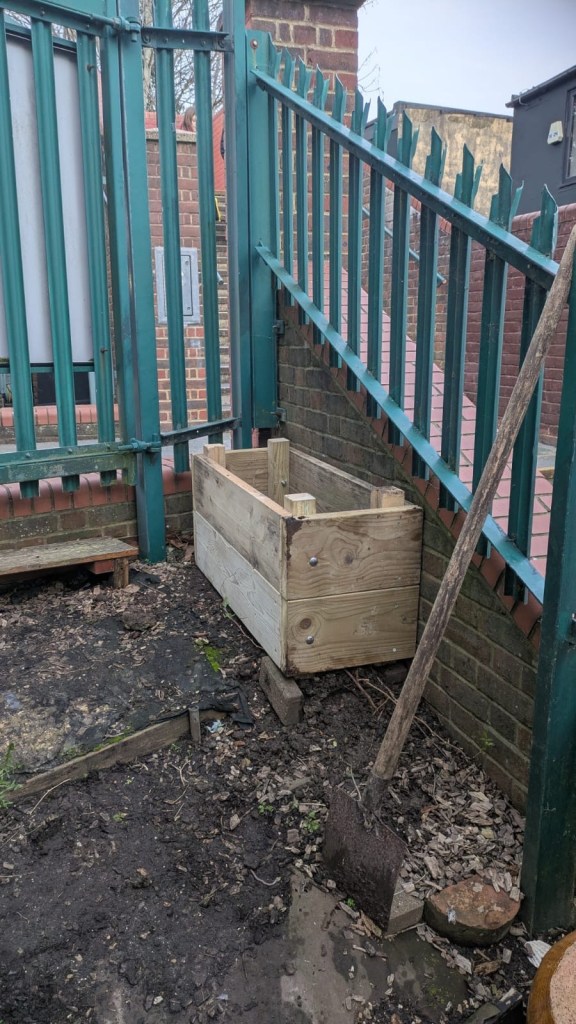
We’ve also started our ‘infrastructure’ works. We have a new wooden raised bed in which to grow ornamental flowers, rather than veg, up the fencing of the edible growing plot. Last year’s sweet peas in this area were much remarked upon.

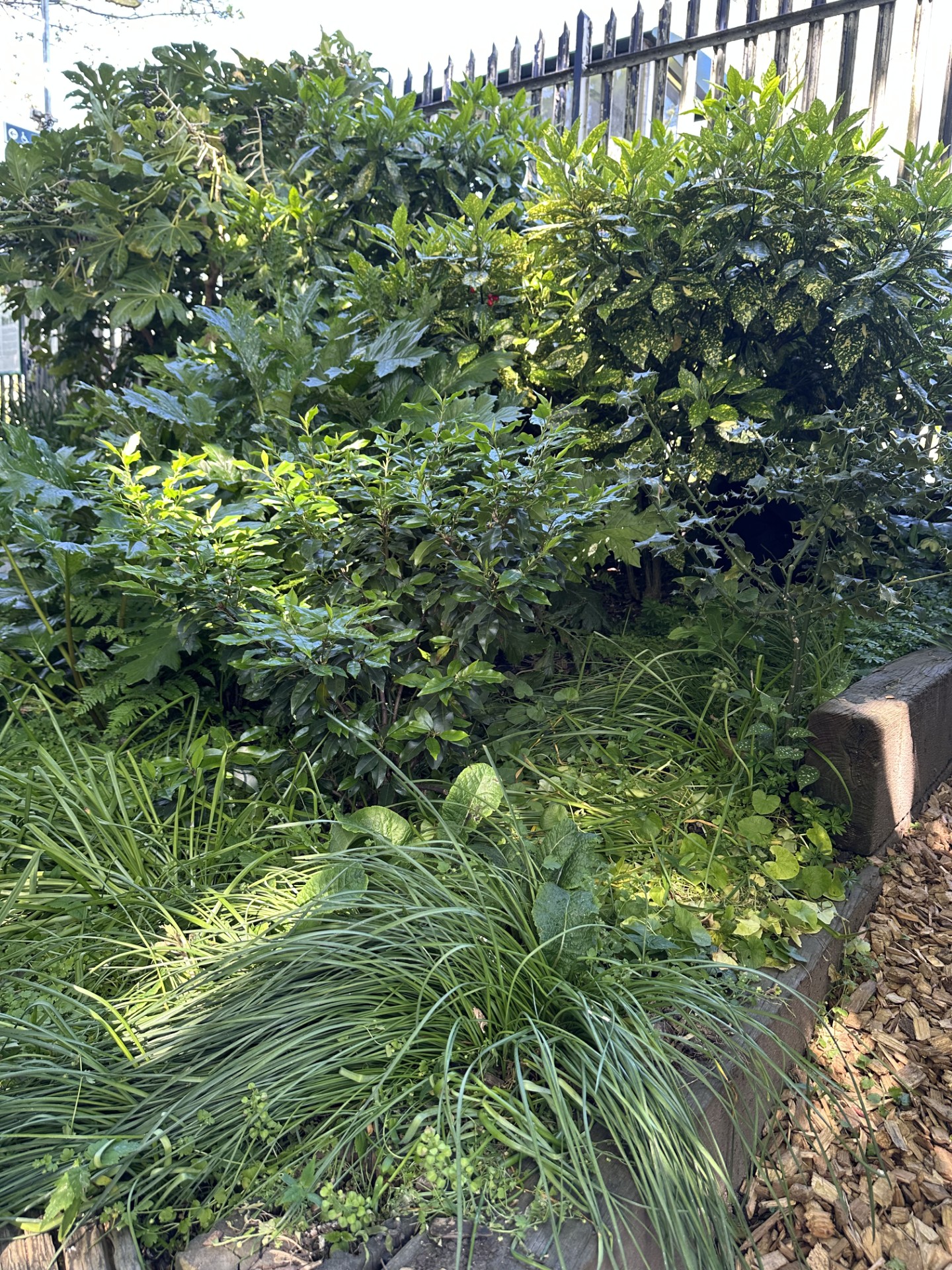
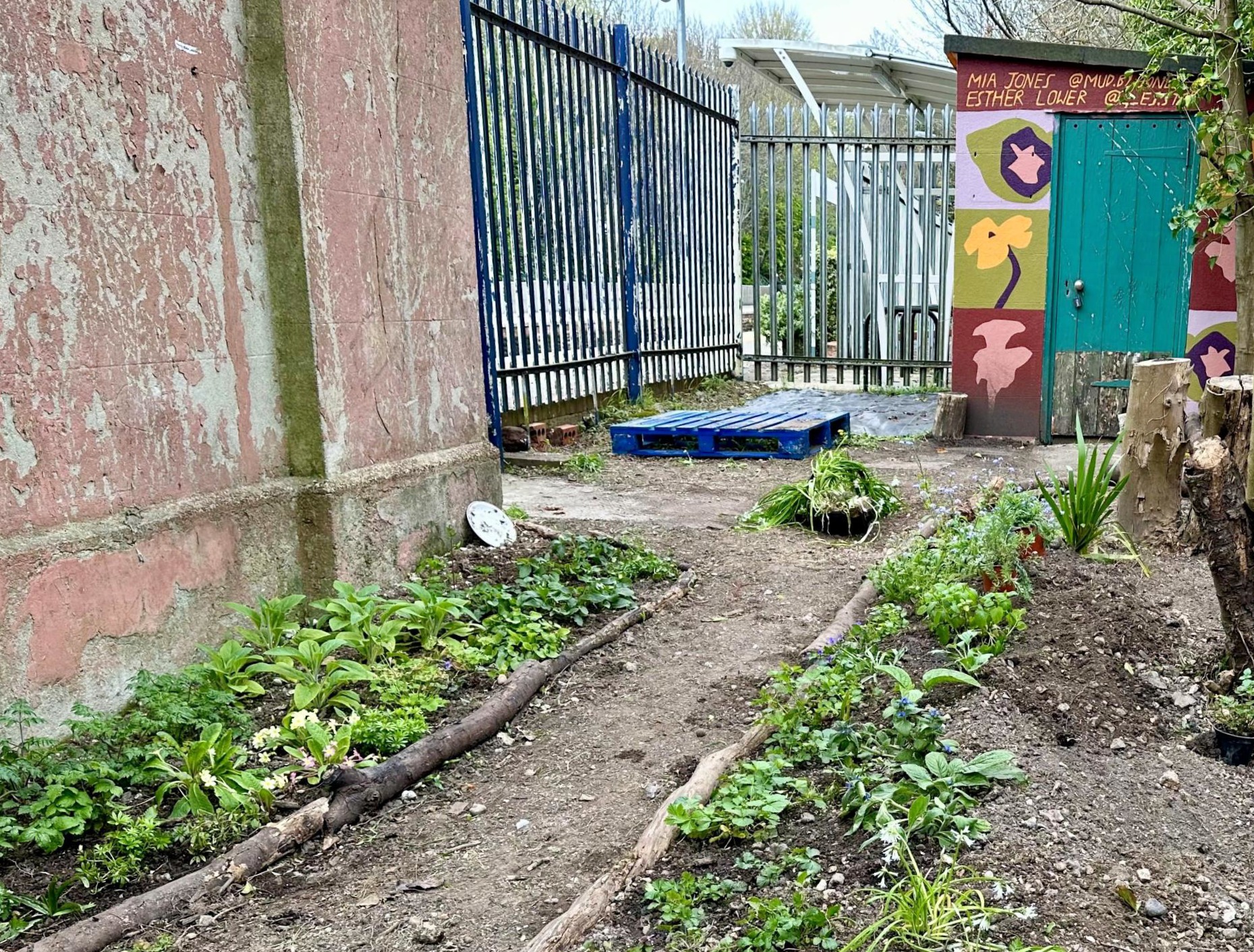
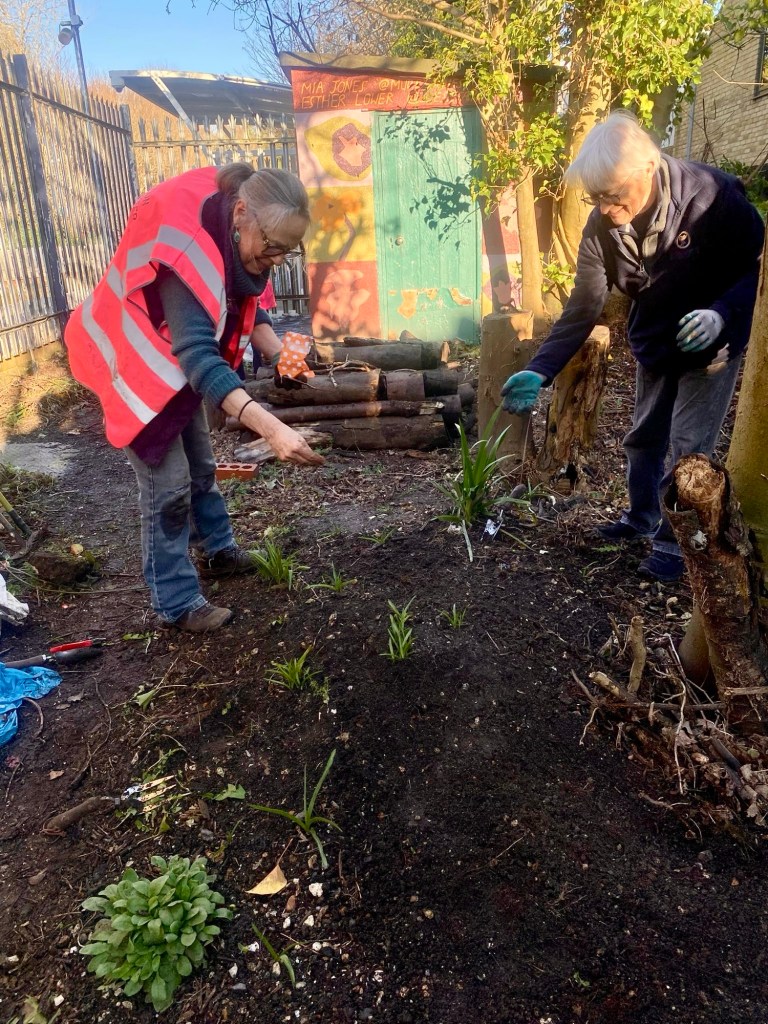
And we’ve done some work in the Pocket Park. The plan is to try to develop the area with woodland wildflowers that tolerate shade. A couple of weeks back we tried an experimental sowing of specialist seeds for deep shade wildflowers.

I’ve also been collecting urban wildflower plants (aka flowering weeds 🌱😊) from my garden and around the area. We have herb robert, green alkanet, comfrey, borage, campanula, celandines, violets, geums, geraniums, toadflax, bluebells and many more, all local plants to be transplanted to the Pocket Park. Now we just need a little less rain and a little more sun.

Posted in Uncategorized | Leave a comment

The pocket park plan

We’ve been working recently with Southern Railway to create a pocket park at London Rd Station. We’re hoping it will be a little oasis of shade and wildflowers where neighbours can sit out, particularly in the hotter summer months. Let us know what you think …

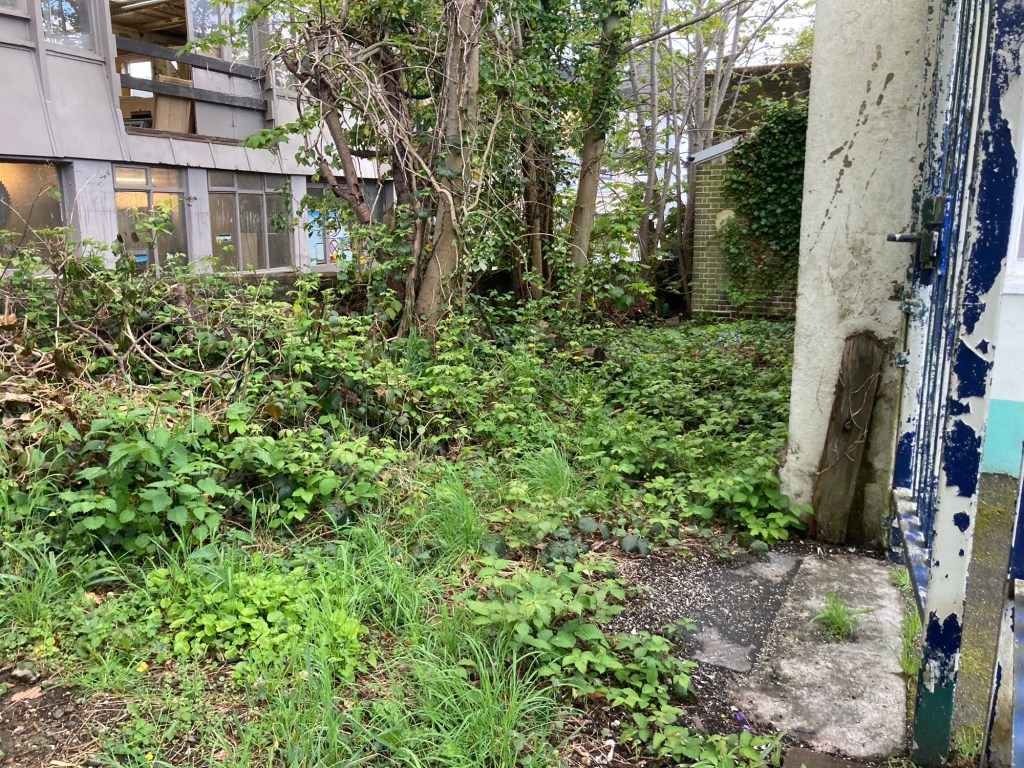
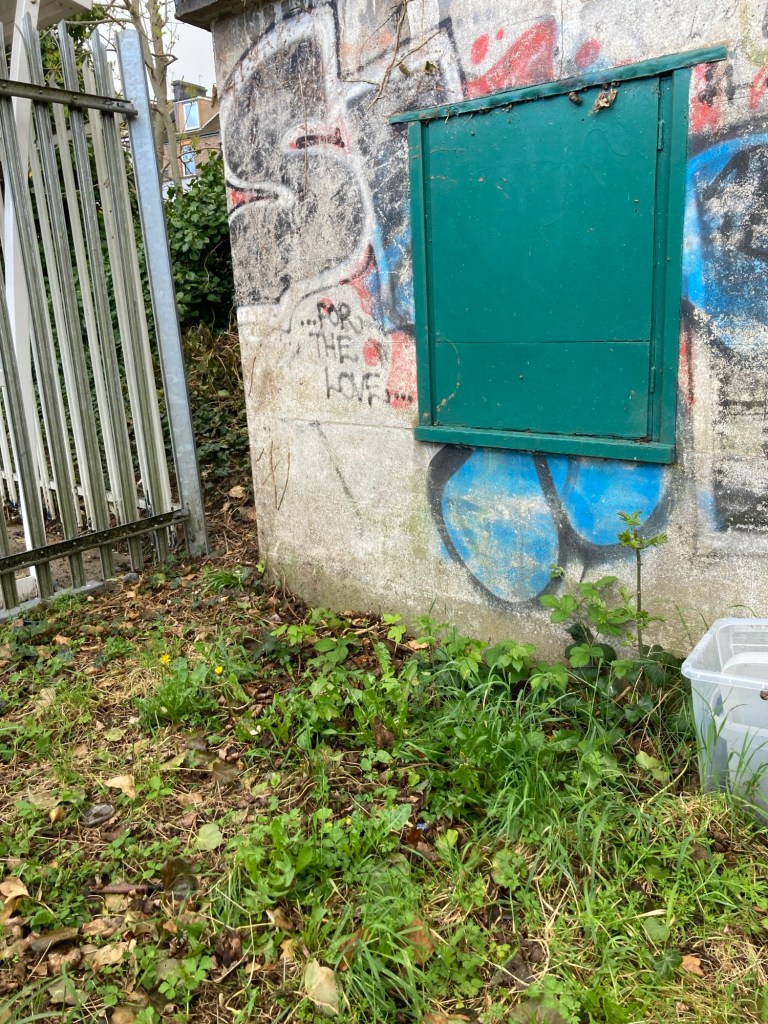
It all came about when a neighbour, John, asked if it was possible to access a derelict area on the south sided the station. Peering through the fencing all we could see was rubble, dead branches, overgrown brambles and an old hut which had been repeatedly tagged.

The brambles and overgrowth
The tagged hut

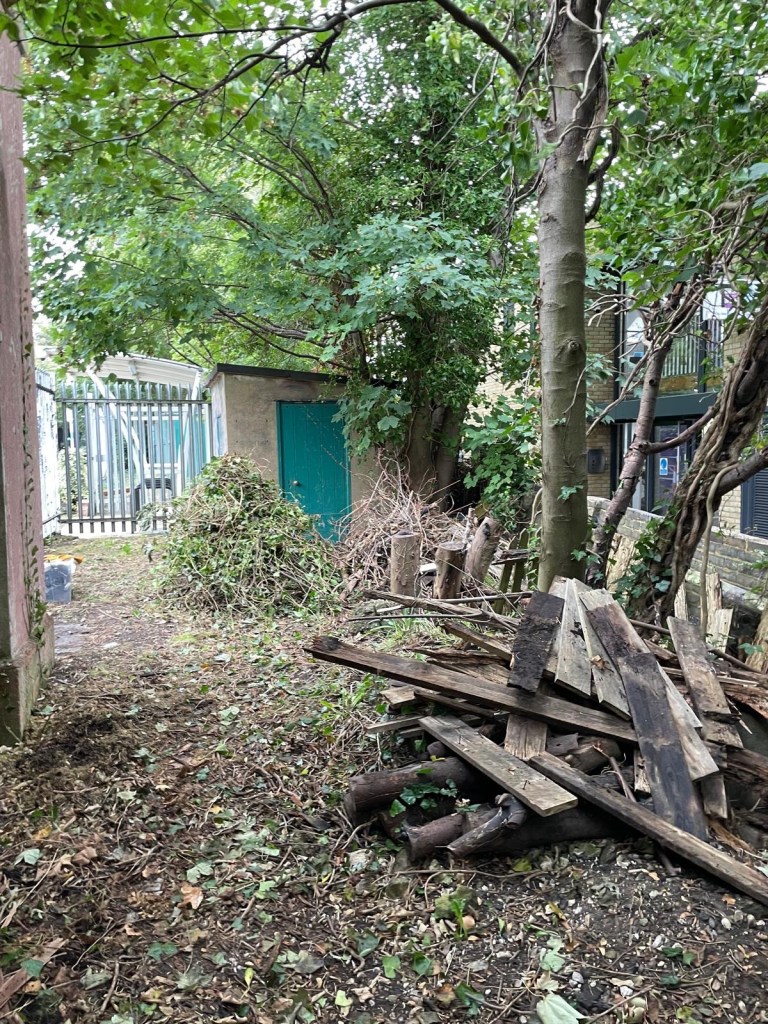
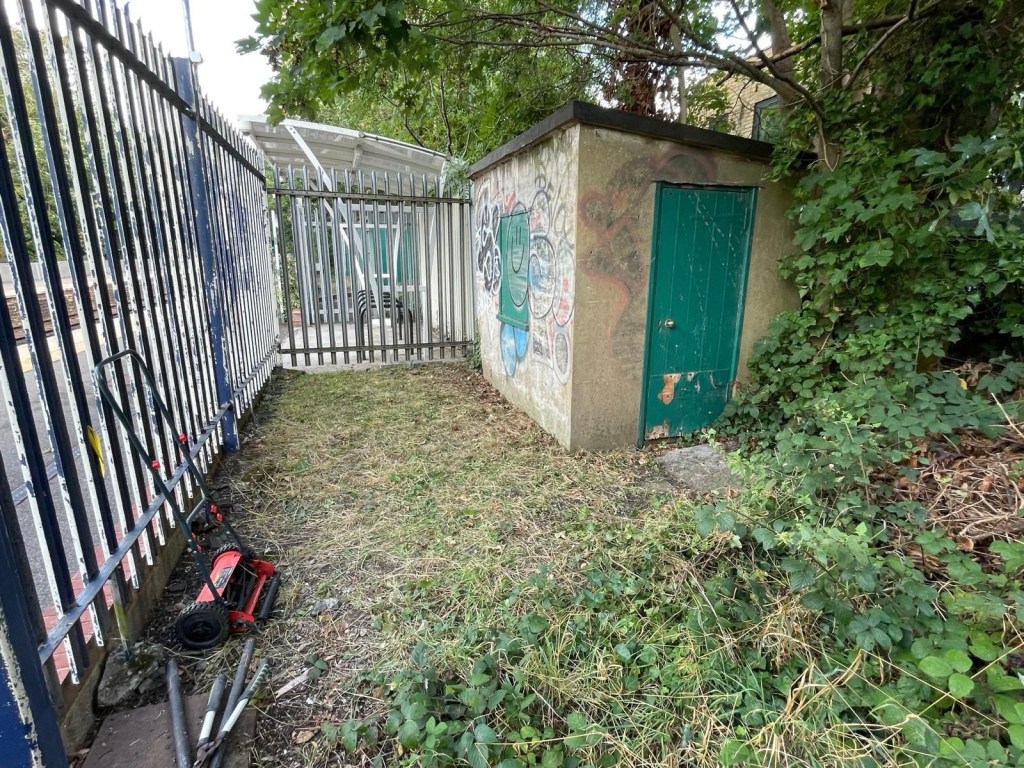
But Southern have allowed us to access the site, and John got going on clearing the area. It’s about 75 square metres with quite a few trees. There were huge amounts of litter, old wood, barbed wire, concrete and general junk to be cleared (including the remains of a car bonnet buried underneath the ivy!).

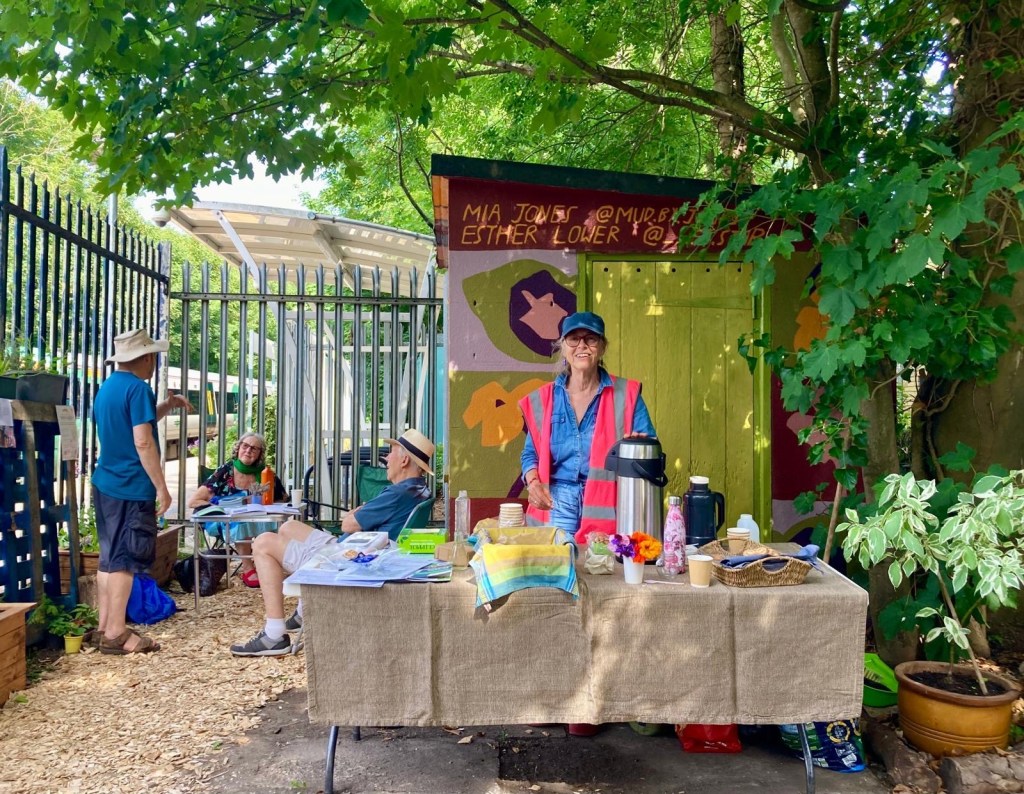
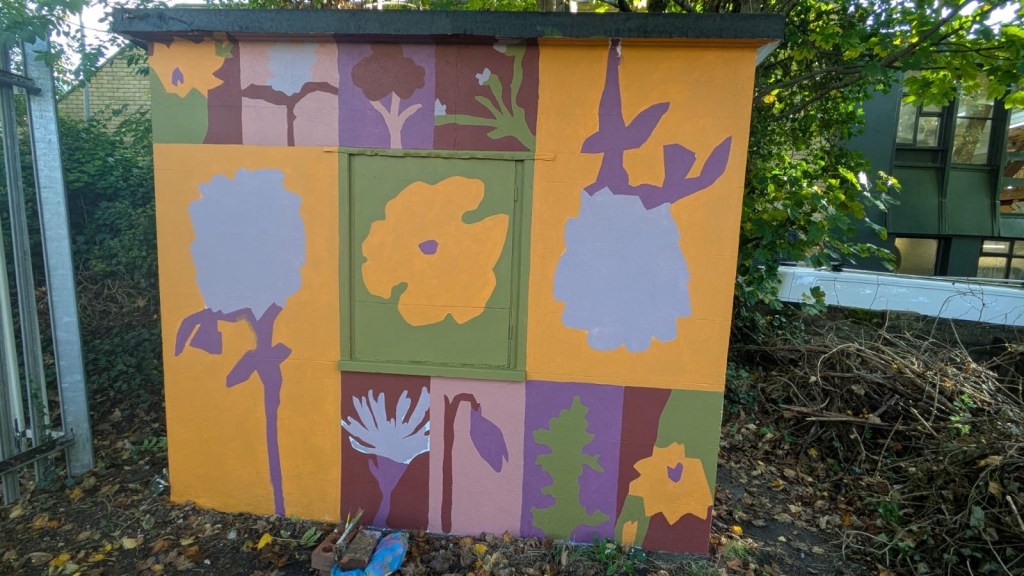
And then, as part of a project ‘Grow Wild on the Railway’, the tagged shed got a makeover from two talented artists, Esther and Mia, recently graduated from Kingston University.

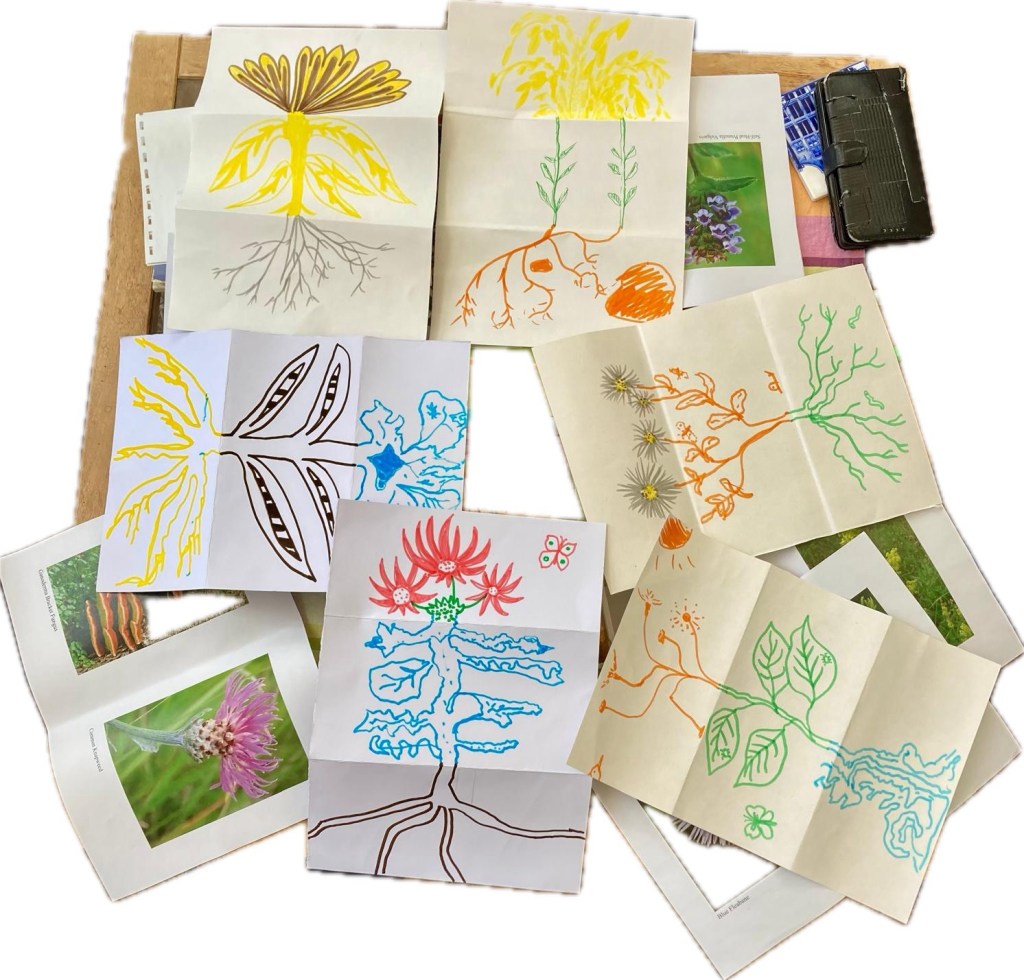
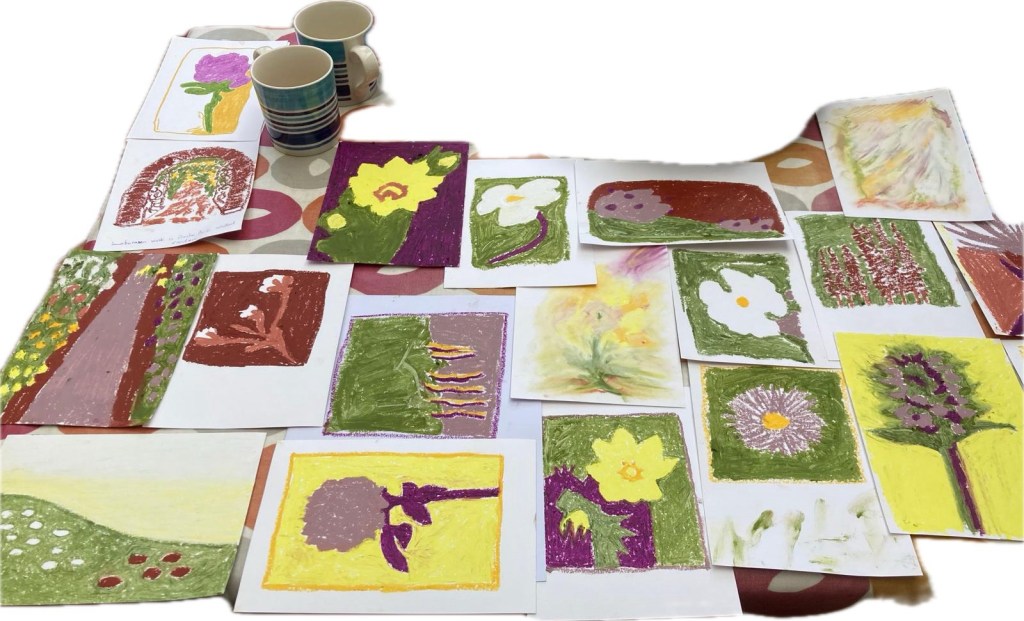
This lovely design, in colours that work well in a shady area, was inspired by a workshop with members of the station partnership. Mia and Esther had us drawing wildflowers, looking at bold shapes and colours.

We’re now onto the next stage: trying to get funding to regenerate the area further: install trellising, plant a shady wildflower area, get some seating and picnic tables and make some woodchip paths. We hope to have the pocket park up and running in the spring.

We’d love to hear from neighbours about any ideas you might have for our London Rd Station pocket park …

We thought, for example, that it would be great to have some artwork from local artists displayed on this wall … (By the way, we think that’s the old terracotta-coloured paint from the 1990s when the whole station was painted that colour).

And if you’d like to get involved with helping regenerate the site, please get in touch. We’re going to need some people power to make this all happen!

Posted in Uncategorized | Leave a comment

End of the season

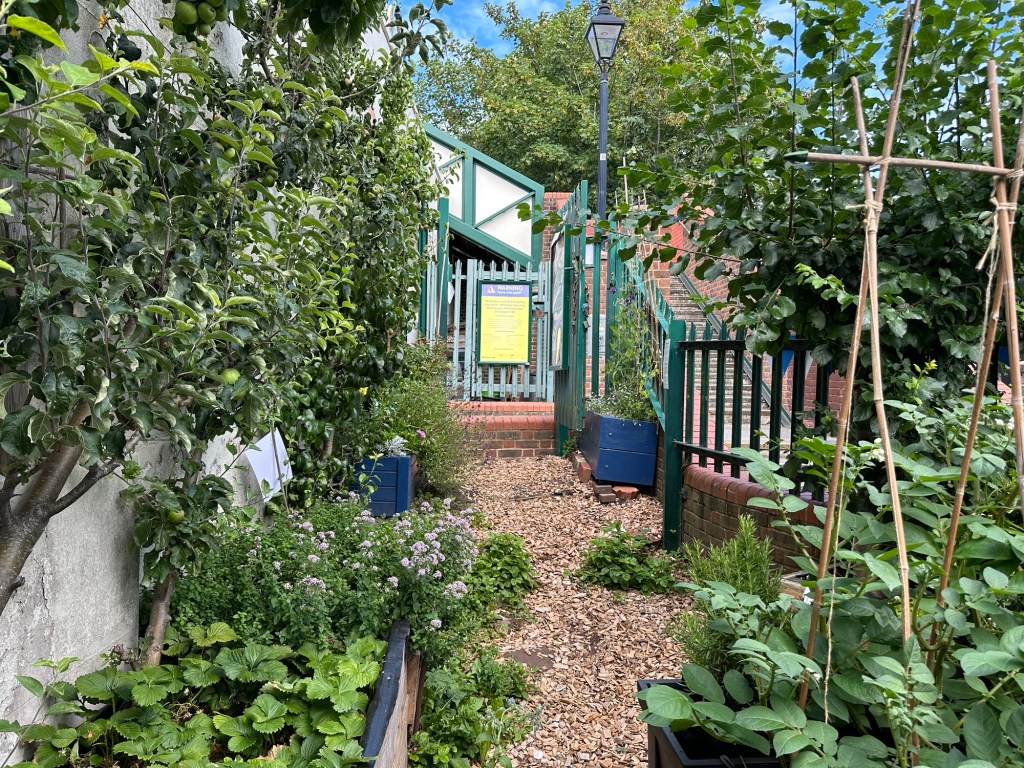
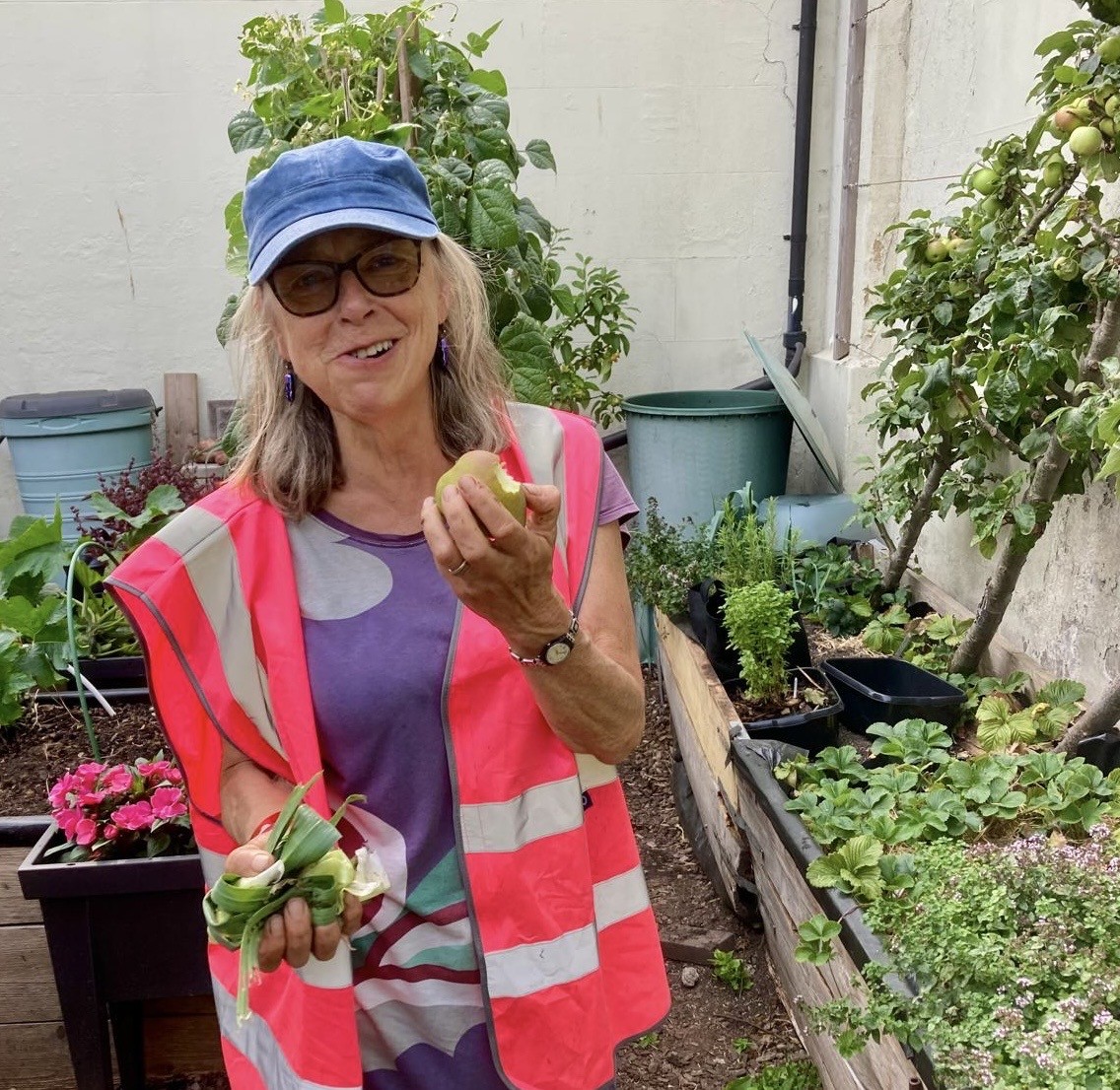
It’s been a pretty good growing season. At London Road Station garden, we had a lovely crop of apples and pears. We picked pears off the tree back at the end of August, and they were crunchy and sweet. The apples were varied but much better than last year. Along with a good rhubarb harvest, there’s been plenty to make good crumbles.

Our harvest was more or less over by the beginning of September. Meanwhile our crabapple is looking beautiful with bright red mini-apples. These can lend colour to Christmas decorations. That’s about it, really – crabapple jelly seems rather pointless. However, crabapple trees attract pollinators and therefore have value for the rest of our mini-orchard.

Posted in Uncategorized | Leave a comment

Planting up the platform planters again

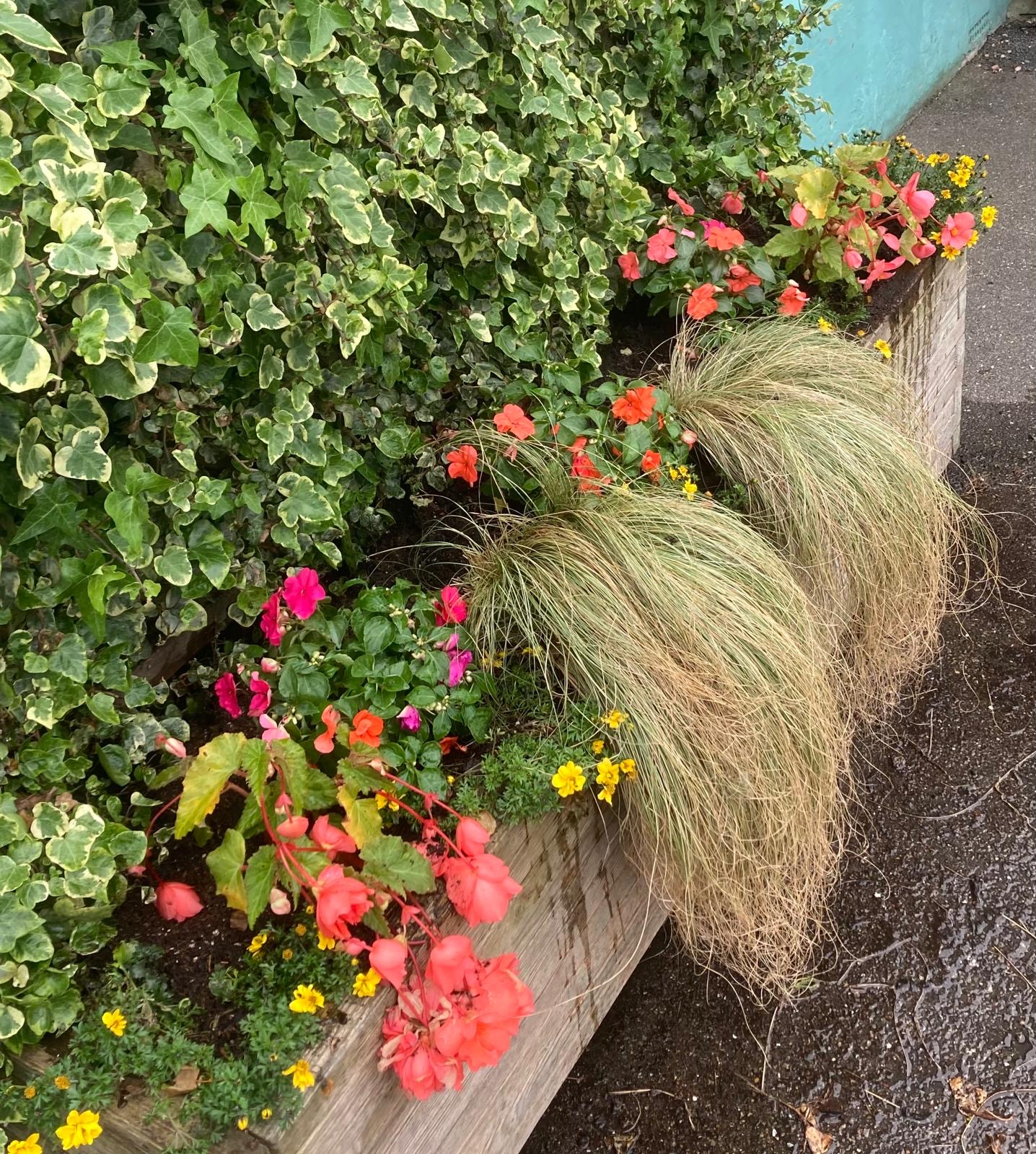
It’s proven quite tricky finding the right plants for the platform planters at London Rd Station. They are in shade for most of the day. The slugs, snails, squirrels and foxes love to visit and dig up the plants. And … a further factor is that the trailing ivy we planted years ago has taken over in each case, meaning that ivy roots dominate the soil and absorb moisture and nutrients.

The central planter

I’ve hacked away at the root systems and added lots of compost, both bought in and our own to provide moisture and nutrients. We’ve planted orange begonias and red-pink busy lizzies – among the few brightly flowering plants to tolerate the shade, drought and onslaught from slugs and snails. Yellow bidens should provide some trailing over the edge but the snails are currently enjoying those little flowers. We’re also trying to ensure regular watering during the summer / hard work as the temperatures soar to 28C.

‘Lewes end’ planter
‘Brighton end’ planter

Posted in Uncategorized | Leave a comment

Our stunning poppies

Our multicoloured poppies and vibrant marigolds

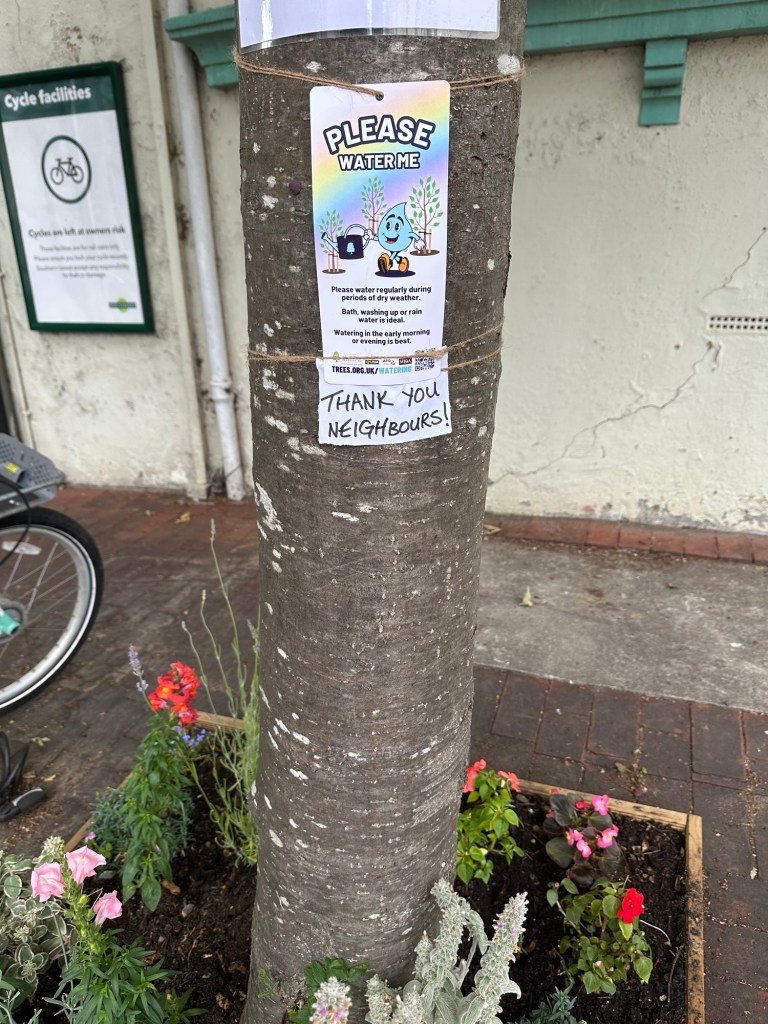
People have noticed our poppies. They are growing large and strong in one of the tree pits on the station forecourt, along with beautiful orange marigolds. There are three different colours: a flame red, a deep burgundy and a lilac pink.

Yesterday, we saw a lovely post on the neighbourhood WhatsApp in appreciation of the poppies, thanking us ‘for bringing joy to the daily commute’.

I hardly dare confess that we have done very little to create this glorious display. We just let the self-seeded flowers grow. It’s extraordinary how seeds will suddenly activate.

I remember the lilac pink poppy seeds were given to us at a street party back in 2012. Over the years, these poppies have ‘popped’ up and we’ve scattered seed at the end of the season. The burgundy ones came in a free packet with a gardening magazine, again a long time ago. The flame red ones? Well, they’ve just dropped by on the breeze.

We’ve planted marigolds over the years and saved the seeds. There’s also a prehistoric-looking yellow verbascum (mullein), again self seeded from plants we grew years ago and perhaps even from the original inhabitants of our edible plot when it was a sad bit of neglected waste land. I suspect seeds also end up in our compost.

But it’s funny how the flowers we didn’t sow this year are the best: the seeds have been biding their time in the soil and obviously this year’s warm conditions have been to their liking.

This serendipity is the joy (and sometimes the pain) of gardening. In the case of the poppies, I think we can take credit for … benign neglect.

Posted in Uncategorized | Leave a comment

Open day cancelled… boo hoo

We’ve sadly had to cancel our participation in the Brighton and Hove Community Gardens Network Trail on Saturday 7 June.

The weather forecast is very unstable with heavy rain, high winds and a warning of thunderstorms. Who knows what the good ol’ English ‘summer’ will actually do, but being out in high winds and even summer showers is not that pleasant.

Some of our fellow community gardens are opening on Sunday. Take a look at the Brighton and Hove Community Gardens Network facebook page for more information.

Posted in Uncategorized | Leave a comment

Come and see us

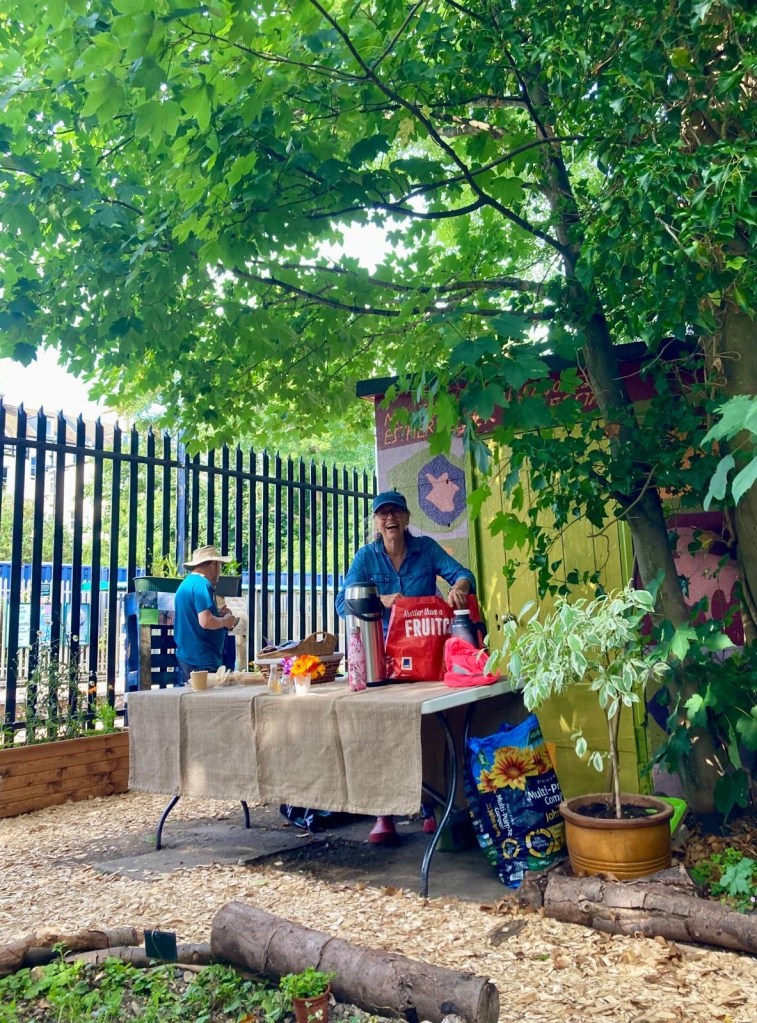
We’re part of the Brighton and Hove Community Gardens Network Trail, happening Saturday 7th June, 11am to 4pm. Drop by (edible plot just by the bridge, Shaftesbury Place) and see what’s growing … And take a look at other small community gardens in Brighton and Hove.

Posted in Uncategorized | Leave a comment

The old plum tree

It was a sad moment this week and I felt terribly guilty: we cut down a tree. Passers-by walking up the steps to the bridge at London Rd Station noticed: ‘Something’s changed … where’s that plum tree?’.

The spreading plum in early spring 2024
Sweet peas around the tree stump

The plum – a ‘dwarf’ Marjorie’s Seedling’ – was planted back in 2012, originally in a dustbin! It’s grown and grown but never really given us a good crop of plums. It outgrew its dustbin some years back and we built it a new enclosure. Despite regular pruning by our friends at Brighton Permaculture Trust, it just got bigger and bigger but no more fruit.

For the last few years, it’s suffered bad attacks of rosy aphids which cause the leaves to curl and drop. This year, this has been compounded by very hot and dry weather and the poor plum tree ended up with frazzled brown leaves and looking very unhappy.

It also had signs of possible canker: scarring on the branches, and it had managed to impale itself on the fence. We noticed too how it was starting to overshadow the whole garden, cutting out light from almost everything else.

So, though hard pruning might have been an option, the best thing seemed to be to cut it down. It had proven to be the wrong plant in the wrong place.

This will benefit the rest of the garden and in particular the cordoned apple trees and pear trees. We had to remove a pear some years back but five out of the seven original fruit trees are still going strong.

We’ve planted more sweet peas and trailing lobelia around the tree stump. There is a lot more light in the garden and passers-by have started noticing again our cordoned fruit trees which were hidden by the plum. The omens are good for our apples and pear this year. We’ll miss you, old plum.

Posted in Uncategorized | Leave a comment

All going a bit too fast

It’s impossible to predict how the gardening year will go. For the last two years, we’ve had warming, dullish, wettish, sluggish weather through the spring with mostly cloudy skies with lots of snails. Seedlings sulked, and coaxing plants to grow in the uninspiring weather was tiring. Suddenly, this year we’re into a hot dry spring and the major challenge is not the gastropods but drought. And keeping up with the plants which having been growing very quickly – including eating quantities of mizuna greens.

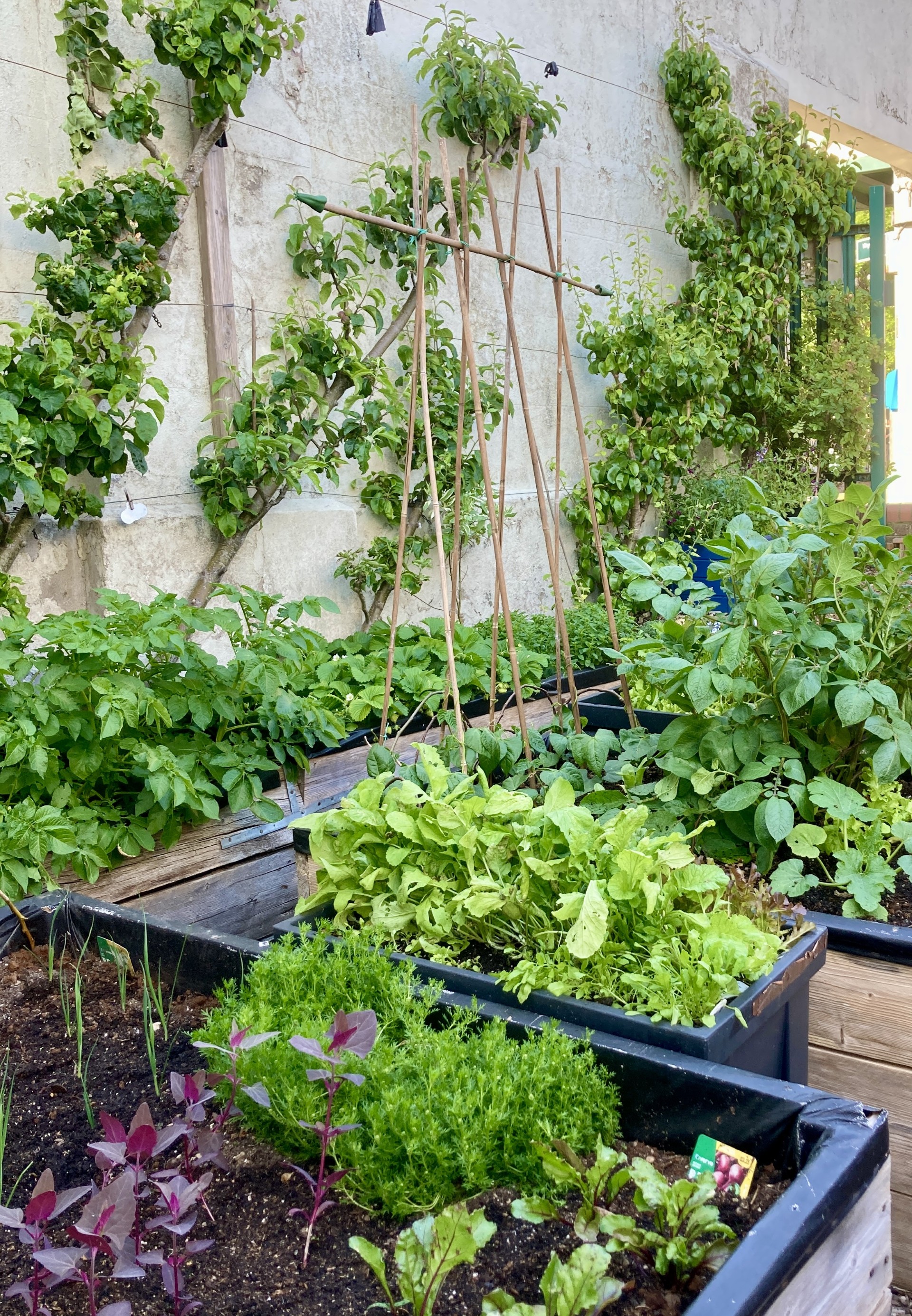
This was the edible plot yesterday. The fruit trees have blossomed and come quickly into leaf after I pruned them hard in February. Green fly is a bit of a problem. It always is, but there’s plenty of evidence of hungry harlequin ladybirds.

In addition to our Sarpo Mira potato plot underneath the apple trees, we have a rogue potato or two in the central bed as we always seem to, despite careful harvesting of the previous year’s crop. Courgettes are trying to hold their own, and the young climbing beans haven’t been savaged by snails. Yay!

Strawberries are doing their thing with little help from us: what a wonderful plant. However, the moment they turn red, all the other denizens of the garden will be after them. And our salad planters have done really well but a bit too quickly. The radishes are getting out of hand!

Yesterday, I planted some remaindered climbing beans and purple sprouting broccoli seedlings. I also divided up and transplanted the beetroot seedlings: they don’t look very strong yet but fingers crossed … The bed underneath the wall has been thoroughly watered and mulched with bark chips, and the green fertiliser (phacelia and rye grass) was dug in back in March.

The red stemmed rhubarb planted back in April has been visited by snails but it’s still growing. Once established, it should flourish. Fingers crossed …

Posted in Uncategorized | Leave a comment