 Work in the gated plot continued today with another raised bed being built, ready for our mini-orchard planting on Sunday. We’ve got a dustbin for planting a plum, and battens have been prepared for fixing the trellis wires for cordonning the apple and pear trees. I’ve also been researching the different varieties we’re getting from Brighton Permaculture Trust.
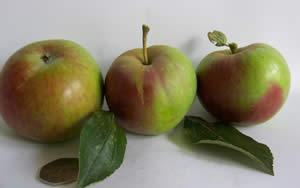
Apples (from left to right in the mini-orchard)
Crawley Beauty M116 Pollination F29 (29 May) This apple is primarily a cooker, and produces a sweet purée, but it can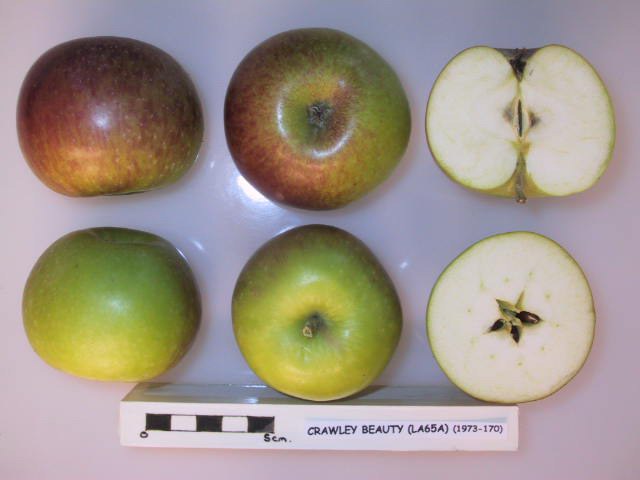 be eaten fresh after storing. It is pale green turning to pale yellow. It is a very tolerant apple, growing well on chalk, with good disease resistance. It flowers late in the spring, which means that fruiting is not affected by frost. Apples are ready for harvesting in mid-October.
It was discovered in a cottage garden in Tilgate, near Crawley, around 1870. The Crawley nurserymen, Cheal & Co., introduced the variety in 1906 and it received the RHS Award of Garden Merit in 1912.
Tinsley Quince M116 Pollination F8 (8 May). Another Crawley apple, Tinsely Quince is medium to large in size, and rectangular in shape. It has pale yellow skin with russet dots and is rather greasy to the touch. It has a slight quince-like flavour , with firm, sweet flesh. It is said to be an exceptional frying apple. The fruit ripens in late September for picking early October.
It is not known when the apple originated, but it came to public attention in the National Fruit Trials in 1942, entered by R. Fairman of Crawley.
Saltcote Pippin M116 Pollination F11 (11 May) Saltcote Pippin is another late dessert apple. It’s orange yellow with scarlet streaks. It’s a juicy apple with a rich aromatic flavour. described as ‘large, handsome, rich’ and ‘brisk’. The tree is vigorous and produces a good crop, ready for harvesting in early October.
Saltcote Pippin was raised by James Hoad in Rye and was first recorded in 1918. It received the Royal Horticultural Society’s Award of Garden Merit in 1928.
Mannington’s Pearmain M116 Pollination F13 (13 May) Richard Hogg’s ‘Fruit Manual’ of 1860 describes Mannington’s Pearmain as ‘one of the best and richest flavoured of our dessert apples’. It is a rich golden yellow with dull brownish red and large russet dots. In terms of taste, it is said to be ‘firm, crisp, juicy, and very sugary, with a brisk and particularly rich flavour’. It is very hardy, bears good fruit relatively early in its life, and is harvested in mid-October. Hogg recounts advice that Mannington’s Pearmain should be left to hang on the tree as long as possible in order to increase the sweetness of its flavour. This variety is said to have originated around 1770 in a garden in Uckfield belonging to a Mr. Turley, a local blacksmith. It arose from cider pomace thrown under a hedge. Grafts were distributed in the neighbourhood, but it was Mr Turley’s grandson, Mr. John Mannington, who later brought the apple to the attention of London Horticultural Society. In 1847, they judged it an excellent dessert apple and designated it ‘Mannington’s Pearmain’.
Pears
Concorde QA rootstock Pollination F22 (22 May) This pear is characterised by its long neck and yellow-green skin. It doesn’t brown much when cut, and is sweet and juicy even when firm. It derives from two 19th century varieties: the well-known Conference pear and the French Comice. It is said to combine the reliability of the Conference pear with the excellent flavour of the Comice. Most importantly, it grows well in an English summer.
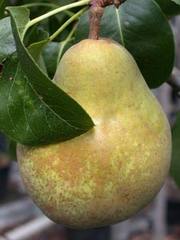 Beurre Hardy QA rootstock Pollination F19 (19 May)An excellent dessert pear with a distinctive flavour. It crops heavily and is resistant to scab, but it may be sensitive to frost, and likes warmth and shelter. The fruit can be picked hard in mid-September and left to ripen. It was introduced in 1820.
Plum
Marjorie’s Seedling SJ rootstock Pollination F26 (26 May) This is a late season plum, very reliable, hardy and disease resistant. It crops heavily, giving dark purple fruit with green-yellow flesh.


 London Road Station Partnership Blog