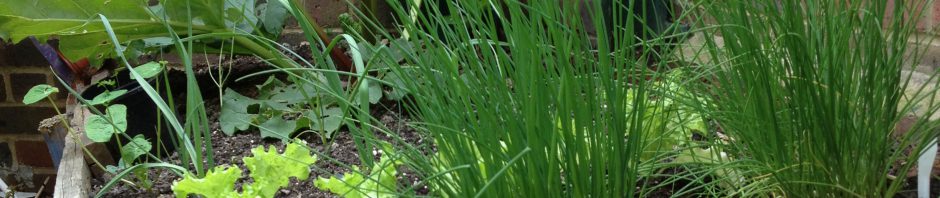
Two weeks ago, I left Brighton in a drought. The water butt in the London Road Station gated plot was empty, it seemed impossible to keep our pots of herbs from drying out, and all activity moved towards the shade of the west wall. I ran round placing all pots in saucers or trays to retain any excess water. We were worrying about the beds with the fruit trees drying out. The days were long, hot and blue-skied. The south wall radiated warmth in the evenings.
I have returned to floods, torrents of water flowing down the streets, water-logged pots and overflowing water butts. The central heating is on, the lights are on – it’s 6.30pm in the evening and it’s still raining. I haven’t yet ventured into the sodden station gardens. I know the slugs have got some of the dwarf beans and the winds will have flattened the flowers in the shady triangle.
This is yet another post about the unhinged weather patterns we’ve had this year. Following on the dry and warm January, cold and icy February, hot March, drenched April and early May, scorching late May, we’ve moved into a cool autumnal June of storms, low grey skies and rain.
Yes, gardening sometimes feels like a battle – fighting off the squirrels, cats, slugs, snails, aphids, ants, fungi, viruses and blights, and trying to get the right stuff in the soil. And this year, there has been no predictability. We’ve had intense packets of heat, and then of moisture, with no balance. It’s destabilising ..
The weather can be the worst enemy, with an impact both on the physical environment but also on morale. The chard will have blown over, the new seedlings will have been flattened by the wind, the strawberries will be rotting with the damp, let the snails do their worst – I’m curling up under the duvet.


 London Road Station Partnership Blog