 I feel a bit of a fraud, posting about the London Road Station garden when I’m a hemisphere away, but e-mail messages having been coming in regularly over the last few weeks about LRSP activity.
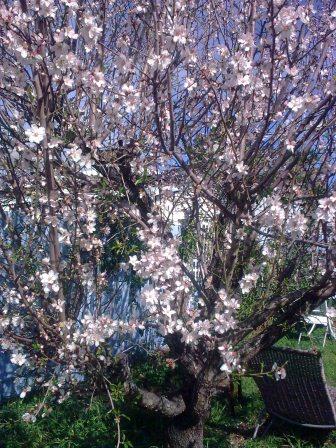
As I can’t be at the garden to squidge caterpillars or green fly, perhaps what I can do is gather the reports together and post second-hand – in between thinning out the newly planted lettuce seedlings and admiring the early ‘spring’ blossom on the almond tree 11,000 miles away. So … the news is that the LRSP gardens are doing well in their second summer. Finally, in August, the sun has shone in South East England; indeed, temperatures have been soaring up to the high 20Cs.
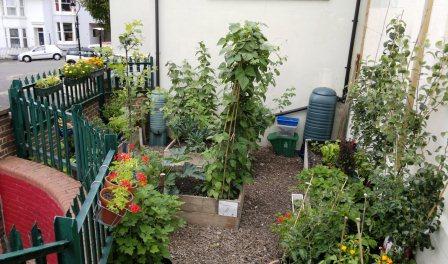
But this has meant again the challenge of keeping the water supplies going. The 210L water butt in the gated plot gets used up very quickly, given that the seven fruit trees alone require around 30 litres each (3 watering cans) at least every two weeks. The second water butt in the shady ornamental plot provides additional supplies as that area tends to dry out less quickly, but the group have had to resort to filling watering cans from Madeleine’s tap.
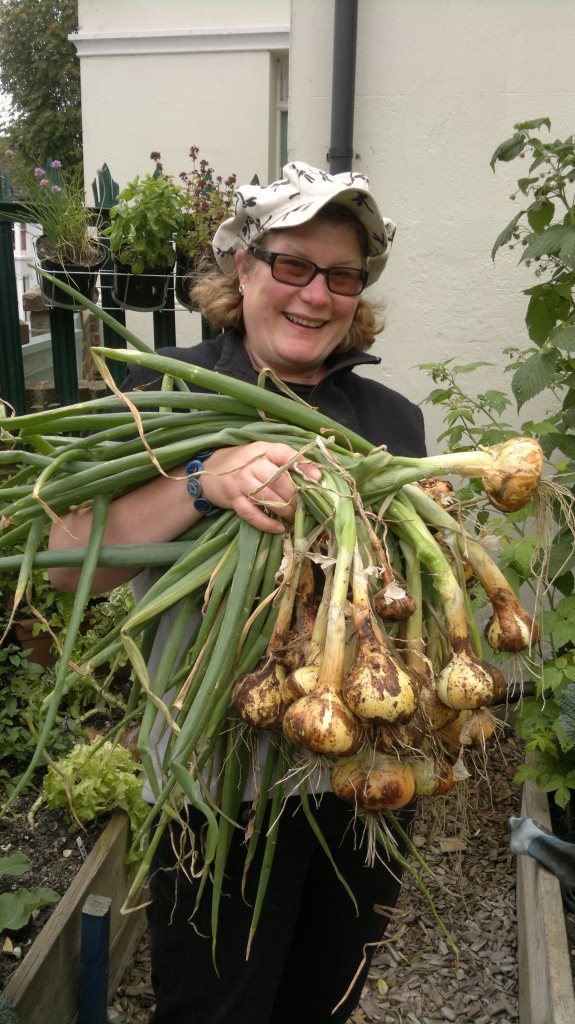 Lettuces, chard and superb onions have been harvested from our raised beds. The onions will now be drying well in the warm weather. They’ve been strung up in our conservatory. Of course, there’s also been the usual mid-summer war of attrition against slugs, snails and particularly caterpillars this year. The kale plants have been badly affected. Much has been harvested, though, and kale soup seems to be one of the ways of using this sometimes tough leafy vegetable. (An aside from down under: interestingly, kale is definitely the in-thing in this very foodie part of Western Australia – I’ve seen it selling in a Fremantle farmers’ market for £3 a small bunch)
All this harvesting leaves space – for summer planting, to be harvested either in early autumn or to overwinter for next spring. Frisee lettuce has been planted, with seeds designed for late summer sowing, brought back from France. This frisee Wallonne is pretty hardy, so it can normally survive the winter. And the slugs don’t like it. Leeks have also gone in.
I also picked up discussion on about putting in some late climbing bean seeds. Given that we often have warm(ish) weather now until at least mid October, they should have a good chance of cropping. The bean seedlings have been vulnerable to slugs, but organic slug pellets have been used to protect them.
Our ornamental garden too has had attention with dead-heading and tidying up. Late August is never a great time for flowers, I’ve found. They are getting tired, blooms are fading and plants can overgrow, lose their shape and go to seed. Keeping on top of cutting back to encourage new blooms takes time.
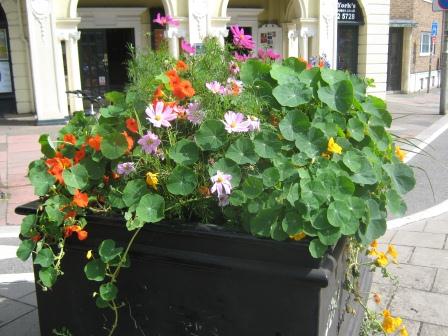
And finally our ‘outreach’ project – planting up the four planters at Preston Circus with ornamentals – is also going well.
The planting we did in June is finally developing with the sunshine, despite attacks of black fly, the occasional impact of Saturday night drinking bouts in this busy area of Brighton and the difficulties of keeping everything watered without any immediate access to water. The small group of committed neighbours who have got involved with maintaining the planters have done a fantastic job keeping it all going. And the East Sussex Fire Brigade at Preston Circus have been wonderfully cooperative, providing access to water when they can, and even getting out there wielding watering cans!


 London Road Station Partnership Blog
Fire station open day on Saturday – maybe the fire persons will let visitors get the hoses out and water the flowers?