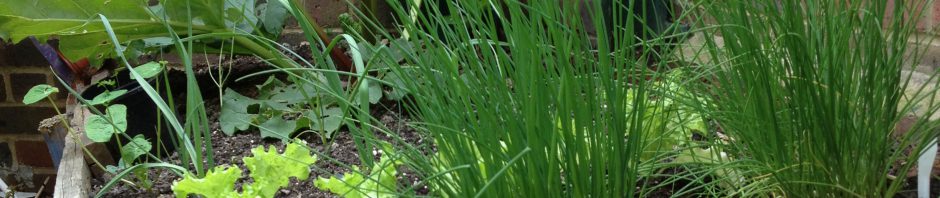
You can tell it’s winter. The layer of frost on my raised beds is a give-away sign, but more than that, I’m indoors. At a computer screen. Catching up on all those interesting documents I haven’t had time to read, following all those interesting links, imagining all the funding opportunities we might bid for. Not getting out to check whether the frost has wilted the lettuces.
First up today was the incongruously benign guide Space for Food Growing from the Department for Communities and Local Government. Its tone is more the jolly encouragement of a self-help book rather than the dry prose of a government policy paper. Its message: “Go forth, gardeners, and take over unused land, for grow-your-own gardening shall contribute to community cohesion and protect you from climate change”.
It’s so easy: no need to wait for an allotment plot (for our nearest allotments, there are 389 people on the waiting list with a waiting time around 5 years!). No, you just “… find other land which could be easily converted into allotment plots or community gardens, such as derelict public or private sector land; green space surrounding social housing estates; or land owned by a school, a residential care home or hospital.” A great idea … but there’s something rather naïve about this guide.
It’s great that a government department appears to be promoting the idea of community land use, and encouraging us citizens to look again at the potential of the unused space around us. But very little of this is new, and very little is about concrete strategies or coordinated funding streams. The references to case studies are useful as are the links to helpful organisations at the end. For example, I only recently found out about The Federation of City Farms and Community Gardens and the work they do on community leases. I’m really taken by the idea of Meanwhile Leases for using land temporarily where development has been halted by the recession, as appears to be the case opposite London Road Station (see earlier post).
So perhaps this is the point: all the useful stuff in Space for Growing Food comes from grassroots projects that have been driven mostly by the energy, investment and imagination of volunteers. I remain to be convinced that the Government has, in any real sense, ‘committed to measures that will enable individuals and communities to gain access to the land they need.’ (p.1). There’s a cynical part of me that is wary when a government department appears to jump on a bandwagon. Or perhaps it’s just that it’s winter …


 London Road Station Partnership Blog