 The planters are starting to take on their summer shape. Their growth is unexpected and in some cases, unwanted. The sudden warm spell during June created challenges for watering, but we’ve got our watering rota up and running now, the water butt at the Calvary Church seems to be working well and we’ve had a bit of respite with evening rain in the past few days.
It was very sad to find that our two watering cans disappeared within a week. We now have two more, firmly padlocked on a combination lock.
I was down at Preston Circus yesterday, trying to stake and tie in the rather wayward plants. One thing is for sure: our planters don’t look like traditional planters stuffed full of bedding plants. They are rather more ‘individual’ with a mixture of perennial and annual planting.
We’ve managed to get height this year, with the verbena bonariensis soaring up. What we lack are trailing plants.
Some plants have done extremely well, quite unexpectedly: others, equally unexpectedly, have done poorly.
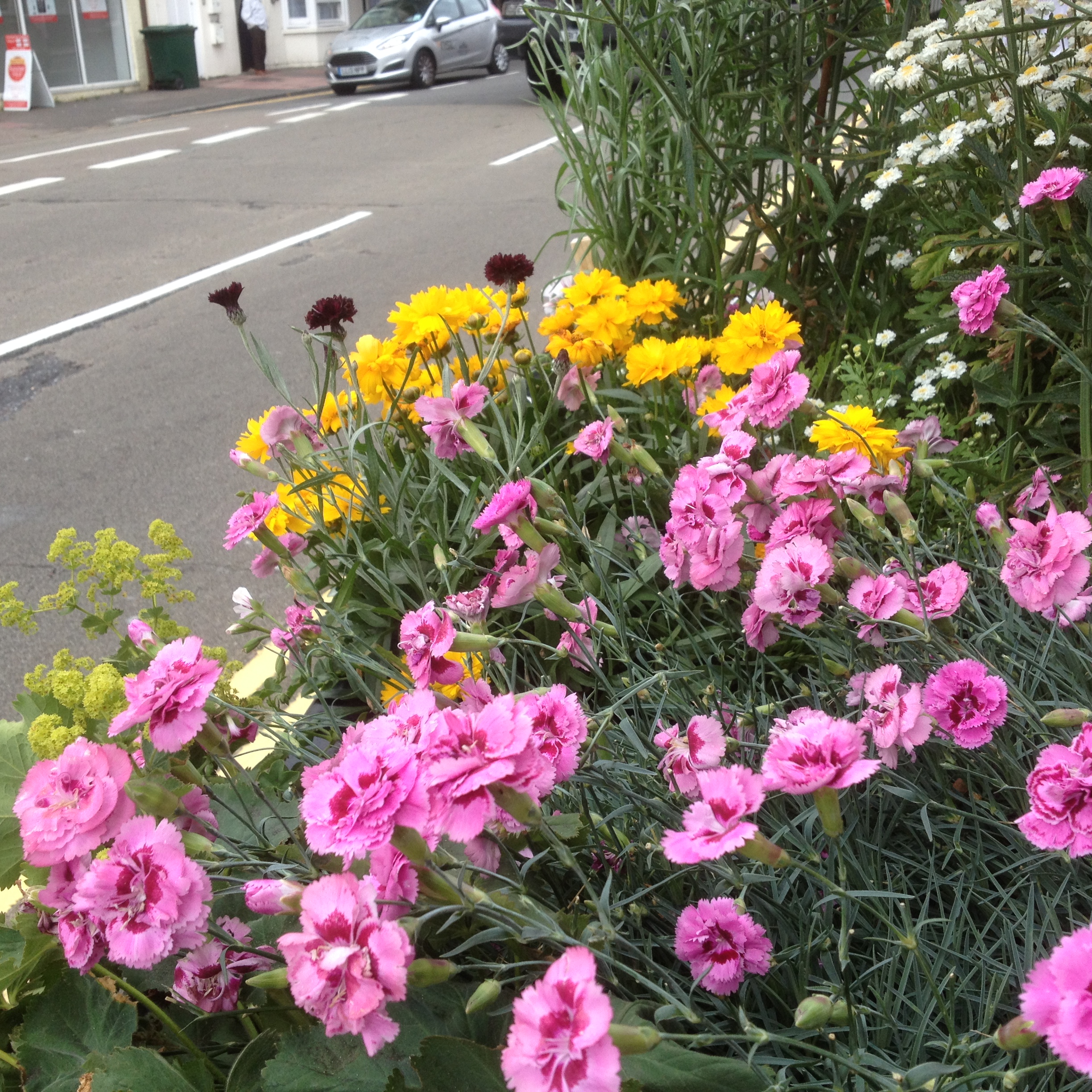 Cottage garden planter: the big surprise for me has been the mass of beautiful scented pinks. This was one plant! Unfortunately the symmetry of a pink either side of a central feature didn’t survive: the ‘north’ pink more or less failed, but we put in a couple of
 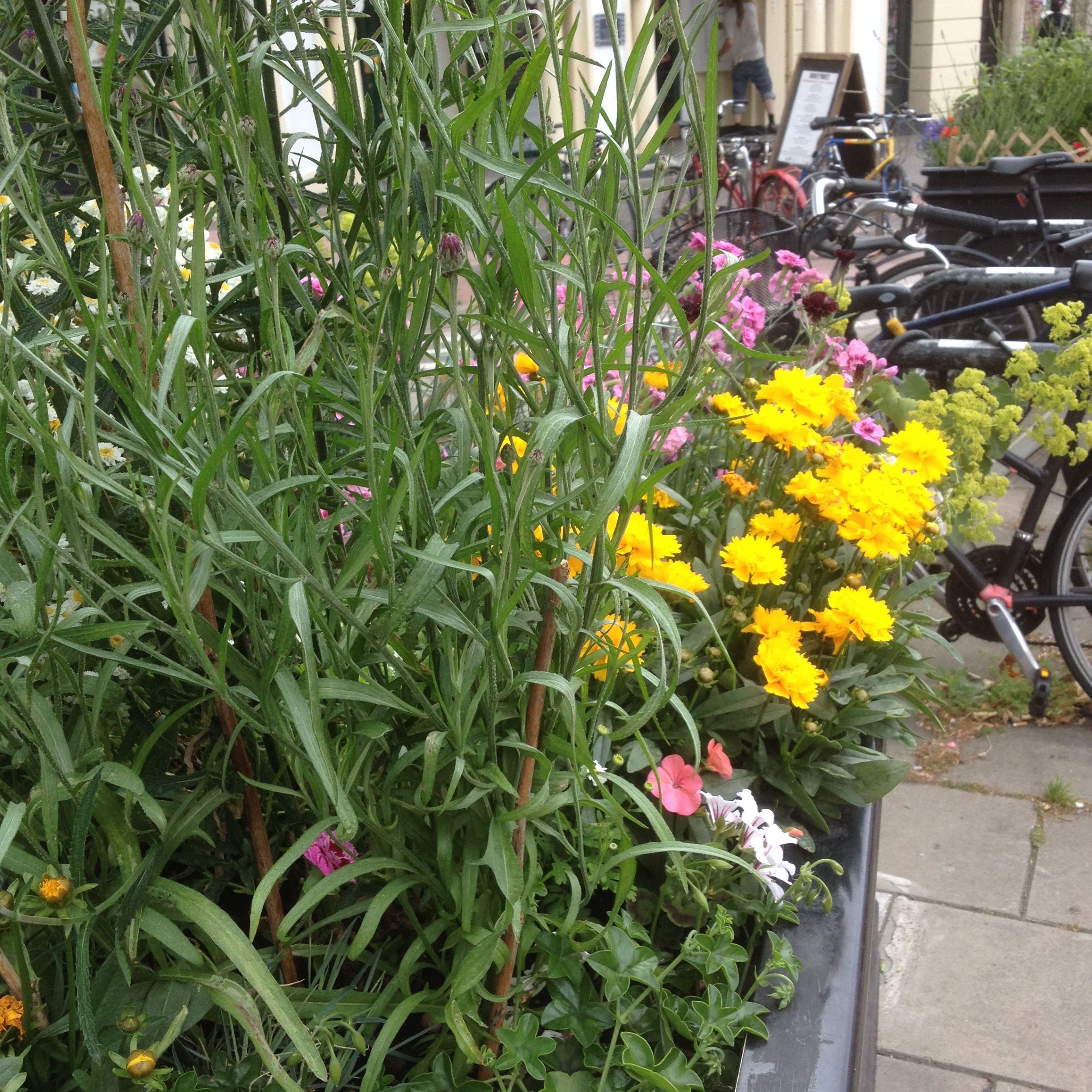 plants that we had propagated over the winter and these are now taking well. It does look lovely with lots of flowers, but also varied foliage, giving it that cottage garden feel. Eve planted deep blue cornflowers there which are growing up amongst the verbena bonariensis. And yet it looked miserable in the early spring.
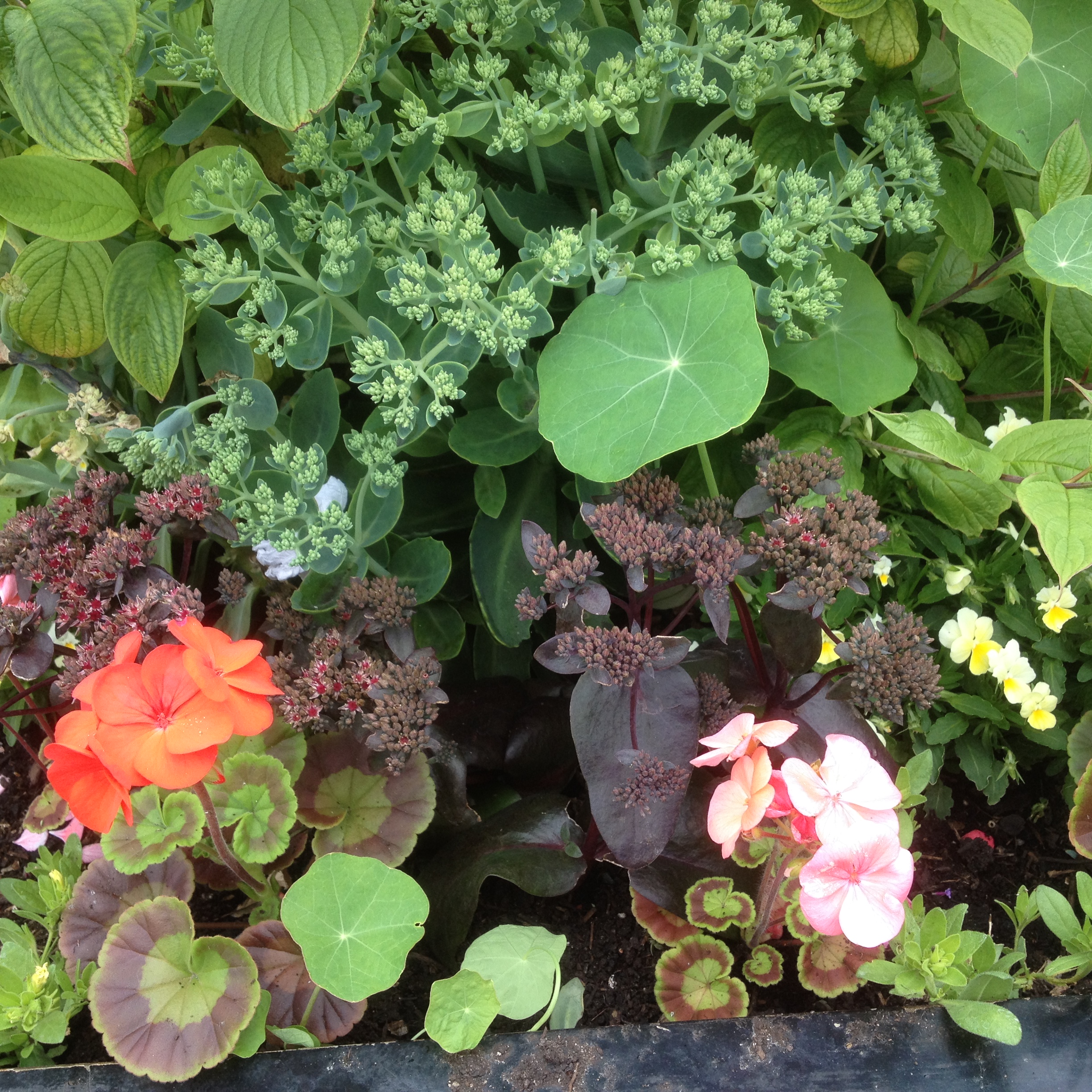 Traditional planter: we’re keeping the nasturtiums under control this year as last year they more or less wiped out several lavender plants. The central shrub has taken well and gives a nice, light green focus. We’ve replaced a couple of lavender plants,
 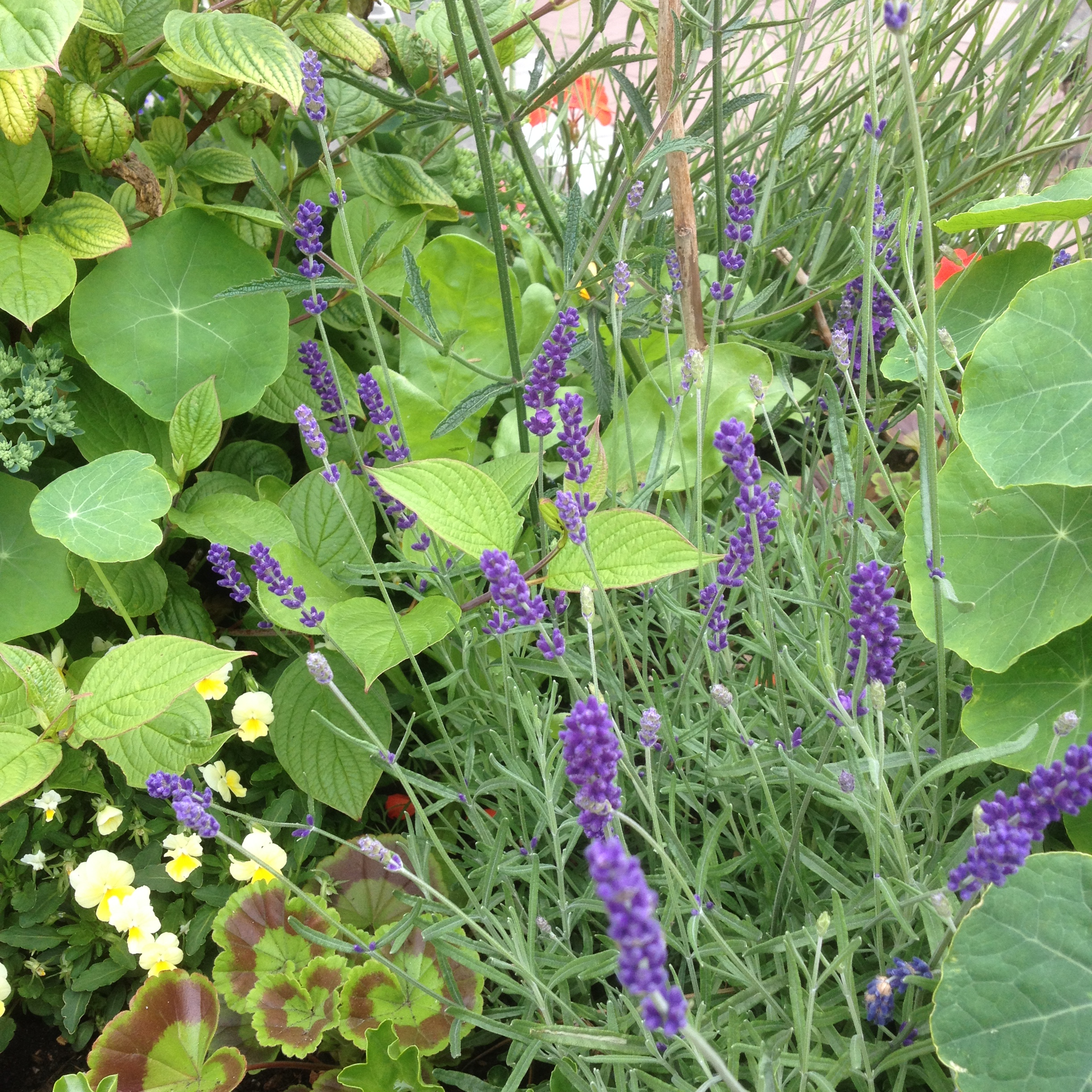 but they are NOT the beautiful lavendula Hidcote that we originally planted, but a longer stemmed, rougher variety. But in the corners nearest the main road, the lavendula Hidcote seems to be doing well. The sedums seem to the working well this
 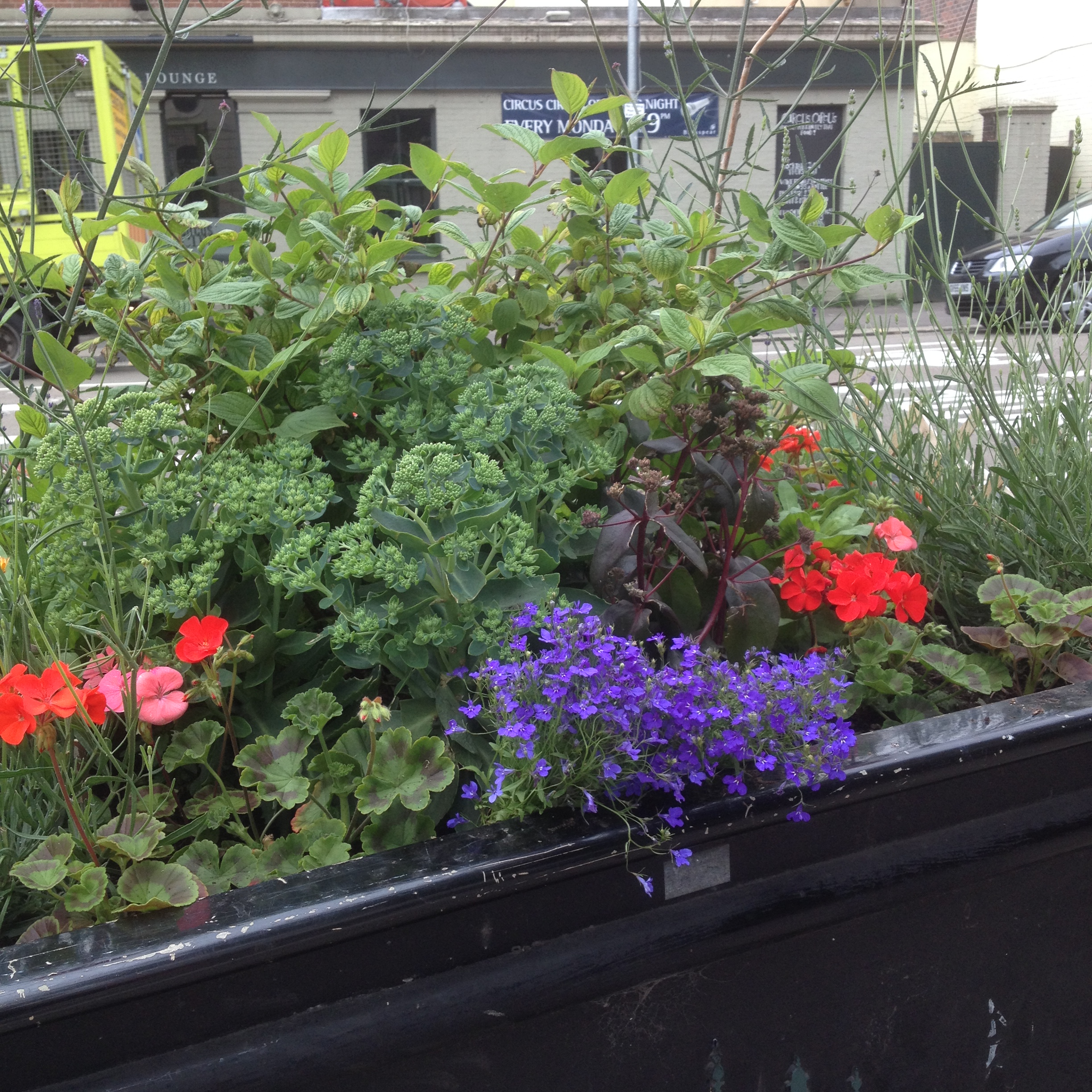 year and yesterday, I planted as many red and salmon pelargoniums as I could fit in and a couple of dark blue lobelia for contrast.
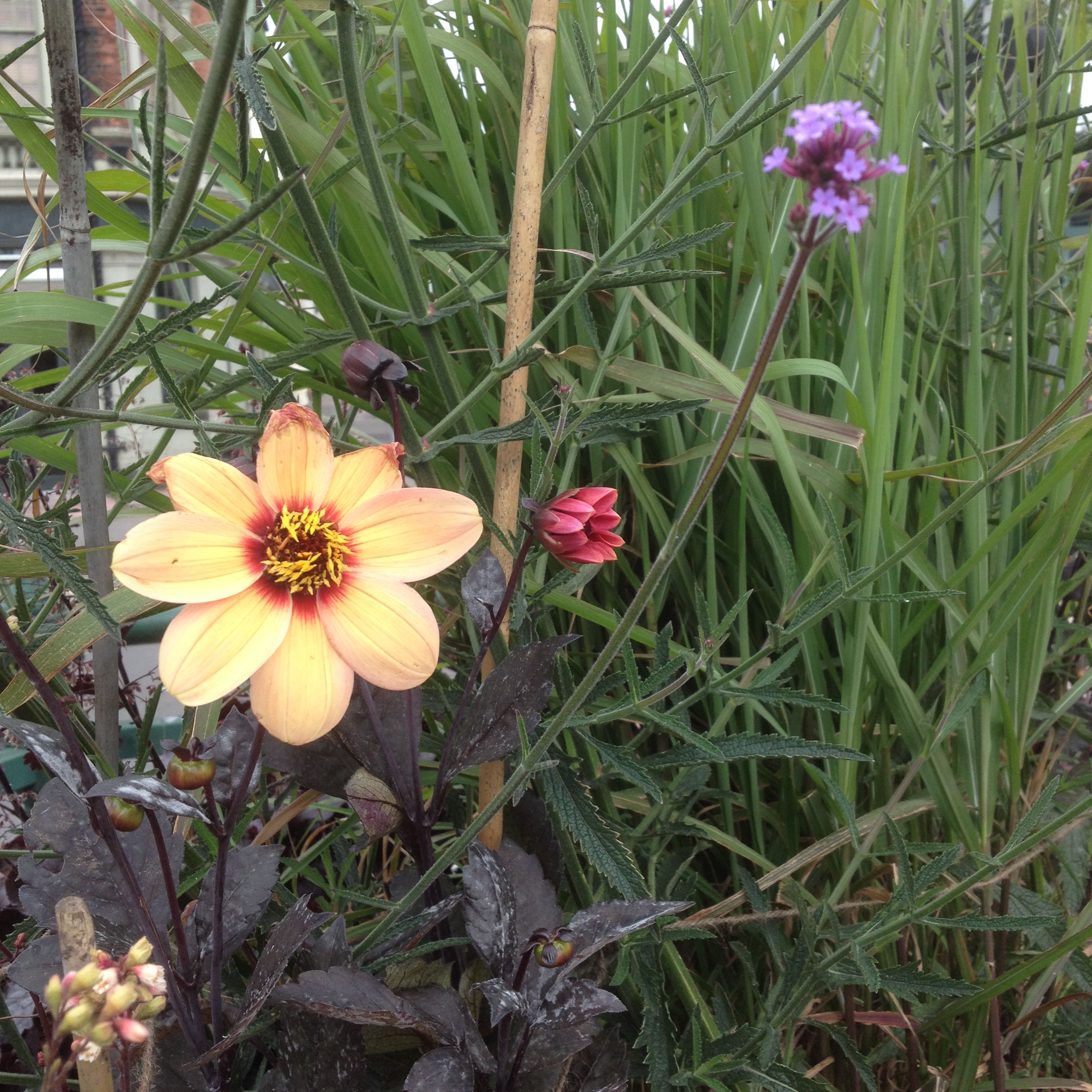 Prairie planter: the grass – miscanthus purpurescens – has grown huge and strong in the centre, but there is absolutely no sign of its advertised reddish tinge. It just looks like er … grass. We’ve planted two apricot dahlias either side, and the
 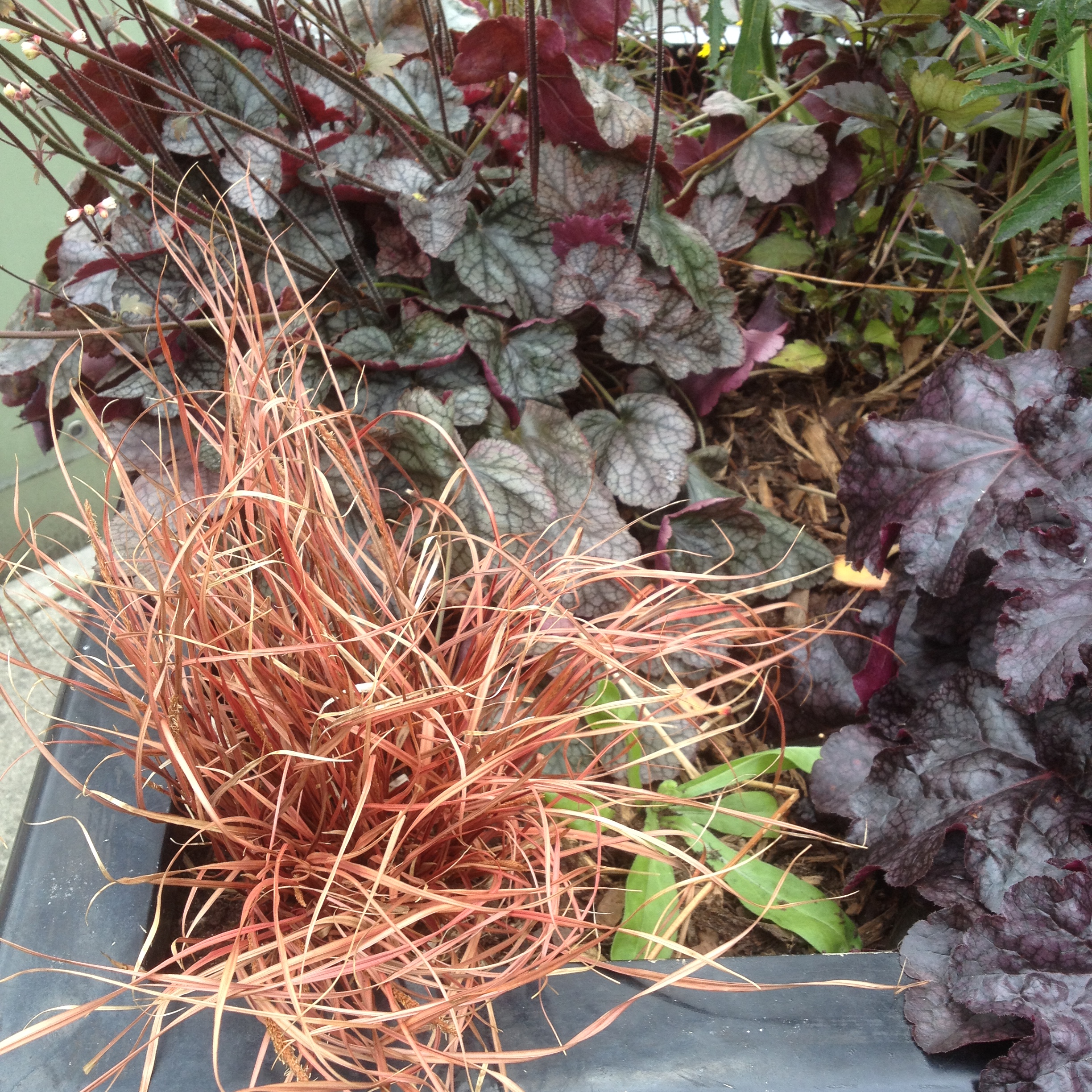 verbena bonariensis blends in well. The real surprise is the heuchera: the rather spindly rich red plant on the north side, originally propagated from one of my garden heuchera, have grown huge and very beautiful. The heuchera facing south have also
 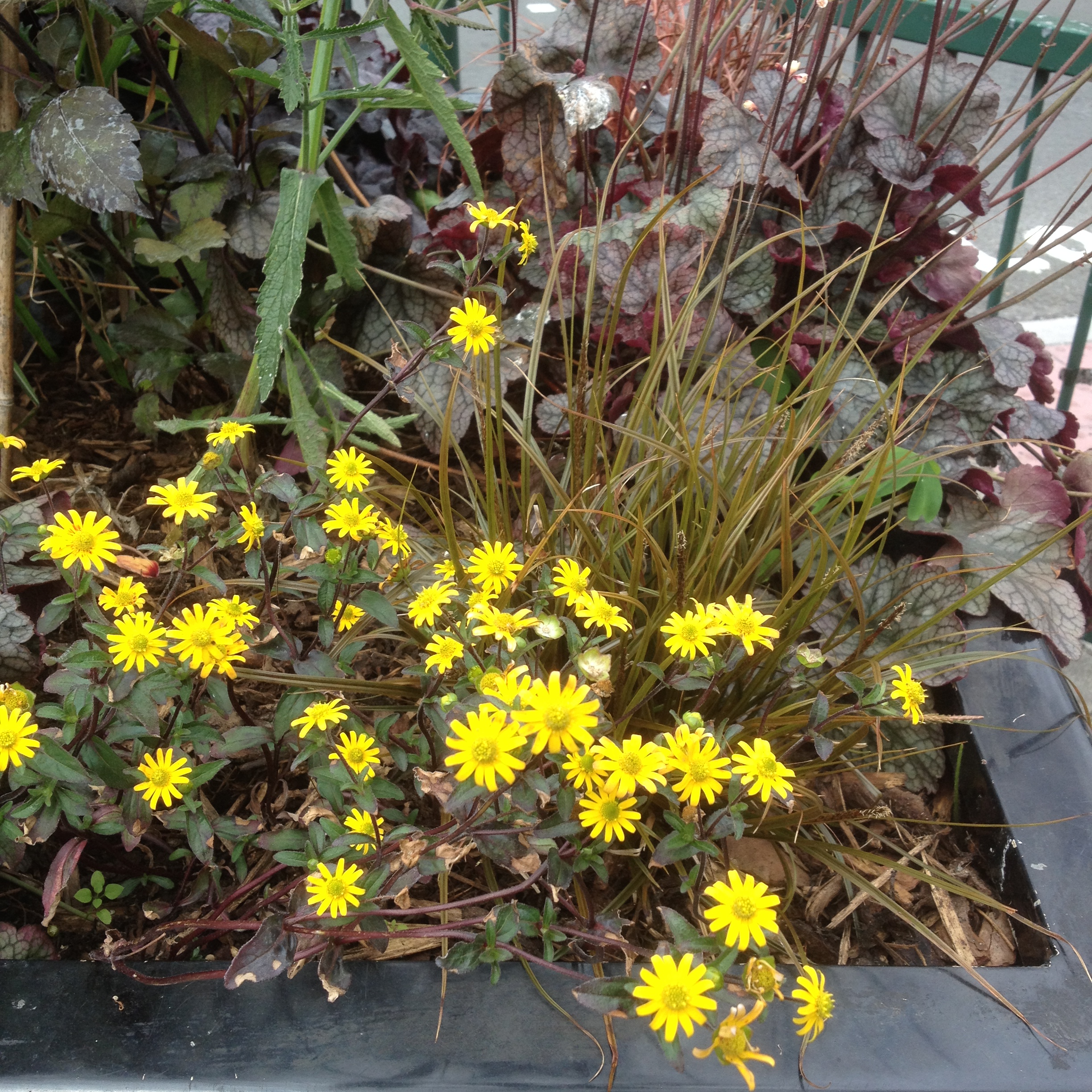 survived well, but clearly need good watering. It was sad that the lime green carex everillo, planted in the corners, didn’t like the hot, sunny site. We’ve replaced them with uncinia rubra, which doesn’t stand out so much but is a lovely red tinged grass. It does need water though.
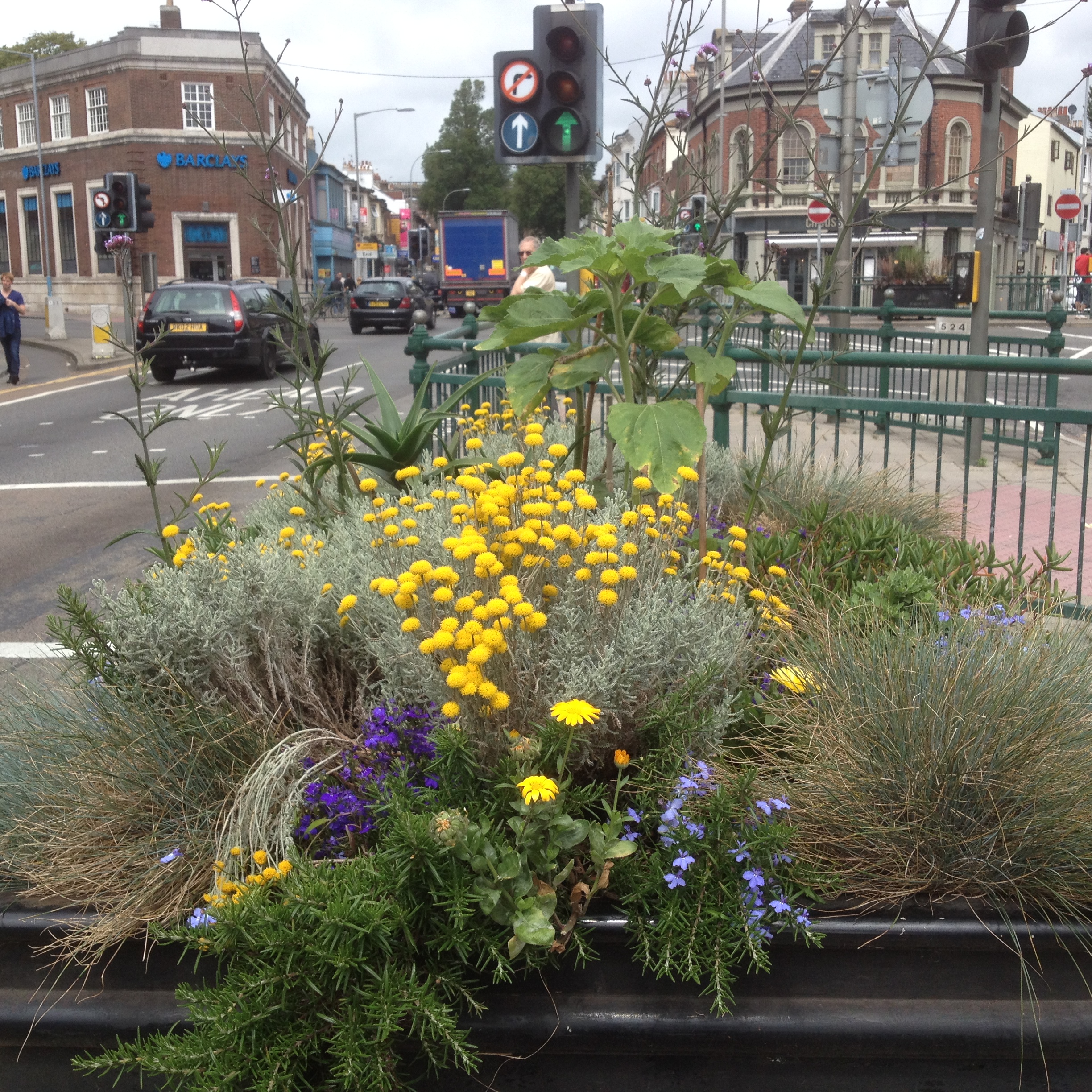
Coastal planter: this planter confounds me! It was at its most beautiful during our wet, warm and windy winter, yet it’s supposed to contain plants that tolerate drought.. Sadly, the grasses – festucha glauca ‘Intense Blue’ – have gone brown, the  lampranthus which flowered in February is woody and refuses to flower, the cotton lavender has gone leggy and the rosemary is yellowing, not glossy. Eve planted a couple of sun flowers – I hope they take – and I’ve put in as many light and dark blue
 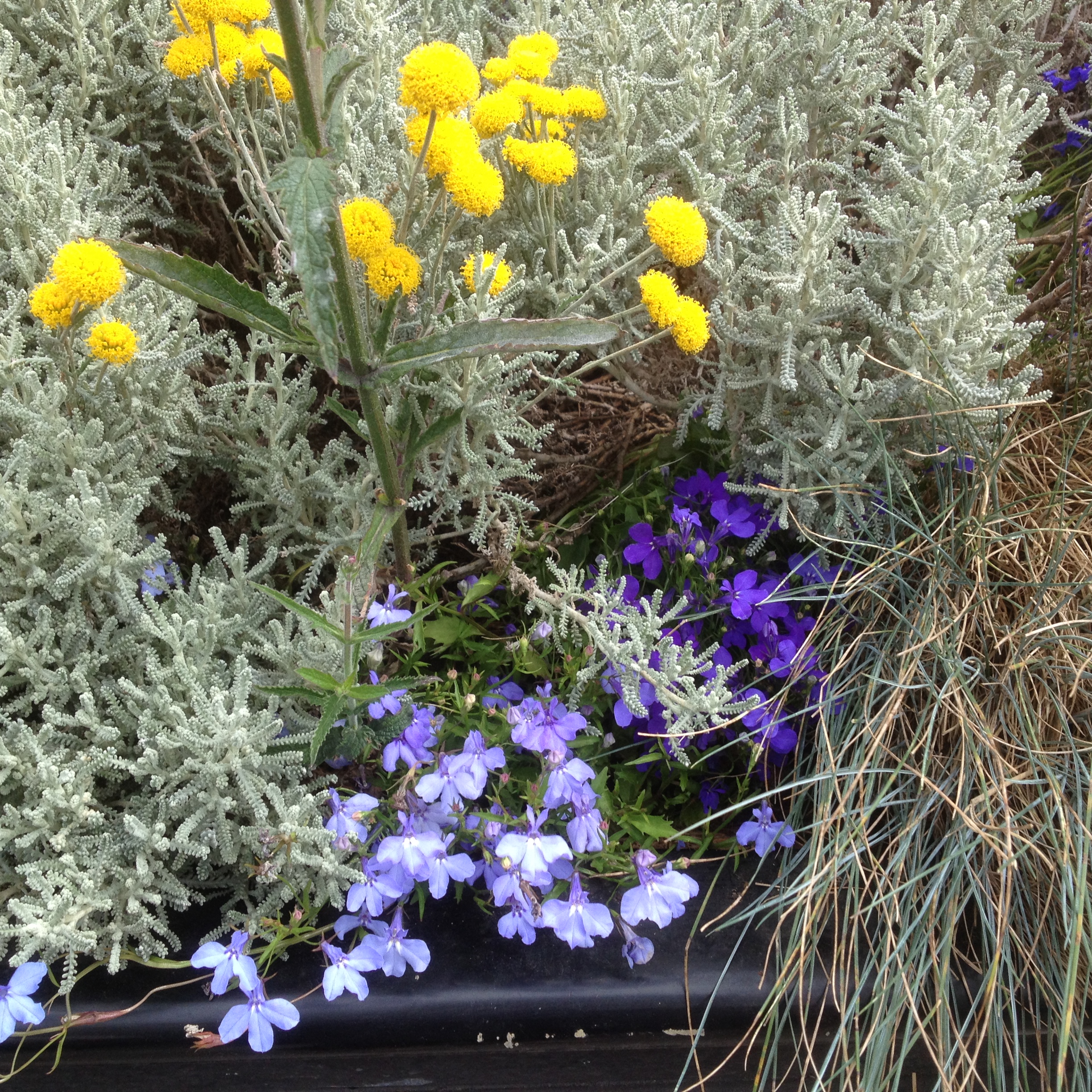 lobelia as I could fit. The blue and yellow theme is lovely, but there’s too much which seems dought-blighted and sad. We’ll take another look soon …


 London Road Station Partnership Blog