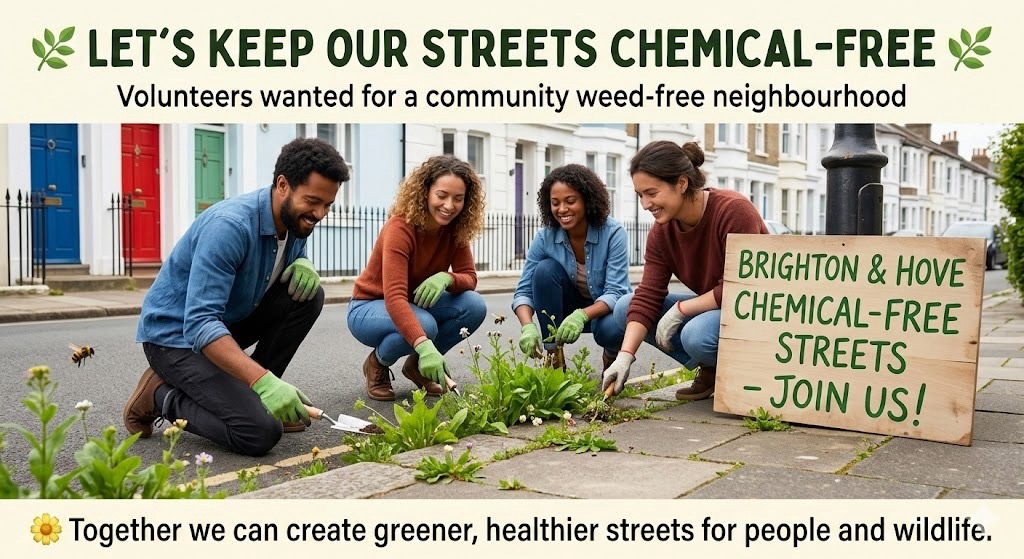
Brighton Council has offered opt-outs for the spraying of pavement weeds with the herbicide Glyphosate IF street residents can commit to community weeding three times a year. In our area of Brighton, around London Rd Station, there’s a groundswell of neighbours getting together to form weeding groups.
At LRSP, we’ve always been herbicide-free, and several of us have spent happy afternoons with a hoe removing weeds from the station forecourt in Shaftesbury Place. So we’re definitely part of the community effort to weed our streets; in fact, it’s our email address LRSP@hotmail.com that is now the central contact for neighbours in our area wanting to get involved in weeding their street. The Council asks each street to have a street co-ordinator, and around 1 volunteer for every 10 houses.
So far, it’s been a very positive initiative with over 40 people volunteering to help – and counting. Shaftesbury Place, Shaftesbury Road, Stanley Road and Lorne Road are already in a position to apply for an opt-out.
And just how hard is it to remove street weeds? Well, I thought I’d give it a go this morning. It took me 5 minutes to remove – by hand, no tools – all the weeds on the pavement outside my house. The ground is fairly wet, the weeds are young. It’s a great time to get rid of them.
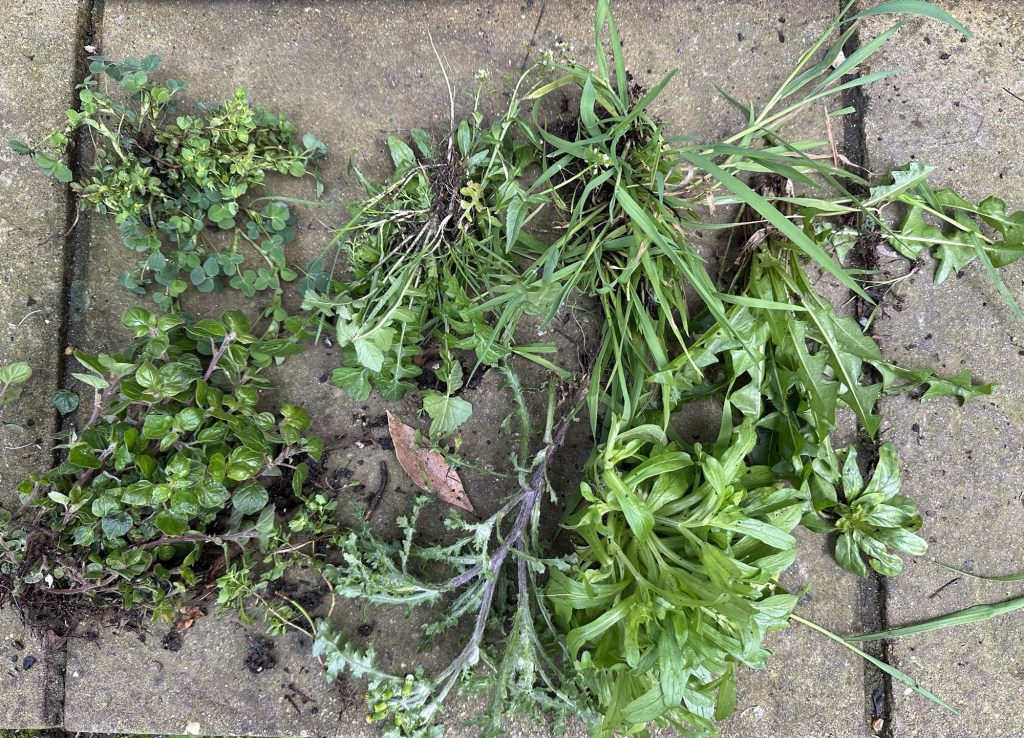
And in terms of biodiversity, it was quite a haul. What are weeds if not urban wildflowers? I think I identified eight different species, and that’s just outside one house. (I used my phone app and wildflower guides – there may be misidentification). They all have lovely common names and nerdy but useful Latin names. Here we go …
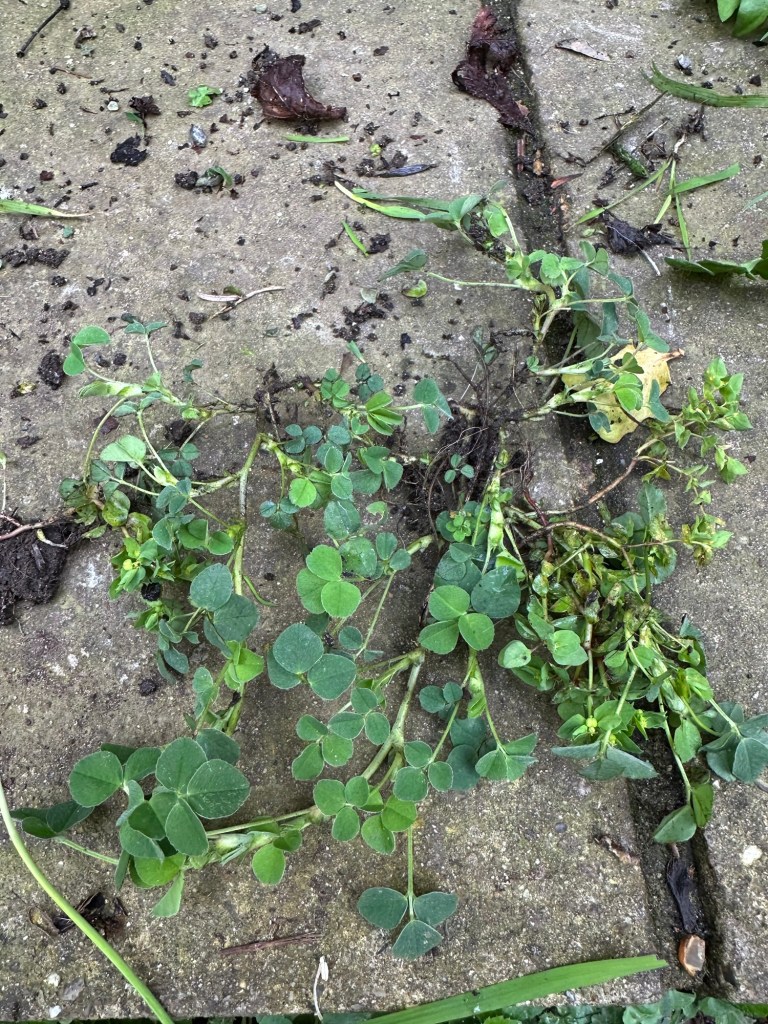
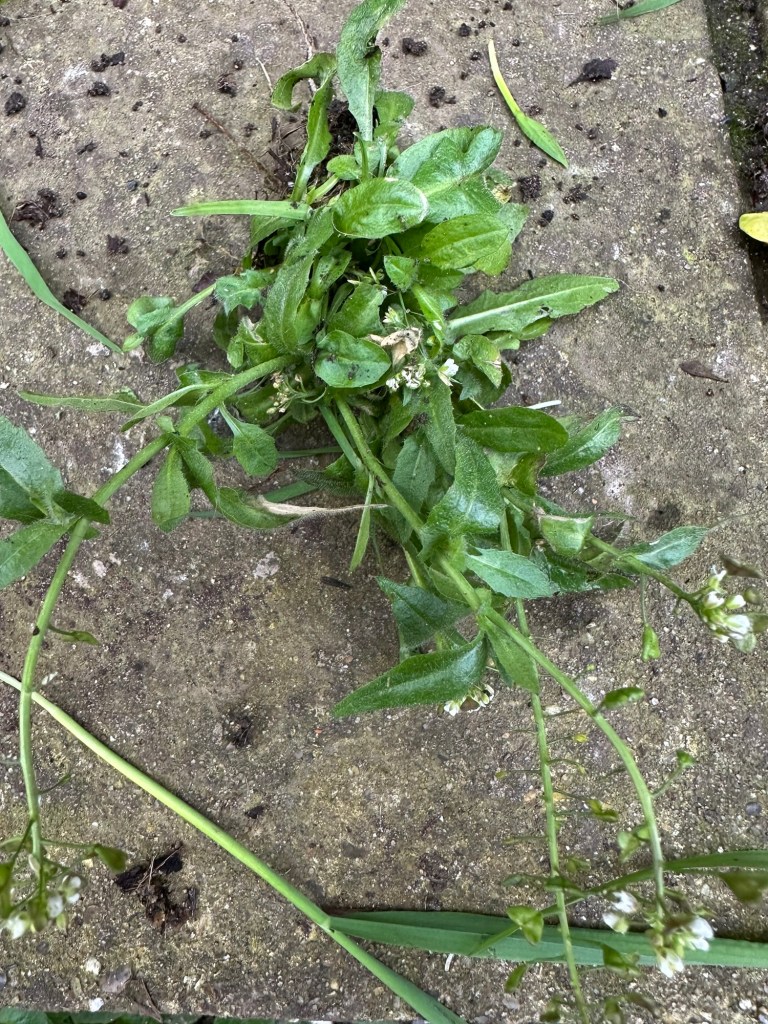
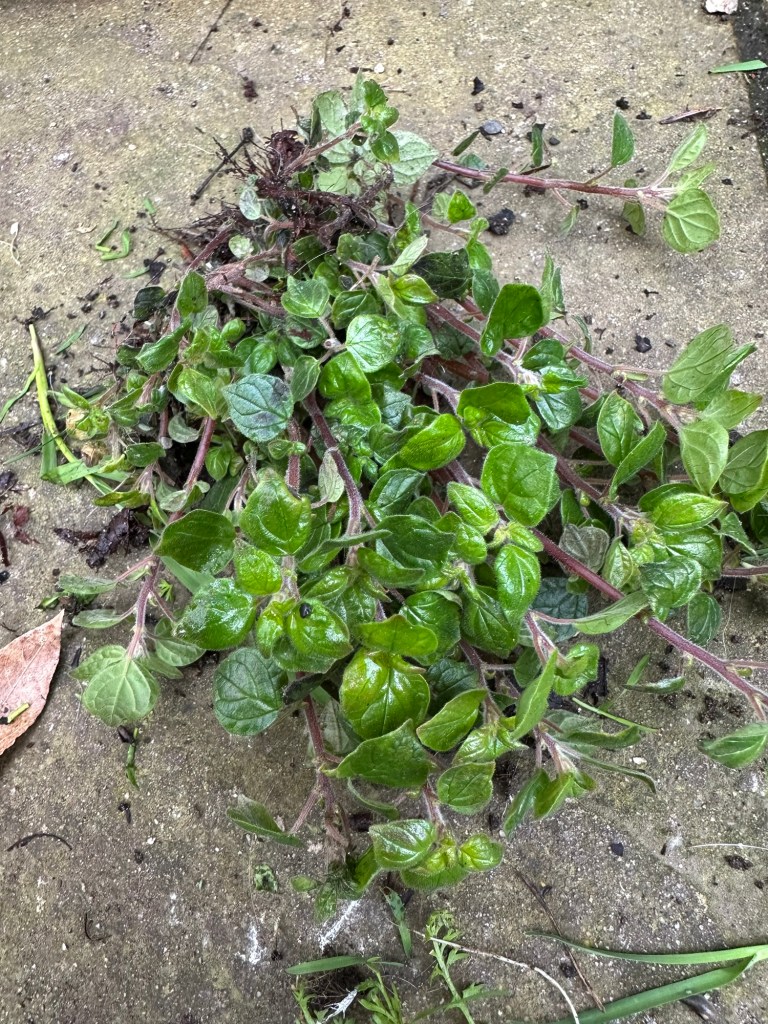
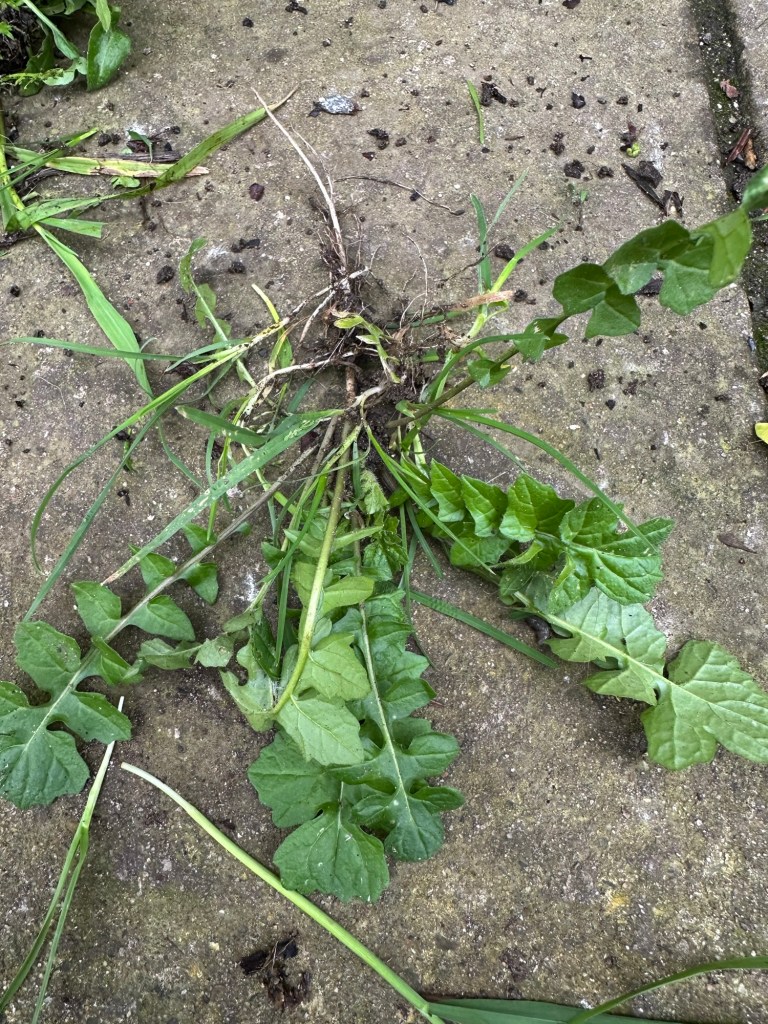
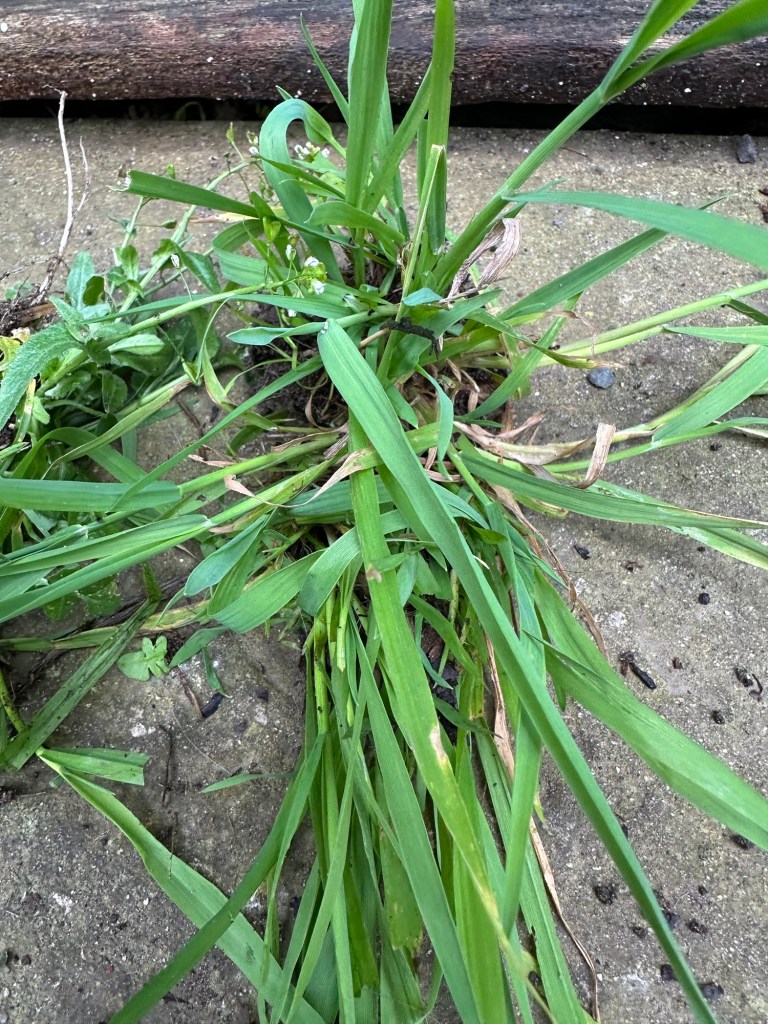
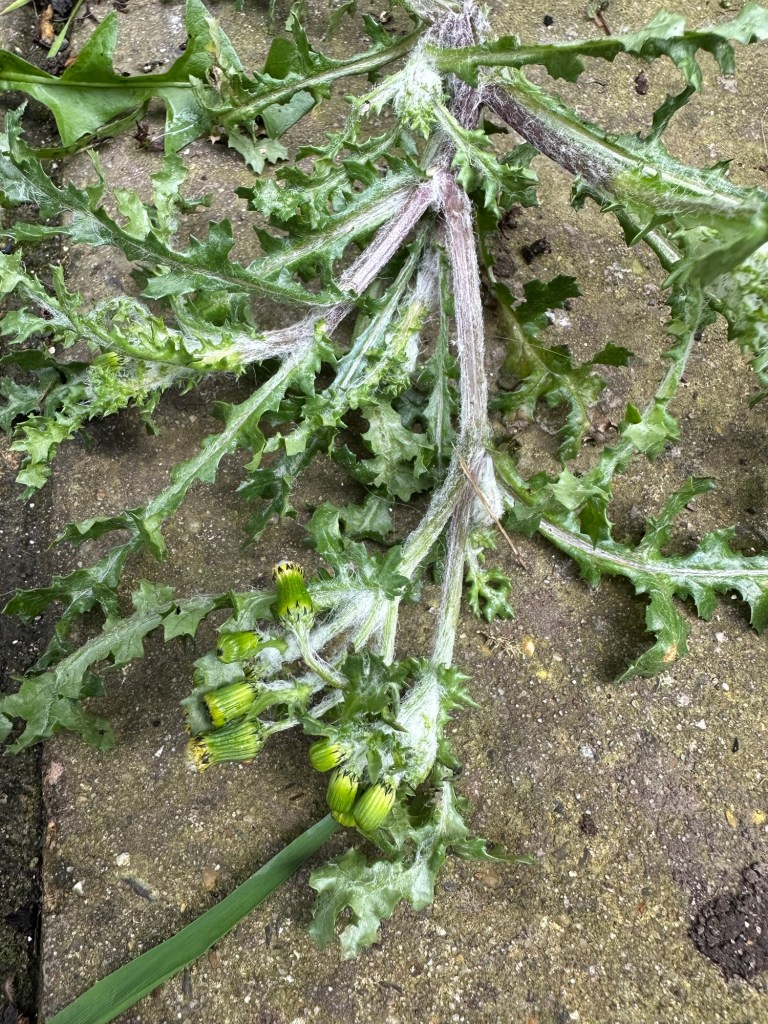
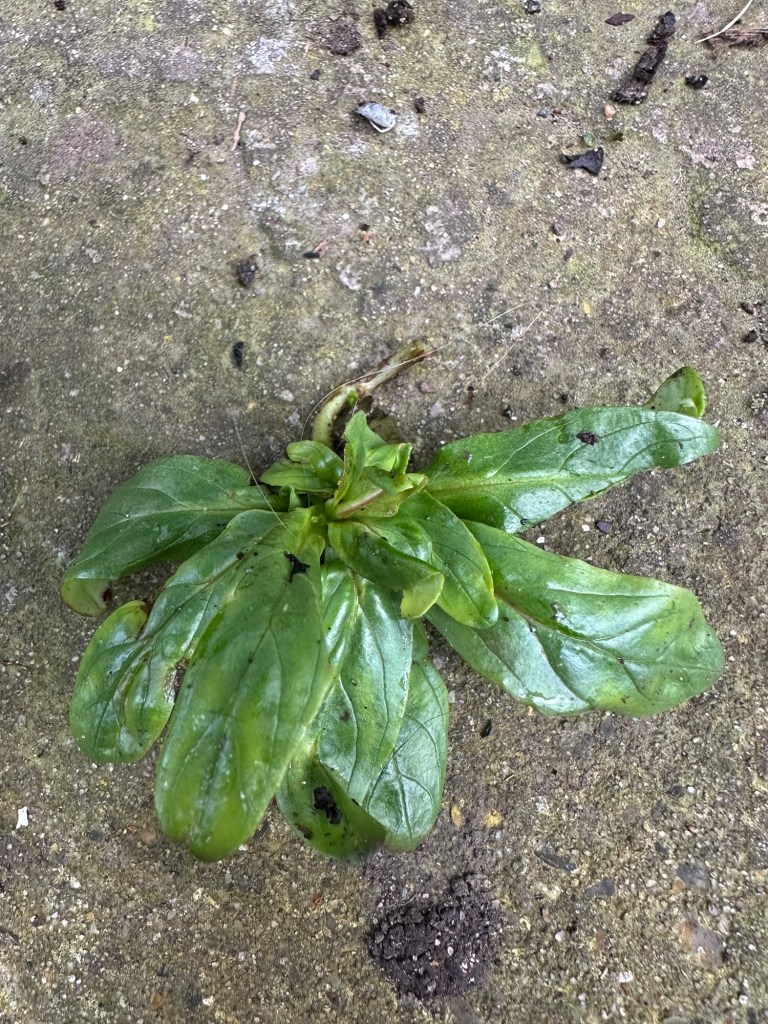
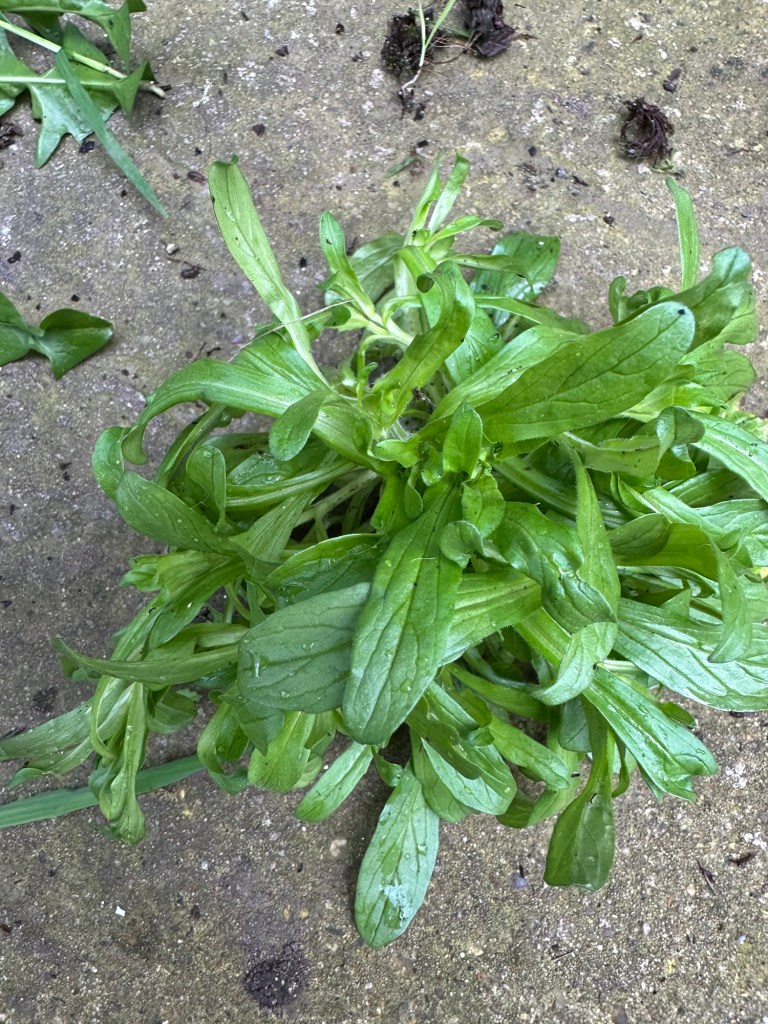
Trying to identify the plants does make weeding interesting, but also reminds us what we’re destroying; so … better our ‘knowing destruction’ than just blitzing with glyphosate?
Do get in touch (LRSP@hotmail.co.uk) if you live in the area of London Road Station, Brighton, and Ditchling Rise – and would like to join the weeding volunteers.


 London Road Station Partnership Blog