Volunteering at LRSP: Day 1

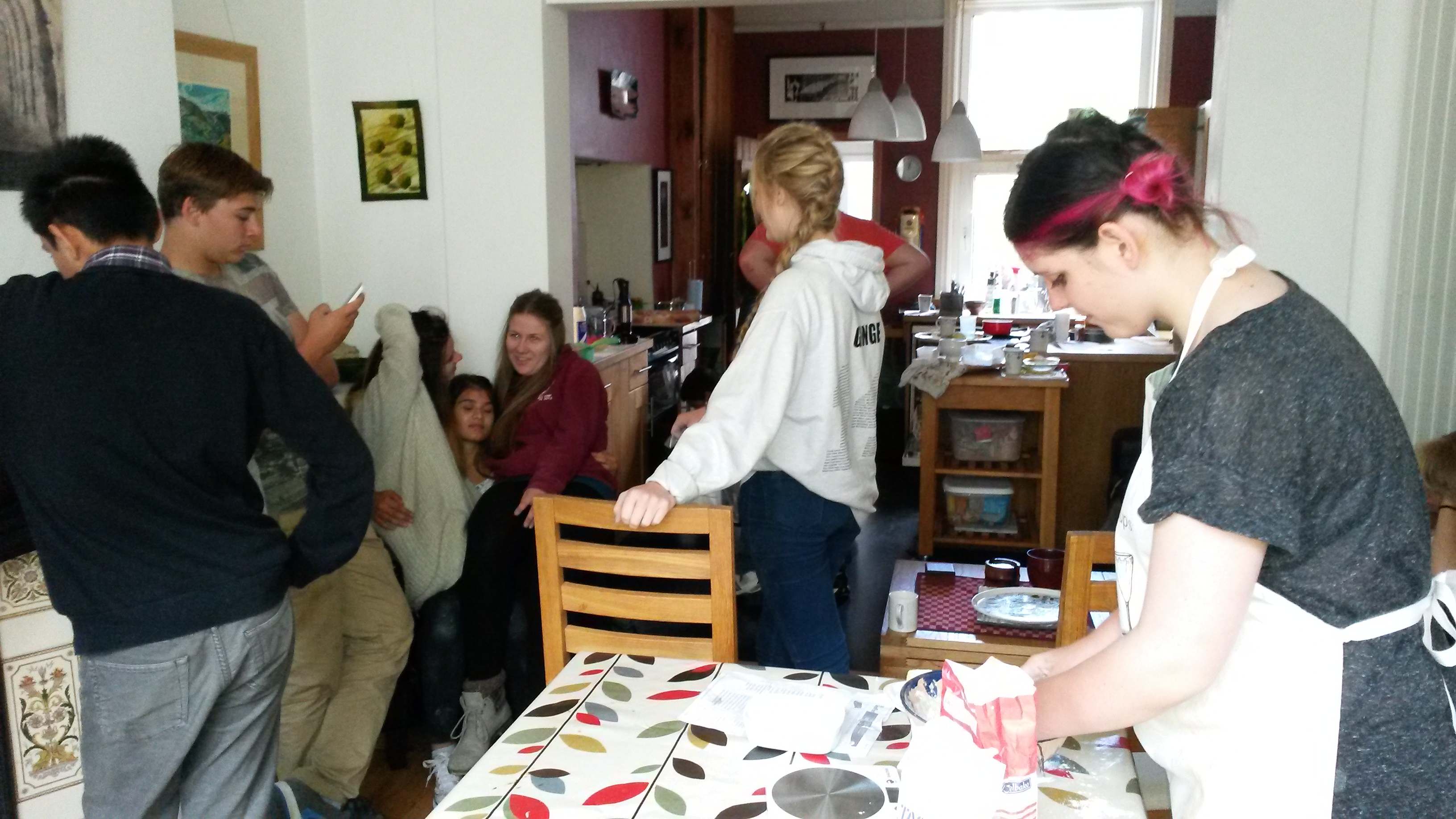
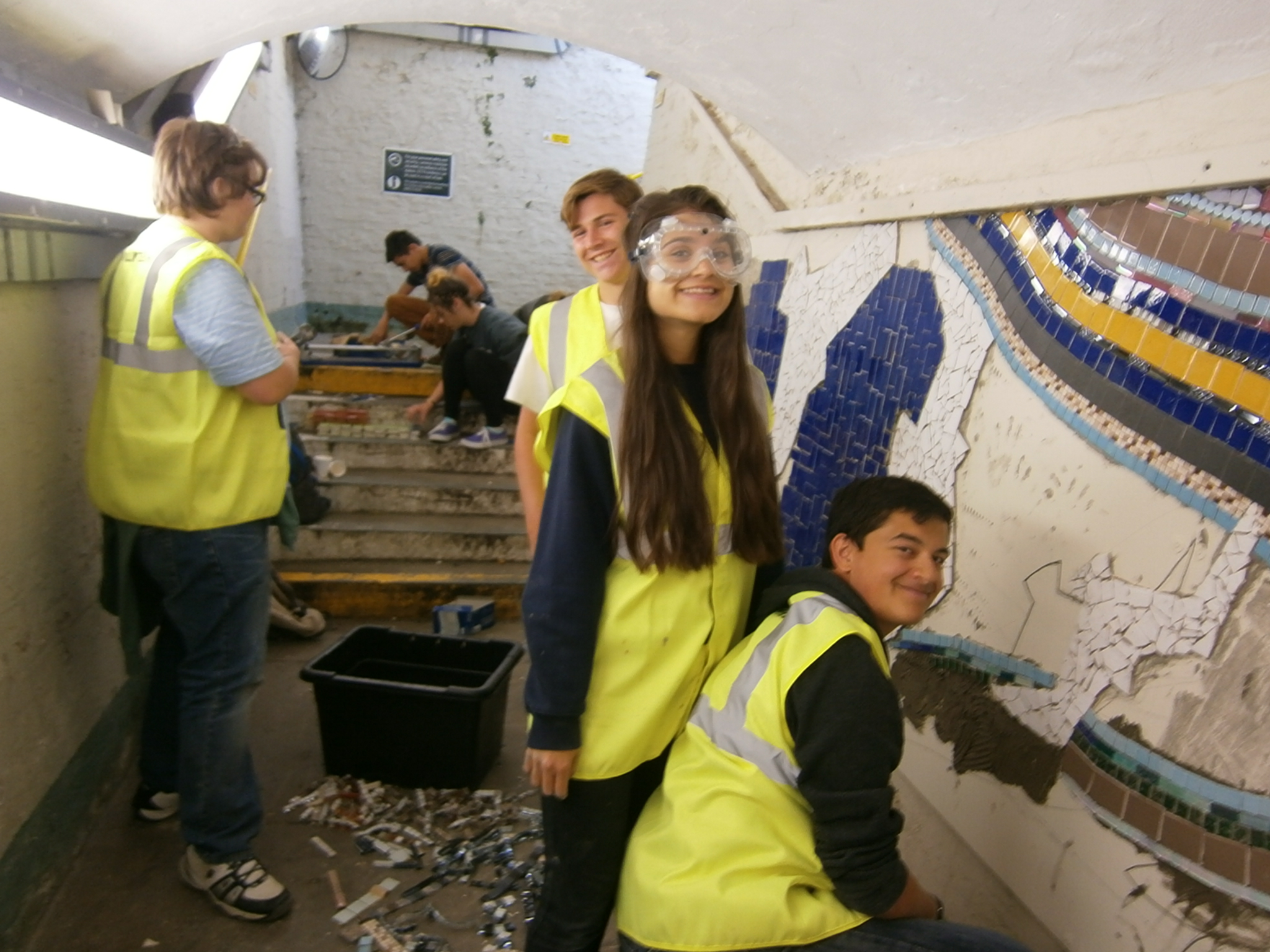
So I’m new to writing for the London Road Station Partnership blog- I guess that’s because this time last week I didn’t really know about the partnership. My name is Orla Byrne, and I’m one of the 12 young volunteers currently working at the station for the duration of this week as part of a summer course that we’ve been participating in- the National Citizen Service- and in partnership with Albion in the Community.

When we got the chance to look at different projects in and around Brighton, and were asked to consider which one we most felt we could contribute to and make successful, the opportunity to paint a mural and revamp the station seemed to jump out of the page. The brief suggested an opportunity for creativity and a real sense of community, and having only been here for a day so far, we’ve not been let down.

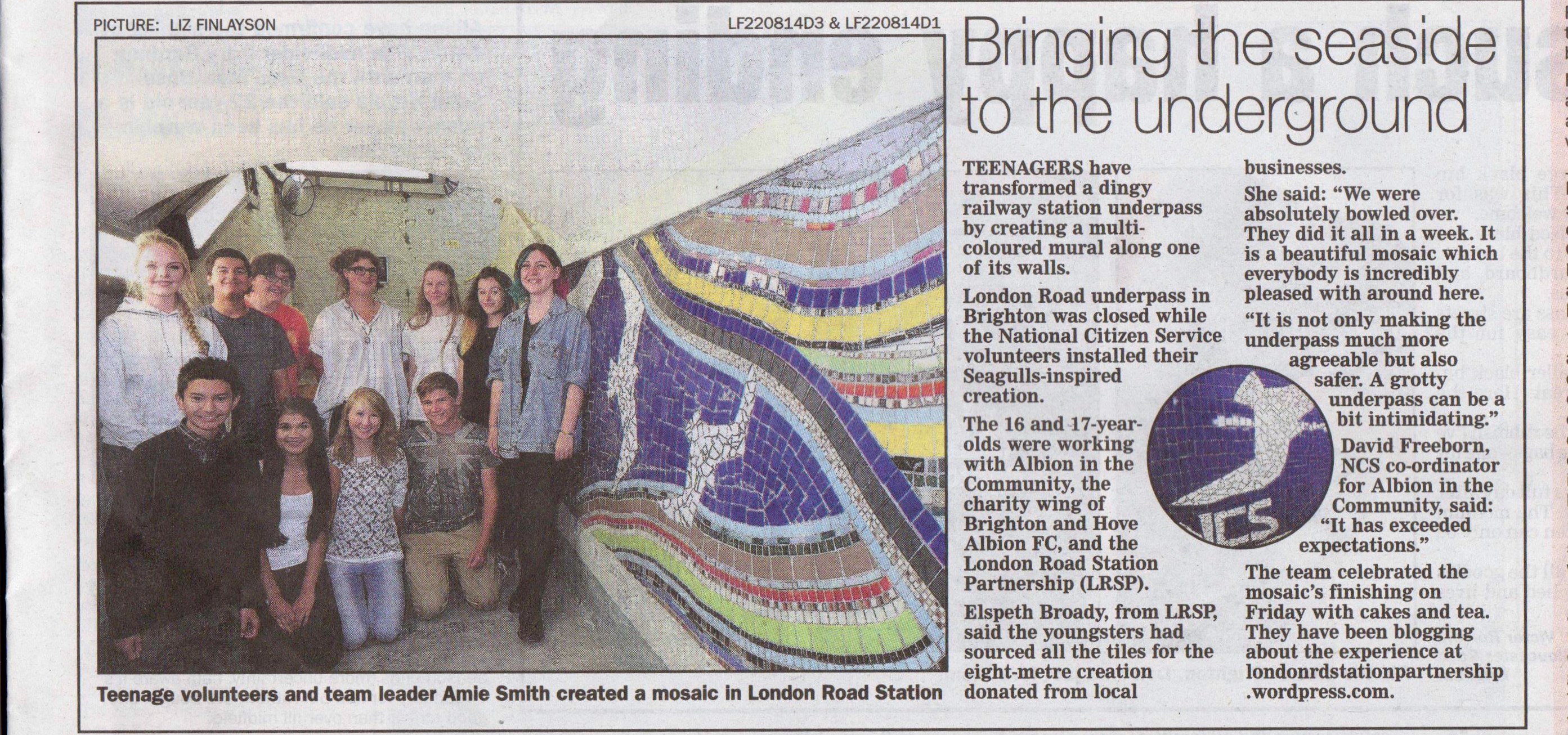
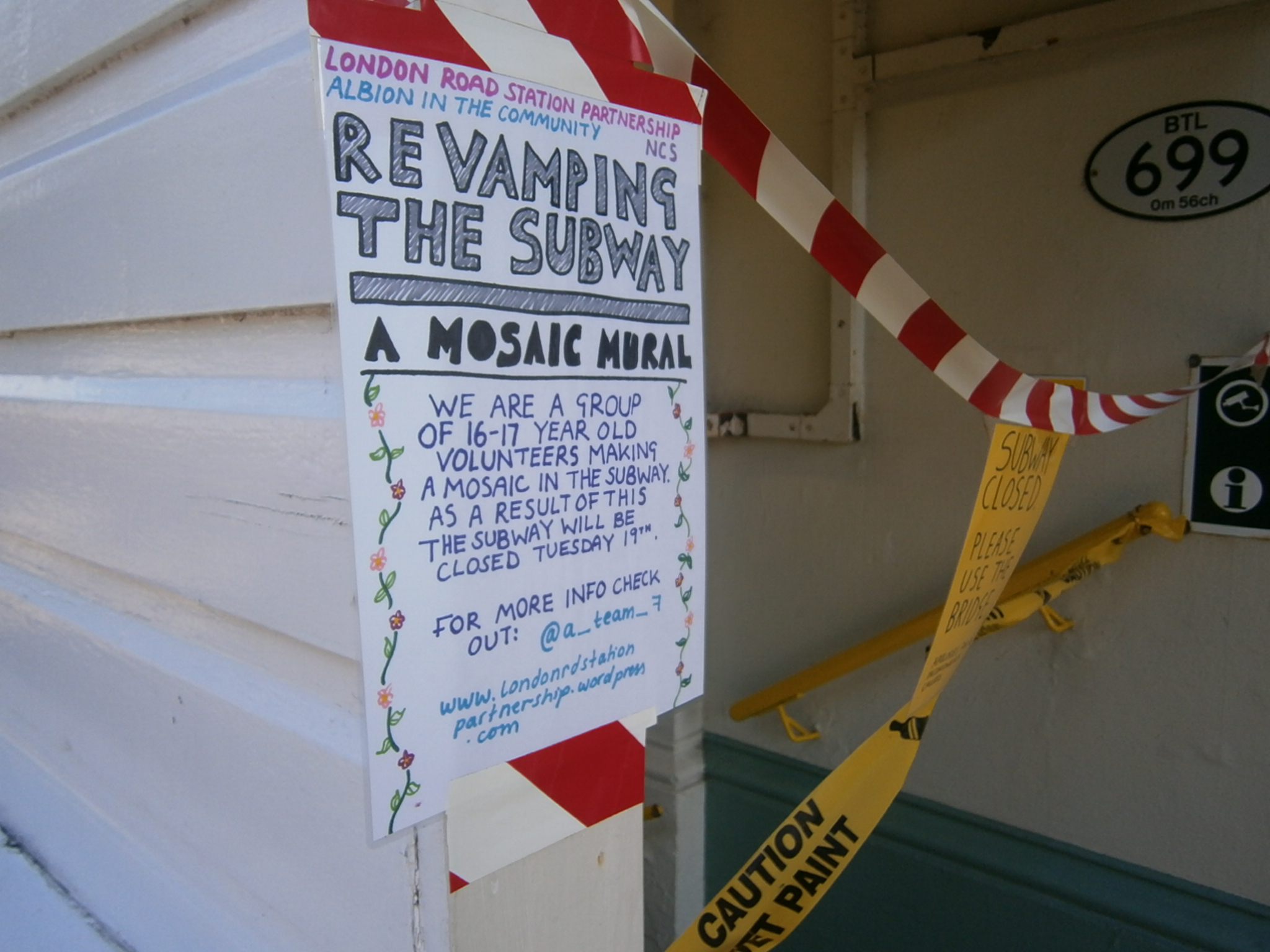
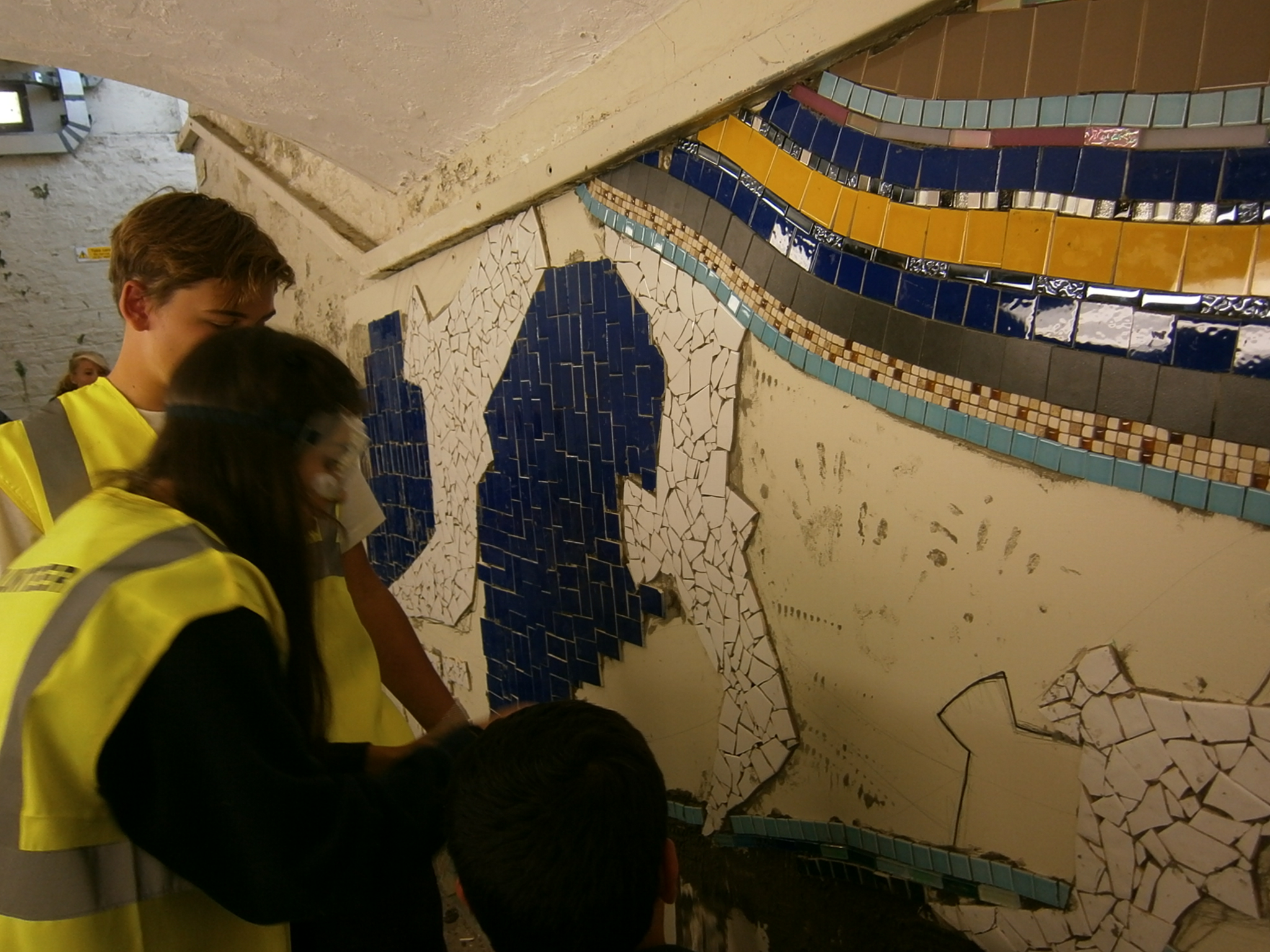
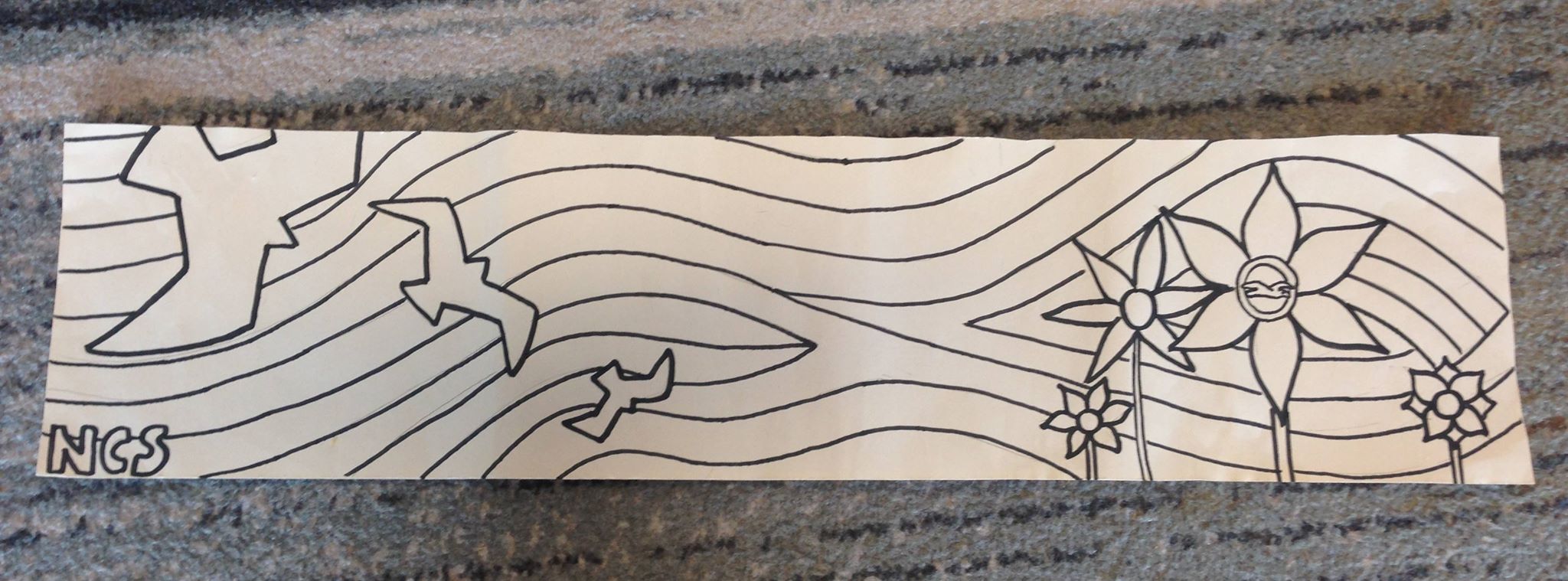
Our plan for the week is to create a mosaic mural in the subway at the station, and we feel that this will not only bring vibrancy to the previously drab area of the station, but also that the mural that we have designed will show the strong partnership which has been forged by the two organisations that made this opportunity possible for us- LRSP and Albion in the Community. The design, shown below, ties in the idea of seagulls and the logo of Brighton Albion with imagery of flowers and nature, now found around the station thanks to the work of LRSP, and the multi coloured wave background not only gives a bright and cheerful tone to the piece, but the waves echo an image often associated with Brighton as a city.

Mosaic Design

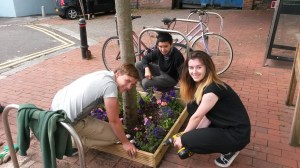
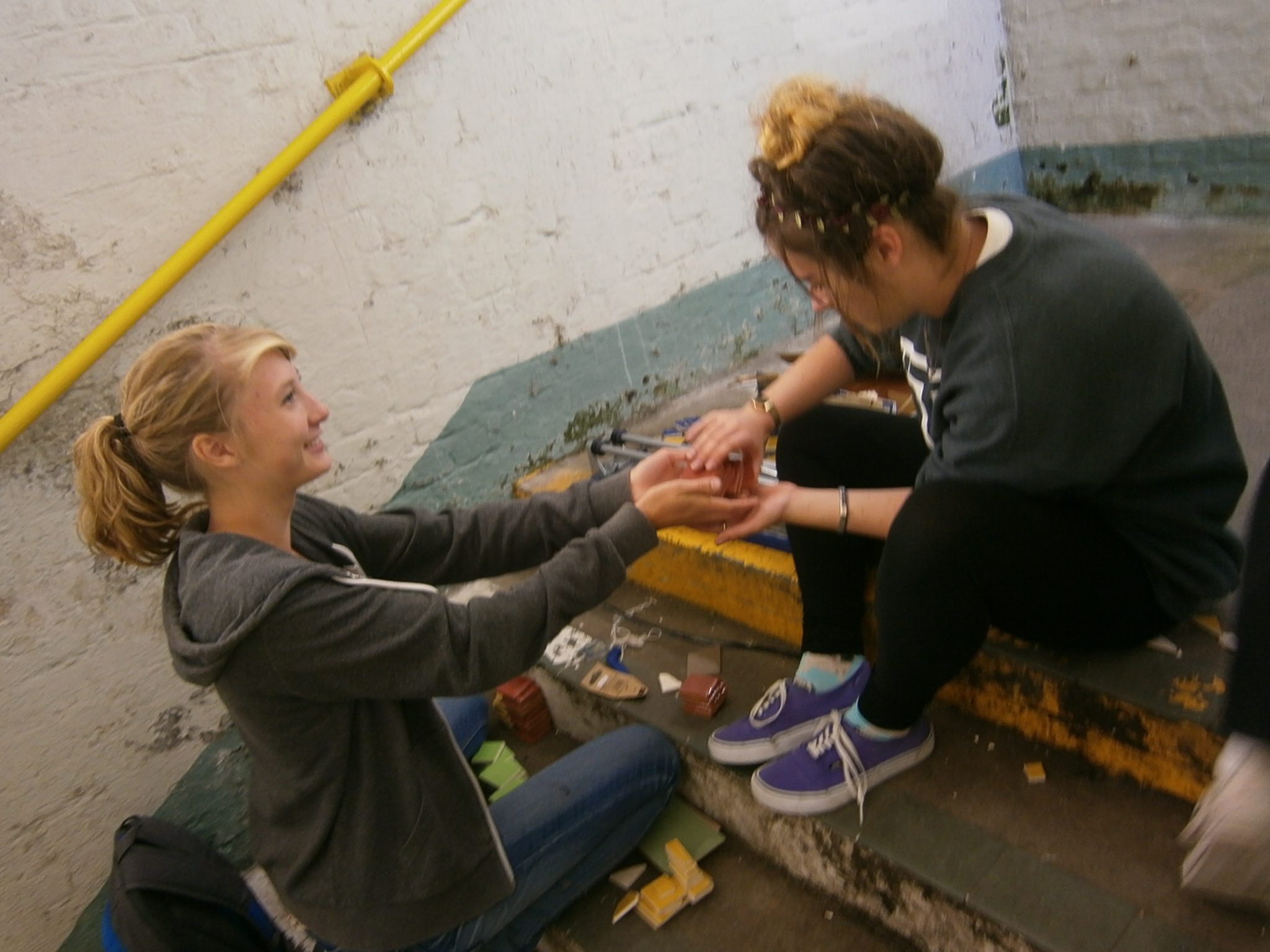
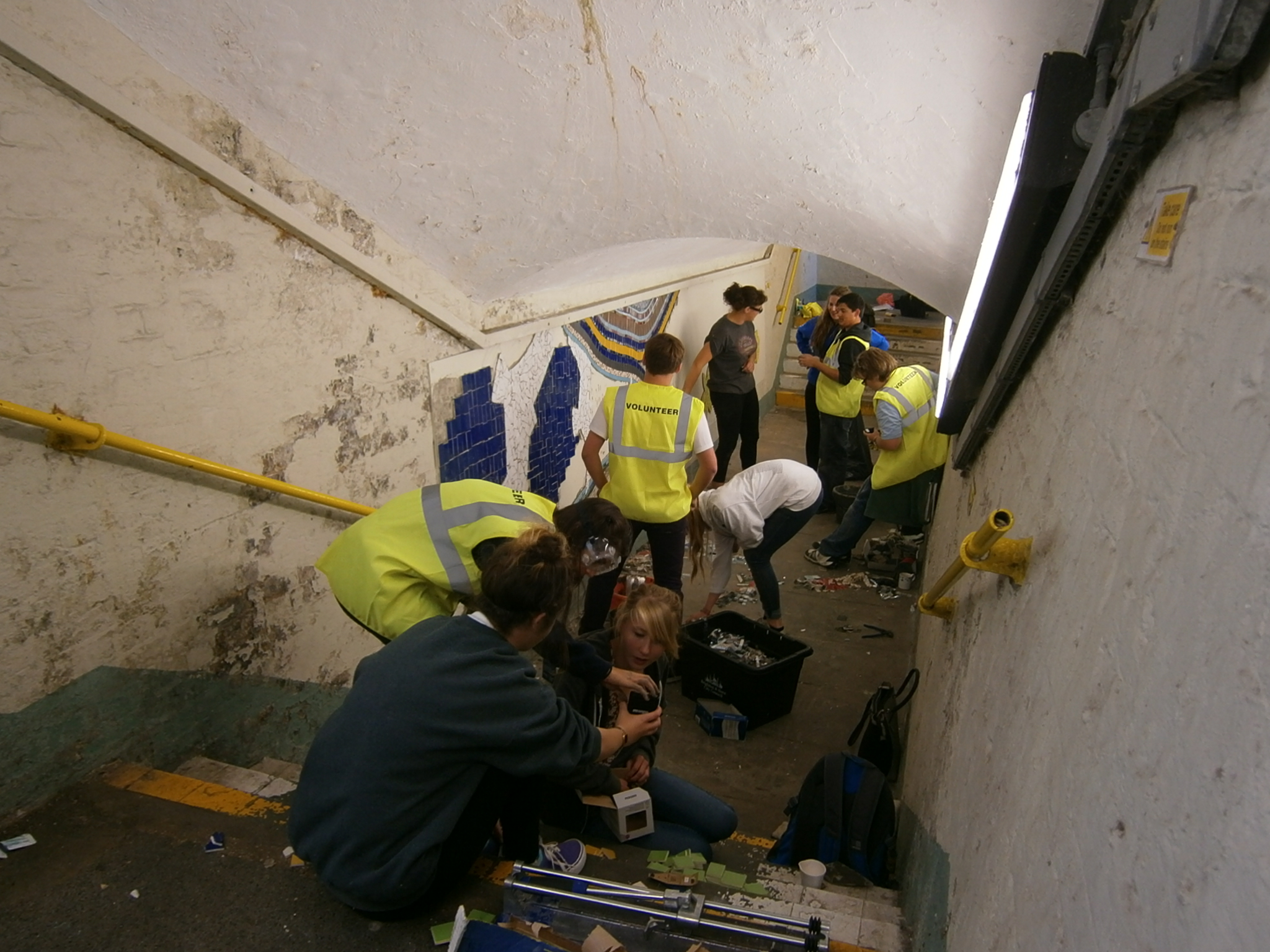
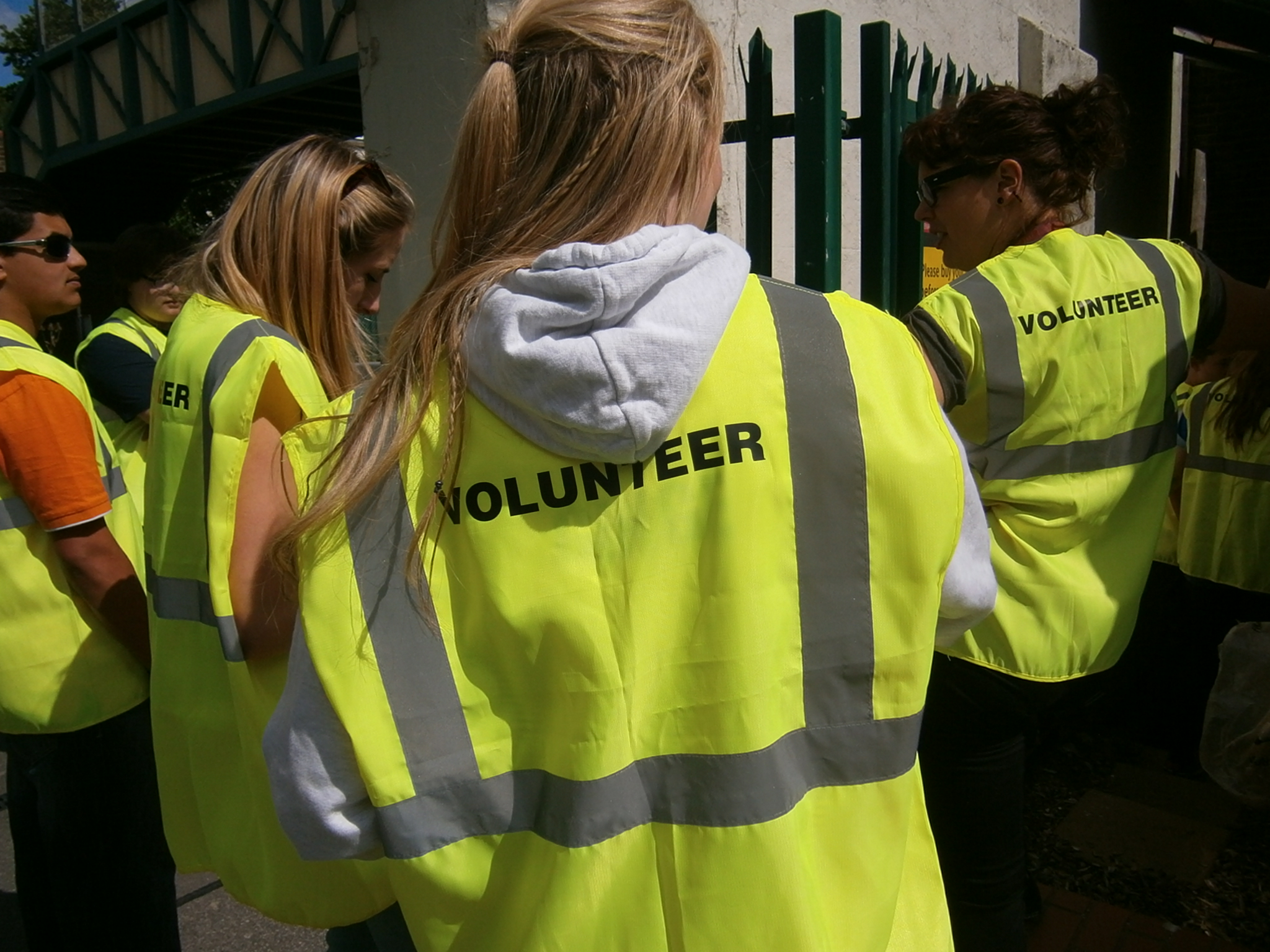
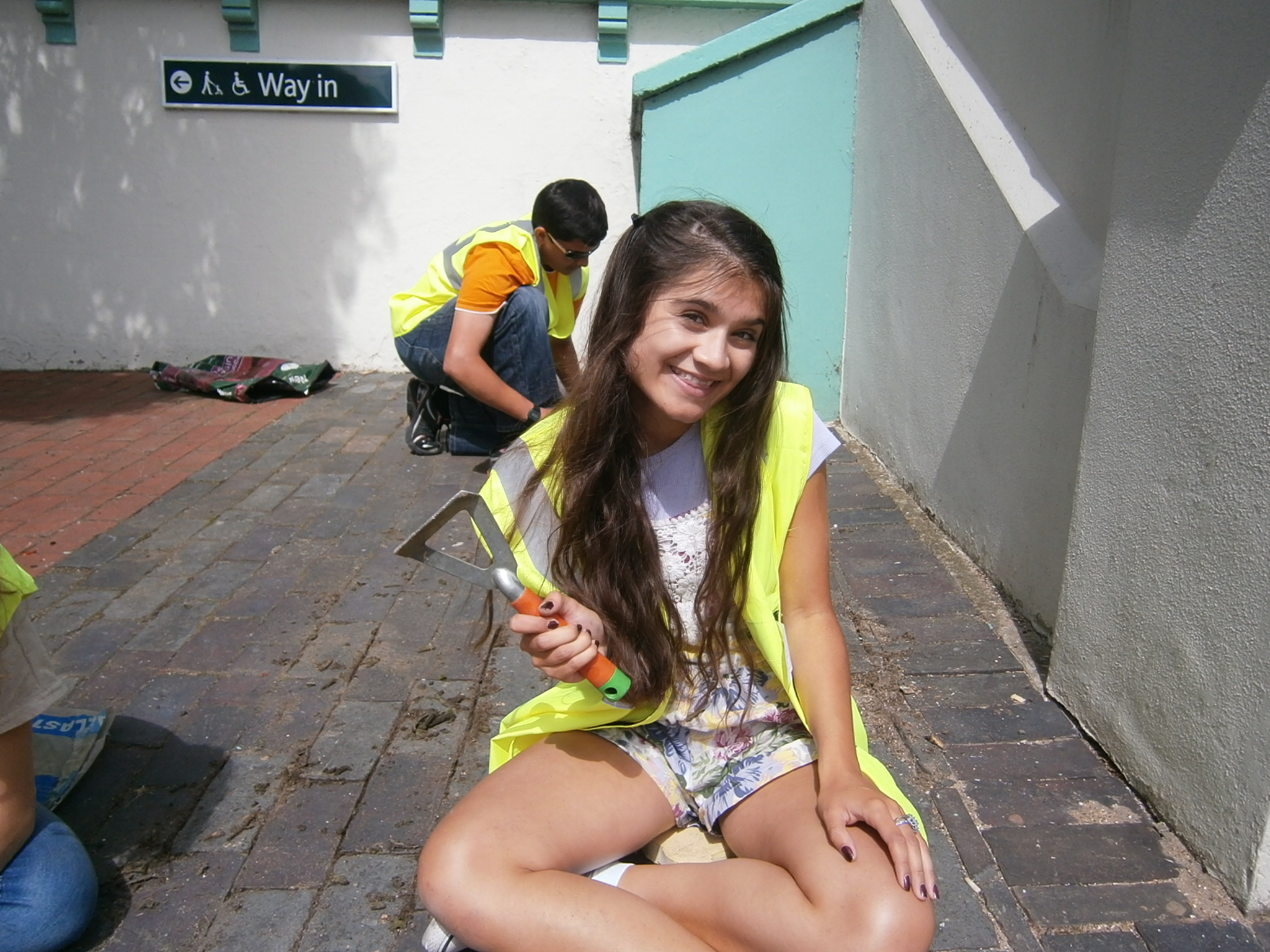
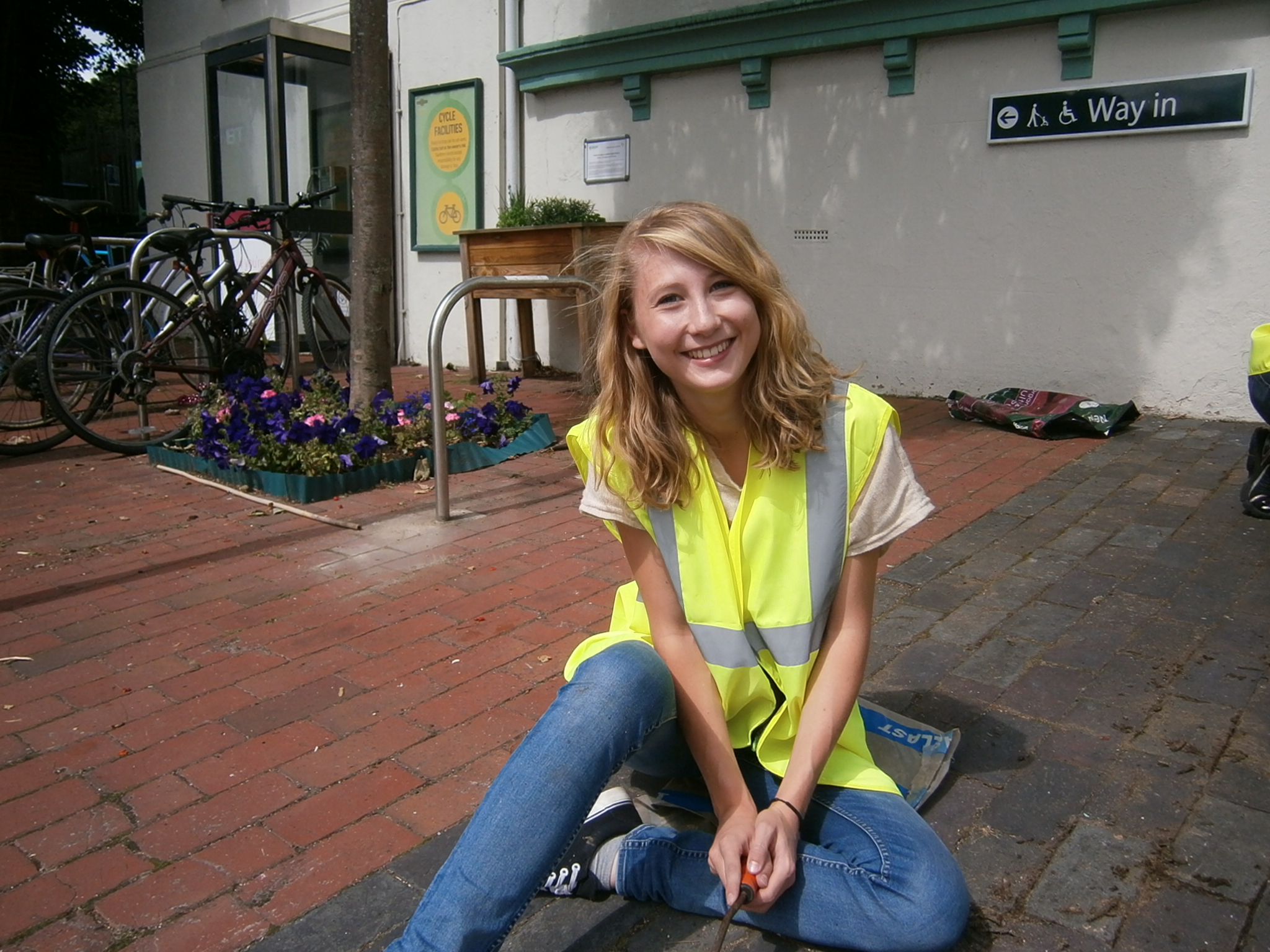
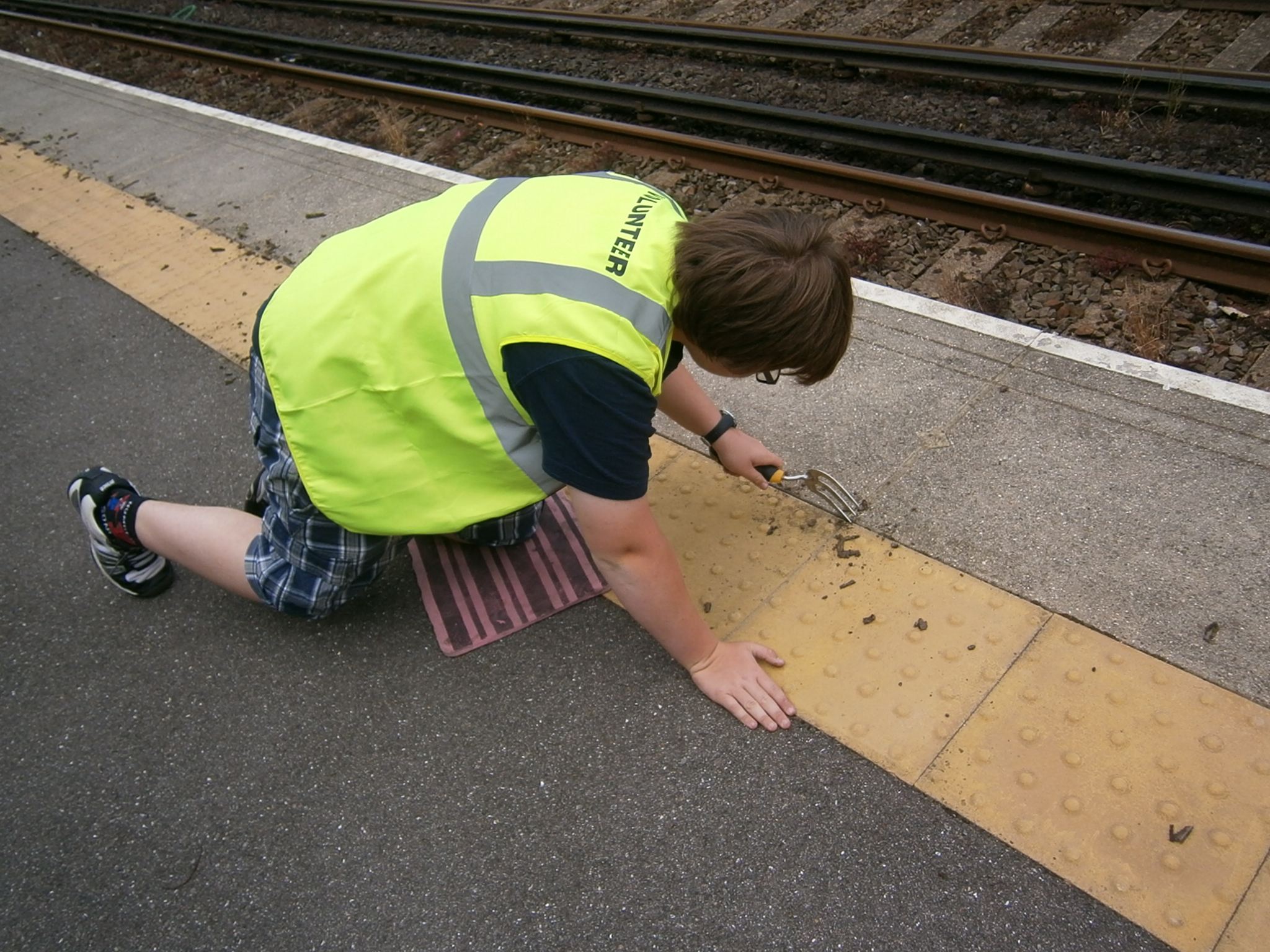
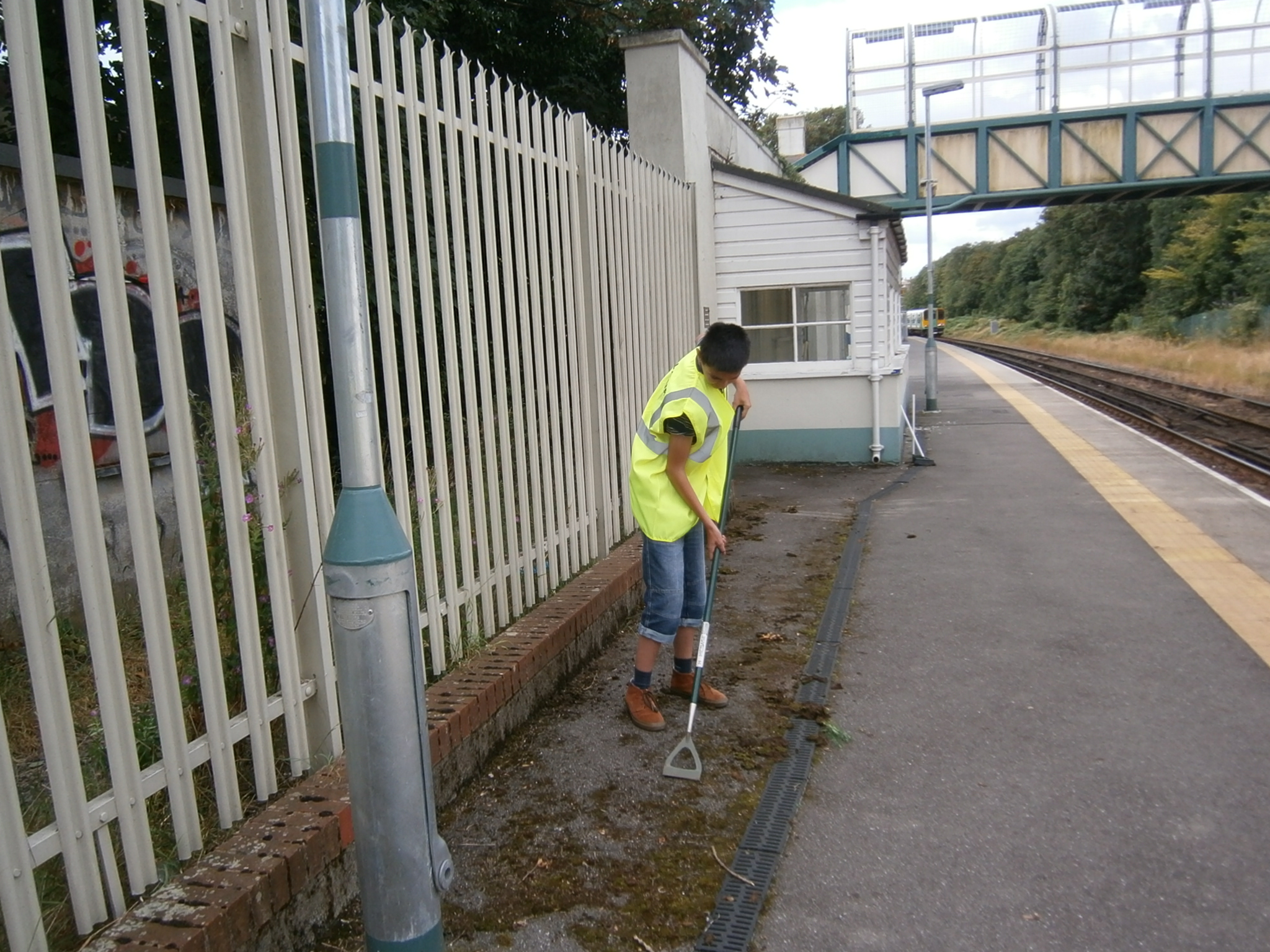
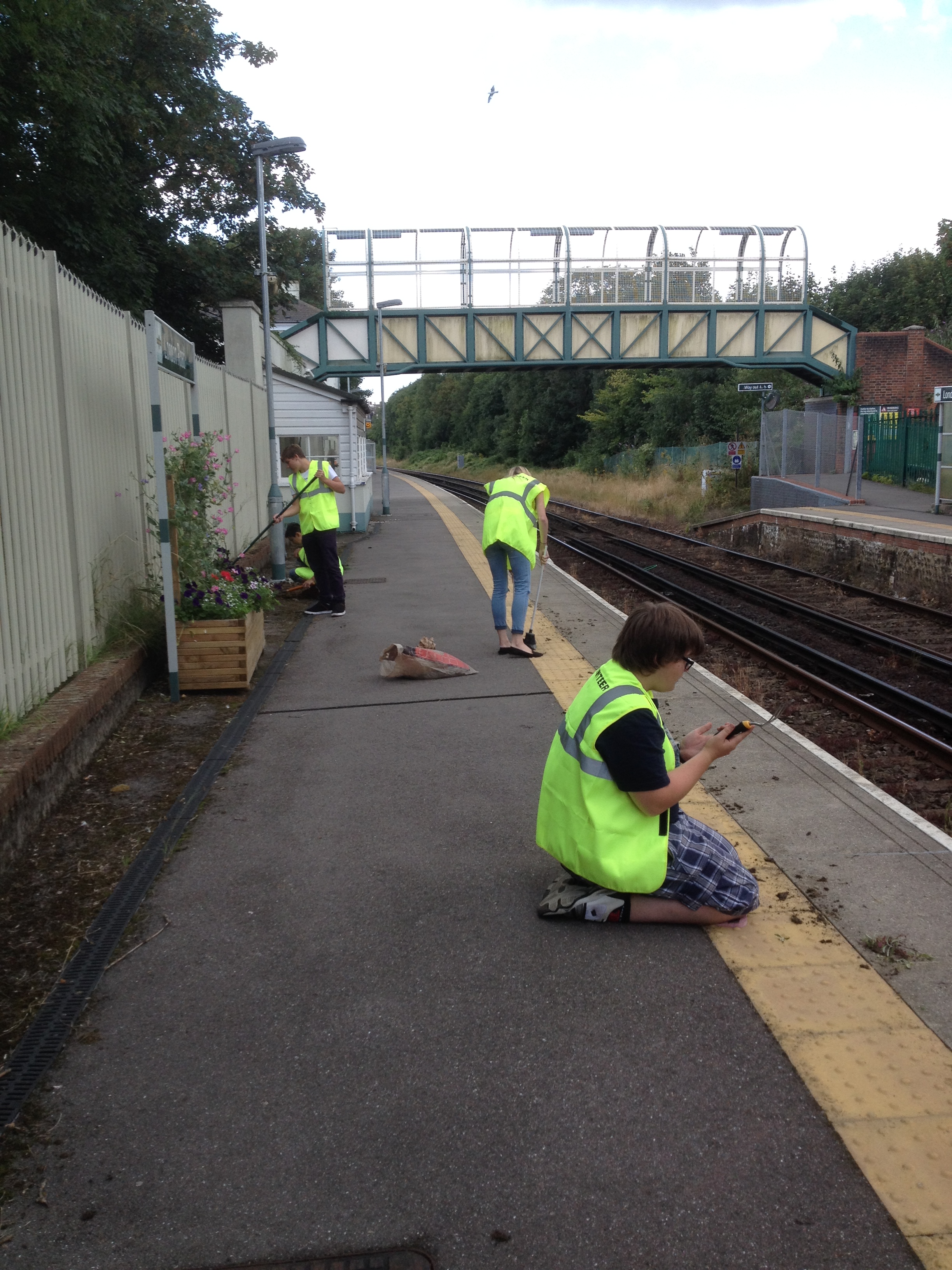
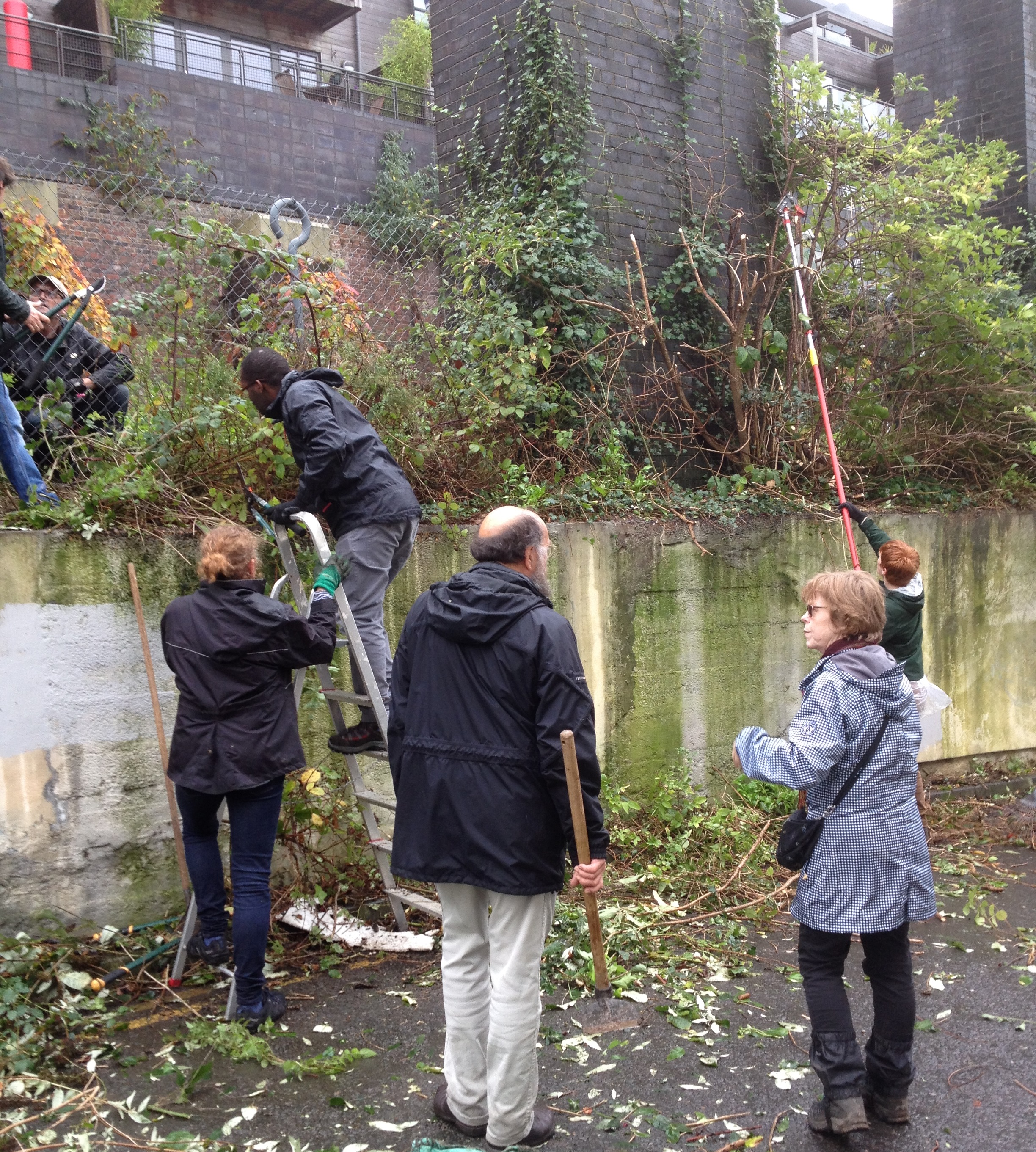
We arrived at the station today at midday, and set to work, all kitted up in our immensely trendy hi-visibility jackets. Our creative team- Izzy, Alice and Mairead- set to work with our team leader Amie to start transferring the outline of the mural onto the board that had been mounted in the subway, whilst the rest of the group grabbed our hoes and trowels and set to work weeding the station platforms and the area at the front of the station.

The time seemed to fly by, but as we finished our work and were able to admire a clearer and more aesthetically pleasing environment the design had been transferred onto the wall, and we came together to discuss our plans for the Big Mosaic Day- tomorrow!

;;;All set with our volunteer jackets Marie weeding the front Emily weeding the front Matt weeding the platform Jack with a hoe

As well as writing this blog daily for the duration of the project, as part of the external communication role in my team, we’ve set up a twitter account! We’re hoping that this will spread word of the work we are doing, so the local and wider community can be fully aware of what (and why) we are doing, and fully benefit from our project. This also means that people who are invested in our project being a success can watch our work as it progresses and I document it in real time.

@a_team_7

is the place to be for updates and pictures of our project as it grows throughout the week, and also if you want to ask the team questions about our project.

So, thanks for reading, and I hope that you follow this project throughout the week, both on twitter and here on the LRSP blog as I write about the work we are doing, as we do it!

Posted in Uncategorized | Leave a comment

More happening … NCS volunteers make a start

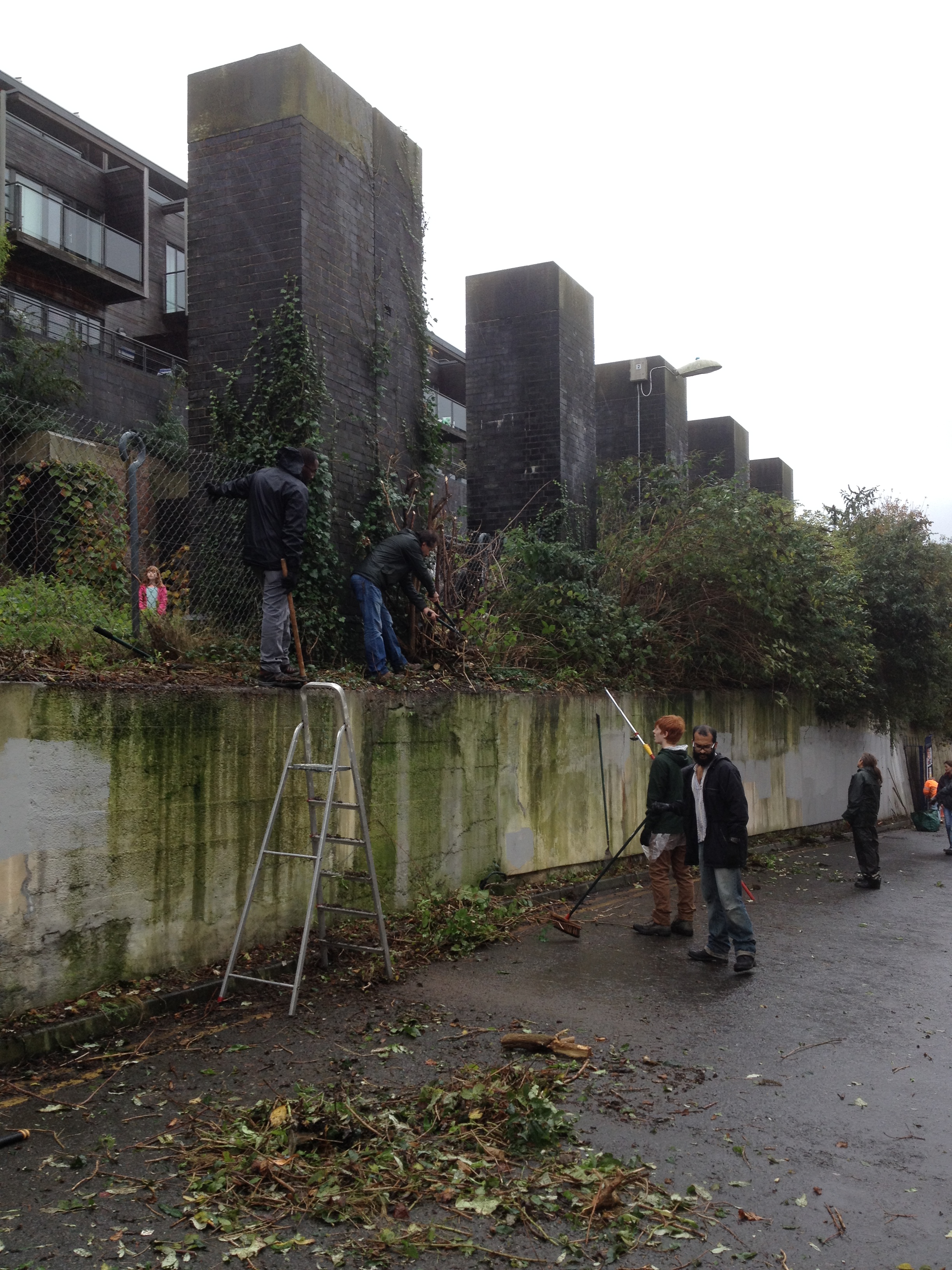
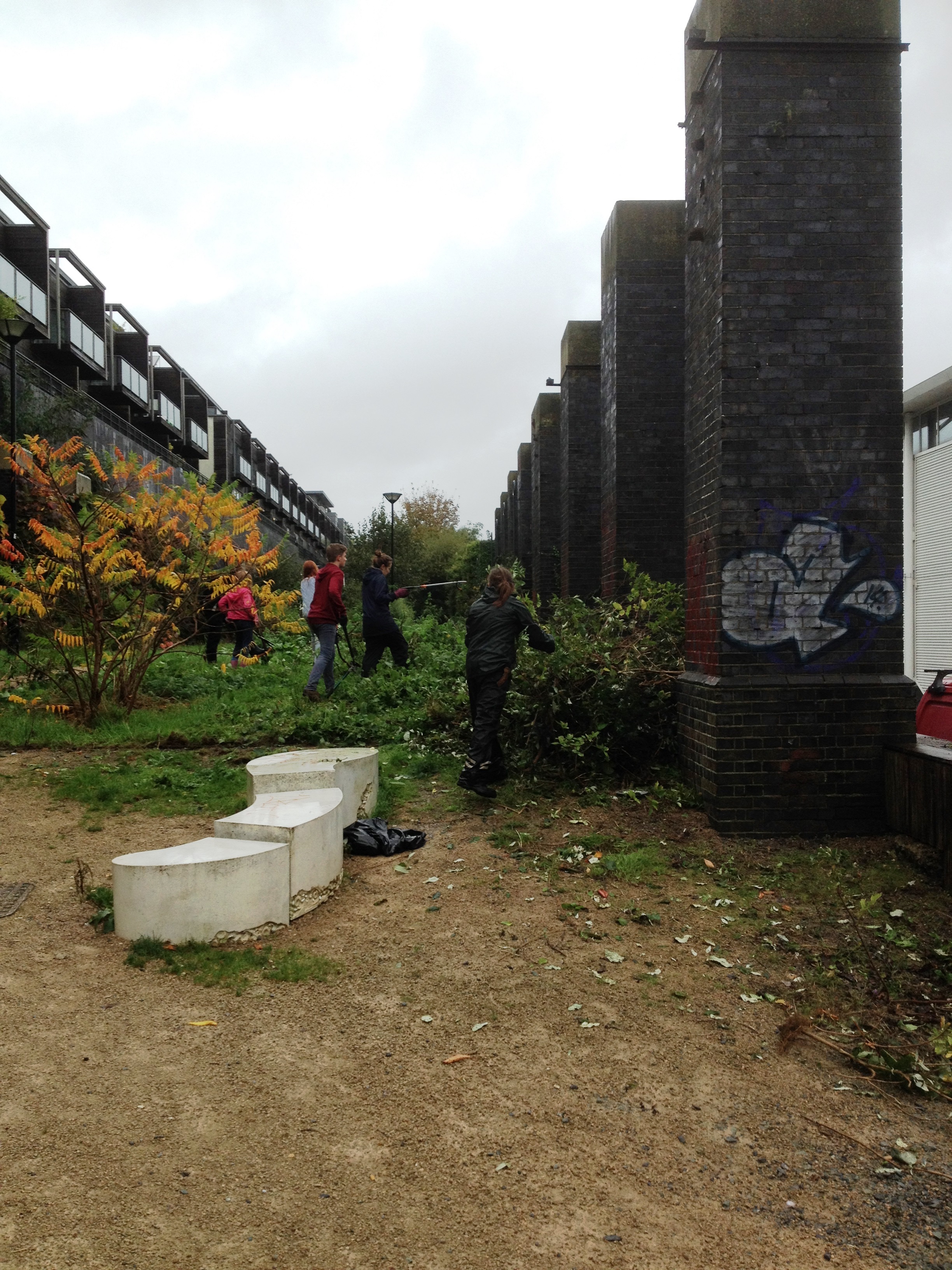
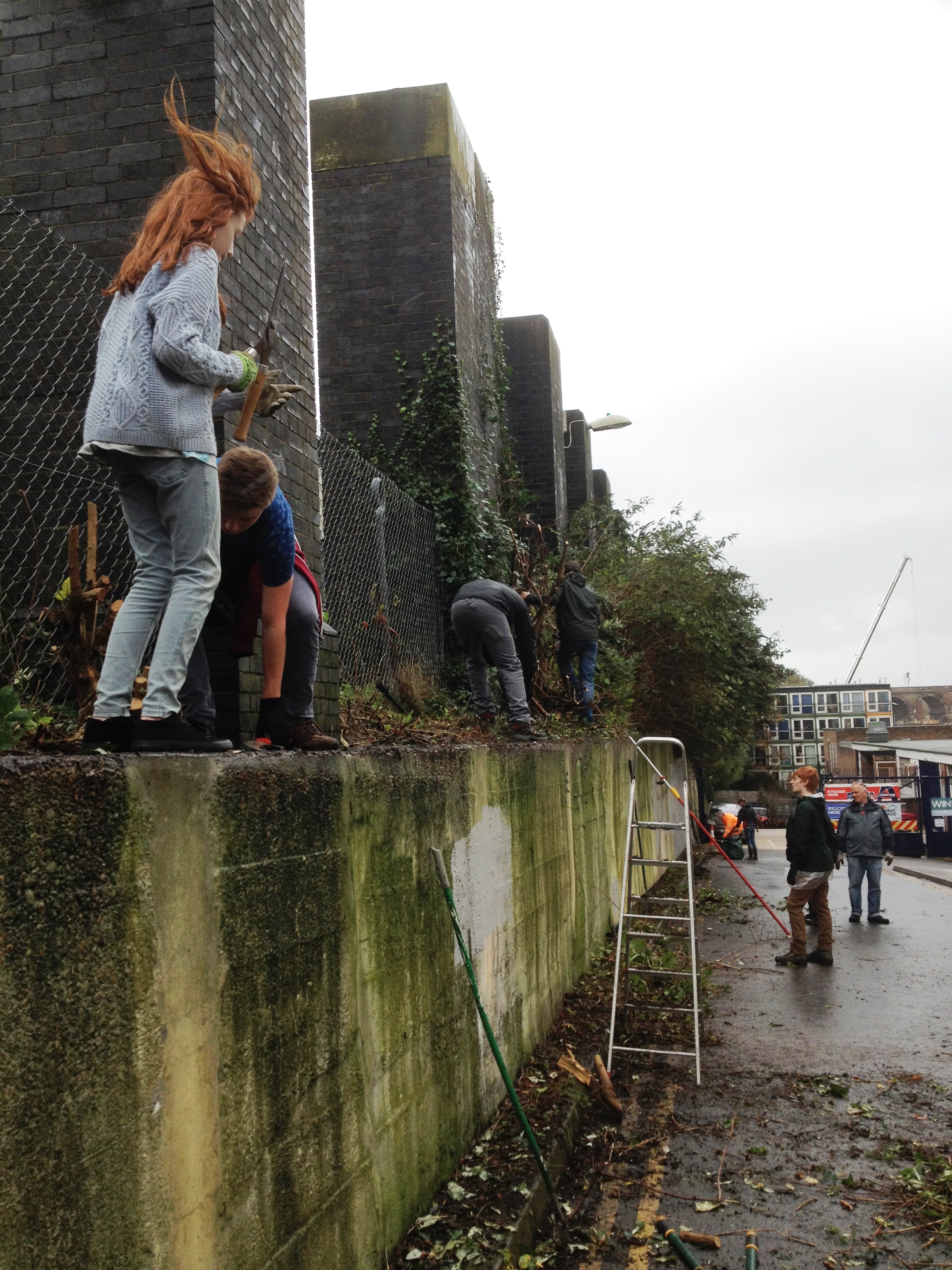
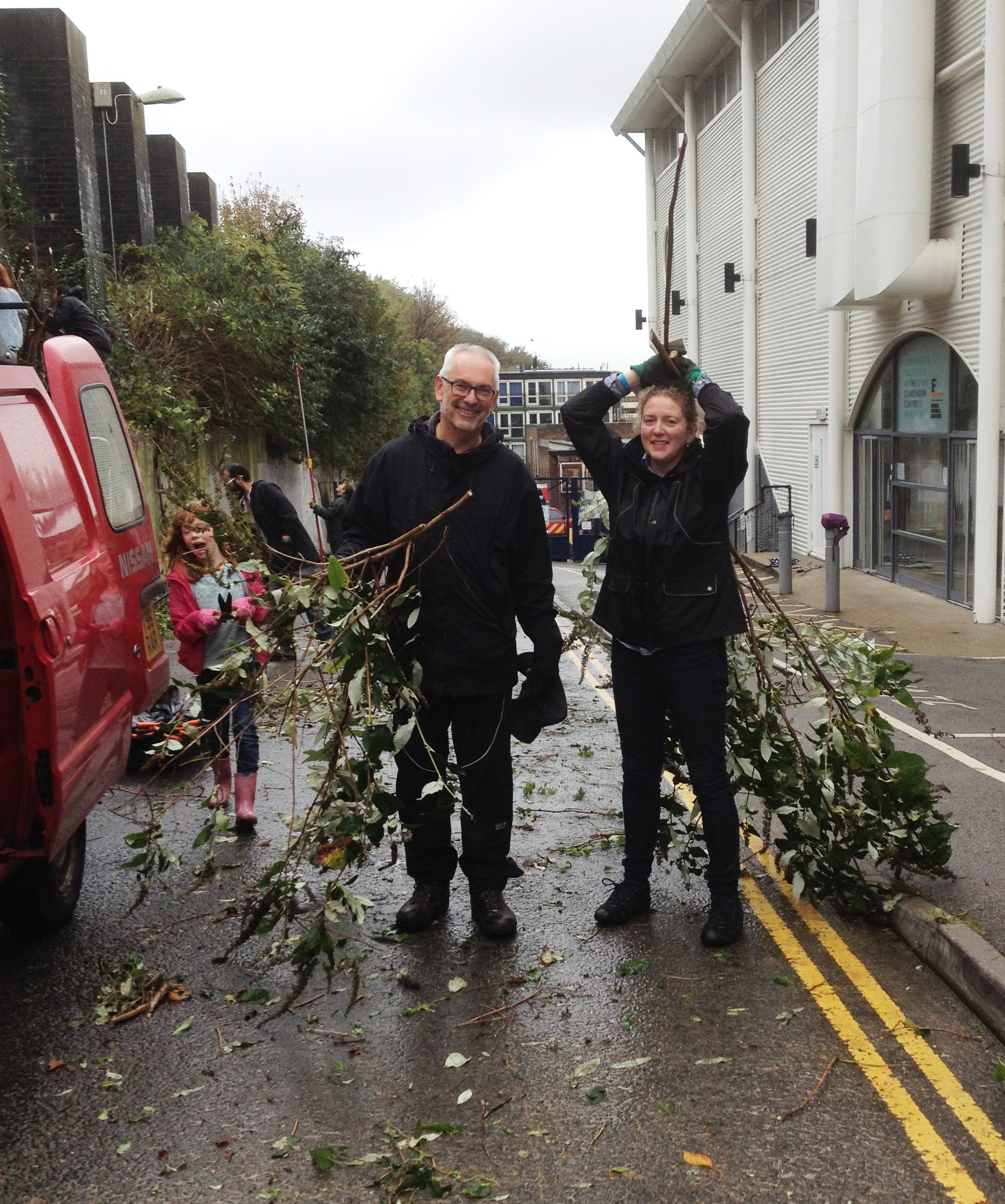
NCS weeding 2A great group of National Citizens Service volunteers started today at London Road Station. The ceramic mural will gradually take shape in the underpass, but today was mostly a day for clearing around the station and getting to grips with hoes (a few giggles here), the large broom, trowels and dustpan and brush. The group are going to write a guest blog for every day of their work here at London Road Station.

NCS with broom 1

Posted in Uncategorized | Leave a comment

The awaited and the unexpected

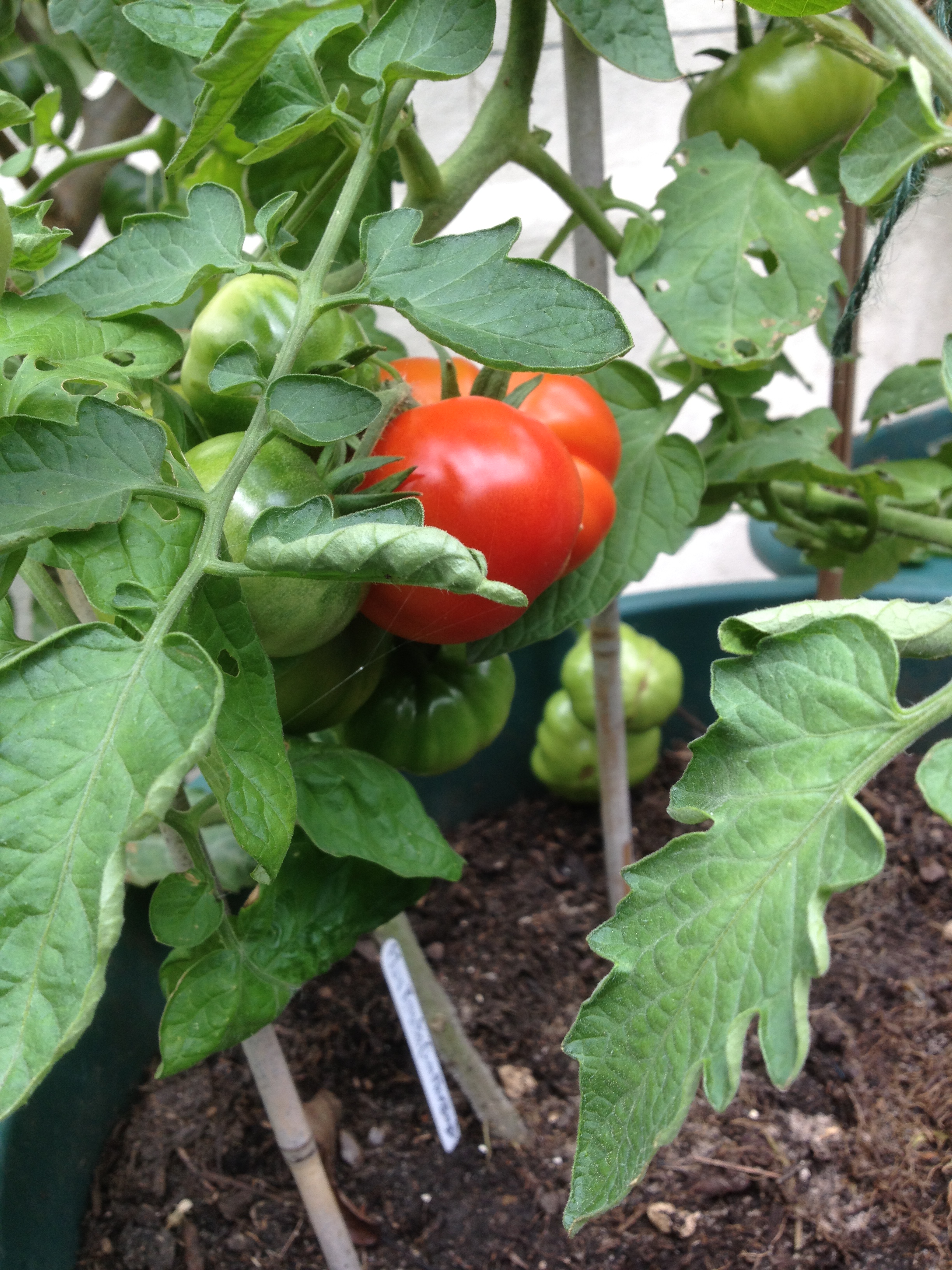
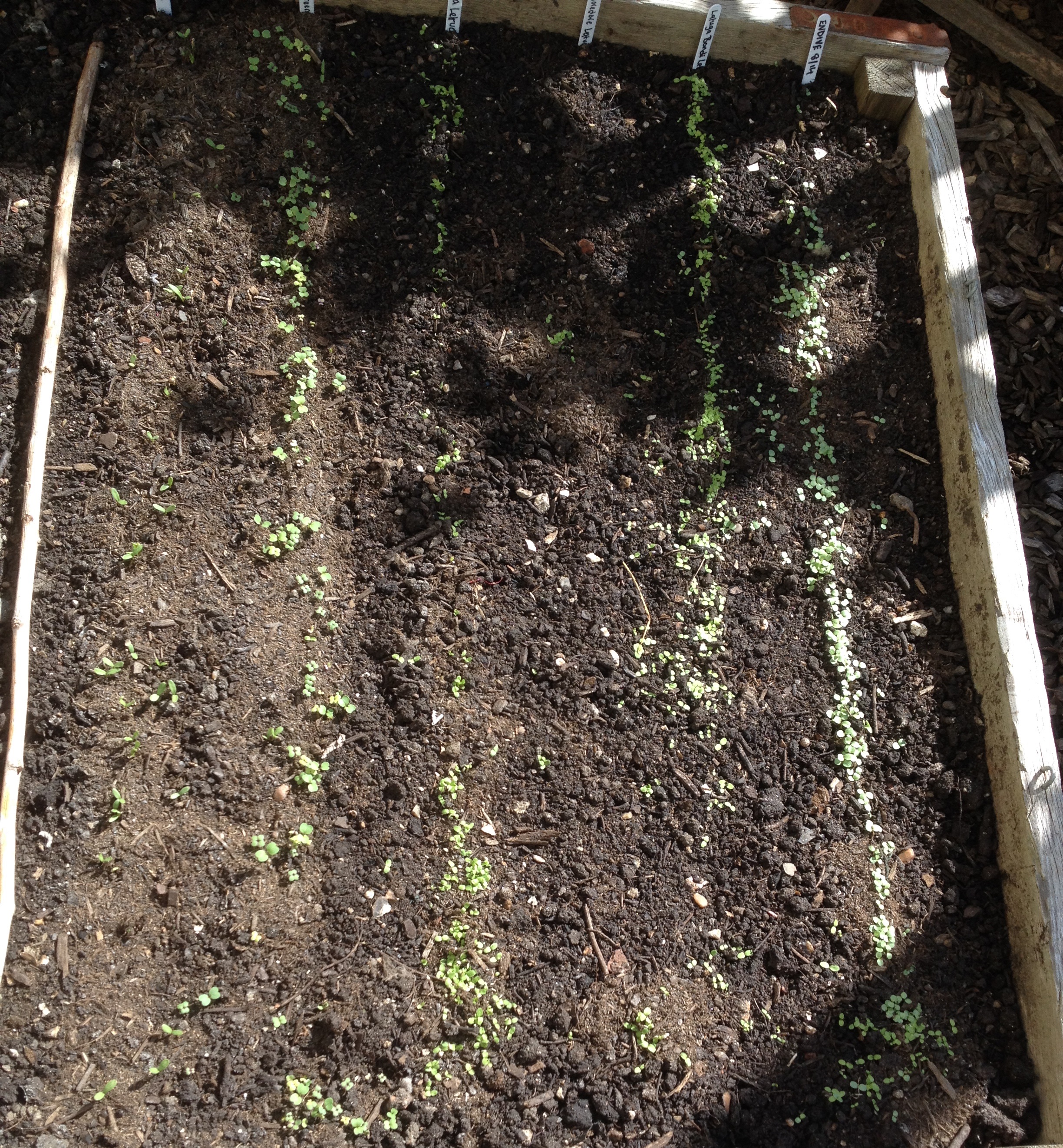
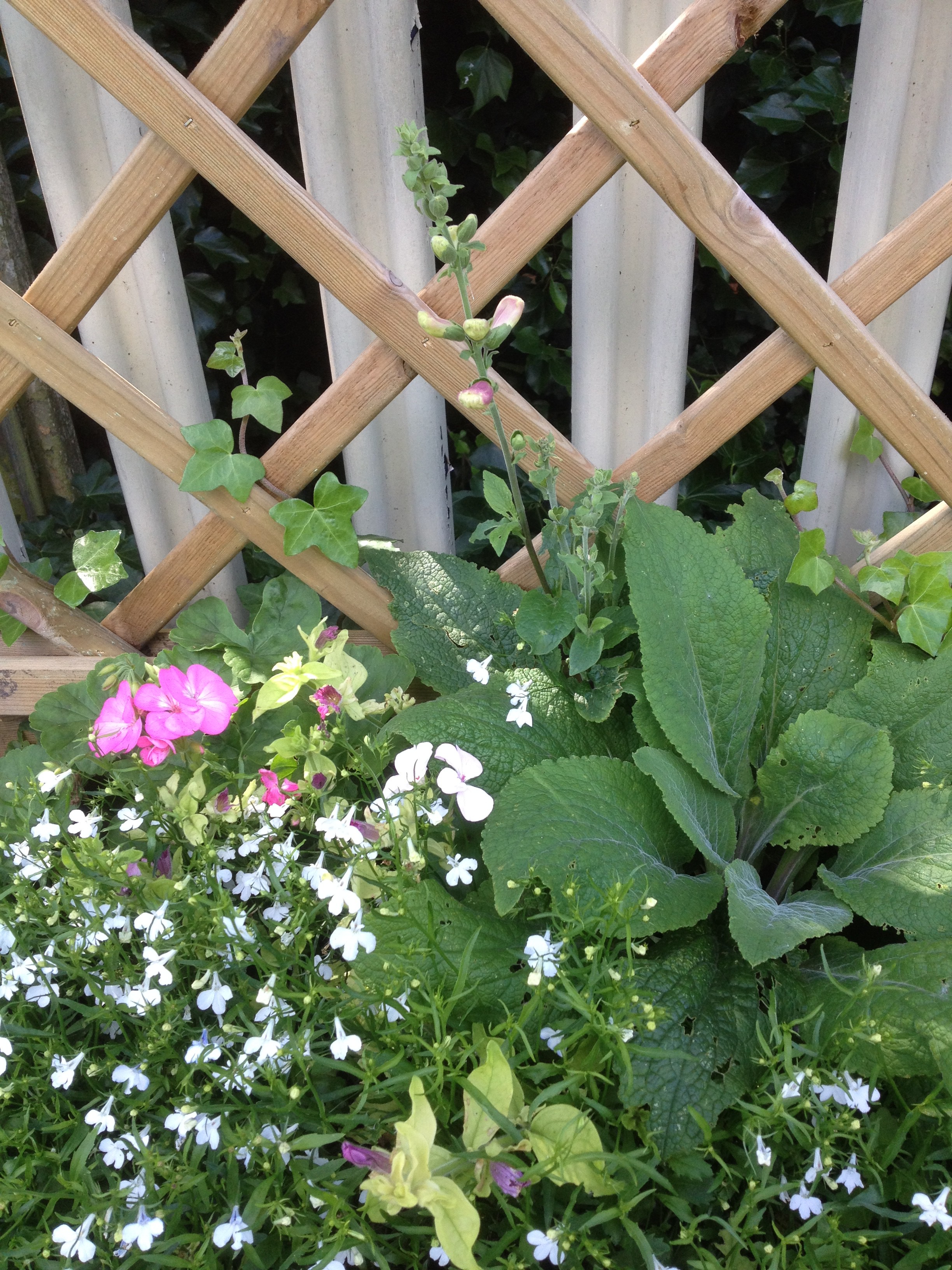
IMG_0728 Great day – bright blue sky, fresh and airy, it was bliss being out in the garden. The high winds have died down. After more rain, things are happening everywhere. Last week’s lettuce seeds have germinated, the cavalo nero is looking refreshed and plentiful (and de-caterpillared), our tomatoes are starting to turn red and the foxglove in the south platform planter finally has a flower on it!

These are all things that we have been waiting for – well, actually, the germination of the seeds in under a week is rather unexpected, but seeing those tiny green Seeds 8.14shoots appear is always magical. We’ll need to defend now from the slugs and snails who are back with a vengeance now the soil is moist.

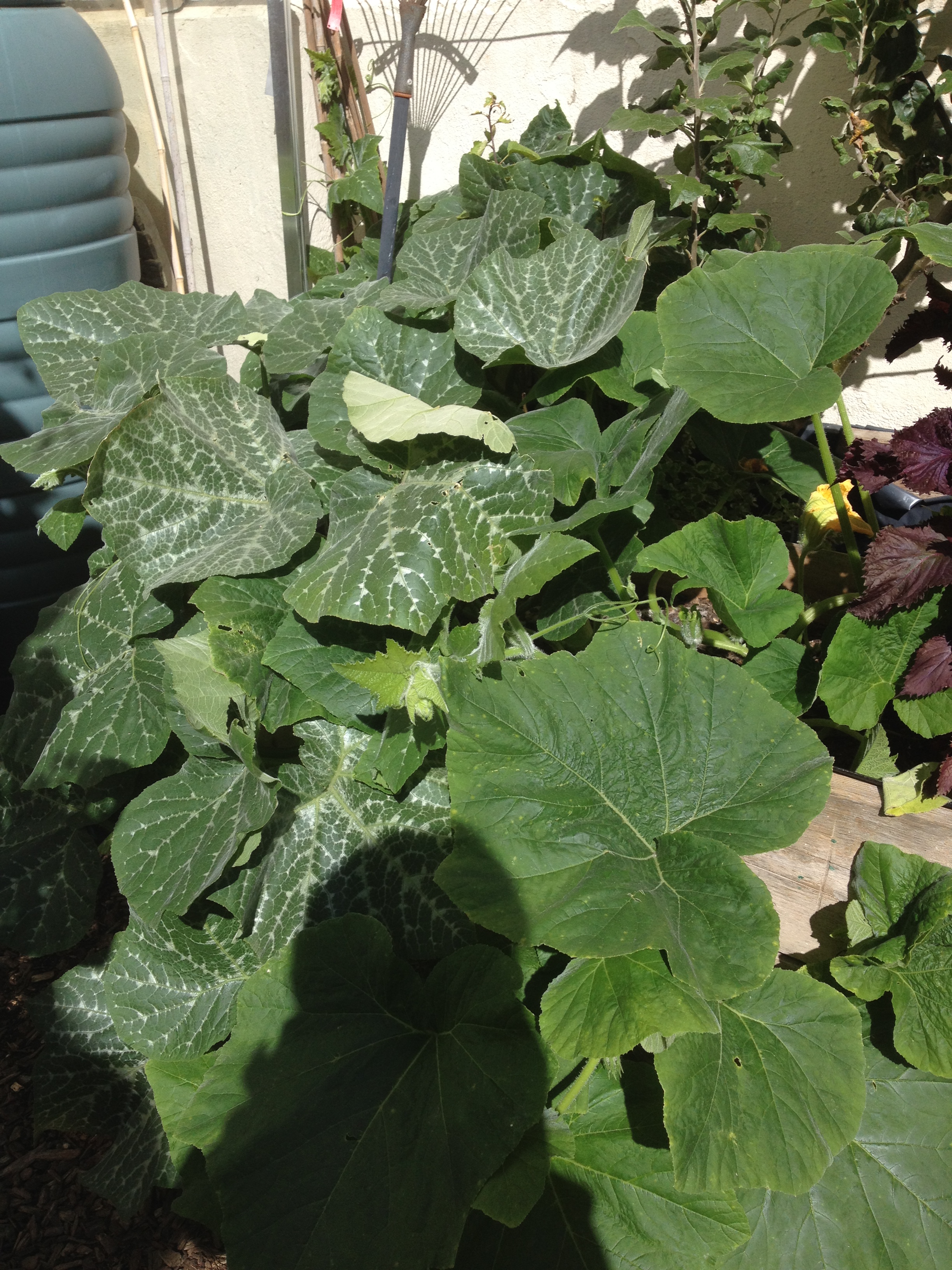
And there are more unexpected things happening. Somewhere (probably from the compost) we’ve ended up with two massive squash plants growing in the far corner of the orchard bed. They are starting to engulf the area where we store canes and some long-handled tools. Maire said last week that most of the flowers look like ‘male’ ones, with long stalks Mad squash 8.14but no fruit: we need some females with little tiny fruits behind the flowers. Will we ever get them, or are these creatures simply rampaging through the plot with little benefit (apart from draping themselves lushly over the raised bed)? Advice from Weekend Gardener suggests that female flowers come after the male. Once we get them, we can encourage pollination.

And we have a return of another unexpected guest: coriander is again growing in the tree pit. We all find this wonderful herb hard to grow, but hey – there it is, in among the lobelia and petunias. I really don’t know where it is coming from. Did we drop coriander seeds here last year? Yet more proof of the serendipity of gardening.

The rogue coriander again 8.14

Spot the coriander

Platplant south foxglove 8.14

Buds finally on foxglove


Posted in Edible growing | Leave a comment

After the storm

We’ve had wonderfully hot weather this summer but inevitably rising the to usual English summer climax of storms. We’ve just recovered from the weekend of very heavy rain (yippee!) and high winds (boo …) and temperatures now are significantly lower – under 20C. The water butts are full and the plants are not gasping anymore.

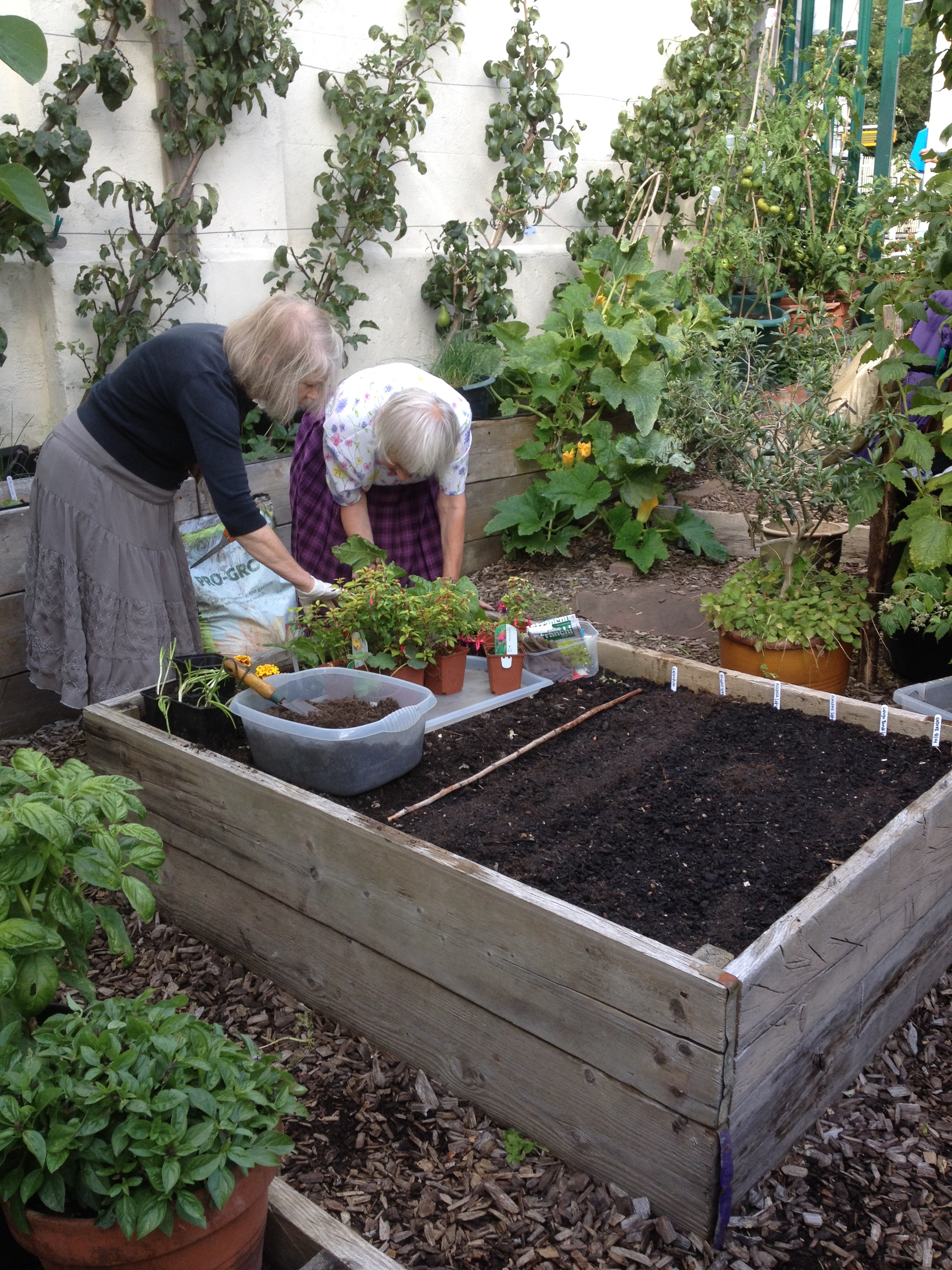
IMG_0715We had a great work session yesterday – probably for two reasons: 1) Sara made the massive courgette she took home last week into the most delicious courgette cake for this week’s work session, and 2) we didn’t have to spend the whole afternoon hefting loaded watering cans about the station. And 3) we put in seeds.

Daphne and Marlene at our new seed bed while Sara tends the tomato plants

Daphne and Marlene at our new seed bed while Sara tends the tomato plants

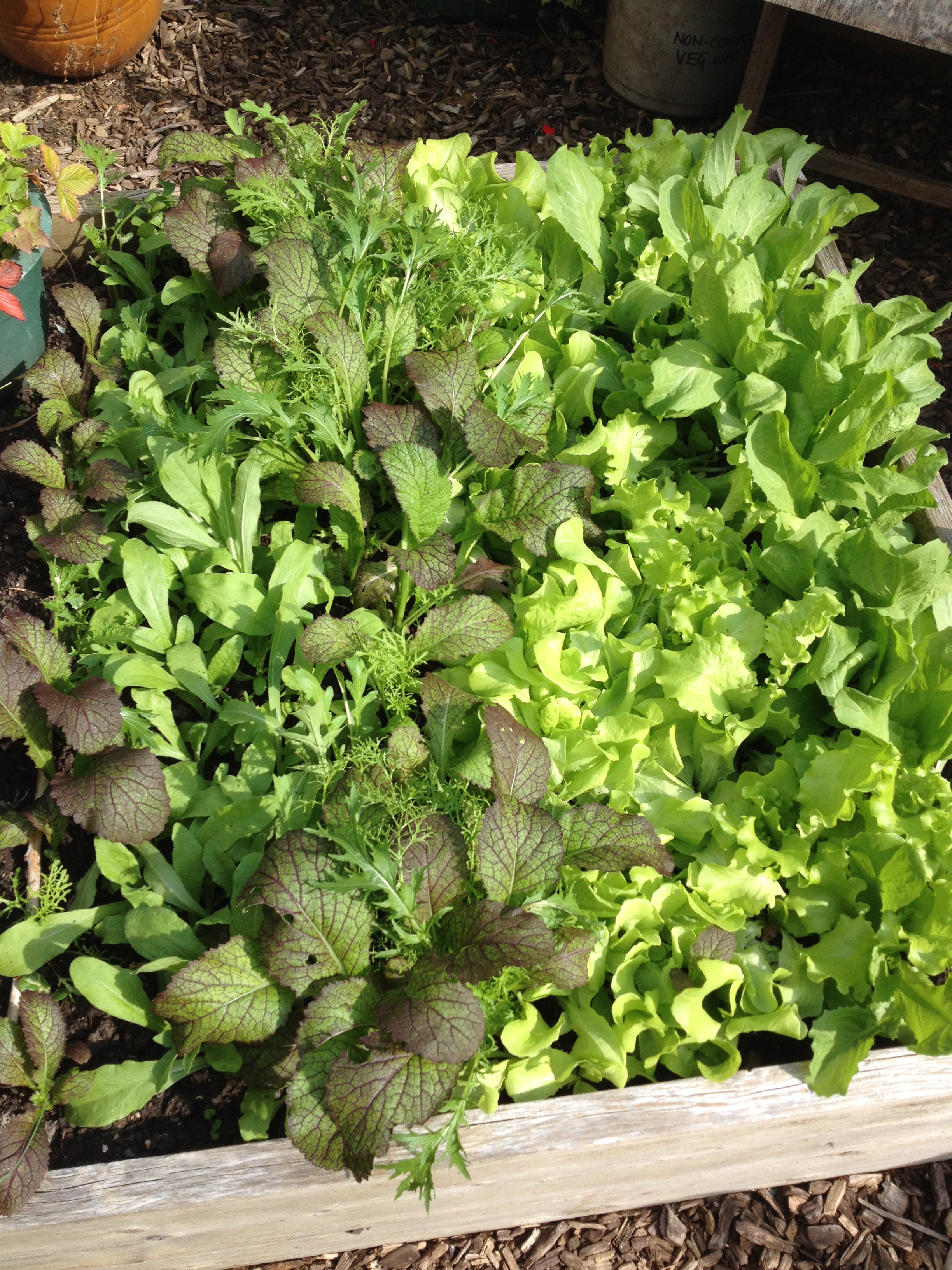
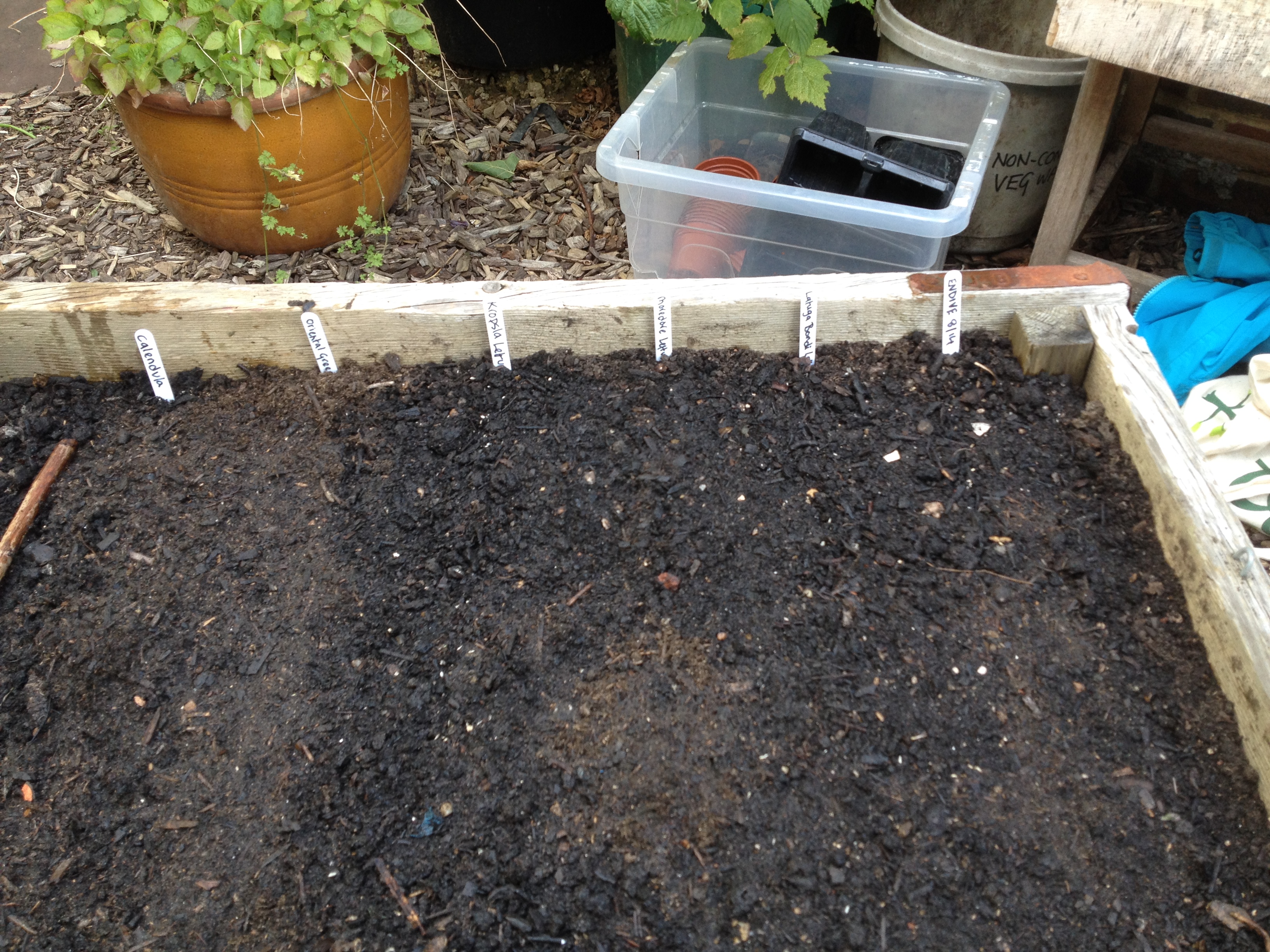
We’ve cleared the chard, improved the soil with Veolia’s soil enhancer and nature has lavished it with rain. The soil is good and crumbly, and still lovely and warm. We’ve sown mostly leaf seeds: from right to left – curly endive, Italian Bondi lettuce, red ‘Mordore’ lettuce, ‘Kopsla’ lettuce, oriental greens and then a row of calendula. We’ll see what comes up. The curly leaves and the oriental leaves tend to be very robust. We may even be able to overwinter them.

I also managed to do some work on the shady triangle, clearing branches and sycamore leaves and ‘parachute’ seeds.

The new heuchera and fuchsias are looking lovely in the central area, and I found space for the lovely lime-leaved fuchsias which a neighbour, David in Stanley Road, had brought back to life after they’d been abandoned by a garden centre.

David had passed by while we were working at Preston Circus planters a couple of weeks ago, and kindly offered us some of his many cast-off fuchsias. He had a wonderful back garden with a tropical feel, full of rescued and foraged plants – quite an inspiration!


Posted in Uncategorized | Leave a comment

Recce at London Road

In garden 11.8.14The station is getting a mini-makeover from a really lovely group of young volunteers, who arrived this morning for an initial recce. It’s part of National Citizen Service, managed in this area by Brighton & Hove Albion football club in collaboration with Southern Railway. They’ll be working in and around the station next week 18-22 August.

Following on a suggestion from Southern’s local maintenance team, their main project is sprucing up the unprepossessing (make that ‘depressing’) underpass. The idea is to create a set of panels to decorate the walls, probably using tile mosaic, with themes associated with the station.

Underpass with KateThey loved the garden, enjoyed the raspberries, tried lovage leaves and shared quite a bit of knowledge of growing, acquired in family gardens and allotments. Some were interested in helping in the garden and when not designing the panels, there may be sweeping, cleaning, shifting compost and painting. Walking around the station forecourt, they also noticed the puny plastic edging around the tree pits and have gone away to see whether they can come up with some sturdier wooden edging for us. Hooray!


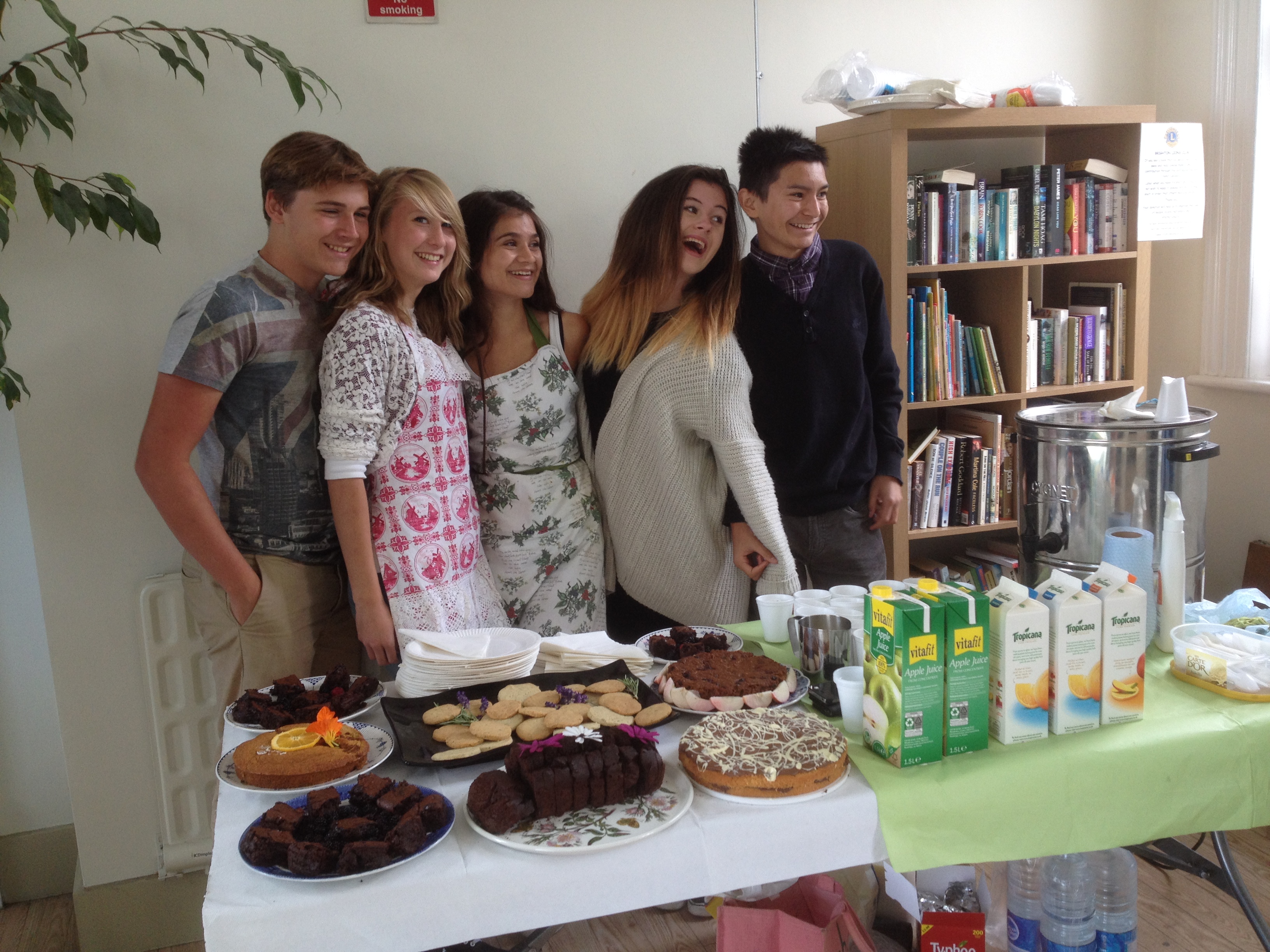
11.8.14 group photoAnd since we quickly established that we all love a (tea) party, we’re all going to get together for another local cakes-and-drinks-fest at the station on Friday 22nd 3pm to 4.30 or so. Put the date in your diary now and come along to see their creations!

Posted in Uncategorized | Leave a comment

Pruning the fruit trees

We embarked on summer pruning today of our cordoned fruit trees. A bit scary, as this is the first time we’ve done it on our own without the expert advice of Bryn from Brighton Permaculture Trust.

Having read up the RHS advice and that from videojug, we established that for summer pruning, we need to prune sideshoots (laterals) and sideshoots of sideshoots (sub-laterals), not the main leader stem. The idea is to restrict growth, not encourage it.

The problem is then identifying exactly which sideshoots and where to cut. It seems important to identify sideshoots which are ‘existing wood’ and those bits which are ‘new season’s growth’.

The video says ‘cut 1cm above the basal cluster – which is the whirl of leaves around the bottom of the shoot just above the rings of old wood’ – presumably marking the point where the sideshoot was last pruned.

The RHS says cut the sideshoots which have grown on old growth back to 1 leaf (around 1cm) – after the basal cluster, and then cut back the entirely new sideshoots to 3 leaves.

The next challenge is to identify leaf buds facing the right way – outwards and fanning away from the main stem, not crossing it.

I think we trimmed all sideshoots back to 3 leaves above a basal cluster – we may have to go back and trim further, but better that than to have pruned too far.

_________________________________________________________

From RHS website: Summer pruning an oblique cordon (at 45 degrees)

Summer pruning is carried out in August, or in areas where growth is strong, such as wet parts of the country, delay summer pruning until September.

  • Look for sideshoots over 22cm (9in) long, which grew earlier in summer directly from the main stem, and cut them back to three leaves. Those stems that grew from existing sideshoots or spurs can be pruned harder – to just one leaf beyond the cluster of leaves the base of that stem
  • Leave shoots less than 15cm (6in) long until mid September and then shorten to one leaf beyond the cluster of leaves the base
  • Prune growth that forms after summer pruning in September (or October if pruning later)
Posted in Pruning | Leave a comment

Pruning the planters

Formal planter nasturtium fire engine 8.14

Last night, our not-so-formal planter with reds and oranges in the sunlight, harmonising with the returning fire engine at Preston Circus, Brighton

Yesterday, we finally got around to doing summer maintenance on the Preston Circus planters. It’s been fascinating to see how each planter has developed a very individual character, and reacts differently to the changing seasons and conditions. People passing were lovely and encouraging – and their comments have confirmed our aim: that the planters look pleasing, but unlike the ‘carpet-bedding’ of conventional municipal planters.

Cottage garden 8.14The ‘cottage garden’ planter by the Duke of Yorks cinema was so pretty in June with its perfumed pinks and abundance of delicate blooms: white feverfew, blue cornflower, violet verbena bonariensis, lime alchemilla mollis, and white ivy geraniums. We also put in some coreopsis to bring a vibrant yellow into the mix. But the heat of July has taken its toll on the pinks and the alchemilla, and indeed the coreopsis, and they badly needed deadheading. The cornflowers and the verbena bonariensis had been blown about and needed staking.

The ‘formal’ planter, also at the Duke of Yorks, has come into its own: no longer looking ‘formal’ but full of strong, bushy and exuberant growth. The central cornus alba sibirica has grown well and has lovely light green leaves. The white sedum – cast off from a supermarket – looks robust, as does our lavender. The red pelargoniums have brought brightness and colour, as has the unplanned dark blue lobelia at the front. And we’ve managed to restrain the nasturtiums to one starring role: a trailing yellow in the north corner. The yellows, reds and purple of the verbena are a sensational colour combination. As we left at around 6.30 yesterday, the sun was picking up the yellows, reds and oranges in this bed just as the red and yellow fire engine went past to the fire station at Preston Circus – see photo above.

Seaside 8.14 yellow blueseaside and traffic 8.14We concentrated yesterday on the ‘seaside’ planter with its blue and yellow colour scheme. This planter – supposed to be our ‘heat-loving, drought-resistant’ bed – did really well in the wet spring, but has looked tired and bedraggled throughout much of the summer. We added in some garden centre half-price refugees: a yellow argyranthemum and three pale yellow trailing petunias, along with two more intense blue lobelia to bring in some strong colour against the blue greys of the santolina and festuca grass. Eve also planted a demure nasturtium, a restrained and well-behaved variety in bright orange.

Seaside orange nasturtium 8.14


We did a summer chop on the santolina, which had gone woody, in order to free up space for the put-upon rosemary prostratus to grow more freely. We also cut back woody stems from the bewildering lampranthus – why isn’t it flowering? I think I have an idea: even after torrential rain on Monday, the soil in this planter was dry and fine. It’s just not absorbing the moisture.

I shall be down again at Preston Circus mulching with a bag of recycled-waste soil enhancer. We are due for rain on Saturday.

Posted in Preston Circus planters | Leave a comment

150th Anniversary of Seaford line 7th June – the video

Our community film-maker extraordinaire, Madeleine Cary, has produced this lovely video of our Brighton to Seaford 150th Anniversary celebration on 7th June 2014.

Click here to view

Featuring

  • our beautiful station building and our station master Nick,
  • our wonderful neighbours and Council representatives,
  • Chris’ cakes with Di and friends on the coffee stand,
  • our MP Caroline Lucas celebrating sustainable travel, stations and communities,
  • singing from The Dawn Chorus with music from local musicians, and the lively group rendition of ‘This train is bound for glory’,
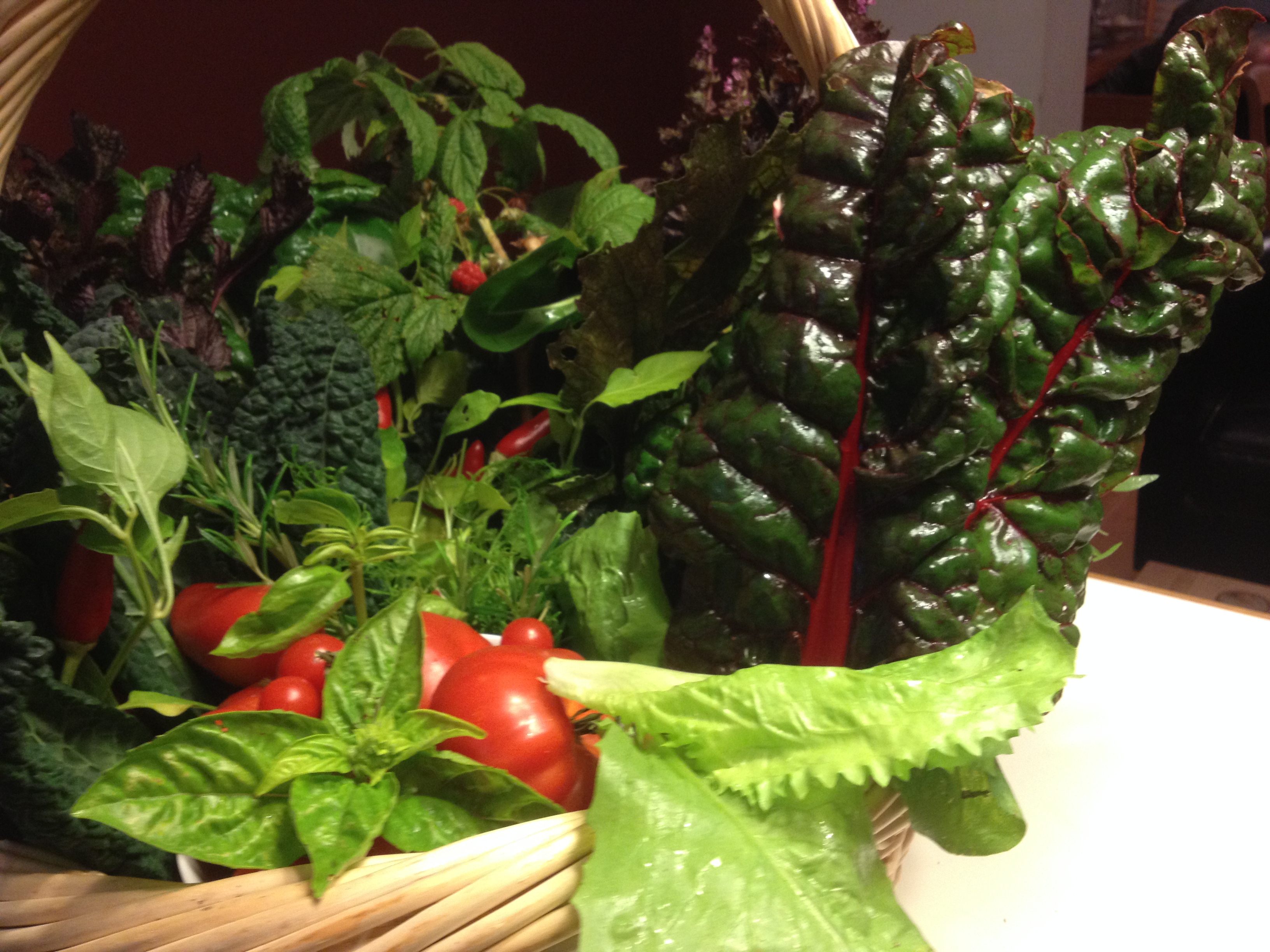
  • Anna from Brighton and Hove Food Partnership demonstrating how to use our chard, mustard leaves, peppers, rhubarb and herbs to make lovely food  AND …
  • the star of the show, Oliver Cromwell – last steam loco – puffing through our station!

Even our old friend The Evening Argus finally reported on the event yesterday:

Mad video 8.14 cropped

Posted in Events, Video | Leave a comment

Thunder and rain at last

It was almost 10pm on Sunday 27 July, and I was out in a sleeveless top watering the Preston Circus Planters. Warm nights have been an unusual feature of the weather in South East England for the past few weeks. It was muggy, but the ground was very dry and the plants were suffering. It was hard work trying to get moisture into the planters.

I needn’t have worried. At 6am on Monday 28 July, I was woken by the usual call of seagulls and then the unusual patter of heavy rain against the window. Shortly after, like mortar shelling which is a sadly familiar sound from the news bulletins these days, the thunder started, cracking the sky open. I couldn’t see the spectacular lightening and in the east of Brighton, we weren’t battered by the hailstones which dramatically hit Hove. The rain fell heavily for around three hours and then again in the afternoon – what a relief for us, but there was disruptive flash flooding for those further to the West.

Our water butts in the edible plot were again starting to run dry. The plants today look refreshed, and the atmosphere is now light and airy with blue sky and sunshine. My bolted lettuces collapsed in the storm and I haven’t yet checked the station garden, but apart from obliging us to lift plants from their water-filled trays and saucers, the rain has been a real blessing.

As plants have quickly blossomed with the sun and warmth, we may need to think about replacing some in our ornamental planters. This is probably the moment to do it – while there is still moisture in the soil. We’ll be out in the station garden this afternoon and then down at Preston Circus to do general maintenance on the planters there. A moment perhaps to get in some more geraniums?

Posted in Weather | Leave a comment

Challenge of summer 2014

Every year brings a different challenge to us at London Road Station garden. This year, it’s pests and plant diseases, along with the perennial challenge of watering.

We seem to just about be on top of the watering, but we are realising that our various planters do imply quite heavy demands. Our water butts ran out very early (end of June) and we had to refill from mains water with a complicated connection of hoses. Last week’s torrential tropical storm in Brighton did at least top them up again.

Our mini-orchard has been blighted by a serious aphid attack and last Tuesday, we noticed canker scars on poor old Crawley Beauty, our slowest growing apple tree. We’ve removed the obvious wood affected, but it looks like there may be more. A quick glance at the other trees did not reveal any spread so far. My ‘Pests and Diseases’ book is fairly low-key about canker: cut out the affected bit and improve growing conditions.

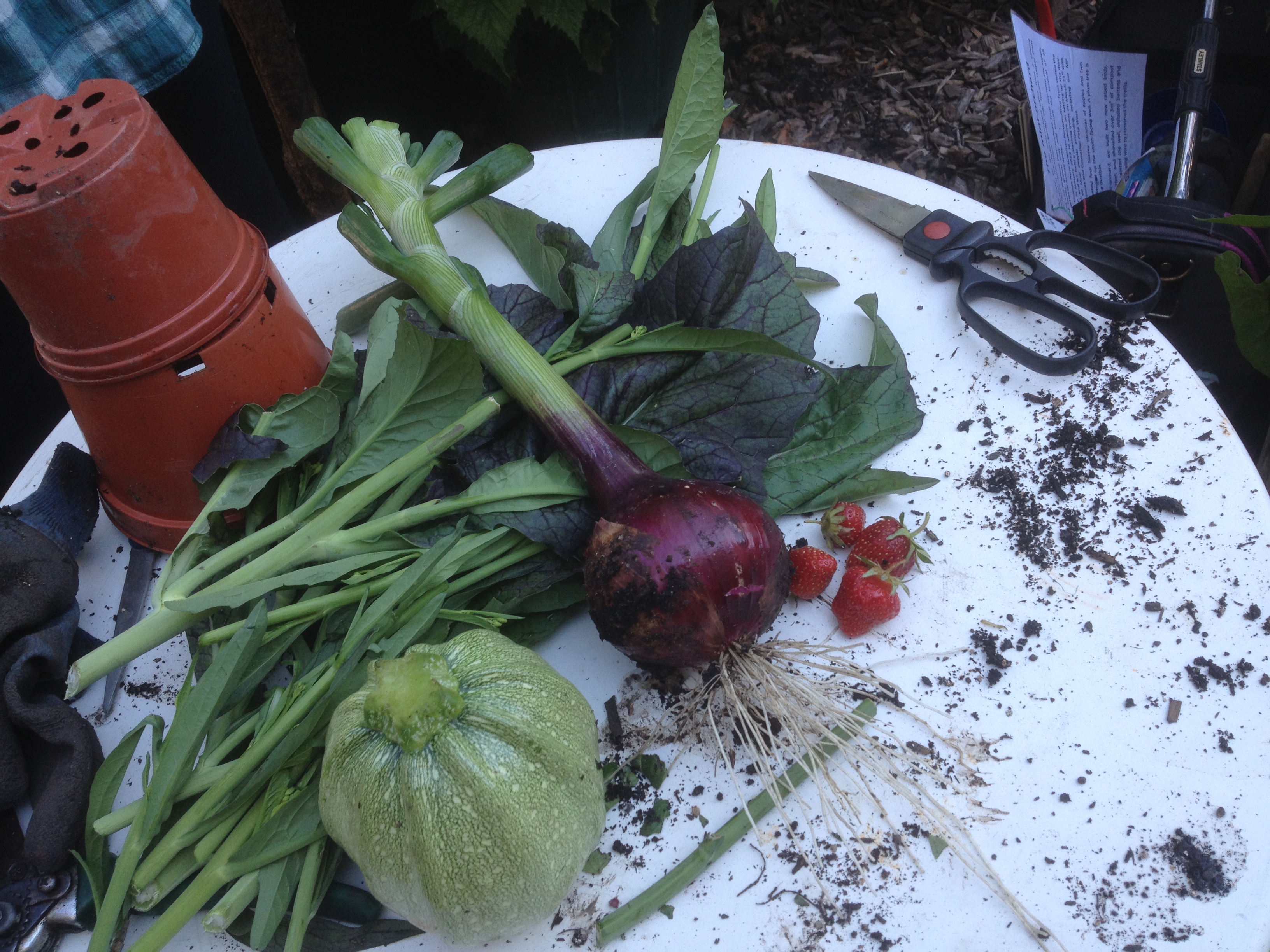
Meanwhile, though, some positive things: the plum tree is looking good with some nice plums ripening, our cavalo nero is growing well with – so far – minimal attacks from caterpillars. We’ve harvested beautiful red onions. Two large bunches are now hanging on my kitchen ceiling, sweetening for our harvest supper onion soup. We’ve also had some good potatoes – enough for around five of us to have a couple of portions. Not much, you might say, but that harvest came from three small seed potatoes that Sue couldn’t plant up in her allotment. And our courgettes – long thin and round ones – seem to be producing constantly.

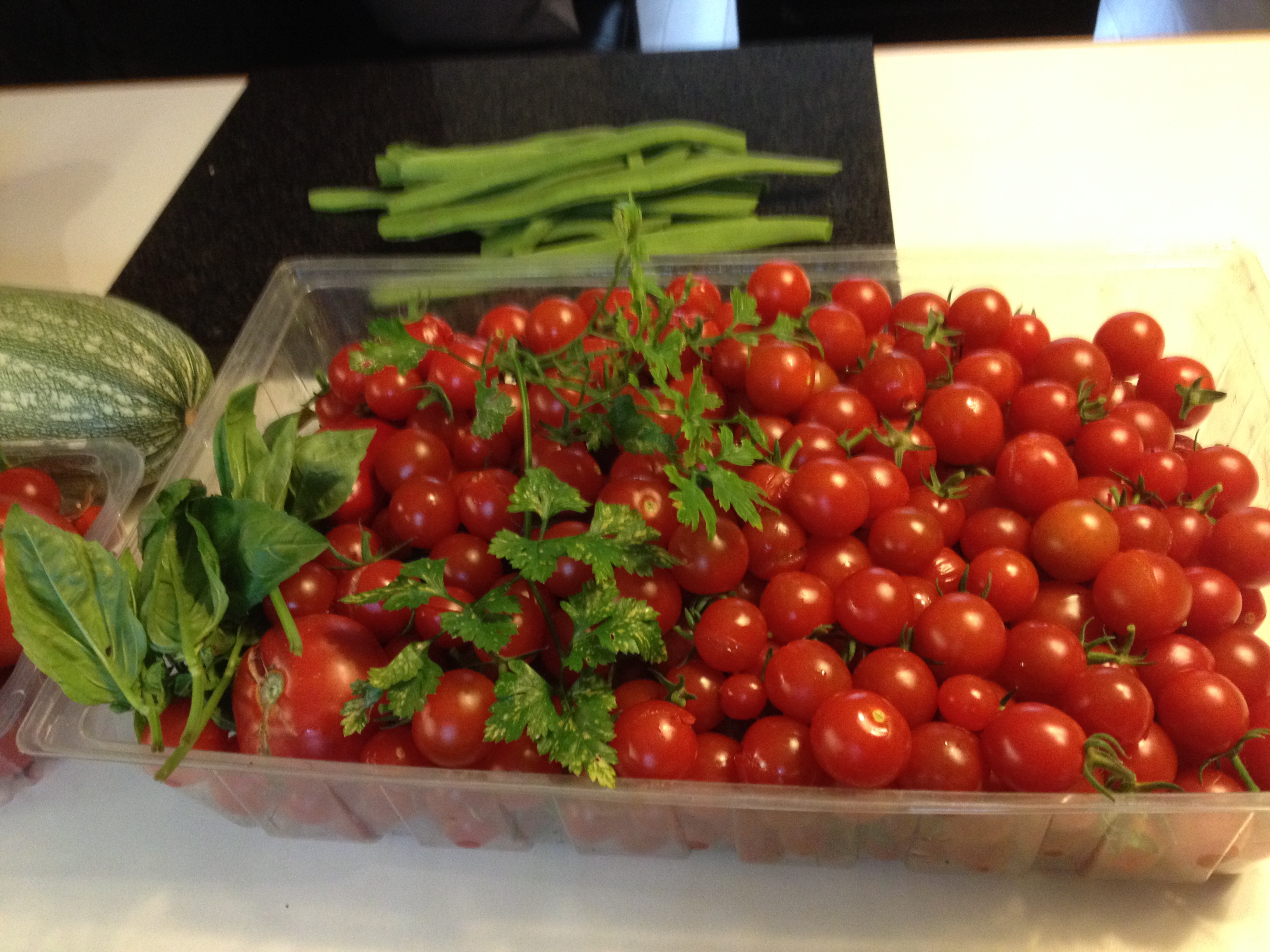
Late July is relatively early for harvesting: in that respect, it’s been an extraordinary year. My greenhouse tomatoes are already ripening and we’ve had cucumbers since late June. As someone remarked the other day, at this rate, we may have to bring forward our annual harvest supper, usually planned for the end of October!

Posted in Uncategorized | 1 Comment