A haul of garden sundries

Garden sundries? Perhaps the boring side of gardening, unless you see the parallel between growing things and cooking things, in which case garden sundries are the exciting things in your store cupboard, the array of esoteric ingredients which make things happen, the baking powder and the soy sauce.

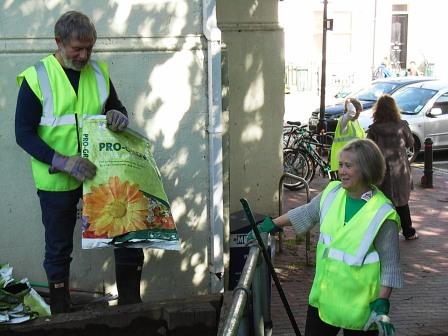
Neighbours David and Karen have just cleared out a garage and donated to LRSP a treasure haul of garden sundries: sacks of compost, plastic bags of Growmore granules, netting and chicken wire. We can store some of the haul – the bags of compost, for instance – in the lesser gated plot at London Road Station, while the rest will await dryer days in my garage. So what’s in the haul? Here’s a summary of the highlights.

Growing media: We’ve now got two sacks of sustainably-managed peat, a bag of seed compost and a bag of ericaceous compost for acid-loving plants. The ericaceous could be particularly useful if we decide to grow some fruit bushes in pots. Blueberries need acid soil, and many other fruits prefer it.

We’ve also got bags of mineral stuff for ‘cutting’ seed soil and potting compost. Horticultural sand and grit can be added to the soil to improve drainage and aeration, while perlite and vermiculite improve aeration and water retention. They look synthetic, rather like polystyrene, but they are both derived from natural minerals: perlite is siliceous rock while vermiculite is laminar magnesium-aluminum-ironsilicate – so now you know…

These granules absorb water, which prevents water-logged or compacted soil, but also ensures the growing medium doesn’t dry out. What’s more, grit, sand, perlite and vermiculite aren’t too comfortable for snails and slugs to slide over, so these minerals can be piled around seedlings to protect them.

Fertilisers: Fertilisers typically supplement the key macro-nutrients required by plants: nitrogen – for all-round vigorous growth; phosphorous – for root growth; and potassium (potash) for flowers and fruit.

We’re aiming to keep to principles of organic gardening and build up the nutrients in the soil first through organic manure and compost, and only then by using organic fertilisers and finally inorganic fertilisers. But vegetables require high levels of nutrients, so when we were growing vegetables in containers last season, we were feeding the plants regularly. This year, we hope to build up good fertility in our raised beds through the manure and compost we have added in the last few weeks. Nevertheless organic and inorganic fertilisers will be useful, though we’ll hope to use them sparingly.

In our haul, there are bags of bone meal and Hoof and Horn (wonderful name). Yes, these organic fertilisers are what they say on the bag: ground up animal bone, which plants love. Hoof and Horn provides slow-release nitrogen, while bone meal has a high proportion of phosphorous. Both are useful mixed into the base of planting holes. While we’re on the wierd preferences of plants, they also love human hair … well, more precisely, the chemical components of hair (51% carbon, 17% nitrogen) which will break down slowly if the hair is buried in the compost heap. So take a plastic bag with you when you next go to the hair-dresser (tip from the Whitehawk Community Food Project gardeners).

We’ve also got several bags of the all-round inorganic fertiliser Growmore. These granules provide equal levels of nitrogen, phosphorous and potassium and can be mixed in the soil or compost at planting as they are designed to release the nutrients slowly. We worked Growmore into the soil at the shady triangle before we planted in June and then again in September, before we put down wood chip mulch. When an organic mulch breaks down, it can leach nitrogen from the soil, so the Growmore should in principle right the balance.

And finally, there’s Garotta. Sounds like something from the nastier days of the French Revolution? Er … actually it’s freeze dried compost fungi and ammonium salts – lovely –I think it counts as organic. It a compost-accelerating powder which helps break down kitchen waste particularly in the winter when it’s not so warm. You just add a sprinkling to each new layer. We’ve now got a big container of it, placed next to our new compost bins – there are more precise instructions for use on the container.

So we now have a well-stocked store cupboard ready for seed sowing and planting in the spring – a big thank-you to Karen and David.

Posted in Uncategorized | Leave a comment

Community bulbs

I can’t even remember when it started …  At the Ditchling Rise Area Street Party in September, Jo from Shaftesbury Road and I were discussing how good the cut-price onion sets from Lidl had been, and Jo said they now had packs of bulbs. Magically, medium-sized daffodil bulbs then appeared next to the water butt. Diane, Daphne and Mark planted them in the centre of the shady triangle.

Then on a visit to The Garden Centre at the end of September, I picked up a good deal on 50 Narcissus Canaliculatus and 25 Narcissus Tête à Tête –miniature daffodils no more than 15cm high – and Yolande and Marlene planted these along the sloping edge of the garden and among the ferns.

Marlene came back a couple of weeks later with a pack of Iris reticulata bulbs, which we’ve planted at the apex of the triangle, and then Mark and Daphne arrived with a small sack of medium-height daffodils. In the fading light of early November, we planted those along the back wall, by the log.

Finally, a couple of weeks ago, when I went to see Bridgette of The Garden House, just along the street from London Road Station, she contributed a bag full of mixed daffodil bulbs. These are now planted along the side of the triangle nearest the water butt.

The shady triangle is admittedly looking a  bit denuded now that the ferns, foxgloves and alchemilla mollis have died down, and the pansies are getting straggly.

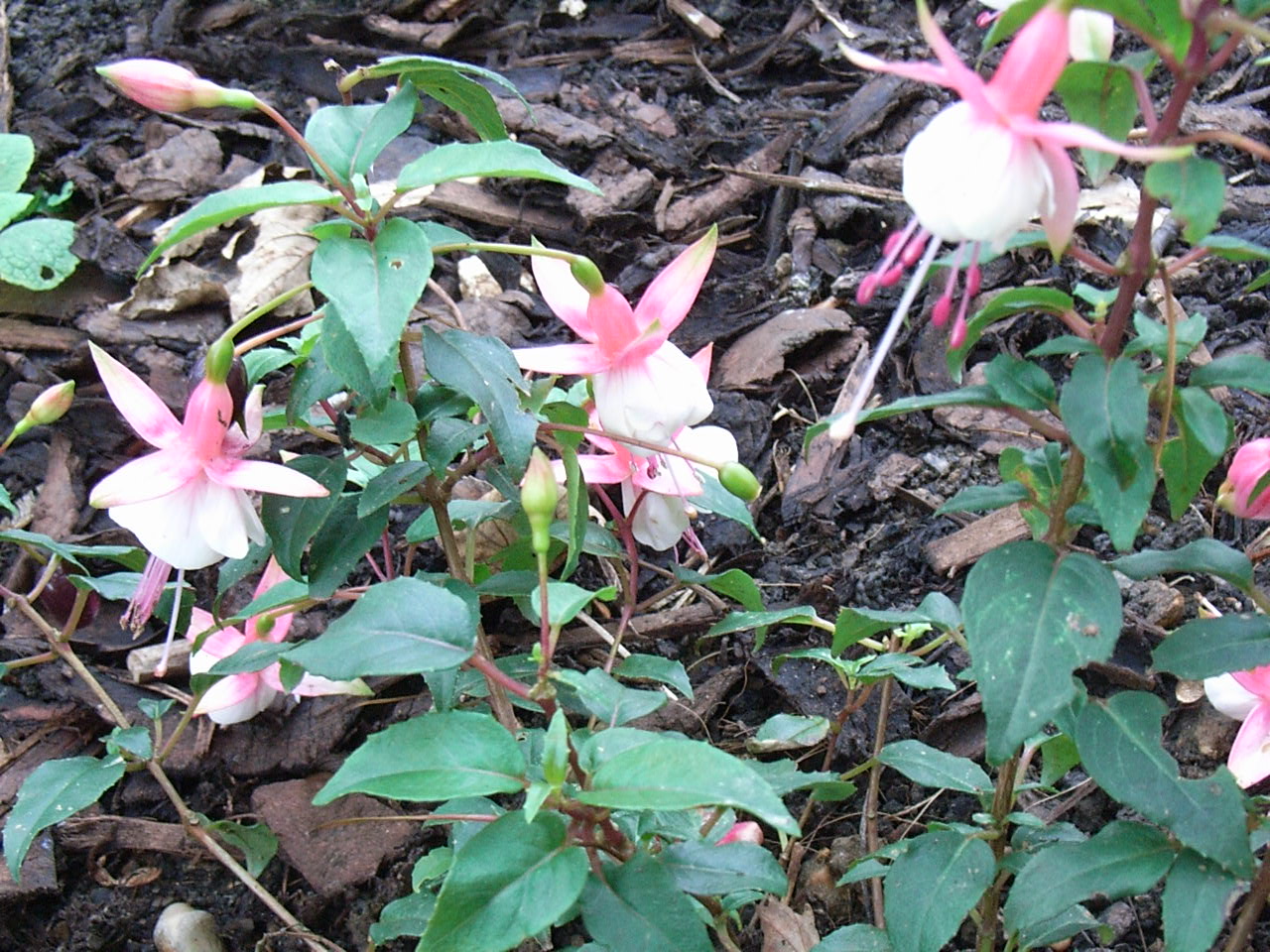
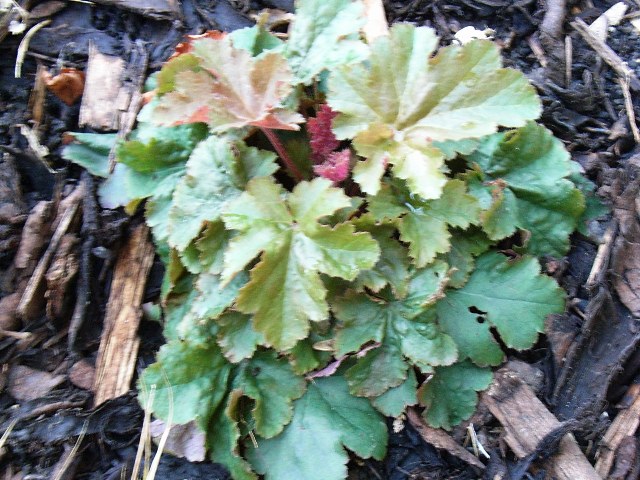
The Mahonia japonica is flowering but it’s still small. Miraculously the bargain-shelf fuchsias from May are still in flower and the heucheras I propagated in early spring are a mixture of bronze, green and pink. We can think of adding this year’s cuttings from Heuchera ‘Licorice’ alongside next spring and hopefully, the cuttings we made from the fuchsias will also root well.

But it’s the bulbs that now intrigue me … because they have turned out to be the truest ‘community’ plantings so far, contributed by different neighbours over the last couple of months. And because of the suspense: will they come up? what will they look like? will the squirrels get to them first? We must have planted around a hundred and twenty … perhaps then we can afford to be magnanimous in sharing them with the wider – wilder – community.

Posted in Uncategorized | Leave a comment

Passionate about … compost?

When was it that ‘passionate about’ become such a marketing cliché? A few years back, I groaned when the umpteenth candidate for a lecturing job told the board they were ‘passionate about teaching’. Yet here it is: I can’t help it, I am passionate about compost. It makes me happy, reconciles me to the grander scheme of things, reassures me that beyond the human world, nature is quietly getting on with restoring and recycling …

Our LRSP compost is doing well. Reports from the plot confirm the lovely mixture of garden clearings, horse manure and kitchen waste is rotting down well, with no evidence of vermin. We’ve filled our first wooden bin to at least two-thirds now. This will of course rot down, but once it’s full, we’ll start using the second bin, while waiting for the first to ‘mature’. The compost in the wooden bin should then be ready to spread on the soil for the spring.

Already four neighbours – who’ve stopped to chat or have contacted us through Harvest – want to register for composting their kitchen waste at our site. So it seems others too are passionate about composting – it’s just that composting in a first floor flat is tricky, and taking a smelly caddy on the bus up to an allotment or to the Council tip is definitely not good bus-user etiquette.

So we’re looking at how we could manage access to our compost bins more easily, and we’ve also put in a bid to Brighton & Hove City Council to purchase a green waste shredder which we could use for ‘community shredding’ events. The idea is that you would bring along your bulky woody prunings and put them through the communal shredder so that they could be composted more easily, either on the LRSP compost heap or on your own. And of course we would have tea and cakes to make it an ‘event’.

Meanwhile, other Ditchling Rise compost heaps are in good heart this year: mine are rich and laden with worms, thanks to a neighbour donating grass cuttings throughout the summer, and Diane reckons it’s her best composting year yet. Talk about passionate … she’s just seived her mature compost for use on flower beds, transferred the unrotted stuff from her ‘current’ heap to the now empty ‘old’ heap, leaving the semi-rotted stuff from the ‘current’ heap to rot down under a cosy carpet for the spring.

OK, so maybe we’ve got just a bit obsessive about compost … but it’s worth it! Rhiannon’s wonderful 4-year-old compost heap which we demolished in June has helped create a rich growing environment for our shady triangle at London Road Station. Every time I dig there, fat earthworms wiggle to the surface. Which makes me think: Rhiannon, how are you managing composting in Manhattan?

Posted in Composting | Leave a comment

LRSP gets composting

We’ve just set up our small-scale community composting initiative at London Road Station, thanks to two donated bins. Brighton & Hove Food Partnership kindly donated a wooden one, and Madeleine brought a large plastic one down from her allotment. The area should be named after Daphne, who had the original idea.

Roberta Emmott from Harvest/B&H Food Partnership and local eco-club leader, Philip Hunton, both came over to the site to advise on composting. A great tip from Philip: start off with a layer of twigs and woody stuff as this will take some time to rot down but will also provide aeration. Roberta provided us with laminated signs for the composting area and a range of useful leaflets on the do’s and don’ts  and several volunteers are going on Harvest’s ‘Successful Composting’ course next week.

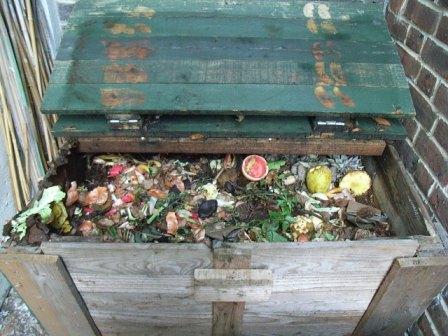
We set up the compost bins with layers of green waste from the station garden and stable manure/hay free from a local stables. To this we’re adding kitchen fruit and vegetable waste – at the moment, just from our volunteers as we see how the composting works out. Brighton and Hove Council have said they’ll provide us with plastic kitchen caddies in which we can store the waste before taking it to the compost site.

If things go well, we can look at registering neighbours who don’t have gardens and want to recycle their kitchen fruit and veg waste: if you’re interested, and live near London Road Station, do get in touch with us now at lrsp@hotmail.co.uk. It’s good to hear that the community scheme recently set up in nearby North Laines seems to be working well.

We’ve also cleared the sycamore leaves from the station and bagged them up to make leaf mould. This takes quite a bit of time to rot down. We’re lucky that there’s a small gated area just opposite our edible growing garden where we’ve set up the compost bins and can store bags of leaf mould. After a year or so, it should give a wonderful rich mulch that we can use around the perennial plants in the shady triangle. I have cursed the sycamore trees that cut the light over the shady triangle for most of the summer, but at least they are now providing a useful resource.

Posted in Composting | Leave a comment

Our harvest supper

It wasn’t a fantastically productive growing year for us, but TA TAH … it was successful. Last week, we celebrated!

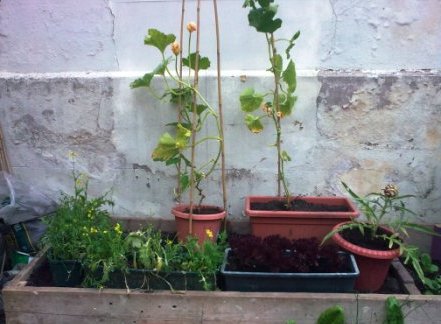
Back in May we started to transform a 12 square metre plot of waste land – covered in weeds, rubble, empty bottles, cans and cigarette butts –  into a small garden for edible growing. We had no idea whether it would work. Given that the soil there was hardly soil, we decided to use grow bags and any containers we could get our hands on. Container vegetable gardening can be hard work, particularly through dry spells.

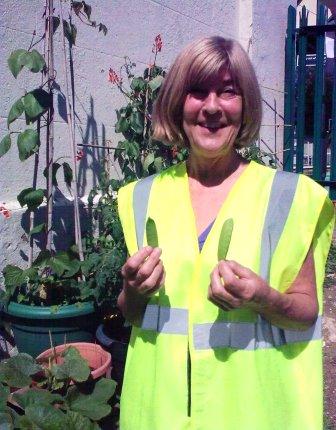
But it DID work … our first produce was mange-tout (well, two mange-tout), followed by some runner beans, lollo rosso, oriental greens and radishes. Our courgette plants – in any case, rather weak ‘rescue’ seedlings from the bargain stand of a local garden centre – didn’t do very much, and some of our squashes clearly needed more room, but the garden was nurtured over our uninspiring summer.

Last week, we got together for a ‘Harvest supper’ made with late produce from the garden: tomatoes finally turning red, scarlet chilli, various herbs, frisee lettuce, radishes and our two beautiful orange squashes provided a wonderful meal. Our menu: Madeleine’s spicy squash and tomato soup, Elspeth’s frisee salad with walnuts, raddishes and bacon lardons and Diane’s tomato tartelets.

There were also dessert grapes from garden vines – we haven’t quite got to the point of producing our own wine yet, but there’s a great south-facing wall in the Station Partnership garden just waiting for a trellis that would delight a vine …

Who knows what our Harvest supper will bring in a few years time: will we be drinking Shaftesbury Chardonnay? Chateau de la Gare 2014? The time to plan the garden for next season and perhaps longer term is coming up: let’s dream … Meanwhile, a big thank-you to all those who have participated in, and contributed to, the London Road Station Partnership garden.

Posted in Events, Uncategorized | Leave a comment

The water butt mystery …

What’s happening? The water butt in our shady garden is a mystery. We installed it in July this year. Even after a solid downpour, it appeared to be empty after a few days. We checked for leaks but found none.

It filled up again after further rain. We didn’t use the water very much over our ‘summer’, as the shady plot stayed fairly moist. The water turned brown and rather smelly, but no leaks.

Now in the autumn, we haven’t had heavy rain for some time. We’ve emptied the water butt over the shady plot, now looking very dry. Last week, we cleaned and refilled it, using tap water. It’s supposed to take 250 litres. But by yesterday there was no water!

My usual gardener’s reflex is to blame seagulls, squirrels, next door’s cats, slugs and snails. True, Brighton seagulls are highly skilled at manipulating plastic rubbish bags, so pushing a small tap should be no problem, but surely even these devious creatures are not that interested in bathing in tap water?

What is going on? The mystery continues … Watch this space for updates. Meanwhile, autumn sunshine is all very well, but if things continue like this, we’ll be spending next Tuesday afternoon dancing for rain in our yellow jackets.

Posted in Uncategorized | Leave a comment

We’re in Sussex Living


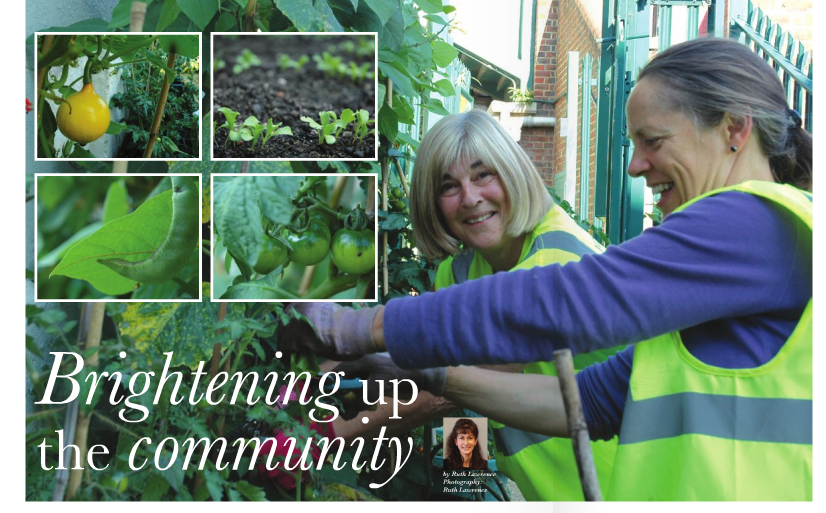
We all sat around in the garden today and read Ruth Lawrence’s article about us in Sussex Living. You’ll find it at the address below: go to pages 50-51. We remember when you came round, Ruth, and we loved showing you what we’ve been doing. Thank you for writing such a lovely piece!

http://content.yudu.com/Library/A1u99a/SussexLivingMagazine/resources/index.htm?referrerUrl=http%3A%2F%2Fsouthdownsliving.blogspot.com%2Fp%2Fwho-we-are.html

Posted in Uncategorized | Leave a comment

How we started …

It all started with a leaflet about Community-Rail partnerships. Living around London Road Station, Brighton, we were thinking about what we could do to improve the environment around the station. We invited Sam Bryant from Sussex Community Rail Partnership to a meeting of the Ditchling Rise Area Residents Association in March 2011. Sam, and Southern Area Manager Paul Wyborn, were very encouraging and happy to support our idea of developing small gardens at the station.

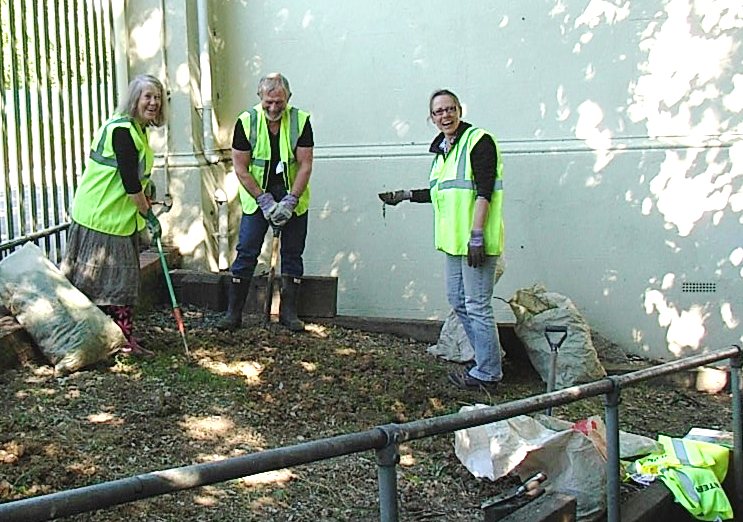
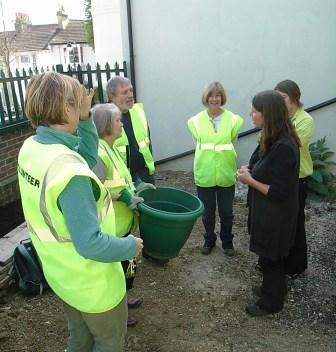
A quick walk around the station with a camera had highlighted various plots of unused land. We decided to focus on two of them, on either side of the station building in Shaftesbury Place. We completed Southern’s risk assessment and drew up a project plan on the basis of which Southern agreed to provide some start-up funding. The next stage was our safety briefing and, having received our lovely yellow hi-viz ‘Volunteer’ jackets, we finally started on clearing the two sites in May 2011.

On the west side is the SHADY TRIANGLE. We’ve dug over the soil, sifted out as many stones as we could and incorporated compost donated by Veolia, who run the nearby recycling plant. A neighbour, Rhiannon, also left us her 4 year old compost heap. The triangle is shaded by trees, so we’ve planted it with shade-tolerant perennials and shrubs: ferns, perennial geraniums, astrantia, foxgloves, pulmonaria, bergenia, alchemilla mollis, heuchera, fatsia japonica and mahonia japonica. Almost all of these have been transplanted or propagated from our gardens or donated by other neighbours. We’ve added as much colour as we can with annuals such as busy lizzies, pansies, antirrhinums and fuchsias.

On the east side, the GATED PLOT has very poor soil; in fact it’s mostly hardcore, stone and lumps of concrete. We decided to try growing edible plants in containers. We started with mangetout and runner beans in growbags and pots. We’ve added tomatoes, a courgette, a chili plant, lettuces and lots of squashes, donated by neighbours and friends. We’ve also started growing herbs in pots. We then experimented with building raised beds, thanks to a donation of scaffolding planks from Gordon Chalmers Scaffolders in Worthing and yet another neighbour who gave us quantities of topsoil. We now have four raised beds. In one, we have planted seeds for autumn/winter crops (radishes, chard, frisee lettuce and cavalo nero), while another acts as a base for our squash plants in pots. Two are awaiting more soil – again, pledged by a neighbour.

Thanks to Southern, we’ve been able to purchase water butts for each plot and cover the paths with woodchip. And our immediate neighbours, the small family joinery firm of A.A. Taylor, made a cash donation which has allowed us to buy plants, twine and canes … and set up our community bank account which enables us to plan for the future.

We’ve had wonderful conversations with so many passers-by who’ve stopped, curious, to find out what we were doing and who’ve been so enthusiastic about the gardens. Many neighbours have donated plants or soil from their gardens, and staff from Harvest, part of Brighton & Hove Food Partnership, have visited to offer valuable advice and provide support.

Posted in Uncategorized | 1 Comment