I’m meeting later with partners from the Sussex Community Rail Partnership, the umbrella group that brings together stakeholders associated with the Brighton to Seaford line. Time to take stock of our activity in the first half of this year … well, up until mid-July.
Our major project has been the Pocket Park – creating a small park area under sycamore trees where previously there was rubble, dumped builders’ material, litter and brambles. It’s lovely to sit out at our bench and table in the cool shade of the trees.
It’s also turned into a bit of a botanical experiment. Since March/April we’ve been planting wildflowers and ‘weeds’ there. It’s a tricky area with very chalky soil and very thirsty big trees. Yes, we’ve been watering regularly throughout very dry weather to try to give our plantings and sowings a chance.
So we’re now observing what has grown well and what suffers from the drought. Totally counter to my expectations, comfrey – feral plants from a local park, The Level, and which are said to like moist soil – has done well while purple toadflax and herb Robert have all but disappeared now. Our statuesque great mullein has dried up while next to it ‘Fox and cubs’ is establishing well. Some of the geranium nodosum have completely died back, along with ‘Sweet Cicely’, while geranium macrorhyzum is looking strong. Sweet woodruff, which has died back in my garden, is looking quite lush in the deep shade.
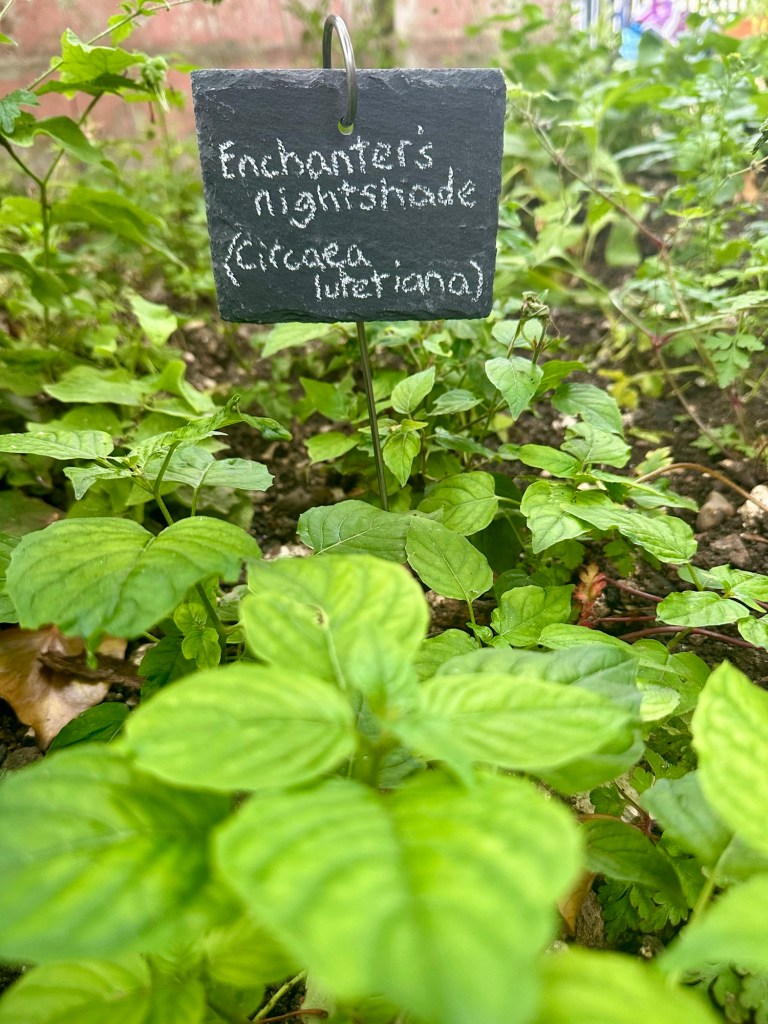
Our specialist wildflower seed for chalky shade has germinated into a range of very small seedlings but very slowly . We’ll have to wait a bit longer to discover what’s there.
We’ll continue to monitor our wildflowers given seriously challenging climate conditions becoming the new normal in the chalky south east.
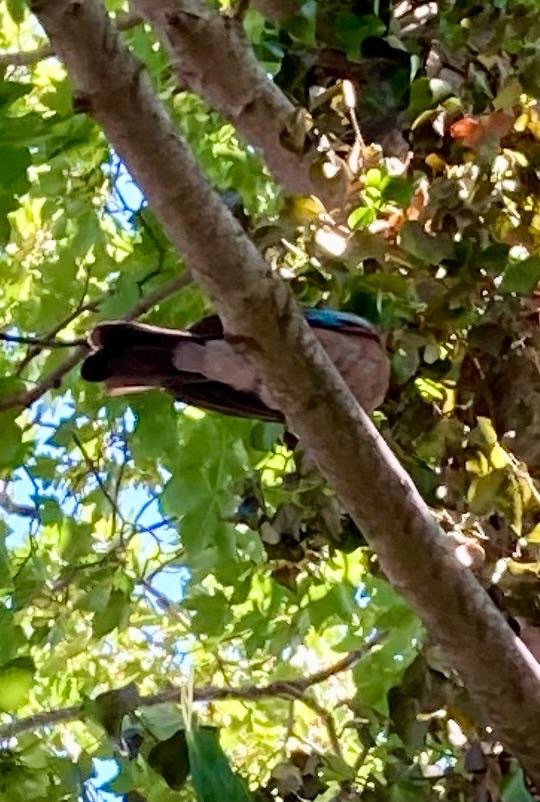
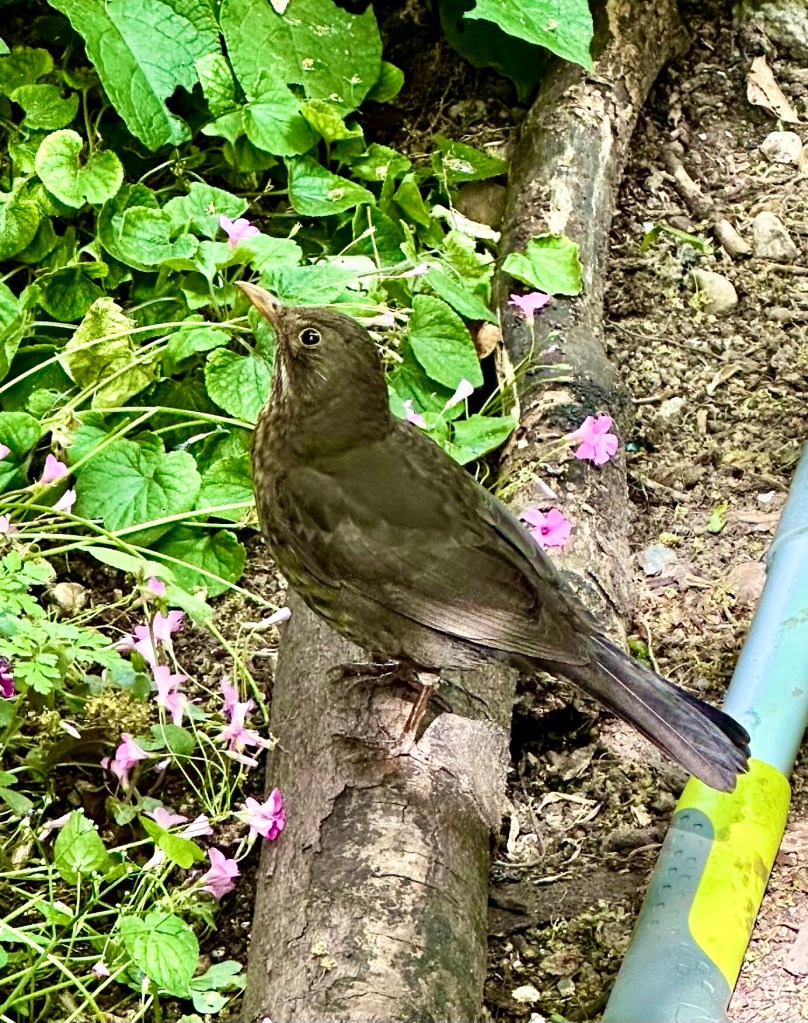
Were also monitoring bird visits. Early on, a blackbird couple were clearly a bit put out that we were in their space but they sang beautifully and I believe set up a nest high in the sycamores: cheeping of baby birds has been heard. We also had a jay visit us while we were having tea one Tuesday afternoon. Difficult to catch a photo of it but it arrived in a characteristic flash of light blue and pinky-beige. And there have been plenty of sparrows and some blue tits in among the ivy.
The pocket park came into its own during our two open Sundays in June. We had a regular stream of visitors: mostly neighbours and friends from other community groups. It was particularly good to see how much local people enjoyed the space.
We haven’t yet sorted out arrangements for opening the Pocket Park to the ‘public’ – a bit more discussion is needed with the railway and within our group. And there’s still work to be done: more furniture and more woodchip plus lots more mulching of our planting areas, some display boards to explain our botanical and wildlife monitoring and signage. Just at the moment, the drought/heatwave means we are keeping gardening etc. to a minimum.
It has certainly been an extraordinary growing year: a long wet start, then repeated heat waves from middle of May. And no rain to speak of since the end of June. Our water butts ran dry ages ago, and although we are not yet under emergency water measures, we do need to use water very sparingly.
It’s been hard keeping our platform planters flowering. Lobelia, which normally works well, is almost dead, begonias aren’t really flowering, antirhynums are surviving the drought but not the strong winds (and foxes, squirrels, and other night marauders). And the planters are leaking … repairs and reconstruction required once the weather is cooler.
The tree pits are looking ok – I think the initiative to invite neighbours to water them has worked well. And much of the planting is proving fairly drought-resilient (lavenders, verbena bonariensis, silver-leafed cineraria, and stachys).
The edible growing plot is really ‘on hold’. Sadly our sweet peas have suffered badly, as elsewhere, despite best efforts. Potatoes took over the raised beds before we could plant courgettes. Beetroot, salads and chard has been and gone. The leeks are surviving and the mini-orchard shows promise. I’m hoping we’ll have some ok apples and pears despite the drought. Meanwhile our good old plum has grown again … after our attempts last year to cut it down. It deserves respect.
I think overall we’ve had a lot of commitment this year from the local group and quite a bit of interest from further afield, particularly neighbours in the local area. We’ve become a de facto hub for supporting the opt-out-of-glyphosate weeding efforts in local streets. However, the extremes of weather have sometimes made for a stop-start rhythm, which makes it hard to build up continuity, and have certainly scuppered some of our growing efforts. No point in temperatures above 25C trying to grow seeds or make new plantings – it’s watering, watering, watering just to keep things alive. I think we will probably need a thorough rethink of our planting this coming autumn. And maybe our traditional harvest supper will have to come earlier: in June???
One thing is for sure: we’ll have to have potatoes and apples on the menu for this year’s event probably in October.


