Preston Circus planted

This afternoon the wind had died down, and it was pleasantly sunny. Finally, we got around to planting up the remaining two planters at the major cross-roads of Preston Circus, and filling the gaps in the two planters we planted back in May.

We’ve had terrible winds torturing plants for the last few days. We had to cancel the planting session on Friday because we feared the wind would destroy any newly planted plants. Sure enough, some of the Cosmos that had established well in the planters outside the Duke of York’s cinema had been broken and uprooted.
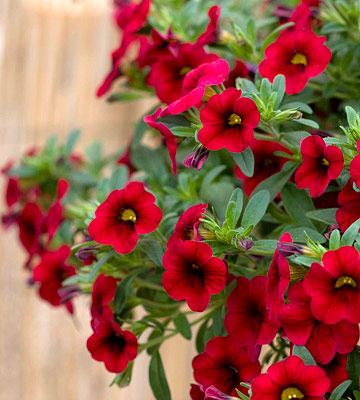
Calinbrachoa

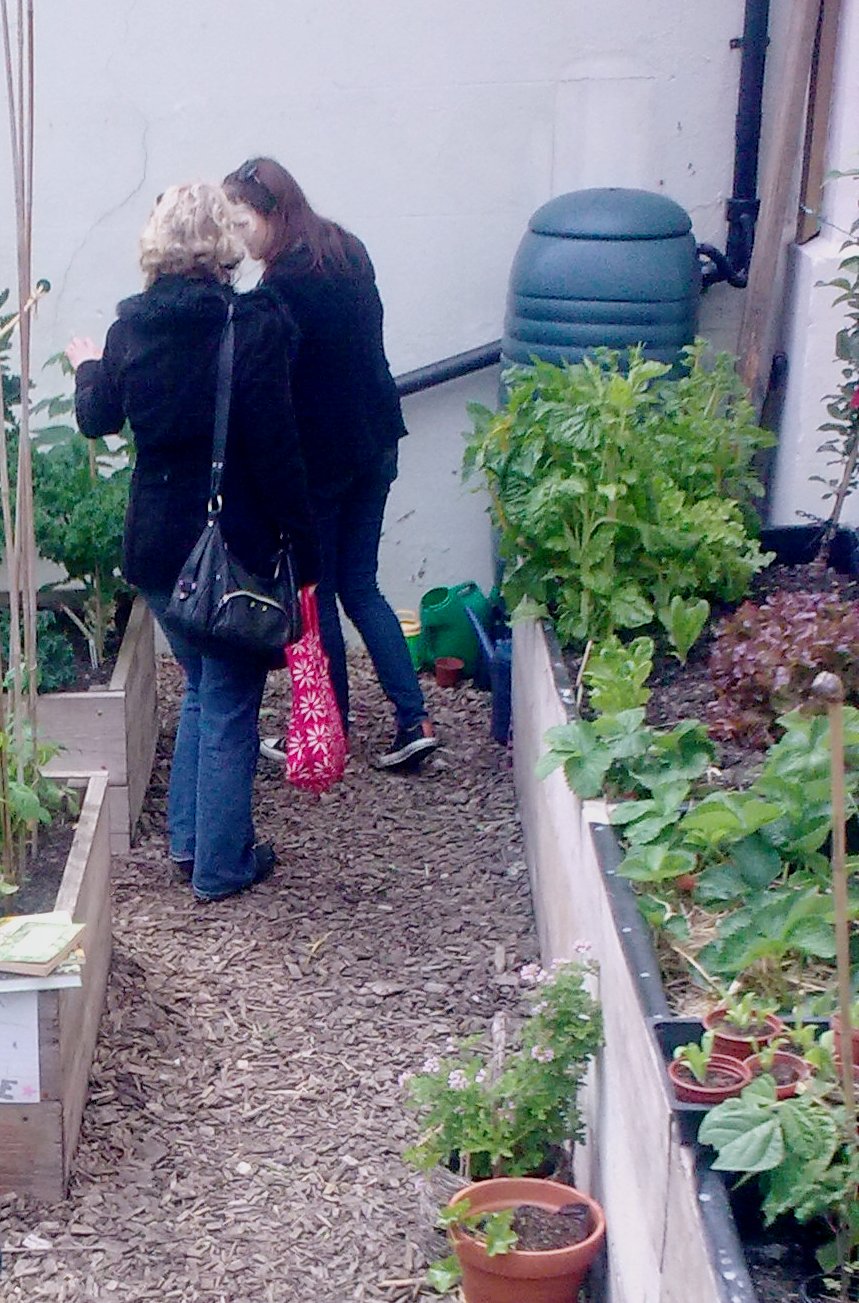
We planted the two remaining planters with both annuals and our remaining perennials. There’s a ‘hot’ planter with reds, oranges and yellow – red hot pokers in the centre, tagetes dotted around, yellow and orange calibrachoa and nasturtium – just outside the Circus Circus.

Further down, in the middle of the lanes of traffic, we’ve planted pink and purple plants: pink and purple calibrachoa, pink petunia, lavender, hemerocallis, sage and verbena bonariensis. Now it’s about water … the planters have been liberally mulched, but with very little shade, they will need watering soon.
Posted in Preston Circus planters, Uncategorized | Leave a comment

Good Gadabout

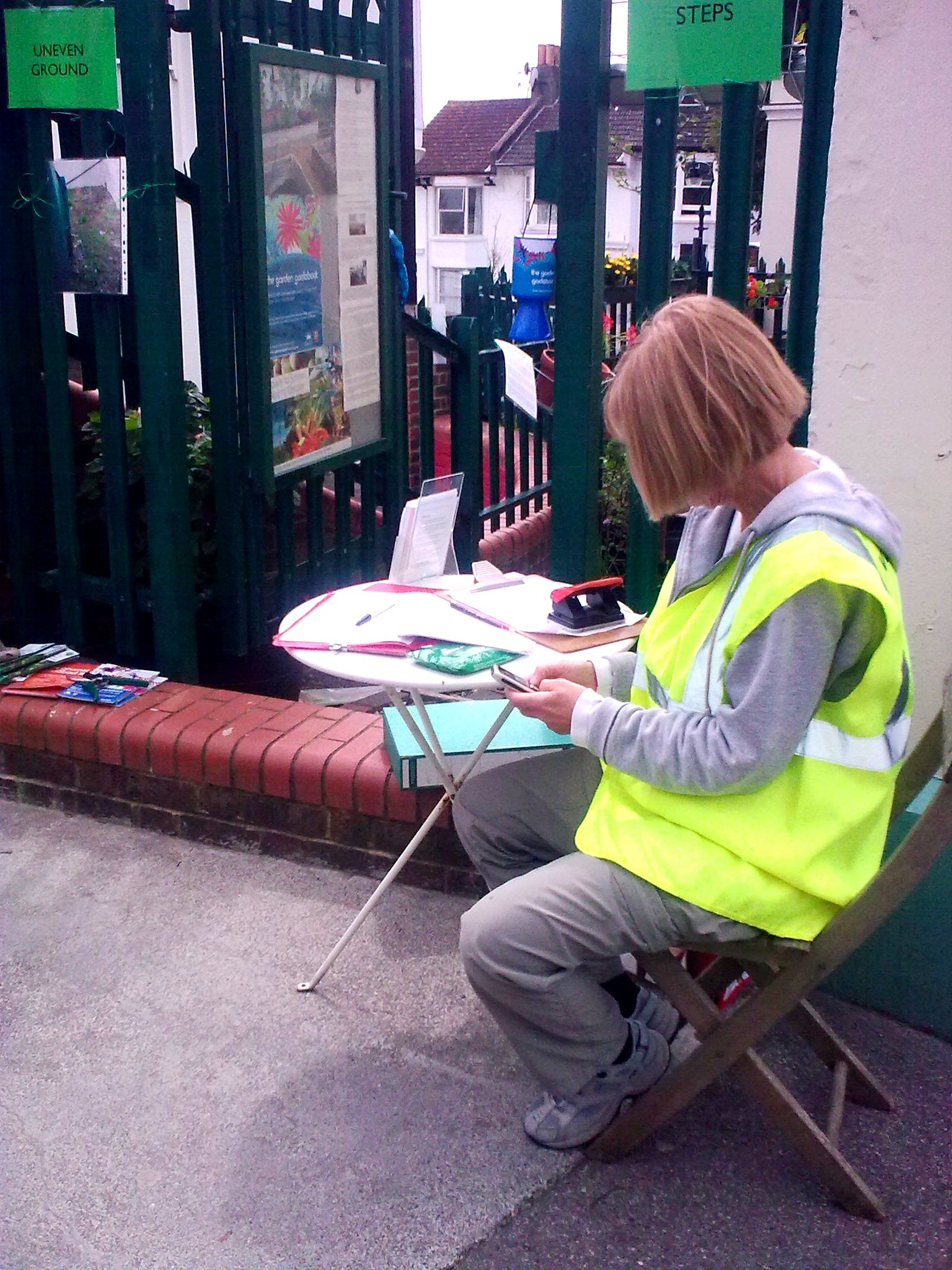
Well, despite very blustery winds, we had a very enjoyable opening for the Garden Gadabout on Saturday. Probably the most difficult thing was tying up the banner and the notices; string is mischevious in high winds.

We were open on Saturday 23rd June from 11am to 5pm. Our tallies seem to indicate that around 50 people visited the garden, which was really heartening when the weather has been so disagreeable. We hope it made a small contribution to the major fund-raising effort by The Sussex Beacon.

Those of us ‘on the gate’ were admirably supported by other members of the group dropping by to chat, with crispy cakes and a chocolate cake, and numerous trays of tea and coffee.

We spoke to many neighbours, as well as visitors from further afield. It was lovely to hear the enthusiasm of people living locally who told us that they regularly peer through the railings to see how ‘their’ garden is doing. We are lucky to garden in an area where there is a lot of pedestrian traffic. When people walk around their area, they really start to own it.

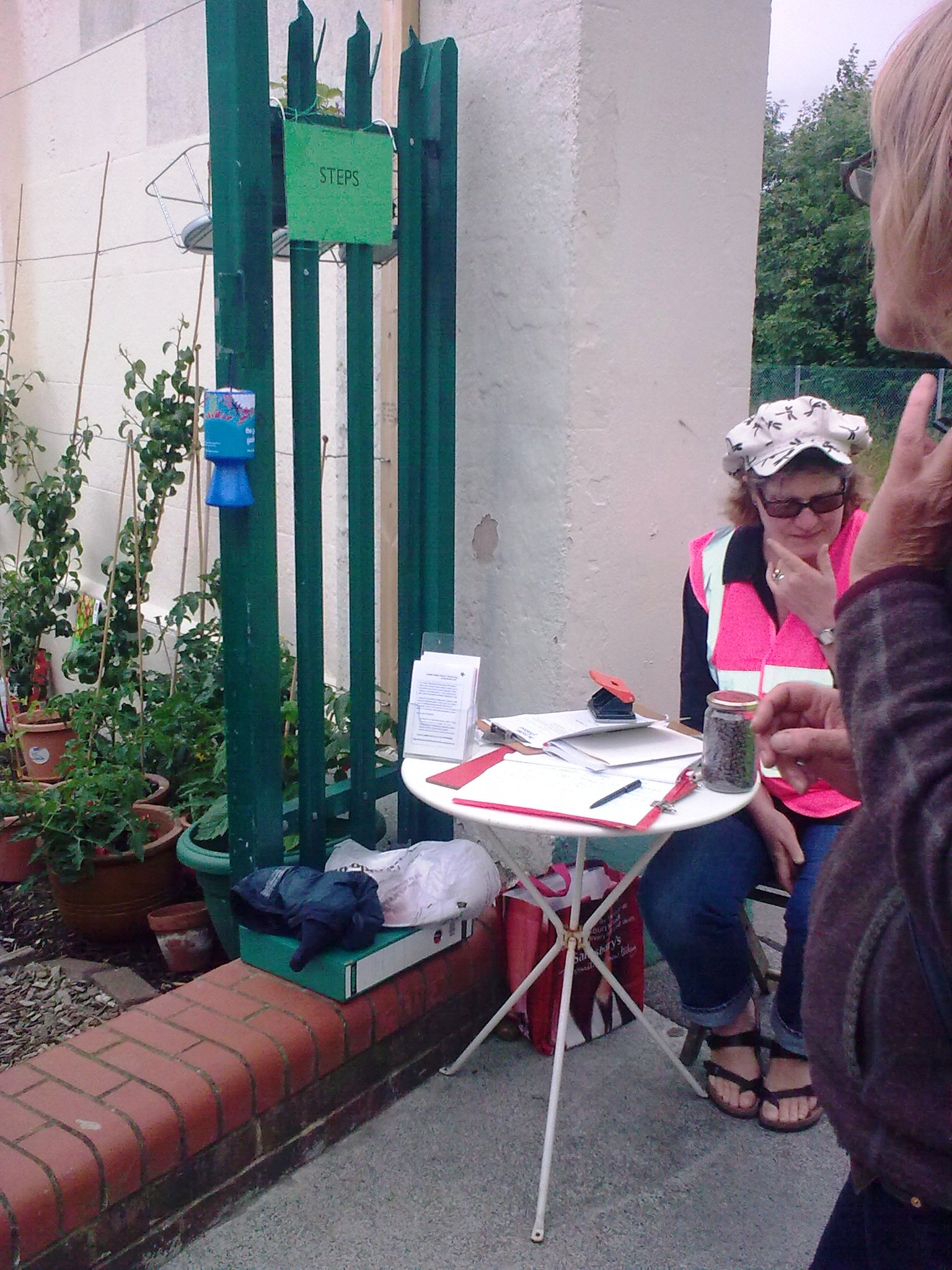
Two French visitors were also telling me how bureaucratic organising garden visits can be in France, such that often gardens – even large, semi-public ones – don’t open regularly to the public. We of course had done our risk-assessment and health & safety checks, with notices warning of uneven ground and that really scary phenomenon, ‘steps’. Luckily, we didn’t have to use our ‘slippery path’ notice.

Our experience of the Gadabout was a really positive one, and we can only encourage people who may have lovely gardens in our area or further afield in Brighton, to think about opening their gardens next year. We enjoyed receiving visitors, we enjoyed sitting out at the station on what proved to be a reasonable Saturday afternoon, and we hope the whole Garden Gadabout will be a great success for The Beacon.

Posted in Uncategorized | Leave a comment

Our video: relive the mini-orchard event!

Madaleine’s just finished the final edit of our first London Road Station Partnership video. Remember the mini-orchard event back in March? It’s all here …  

Click to view our video!

Posted in Edible growing, Events, Uncategorized, Video | 1 Comment

Garden Gadabout 23rd June


We’re delighted to be ‘opening’ the London Road Station Partnership gardens for the Brighton Garden Gadabout on Saturday 23rd June from 11am to 5pm.

The Garden Gadabout is an opportunity to visit a whole range of private and community gardens in and around Brighton. It raises vital funds for the Sussex Beacon, a care centre supporting people living with AIDS/HIV. Funds are raised via an entrance ‘donation’ and garden sales or activities. The gardens are organised into local trails. We are part of the Fiveways and Roundhill trail. The entrance donation for a single garden is £2 , or a one day ticket provides entry to all the gardens across all the trails for £7.

The London Road Station gardens are not Chelsea show gardens, nor examples of ‘municipal’ style annual planting that used to be typical of station gardens. What they do show is what can be done with two small pockets of waste land and a great deal of enthusiasm, when there is support from the local community.

Our shady triangle garden of shade-tolerant ornamental plants (photo above) has been planted almost exclusively with plants propagated and donated by local people. The raised beds in our gated edible growing plot are made from scaffolding planks donated by local companies; our mini-orchard of cordonned fruit trees was sponsored by our local pubs. There’s a story behind every plant and every fixture.

Come along on Saturday 23rd. We’ll be there to tell you the stories, talk about our links with other community gardens, about our trials and tribulations, about composting and cordonning, about London Road Station and its history …

Posted in Uncategorized | Leave a comment

Under the duvet in June

Two weeks ago, I left Brighton in a drought. The water butt in the London Road Station gated plot was empty, it seemed impossible to keep our pots of herbs from drying out, and all activity moved towards the shade of the west wall. I ran round placing all pots in saucers or trays to retain any excess water. We were worrying about the beds with the fruit trees drying out. The days were long, hot and blue-skied. The south wall radiated warmth in the evenings.

I have returned to floods, torrents of water flowing down the streets, water-logged pots and overflowing water butts. The central heating is on, the lights are on – it’s 6.30pm in the evening and it’s still raining. I haven’t yet ventured into the sodden station gardens. I know the slugs have got some of the dwarf beans and the winds will have flattened the flowers in the shady triangle.

This is yet another post about the unhinged weather patterns we’ve had this year. Following on the dry and warm January, cold and icy February, hot March, drenched April and early May, scorching late May, we’ve moved into a cool autumnal June of storms, low grey skies and rain. 

Yes, gardening sometimes feels like a battle – fighting off the squirrels, cats, slugs, snails, aphids, ants, fungi, viruses and blights, and trying to get the right stuff in the soil. And this year, there has been no predictability. We’ve had intense packets of heat, and then of moisture, with no balance. It’s destabilising ..

The weather can be the worst enemy, with an impact both on the physical environment but also on morale. The chard will have blown over, the new seedlings will have been flattened by the wind, the strawberries will be rotting with the damp, let the snails do their worst – I’m curling up under the duvet.


Posted in Uncategorized, Weather | Leave a comment

Of ants and aphids

Several of us have noticed lots of ants swarming up our apple trees. What’s going on? Are the ants doing any damage?

Ants unfortunately are a sign of aphid colonies, and aphids – green and black fly – suck sap, which is bad for our trees. We’ve also noticed a few curled up leaves, and these may also be the result of aphids. What can we do?

  • First the mechanical solution: check both sides of the leaves  and squishany black fly and green fly between human fingers.
  • Second the chemical solution: spray leaves with an organic pesticide based on ‘natural’ chemicals that will break down, such as pyrethrum or fatty acids. We have a spray available in the gated plot.

Aphids are a ‘normal’ part of our growing environment; we’ll try and control them, but they will return. It’s just a case of keeping their presence to a minimum so that plants don’t get weakened.

But having dispensed with aphids, back to the ants … What’s the connection? Ants and aphids are symbiotic. The aphids suck sap and secrete a sweet ‘honeydew’, the ants feed on the honeydew: a perfect relationship, perhaps, but not an equal one. It’s the ants that are the clever manipulators.

They literally ‘farm’ aphids – just like we farm cows – to ensure their honeydew supply. They will gently massage the back and rear end of the aphid to make it produce honeydew on tap. Ants also protect their ‘livestock’ by attacking aphid predators and will even nurture aphid eggs underground in their own nests. Once the aphids hatch out, their ant masters take them back to the host plant to continue producing the sweet, sticky stuff. Get rid of the aphids, and you should get rid of the ants …

More on aphids from the RHS.

Posted in Uncategorized | Leave a comment

Volunteering

We’re always delighted to welcome new people to London Road Station gardens, to do routine maintenance, to develop the ornamental garden, to plant up seedlings etc. Members of the partnership can access the garden when they want, but we usually try to meet on a Tuesday or sometimes on a Thursday: our Work Days page above will tell you more.

We’ll also soon be getting going on replanting the Preston Circus planters, and that’s going to need volunteers to plant and water. I’ll be posting soon about meeting times for that project, but do get in touch if you’d like to be involved: pcplanters@hotmail.co.uk

We’ve also found out that there are all kinds of opportunities in Brighton & Hove to get involved in growing projects: two of our favorite organisations, Harvest and Brighton Permaculture Trust, need volunteers. Harvest are looking for people to help with planting and maintainin the inspirational demonstration garden in Preston Park, while Brighton Permaculture Trust and Fork & Dig It both have activities going on at Stamner Park.

I was up in Stamner Park last Tuesday for Brighton Permaculture’s fruit growing course. It’s an oasis of calm and outdoor activity, within walking distance of Brighton (well, just over an hour from London Road Station). We spent an idyllic afternoon wandering around their various orchards up there, and I looked in on Fork & Dig It’s lovely plot: both projects offer wonderful places to work and relax around vegetable growing and other things.

Here are the details:

Harvest: http://www.harvest-bh.org.uk/events, email harvest@bhfood.org.uk or call 01273
431 700. Work will be starting on the Harvest demonstration vegetable garden
in Preston Park and Harvest will be running monthly volunteer days throughout
the growing season. Join us on Friday 25 and/or Monday 28 May (11am-1pm) for some clearingn and planting. Please contact us to let us know if you plan to attend.

Brighton Permaculture Trust There are lots of  opportunities @ BPT for you to get behind the scenes and help with projects and events like Apple Day, Eco Open Houses, and Green Architecture Day, as well as working and learning on BPT’s Permaculture plot and orchards at Stanmer Park. Click here for more.

Fork & Dig It, the organic community growing project up at Stanmer Organics, is looking for volunteers. Help is needed to harvest, weigh and bag produce for their VegShare, and they’re also looking for volunteer organic growers. For VegShare volunteering please contact Emily on 07969 805795 and to volunteer in the garden call Tim on 07766 972915.

Posted in Uncategorized | Leave a comment

Beautiful bulbs, dying daffodils

We planted a lot of daffodil bulbs in the autumn in the shady triangle. Most of the miniature ones (Tete a tete) came up and flowered beautifully, along with quite a few of the large daffodils at the back of the plot. But the off-white narcissi in the middle of the triangle have only just flowered, sluggishly and half-heartedly, while the irises at the apex produced green shoots and leaves, but no flowers.

Why? The RHS site suggests that bulb blindness may be caused by dry conditions, shallow planting, late planting or poor nutrition on light soils. All of these factors could have applied to our planting, though I don’t think we planted too shallow and I know we worked in lots of bone meal at planting time. But we did plant well into October and November last year, and we have had a very dry winter. We mulched, however, with both wood chip (October, November) and with soil enhancer from recycling (March). Feeding with potassium-rich feed such as tomato feed after flowering seems to be recommended, so that our bulbs can build up resources for next year.

And that’s one of the counter-intuitive things about bulbs: you have to look after them carefully, or at least allow them to look after themselves, after they have flowered and as they start to die down. The daffodils and other bulbs are now at that difficult stage where flowers are gone (we dead-headed most of them) but straggly green leaves are flopping are all over the place. The temptation is to ‘tidy them up’ – tying them, plaiting them or cutting them back. But no: the leaves provide the food for next season and need to be left for at least six weeks after flowering, ideally just dying down naturally to a shrivelled brown and then removed.

The art is to hide the daffodil leaves under the burgeoning foliage of other plants. Certainly, most of the plants in the shady triangle have grown richly these past few weeks, so this should be possible. And then, feed the daffodils along with the tomatoes?

Posted in Uncategorized | Leave a comment

Spring greens

It’s been a frustrating and confusing spring. The daytime temperatures have barely been in double figures, there have been strong winds and heavy rains. Usually at this time of the year, gardens are crying out for moisture. This year, we also need warmth. My greenhouse is filling up with tomato and bean plants we daren’t plant outside just yet. The pots are waiting in the sunniest corner of the station garden, but we’ve learned from the miserable state of the dwarf beans planted in mid April, that early planting doesn’t always pay off.

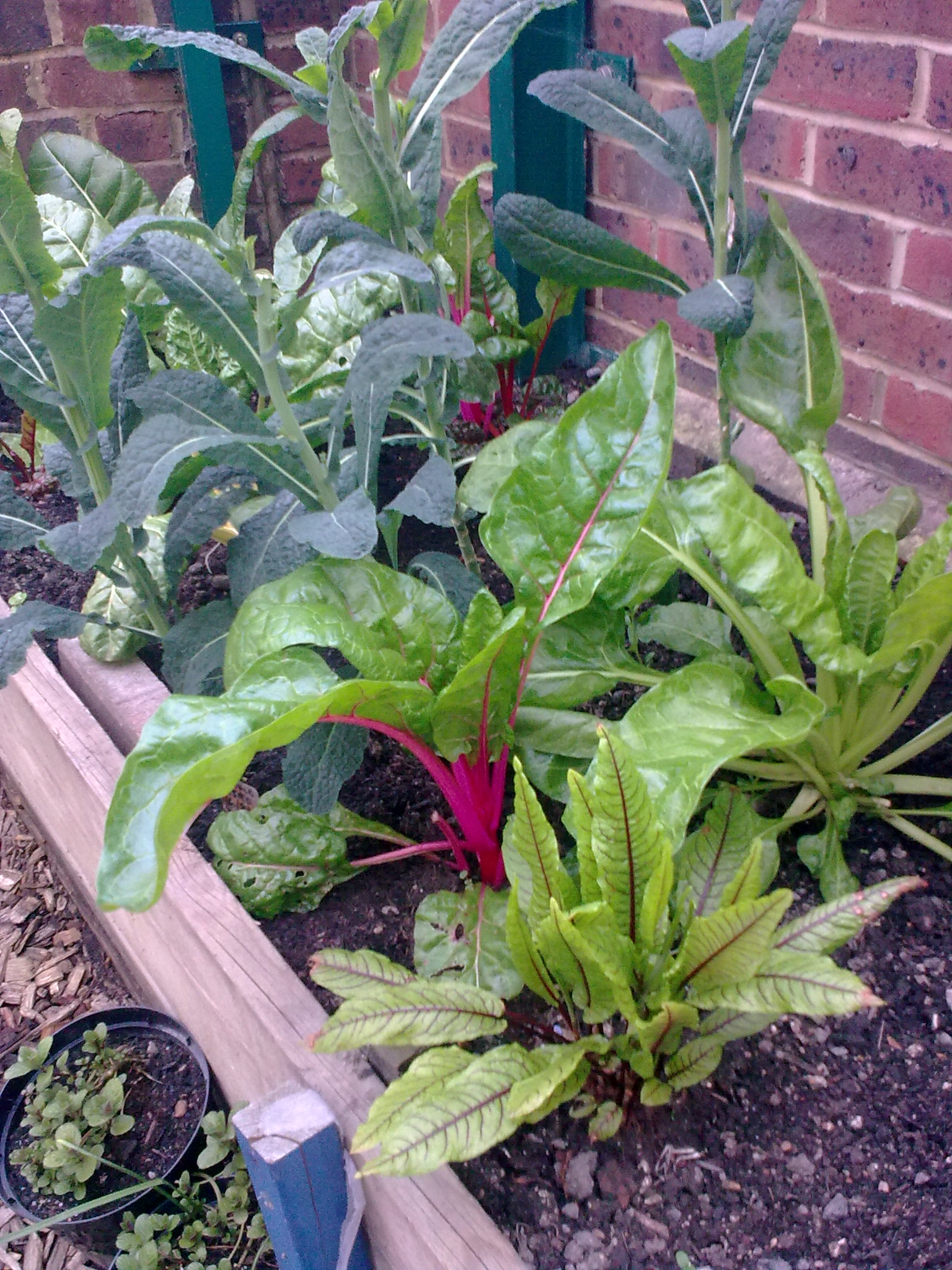
However, we have been harvesting spring greens. Our chard and cavalo nero, planted in August and overwintered, have become star ingredients in soups. The frisee lettuce is a bit of an acquired taste, but it’s a hardy leaf and doesn’t attract the slugs. It’s a great feeling popping out to pick greens just before lunch. The leaves don’t require much cooking – just either steaming lightly with a knob of butter, a tiny drop of water at the bottom of the pan on a very low heat, or adding at the last moment to hot stocks.

For a great ‘hot and sour’ style soup, I use vegetable stock or miso, into which you plunge mushrooms, chopped spring onions and noodles. Then add a bit of rice vinegar and chili oil to taste. Just before you serve, add chopped leaves.  It takes 5 minutes.

Frisee lettuce, with a bitter after-taste, is wonderful as a salad base to which you can add ingredients such as walnuts, bacon pieces or shavings of parmesan. A hearty French dressing, made with balsamic vinegar, mustard and garlic (add some honey to balance the flavours), is essential, together with fresh black pepper.

It’s getting on for lunchtime, so I’ll be out to see what greens there are in the garden. Just a thought: one of the tips from the Southern Water web site on saving water is to wash vegetables in a bowl of water rather than under a running tap. I never thought of it before, but we waste a lot of water through rinsing. I’m trying to rinse off soil from lettuces with water from the water butt, followed by washing in the sink with the plug in.

It feels counter-intuitive since the weather has been so wet recently, but our region is still in drought.


Posted in Edible growing, Weather | Leave a comment

Improving relationships

So far, no sign of the ruby-tinted spinach we seeded back in early March: too hot, too cold, too wet, too windy or perhaps it was the squirrels? Germinating seed is sometimes more difficult than you think, particularly in open ground.

Last season, our scattering of radishes and chard directly into our leafy veg bed worked well. We sowed late August, seedlings appeared quickly in the warm and moist soil. The chard has overwintered. This season we’ve managed peppers and tomatoes so far, but sown in small pots or seed trays, and cossetted in a greenhouse.

Perhaps the problem is the relationship between the soil and the seed. ‘Timely cultivation to make a tilth will ensure a good relationship between seed and soil’, says the voice on a useful RHS video on seeding vegetables. Our soil is quite friable and loose – fairly tilth-like – but perhaps we didn’t define our ‘drills’ sufficiently to bring soil and seed together harmoniously?  The video is well worth watching for a reminder of basic techniques, and I rather liked the idea of gardeners cast in the role of relationship facilitators.

We’ll probably go back to sowing in trays of seed compost first, and then planting out the transplants: the relationship between soil and seed is easier to nurture, without the direct interventions of weather and wildlife. Ruby spinach in a seed tray, courgette seeds in small pots should be no problem – but early sowings of French beans even in individual pots have sometimes defeated me.  Too wet, they rot; too dry, they shrivel –  oh yes, French beans can be very fussy about their relationships.

Posted in Edible growing | Leave a comment