Beautiful bulbs, dying daffodils

We planted a lot of daffodil bulbs in the autumn in the shady triangle. Most of the miniature ones (Tete a tete) came up and flowered beautifully, along with quite a few of the large daffodils at the back of the plot. But the off-white narcissi in the middle of the triangle have only just flowered, sluggishly and half-heartedly, while the irises at the apex produced green shoots and leaves, but no flowers.

Why? The RHS site suggests that bulb blindness may be caused by dry conditions, shallow planting, late planting or poor nutrition on light soils. All of these factors could have applied to our planting, though I don’t think we planted too shallow and I know we worked in lots of bone meal at planting time. But we did plant well into October and November last year, and we have had a very dry winter. We mulched, however, with both wood chip (October, November) and with soil enhancer from recycling (March). Feeding with potassium-rich feed such as tomato feed after flowering seems to be recommended, so that our bulbs can build up resources for next year.

And that’s one of the counter-intuitive things about bulbs: you have to look after them carefully, or at least allow them to look after themselves, after they have flowered and as they start to die down. The daffodils and other bulbs are now at that difficult stage where flowers are gone (we dead-headed most of them) but straggly green leaves are flopping are all over the place. The temptation is to ‘tidy them up’ – tying them, plaiting them or cutting them back. But no: the leaves provide the food for next season and need to be left for at least six weeks after flowering, ideally just dying down naturally to a shrivelled brown and then removed.

The art is to hide the daffodil leaves under the burgeoning foliage of other plants. Certainly, most of the plants in the shady triangle have grown richly these past few weeks, so this should be possible. And then, feed the daffodils along with the tomatoes?

Posted in Uncategorized | Leave a comment

Spring greens

It’s been a frustrating and confusing spring. The daytime temperatures have barely been in double figures, there have been strong winds and heavy rains. Usually at this time of the year, gardens are crying out for moisture. This year, we also need warmth. My greenhouse is filling up with tomato and bean plants we daren’t plant outside just yet. The pots are waiting in the sunniest corner of the station garden, but we’ve learned from the miserable state of the dwarf beans planted in mid April, that early planting doesn’t always pay off.

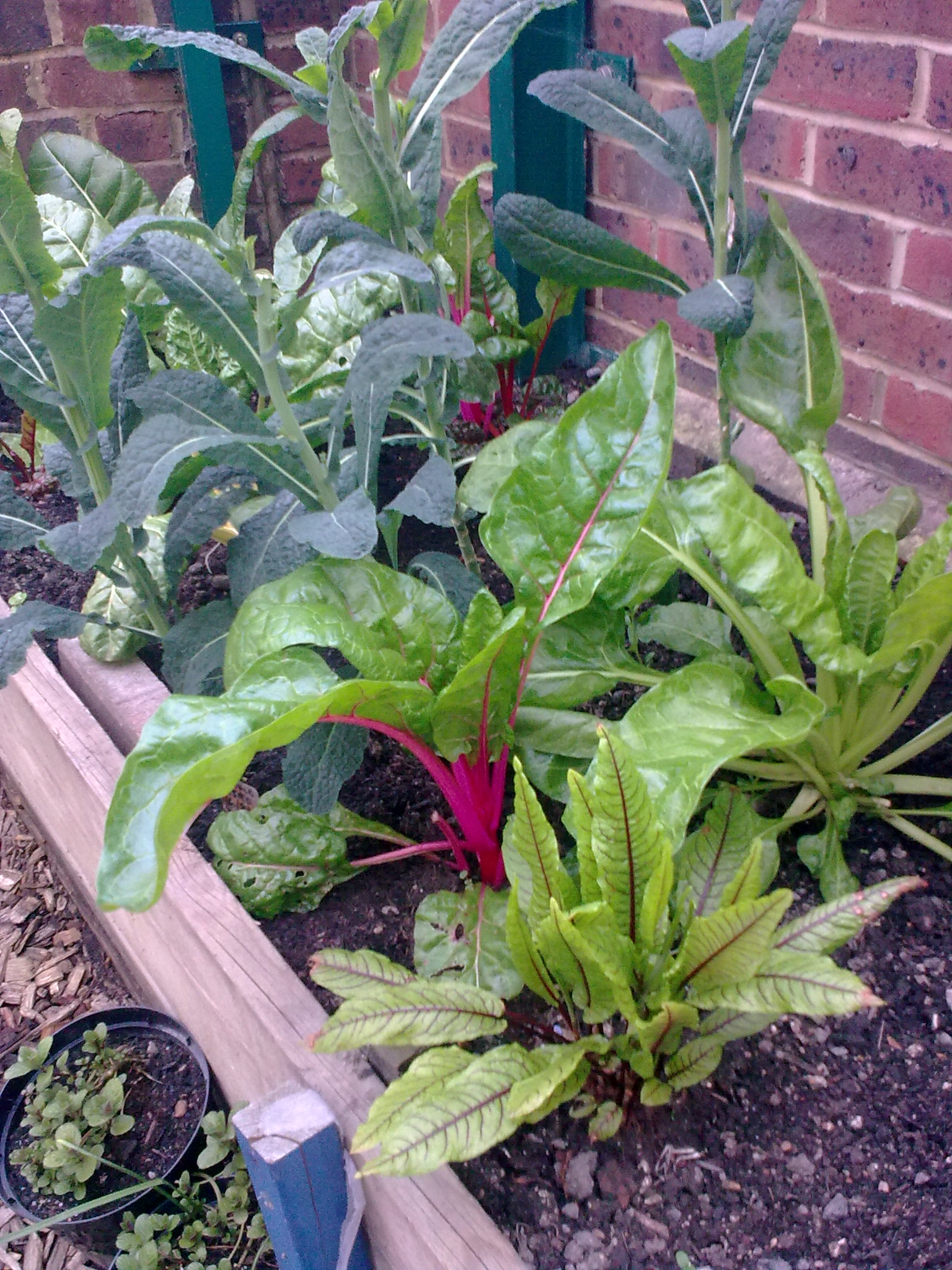
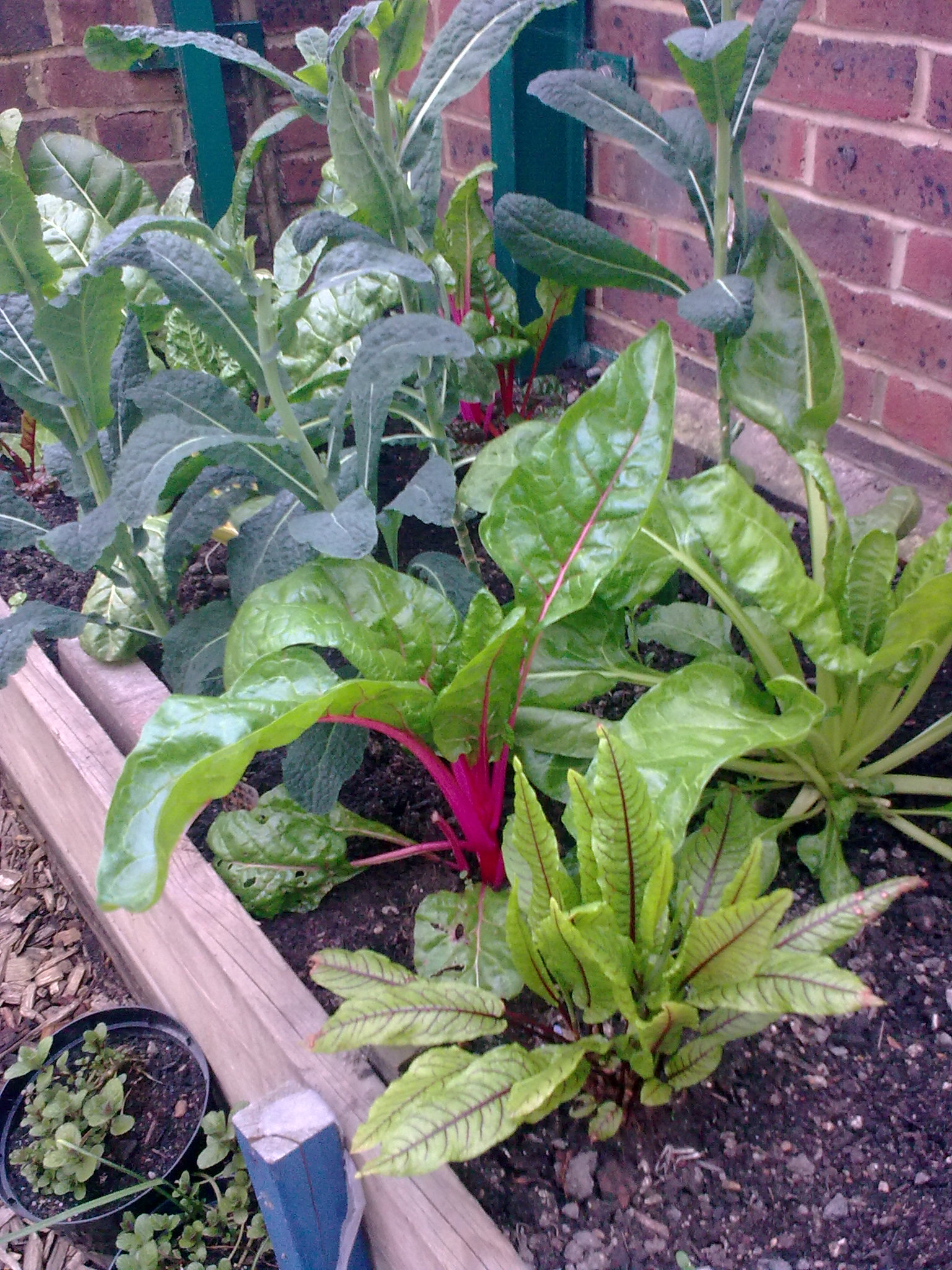
However, we have been harvesting spring greens. Our chard and cavalo nero, planted in August and overwintered, have become star ingredients in soups. The frisee lettuce is a bit of an acquired taste, but it’s a hardy leaf and doesn’t attract the slugs. It’s a great feeling popping out to pick greens just before lunch. The leaves don’t require much cooking – just either steaming lightly with a knob of butter, a tiny drop of water at the bottom of the pan on a very low heat, or adding at the last moment to hot stocks.

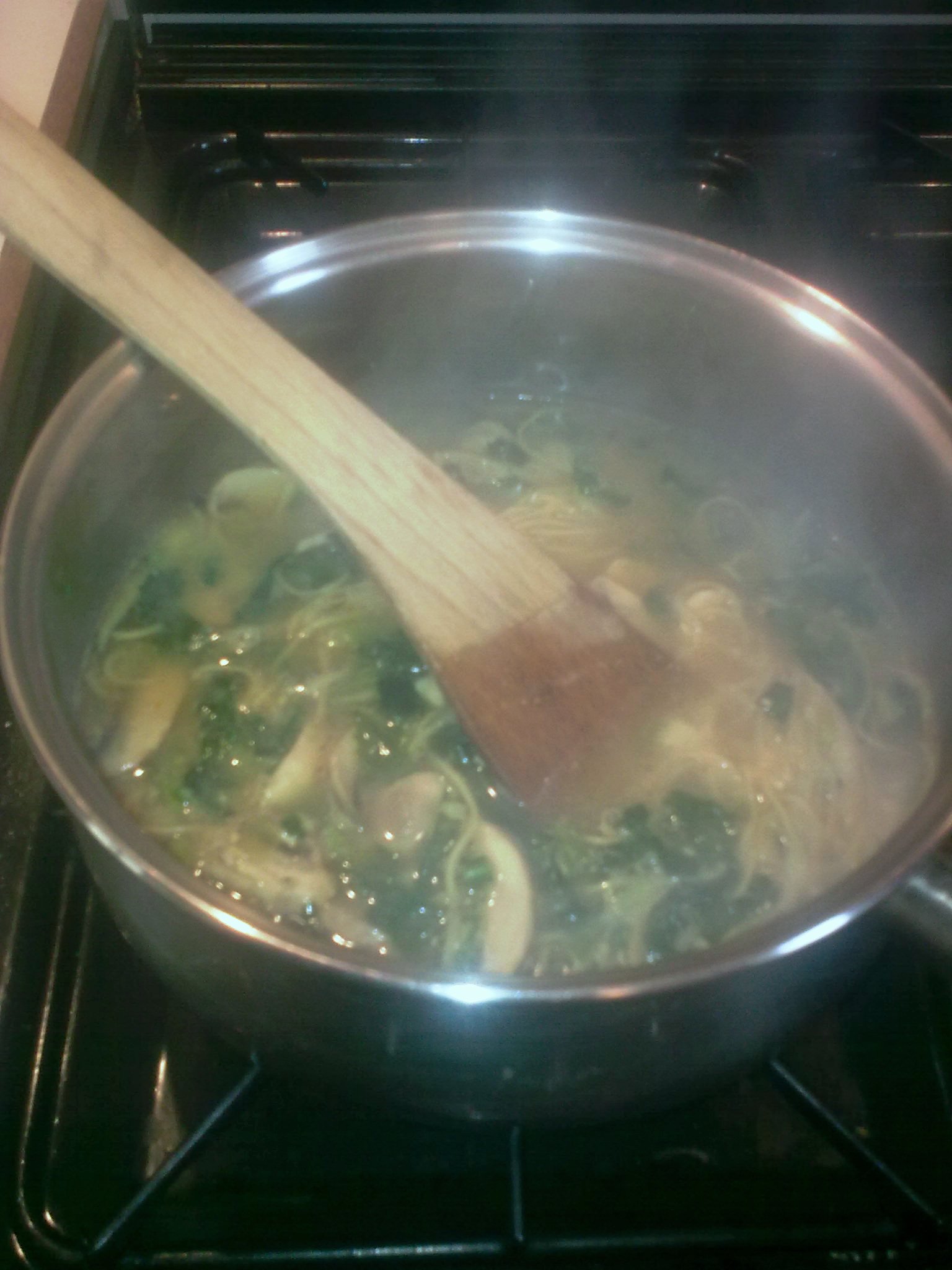
For a great ‘hot and sour’ style soup, I use vegetable stock or miso, into which you plunge mushrooms, chopped spring onions and noodles. Then add a bit of rice vinegar and chili oil to taste. Just before you serve, add chopped leaves.  It takes 5 minutes.

Frisee lettuce, with a bitter after-taste, is wonderful as a salad base to which you can add ingredients such as walnuts, bacon pieces or shavings of parmesan. A hearty French dressing, made with balsamic vinegar, mustard and garlic (add some honey to balance the flavours), is essential, together with fresh black pepper.

It’s getting on for lunchtime, so I’ll be out to see what greens there are in the garden. Just a thought: one of the tips from the Southern Water web site on saving water is to wash vegetables in a bowl of water rather than under a running tap. I never thought of it before, but we waste a lot of water through rinsing. I’m trying to rinse off soil from lettuces with water from the water butt, followed by washing in the sink with the plug in.

It feels counter-intuitive since the weather has been so wet recently, but our region is still in drought.


Posted in Edible growing, Weather | Leave a comment

Improving relationships

So far, no sign of the ruby-tinted spinach we seeded back in early March: too hot, too cold, too wet, too windy or perhaps it was the squirrels? Germinating seed is sometimes more difficult than you think, particularly in open ground.

Last season, our scattering of radishes and chard directly into our leafy veg bed worked well. We sowed late August, seedlings appeared quickly in the warm and moist soil. The chard has overwintered. This season we’ve managed peppers and tomatoes so far, but sown in small pots or seed trays, and cossetted in a greenhouse.

Perhaps the problem is the relationship between the soil and the seed. ‘Timely cultivation to make a tilth will ensure a good relationship between seed and soil’, says the voice on a useful RHS video on seeding vegetables. Our soil is quite friable and loose – fairly tilth-like – but perhaps we didn’t define our ‘drills’ sufficiently to bring soil and seed together harmoniously?  The video is well worth watching for a reminder of basic techniques, and I rather liked the idea of gardeners cast in the role of relationship facilitators.

We’ll probably go back to sowing in trays of seed compost first, and then planting out the transplants: the relationship between soil and seed is easier to nurture, without the direct interventions of weather and wildlife. Ruby spinach in a seed tray, courgette seeds in small pots should be no problem – but early sowings of French beans even in individual pots have sometimes defeated me.  Too wet, they rot; too dry, they shrivel –  oh yes, French beans can be very fussy about their relationships.

Posted in Edible growing | Leave a comment

April showers, summer drought

At last the weather has decided to be season-appropriate. So far in Brighton, we’ve had spring in January, winter in February and summer in March. After the warmest January and the driest March on record, the South East of England is subject to drought and since the beginning of April, we are banned from using hosepipes.

Much to our consternation, our two water-butts in the station garden were starting to run dry at the end of March. The temperatures were up in the 20’s (centigrade). While plants were enjoying the sunshine, we were concerned about keeping our new plantings – our seven young fruit trees in particular – well watered. There was a sense of panic: if we have little water at the end of March, how will things be in June when our raised beds are full of new vegetables? And with the hose-pipe ban?

Since the beginning of the last week, however, we’ve had lower temperatures, bright sunshine, blue skies and sudden downpours. Our water-butts are full again and plants are sprouting intense green leaves. The ‘Bright Lights’ chard, planted in August, have beautiful yellow and magenta (a rich word for a rich colour) stems. The onions have sprouted. We’ve picked the heads of the cavalo nero (like purple sprouting broccoli). The hanging basket which Marlene planted up for us now has perfectly-formed miniature tulips. The Harvest raspberry canes have leaves, including those we planted experimentally in containers.

As for the mini-orchard, the fruit trees planted in mid-March all have leaves and buds – all except for Crawley Beauty, that is. Mary was very dubious about the name of this tree, which she planted, and so far, it’s still sleeping. It has been planted in the shadiest position, and I’m sure it will wake up and blossom soon. It’s a cooking apple after all, hardier probably than the fancier eating varieties, and it will take its time.

The fresh air, moist soil, blue skies, occasional showers and warm sun, however, are notoriously fickle at this time of year. Night-time temperatures on Sunday are forecast to go down to 2C with possibilities for frost – which could mean wrapping the lettuces up in fleece blankets again! And if we continue with ‘sunny spells’, it doesn’t take long before the soil starts to dry. And yes, we still have a drought.

In the station garden, we’ve hardly ever used a hose-pipe in any case, so there’s hope we’ll manage this summer. Last summer, we did fill up a leaking water-butt via a long hose extension to Madeleine’s outside tap, but the operation was fiddly, lengthy and faintly ridiculous as we stood there in our yellow jackets warning station users about the snaking pipe dangling overhead.

Our shady garden should survive drought quite well; the leaf canopy means that evaporation from the soil is not so intense, but then the soil doesn’t get as much rain. We plan to install another water-butt in the gated plot where we have our fruit & veg. In both plots, we’ve dug lots of organic matter into the soil, and covered it several layers of mulch: bark in the shady triangle, followed by soil improver from recycling, and stable manure compost worked into the raised beds in the gated plot, mulched again with the soil improver.

The point of building the raised beds was to avoid reliance on smaller containers which are demanding both in terms of growing medium (compost has to be bought each year) and water. We are restricting our use of containers this year to our sun-loving vegetables: chilis, tomatoes and peppers, and possibly courgettes, just to experiment with vertical rather than horizontal growing. We may need to invest in some soil-based compost for our pots as this dries out less quickly than standard peat-alternative-based.

There’s more about coping with drought on the RHS website, and you can read their guide . Some of our key tips:

  • We’ve adopted the finger method of checking for water needs: if the soil is dry at your finger tip when you stick it in the soil, then water is probably needed.
  • Watering should be generous; skimping just wastes water and encourages superficial root growth. Avoid watering leaves: water around the base of the plant.
  • According to the RHS, fruit and vegetables will usually crop without watering, but quality and quantity is improved with watering near to harvest.
  • Containers DO need frequent watering as they will otherwise dry out quickly. Line earthenware pots with polythene to avoid evaporation. Plastic pots are better. Put saucers under containers.
  • Establishing plants – seedlings, newly planted plants – DO need water, but not over-watering. Their roots do need to be encouraged to search the soil for moisture.

And there’s one great thing about dry gardening conditions: slugs and snails hate it!
Posted in Weather | 2 Comments

Making a start on the Preston Circus planters

It’s hot now in Brighton. It’s been hot for the past 10 days. Last Saturday was hot and bright – a perfect day to start exploring the four municipal planters at Preston Circus. Eve and I spent a couple of hours digging over the planters and rescuing the plants that had survived.

We did have to clear quite a few cigarette butts, but contrary to expectation, the planters were relatively clear of rubbish. What’s more, the compost in them looks feasible. It’s dried out, but it’s not dusty, compacted soil or the kind of claggy mix of sand, chalk and stones that we uncovered in the shady triangle to begin with. It will need quite a lot of mixing with organic matter. But there’s potential.

Furthermore, we were able to rescue quite a lot of plants. It looks like these were planted last summer, but clearly didn’t grow well. The majority were root bound: their roots had grown round and round tightly following the shape they had been in the pot, not venturing out and developing into the soil. We dug out about eight lavender and ten vinca minor that were growing. There was also quite a bit of catnip (nepeta cataria) and some curious rhizomous plants: kniphofia? hemerocallis? montbretia?

The rescued plants have now been repotted and soaked, and are being looked after outside my greenhouse. They should grow back, ready for planting at the end of April when Brighton & Hove City Council have promised to refresh the soil in the planters.

As always, passers by stopped to chat as we dug, and five more people signed up to support the resurrection of the Preston Circus planters, in particular to take on watering once planting has happened. We’ll be looking at planting from mid-April. Drought-tolerant plants are going to be essential given this summer’s hosepipe ban.

If you’d like to help with resurrecting these planters, do get in touch: pcplanters@hotmail.co.uk

Posted in Preston Circus planters | Leave a comment

Turning over the compost

On Tuesday Mark transferred our compost from the wooden bin to the large plastic bin. We had almost filled up the wooden bin, and the mixture was getting a little slimy. This is probably normal at the end of the winter. The compost simply wasn’t breaking down during the really cold weather in February.

We were also a little suspicious that our carefully tended compost was providing a lovely warm nest – or perhaps overnight accommodation – for a small rodent. Sometimes vegetable peelings were pushed up against the sides of the bin, and there seemed to be small indentations. When we turned the compost, there did seem to be a run, dug underneath the wooden bin, but otherwise, no other evidence of inhabitation.  We’ll be lining the wooden compost bin with fine mesh chicken wire before we start using it again.

The new plastic bin has an integrated base, and we’ve placed it on a brick base to stop any burrowing underneath it. We started the new bin off with some woody prunings, and mixed in some rotted straw-based manure and some of our leaf mould from the autumn. Mark has also added a few layers of shredded cardboard, and we’ve sprinkled some Garotta on the fresh top layer.

The compost – which we started in the autumn – looks good: brown already, though still a bit clumpy rather than crumbly as they say it ought to be. Now we’ve mixed it, and the days are getting warmer, it should start breaking down quickly and be fully ready for working into the raised beds and the shady triangle in the forthcoming autumn.

Posted in Composting | Leave a comment

Things to do, places to go

Lots of things are happening, lots of things to do. We seem to have lurched from winter to spring in the space of a few days, though there are still occasional frosts. I think we’ll be clearing things out today in the station garden and sowing new seeds.

And it’s not just in the garden that things are happening. Elsewhere in Brighton & Hove, there are moves afoot to get community gardens together. Harvest, the edible growing part of Brighton & Hove Food Partnership, do a fantastic job of keeping us all informed about events and opportunities for networking.

We’re also joining Brighton & Hove’s Community Voluntary Service Forum, after Mary attended the Green Spaces meeting last week to support networking of gardening groups. We’re also applying to join the Royal Horticultural Society’s Britain in Bloom ‘-It’s Your Neighbourhood’ scheme.

And here are details of some interesting events we hope to get involved in:

On Sunday April 1st 1- 3.00 pm, Hanover VEG, a community garden at the Hanover Centre, are having a Growers gathering. It’s an opportunity to swap seeds, seedlings and know-how with other community gardeners.

On Tuesday April 3rd 6.30 – 8.30 pm, The Food Partnership is launching its refreshed food strategy. They are inviting community food projects to showcase their work. The event is by invitation only, so e-mail Ann Baldridge, the Harvest Development Officer on ann@bhfood.org.uk to find out more. We’ll be sending in photos of the London Road Station Partnership, and hopefully someone can get along to talk about it.

On Tuesday 22nd May we’ll be finding out more about maintaining our cordonned fruit trees at Brighton Permaculture Trust’s community orchard training day course in Stamner Park. It covers the ‘basics of how to nurture newly planted fruit trees during their vulnerable first few years – watering, feeding, pest and disease prevention’ as well as ‘apple cookery, making juice on a traditional apple press, and other ideas for celebrating your apple harvest with your friends or community’. It’s open to anybody over 16, not just community groups.

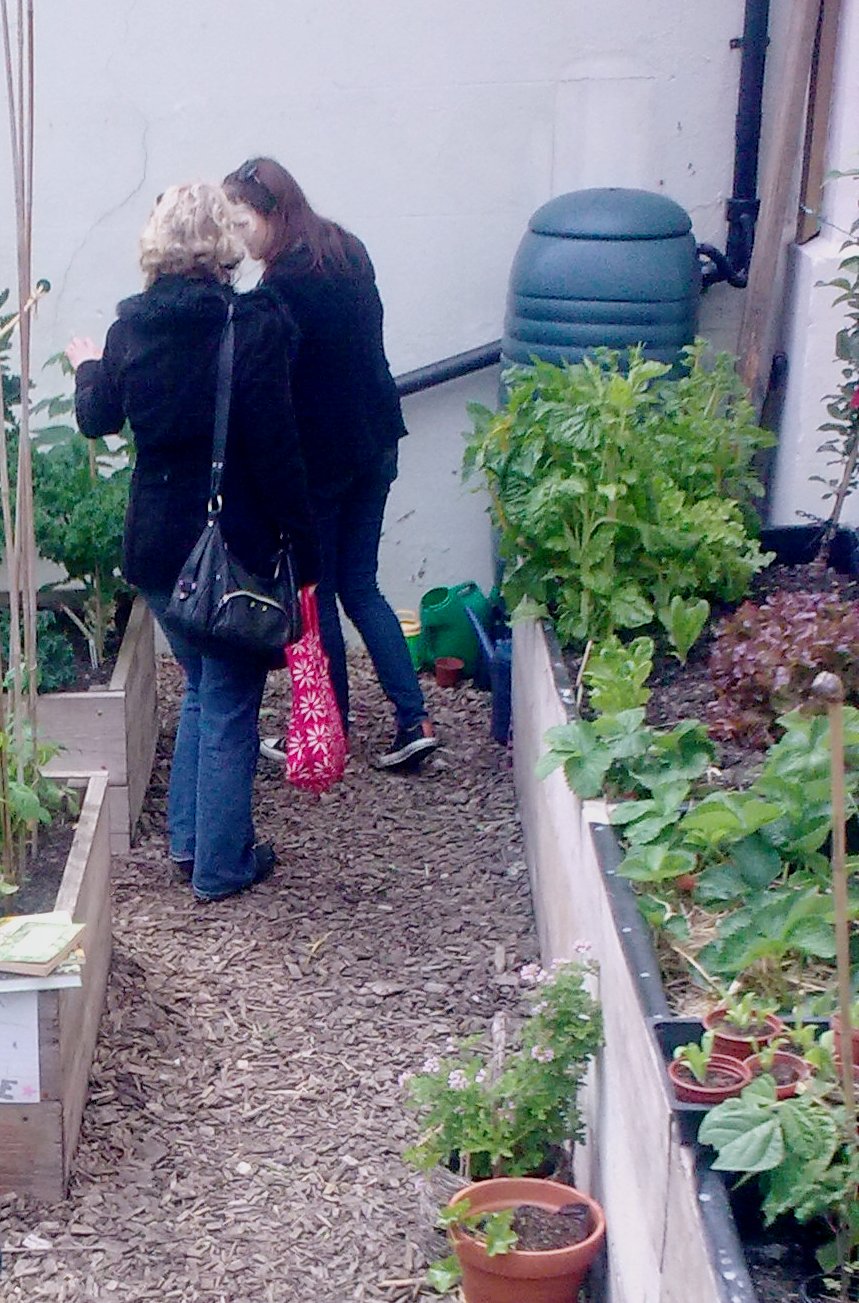
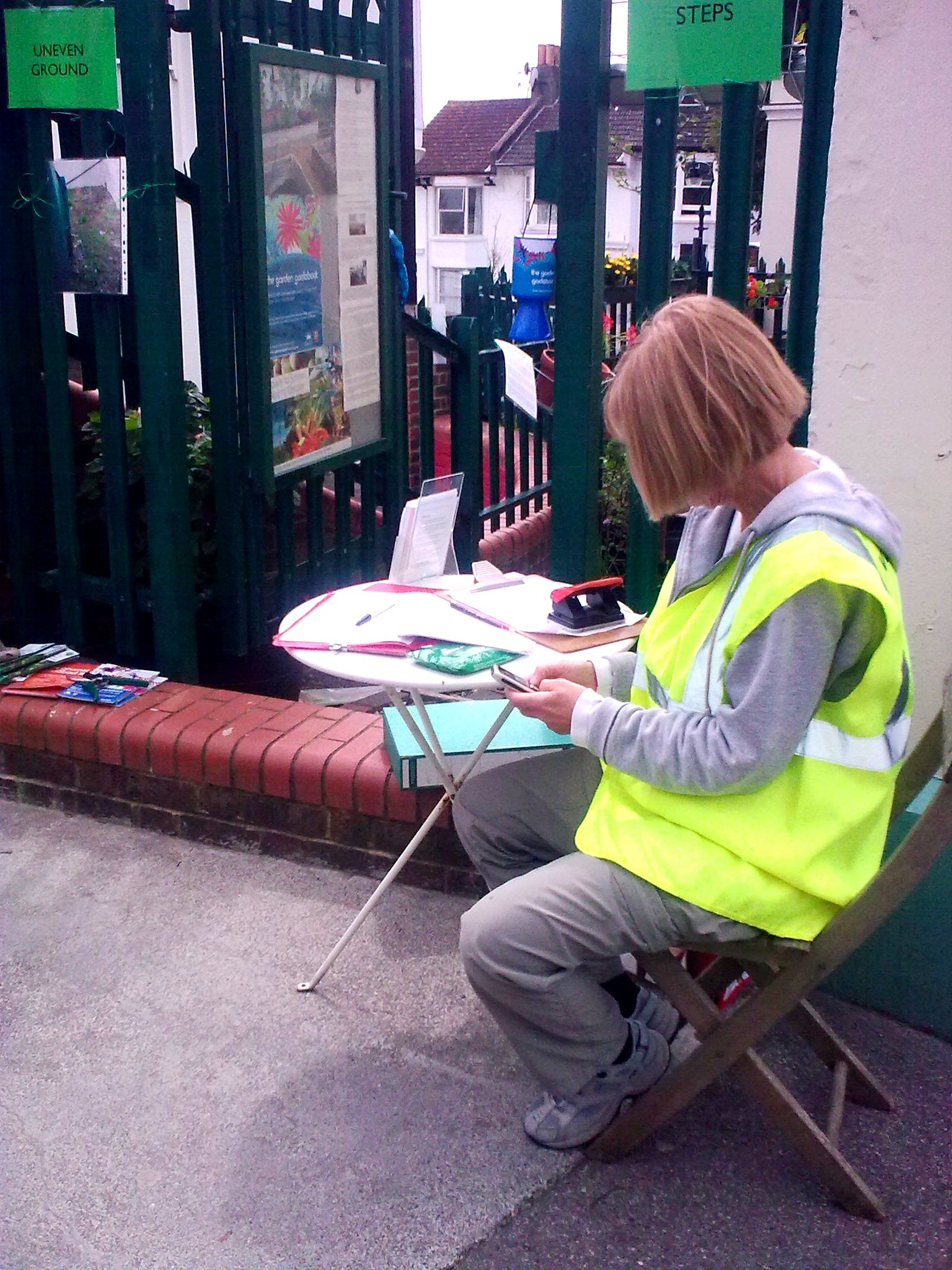
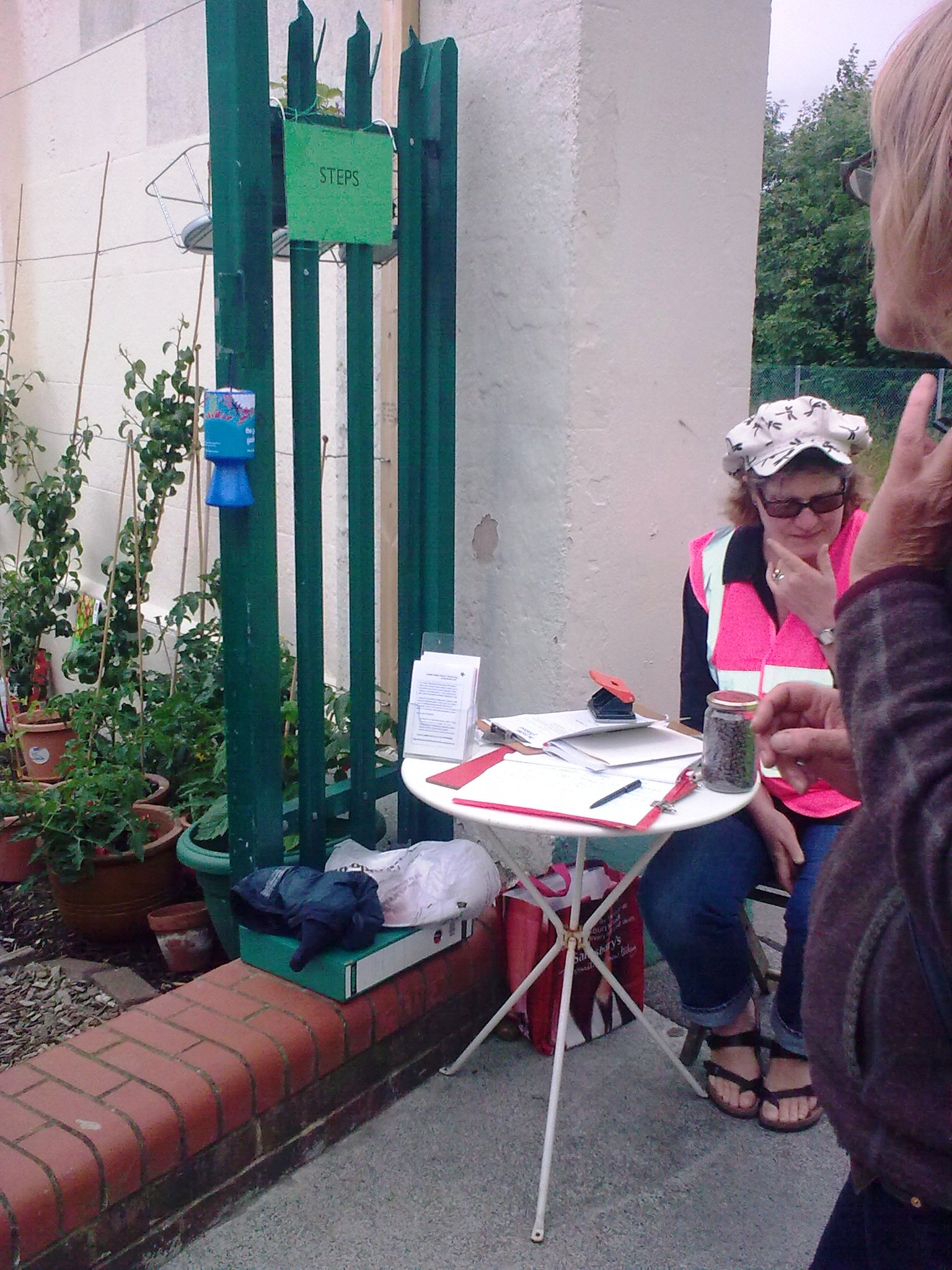
And on Saturday 23rd June, we’re part of the Five Ways and Roundhill trail for the Brighton Garden Gadabout. We’ll be ‘opening’ the gardens to support The Sussex Beacon. We hope by that time, the cordonned fruit trees will have leaves if not blossom, and our veg beds will be looking lush with salads, kales, beans, onions and strawberries, together with pots for the sun-loving tomatoes, chili and peppers. The shady triangle should look beautiful too, its heucheras restored and replenished, its geraniums in bloom, more fuchsias and foxgloves, and perhaps some aquilegias and astrantia still in flower.

Finally, we’re very chuffed to have been invited to speak about the gardens at the Association for Community Rail Partnership‘s National Station Adoption Seminar in Manchester on July 18th. The visit to Manchester may provide an opportunity to visit the inspiring Incredible Edible project in Todmorden.

Time now to get down to real work – digging over a potato bed, planting marigold seeds and later this afternoon, the lovely task of turning over our compost.

Posted in Events | Leave a comment

It’s spring – a year of LRSP

This last week has really brought a sense of spring to Brighton. The daffodils are out, there are buds on the trees and cafe tables are appearing on the pavements again. The sky has been bright blue, the sun has been shining and the temperatures have been up to 17C. I’m apprehensive about the drought that’s been declared in the South East, but today it’s raining for the first time in 10 days.

It’s almost a year since we set up the London Road Station Partnership and started creating our gardens: we had our first meeting on Sunday 27th March last year. It’s a moment to reflect on what we’ve achieved because it’s so easy to forget. Here are the before and after photos: and yes, our bulbs did come up (see November post).

Shady triangle

Shady triangle March 2011

Shady triangle March 2012

Gated edible growing plot

Gated plot March 2011

Gated plot Jan 2012

Posted in Uncategorized, Weather | Leave a comment

Mini-orchard planting

We had a very successful fruit tree planting last Sunday. Seven fruit trees were planted guided by Brighton Permaculture Trust, and all in all, around 50 people came along to celebrate and help dig in the trees.

Pete West – our Councillor and Cabinet Member for Environment and Sustainability – and our MP and neighbour, Caroline Lucas, were there to do the first digging. We were also delighted to see Ann Baldridge from Harvest, Sam Bryant from the Sussex Community Rail Partnership, David and Mike from the Phoenix Centre, Tom from the Signalman pub and of course, lots of neighbours and friends.

Robin van Creveld prepared a wonderful lunch on the station terraces of apple and squash soup, apple ratatouille wraps and a ‘winter pudding’ made from panetone soaked in apple and blackberry compote with port. The recipes are on his website.

The event was the culmination of a month of intensive work in the garden. To make it even more special, we learned the day before the event that we’d been successful in getting a small grant from Harvest to cover further training with Brighton Permaculture Trust on the maintenance of the mini-orchard.

You can read all about it in Brighton’s Evening Argus (the wonderful Argus characteristically got the name of our group wrong in the first paragraph: we are not Preston Circus planters!)


Posted in Edible growing, Events | Leave a comment

Magic moments in the garden

It’s been pretty intensive in the gated plot these last few days as we’ve worked hard to build the raised beds, repaint the wall, put up the trellis wires for the mini-orchard and get the raised beds filled with rich soil ready for Sunday’s fruit planting event.

But it’s also been quite magical. It’s made me realise how the garden seems to bring out the best in people. On Wednesday, we were offered around a ton of soil improver from the composting company at the Beddingham recycling plant near Lewes. It arrived loose in a truck early on Thursday morning. I sent out a plea to Ditchling Rise Area residents midday on Wednesday and by Wednesday evening, someone had loaned us a wheel-barrow and a large tarpaulin. At 8am on Thursday morning, a group of around five neighbours equipped with shovels appeared to help shift the mound of compost that arrived, steaming, on the station forecourt. As some went off to work, reinforcements arrived, and by 9.30, we’d moved the (compost) mountain.

On Thursday afternoon, Brighton Permaculture Trust arrived with sixty bags of rich soil. As I was unloading them with Luke, a young man dressed carefully in top range sports gear stood watching us. After a moment, he offered to help. He spent 10 minutes helping us carry muddy bags into the garden – never mind the fact that he got soil on his clothes and very dirty hands. I was quite moved by the unexpected gesture.

This morning, as I was digging energetically to mix the Permaculture soil with the Beddingham soil improver, I was distracted by the lovely tinkly sound of what turned out to be a ukelele. Unexpected music in the street is always magic. Narainder said he’d just bought the instrument and had never really played it, but it sounded fun. We talked about music and gardening being great social unifiers.

The interest of passers-by, the conversations, the good humour, the unexpected acts of generosity have been the magic moments of gardening at the station that inspire and motivate. And today, finally, the weather also brought the magic of blue skies and warm sunshine: for the first time, it really felt like spring.

Posted in Uncategorized | Leave a comment