All going wonderfully and too fast!

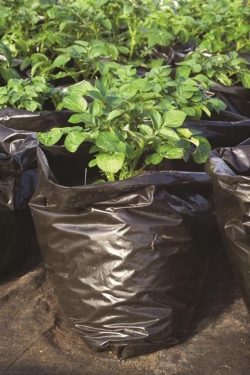
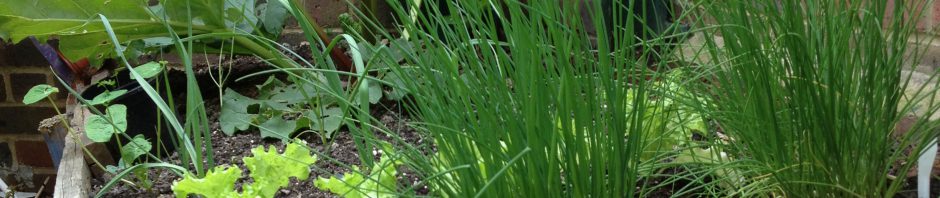
It’s all growing – growing so fast I can’t keep up. Our potato plants are huge, with leaves billowing over the old compost bags (wow! our compost must have been powerful) and we’ve now got flowers – good sign. Our fruit trees are looking beautiful with lots of little applets and pearlets and plumlets; we’ve even got blueberrylets and strawberrylets. Our green leaf beds are doing well: last year’s rocket is powering away, this year’s sowings of lettuces of various kinds are taking well, cavalo nero and chard seedlings are in and happy after the rain and beetroot seedlings, planted with two enthusiastic school children about a month ago, are doing well. We’ve got beans and courgettes surrounded by marigolds and the leeks and onions, sown earlier in the year, are growing well.

Slugs and snails are a bit of a problem this year, but the grease bands around the fruit tree trunks seem to have worked – amazingly. Certainly the station trees are doing better than my own plum trees which have been badly attacked by rosy aphids, and I forgot to give them the grease band treatment.

And we’ve got hanging baskets of flowers: finally, Marlene has persuaded us by bringing hanging baskets and seeds, that it might be nice to have some colour around the place. We planted them up a couple of weeks back with petunias, geraniums and lobelia and put in plenty of water crystals and absorbent lining. They drip onto other pots when we water them.

It’s all lovely – May this year has been such a wonderful month of transformation. A cold and wet April meant we had a slow start this year, but May has given us hot days and lots of rain. It’s all been happening very quickly, so quickly that I haven’t been able to steal the time away from the gardens to post photographs of everything that’s been happening. That will have to wait …

Meanwhile, Mark has cleared the pipes down to our water butts so we should have a good supply of water with a couple of downpours forecast. It’s all happening …
Posted in Uncategorized | 1 Comment

Celebrating spuds

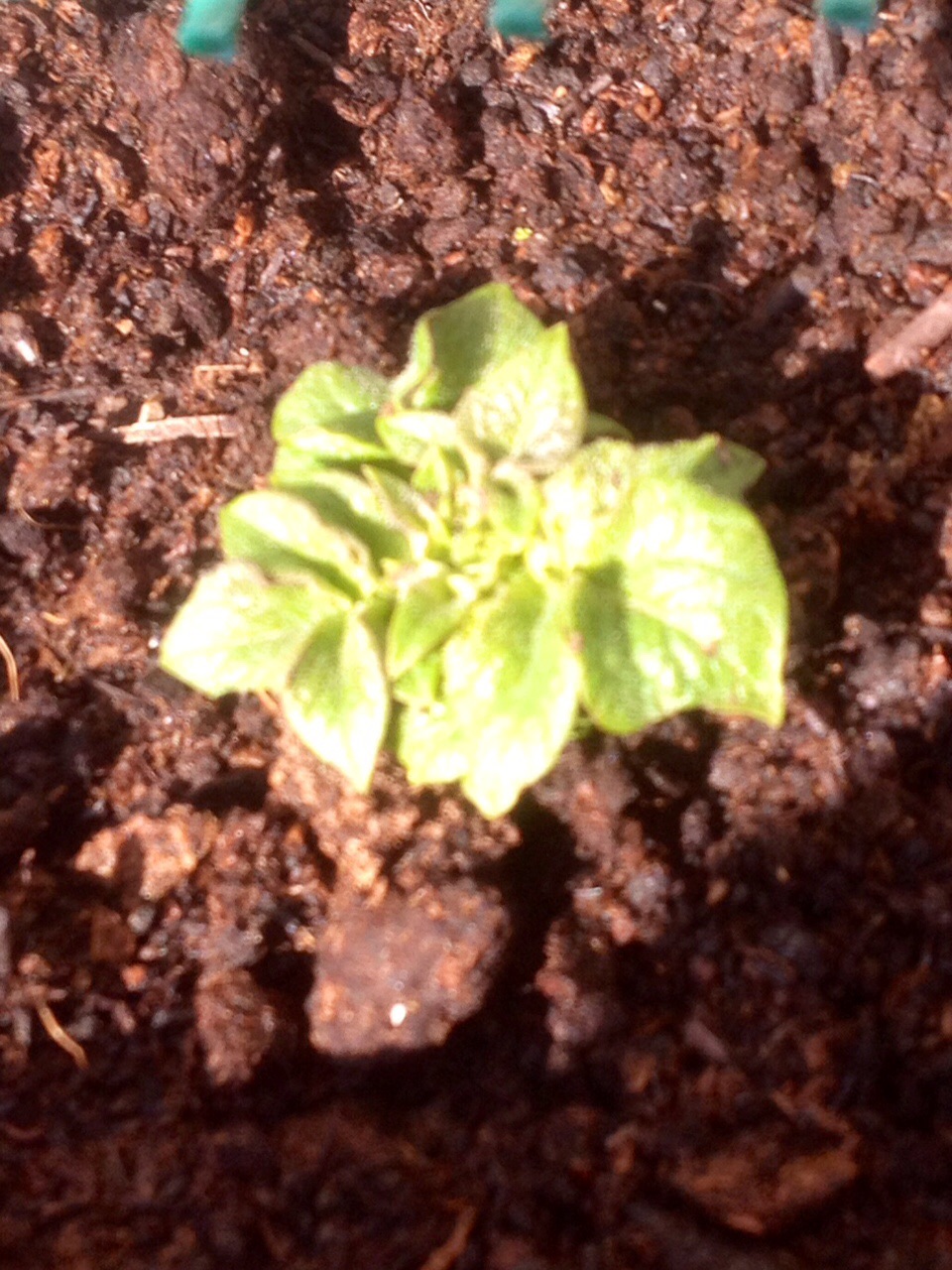
imageWe have experimented this year with potatoes in plastic compost bags using around a third of our own compost as well as compost from old grow bags and pots.

Yippee … The Sharpes Express first earlies are showing signs of life along with one or two of the Charlotte second earlies. Can it be this easy?

We’ve registered for Miles of Spuds, set up by The Green Centre, Brighton. It turns out that the Sussex Land Army women planted a mile of potatoes across Brighton during the Second World War and this initiative is to celebrate that.

Posted in Uncategorized | Leave a comment

March – optimism against the odds?

Clematis%20Pilu

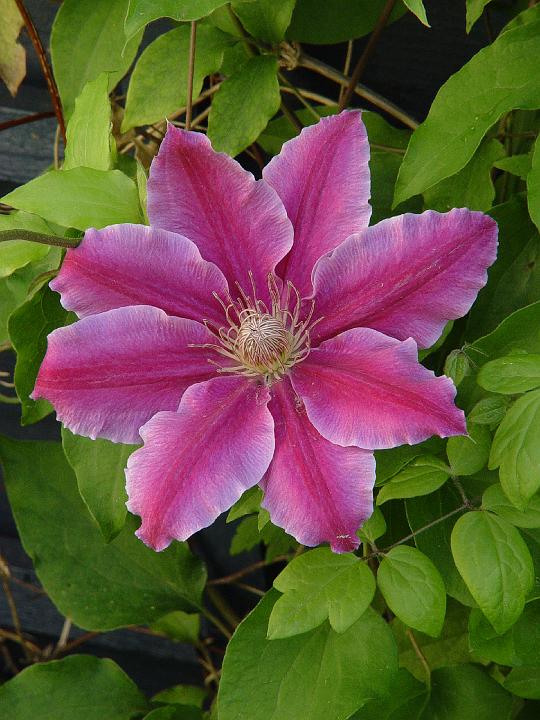
Clematis ‘Pilu’

There’s a lot in this blog about the weather: our gardening lives are dominated by it. Today started out a bright cold morning: blue sky, sunshine and a sense of spring in the air. A morning designed to inspire optimism and plans.

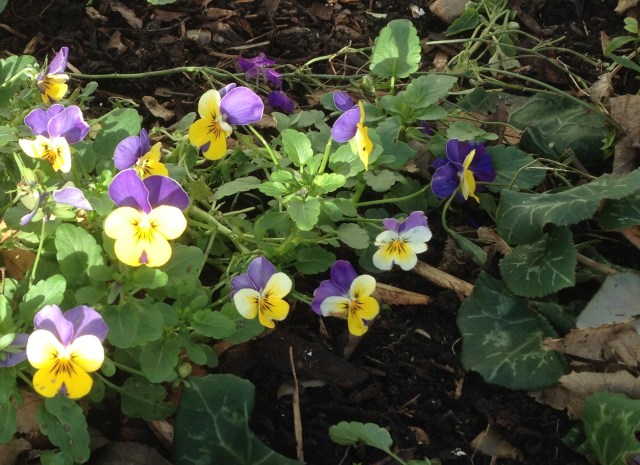
Some of us had arranged to go to our local garden centre; it was the kind of morning when I have to be restrained from buying every beautiful plant in sight. We bought more dwarf daffodils and some pansies to fill spaces in the tree pits and platform planters, along with the primroses imported from Wales and some lovely red primula, reduced in price at a garden centre last week. We also bought another clematis (‘Pilu’) for the Lewes planter and leek seedlings (‘Musselburgh). I envisaged an active work session of planting out.

Indoor gardening 3.16

Indoor gardening

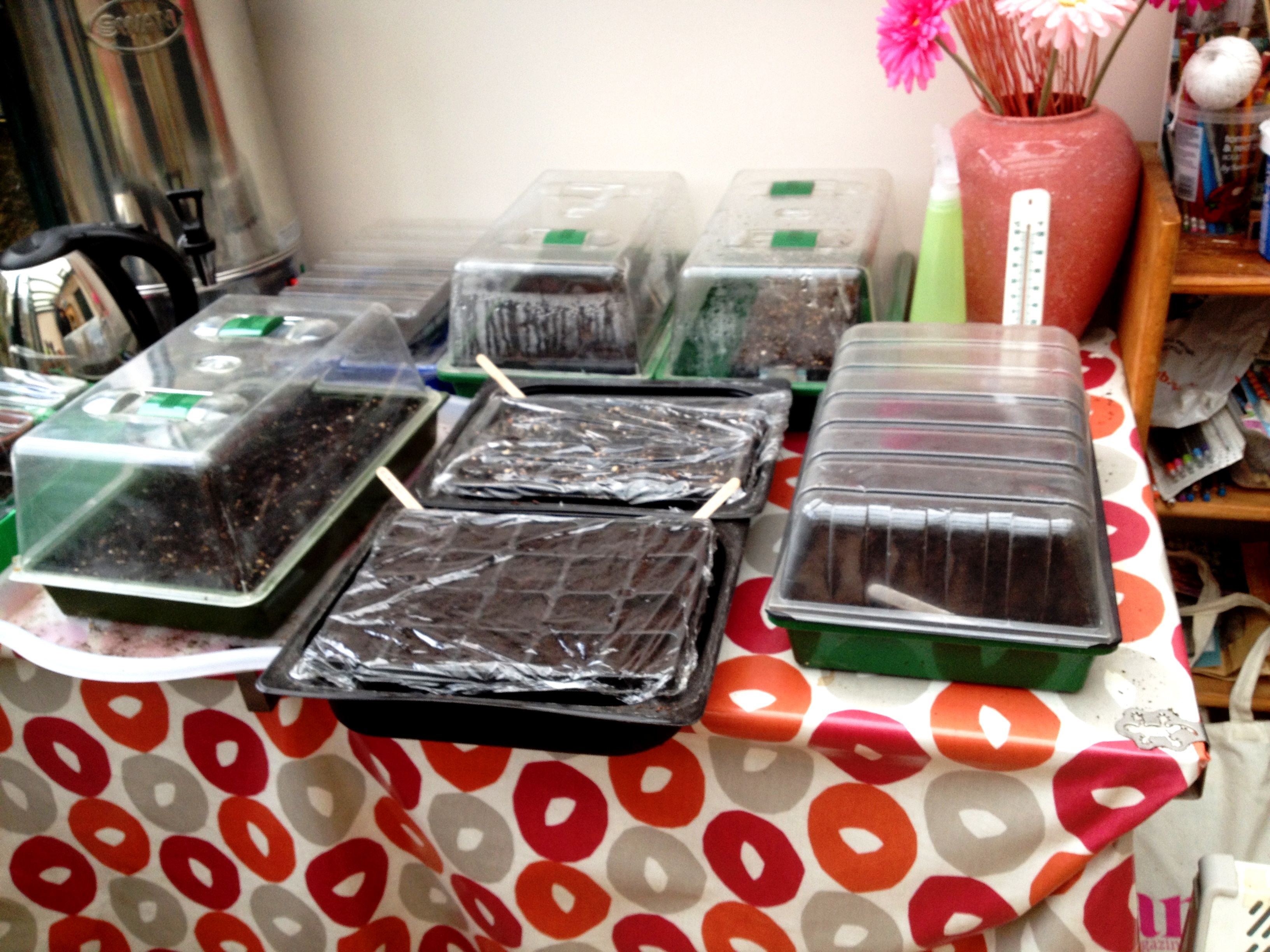
As we looked back across the Downs from the garden centre, we saw – and felt – the clouds and the cold roll in. The sky was bleak and overcast by the time we got out to the LRSP gardens this afternoon. We retreated to the conservatory to sow some more seeds. This is how it is at this time of year: lots of plans, lots of aborting plans cause of the weather – too wet, too cold, too windy, too frosty. This year has had a very different set of gardening frustrations to previous years: very wet and over 10c before Christmas, now dryer but falling to just above freezing at night and in single figures during the day. In March in the south of England, that’s unusually chilly. And not great for sowing seeds, which typically need 15-20c to germinate.

Seed trays 3.16So this afternoon everything was in the conservatory: us, the seeds, the compost, the seed trays, the watering cans, the propagators – all a bit of a muddle. But we have managed to sow this week and last:

  • Courgette ‘midnight F1’
  • Lettuce ‘Lettony’
  • Lettuce ‘Salanova’
  • Swan river daisy
  • Cleome
  • Marigold French petite mixed
  • Lovage
  • Basil (Italiano Classico)
  • Basil (Crimson king)
  • Sweet peas (Giant waved)
  • Cleome

So far no sign of germination, except the classic Italian basil: tiny green shoots pushing through the soil. Just enough to make me feel it’ll all grow, despite the cold.

Posted in Uncategorized | 1 Comment

International women’s day in the garden

Sandi Toksvig in her Brighton show on International Women’s Day urged women to get out there, and be active and joyful in a mad and somewhat surreal-ly skewed world. We were …  and will be: all four decades of us.

Posted in Uncategorized | Leave a comment

Seeds for spring

Yesterday was bright and sunny and for the first time in 2016 I spent the whole day in the garden, pottering and clearing. Sadly, this morning, it’s grey and overcast and we can’t do our planned garden centre visit. Time, though, to take stock of our seeding plans and … do the washing-up. Our seed trays and pots will need to be washed in Jeyes fluid (a dreadful smell, but one I now associate with the excitement of early spring) and set out to dry or be wiped down ready for this year’s seeds.

Last week, over a cosy tea, we reviewed our planting from last year and planned for this year.

  • sweet corn: ok, but didn’t produce enough for the space they took up
  • squash: the ones we deliberately planted didn’t do well, the ones we didn’t know we planted rambled all over the training wires for the mini-orchard and we all now have beautiful displays of yellow and green striped gourds in our houses! They do require space.
  • tomatoes: for the investment in time, water and feed, they are not worth growing in grow bags and pots outside. My greenhouse probably produces enough for us all, so more ‘sweet million’ in grow bags indoors.
  • carrots: need very carefully prepared soil – didn’t do much in containers

The problem with things like purple sprouting broccoli and other brassicas is that they take up a lot of space and get devoured by caterpillars. Rather more adventurous things like aubergines and peppers require sunlight, warmth and shelter. So we settled on the following list for our small site which gets South westerlies blowing through and where the only water source is our water butts:

  • Shady bed: leeks (miniature), chard,onions, cavalo Nero (inevitably!)
  • Warm front bed: courgettes (bush miniature), French beans
  • Back slightly shaded bed: runner beans, rocket and other leaves, also beetroot
  • Orchard bed: beetroot and lettuces
  • And lots of basil and parsley!

We should also sow some marigolds and other companion plants, and maybe some other pollinator plants that will look pretty (and survive) in Marlene’s hanging baskets.

Posted in Uncategorized | 1 Comment

Pot potatoes – our ‘feature’ for 2016

250x375_fit_black-potato-bagsMarch 1st: it should have been a presage of spring but after a wonderful bright day yesterday, we woke up to ‘mist and murk’, wind and rain again. I cancelled the usual Tuesday workday as it was very wet outdoors. Instead, four of us met for tea inside in the warm at Diane’s and brainstormed ideas for planting for 2016.

2016 is going to be our pot potatoes year: we’re going to try growing potatoes in pots and bags. As none of us has done this before, we’re looking for guidance and here is wonderful Monty Don, showing how to plant potatoes in dustbins using mostly garden compost. Fantastic!

One of the things which puts me off  growing veg in containers is the need to buy potting compost and replace it each year. But ‘garden’ compost: we have plenty thanks to our community composting scheme. I think we even have a spare dustbin.

I’m always concerned about the size and nature of the container. Too small and veg plants just go all cramped, pinched and resentful; too big – well, we just don’t have room for too big. But here’s Sarah Raven to the rescue, suggesting you can use inside-out thick compost bags. We’ve got loads of those. As growing medium, she suggests using one third ‘molehills‘ and two thirds proprietary compost. Hmm, pity we don’t have moles round London Road Station but perhaps we can think about a visit to the Downs?

And here’s a site which suggests you can use the giant ‘ton’ soil delivery bags for as many as 9-12 potatoes. We’ve got at least three of these bags hanging around. All you have to do is: ” …  fold down the sides of the bag, fill the bottom with compost, and plant your potatoes. You shouldn’t need to make holes in the bag, because of its size, and the fabric’s ability to let excess water through.”

Yet another site talks about planting up to 6 potatoes in 40 litres of compost. They suggest using potato fertiliser too: 135g for each 40 litre bag. You put 4 inches of compost into the bottom of the bags, place the seed potatoes 4 inches from the edge of the bag, scatter the fertilizer around the potatoes and then cover with up to 6 inches of compost. But then the video on the same site talks about planting 5 seed potatoes with 35 litres of compost and 45 gr of potato fertilizer.

And here’s yet another video which suggests you can use a mix of old grow bag soil, garden compost, blood fish and bone fertilizer and rock dust as your growing medium and large shopping bags as your container. This video warns against using the ‘ton’ bags as they may get too moist

But here’s my favourite: it shows growing 2-3 seed potatoes in 30 litre pots – and a very surprised gardener finding that his first pot of sarpo mira potatoes gives a harvest of 13.4 lb.

Yes, I think we can do this …

Posted in Edible growing | 1 Comment

Funding and finance = fun?

Last week, I was asked by our railway company, GoVia-Thameslink-Railway, to give a talk on funding to a gathering of people involved in station partnerships. It was a very friendly get-together, with lots of great ideas and a real commitment to what we’ve certainly come to feel is the core of a station partnership – the sense of community it generates. That’s what brings small-scale funding and donations, that’s what makes the whole thing meaningful.

I think we’re probably reluctant fund-raisers at London Road; we’d rather be getting our hands dirty in the soil. But looking back on our five years, we’ve been very lucky that people around us (local businesses, neighbours, local organisations) have helped us with small-scale funding, as well as lots and lots of donations in kind.

And just today, a new venture at London Road Station made yet another contribution to what we do. The Gorilla Kitchen is a mobile pizzeria, producing excellent fresh pizzas in front of your eyes at London Road Station on Tuesdays and Thursdays. It’s a great initiative, though it can’t have been easy setting up first in gales and torrential rain, and now in freezing cold.

We decided to try it tonight, got talking to the lovely people running it about the LRSP and the residents’ association. They mentioned how they really liked our herb planters; we talked about what fun it would be to have musical performances on the station terraces in the summer. When our pizza was finished, we tried to pay; they refused payment. We remonstrated … they refused. We compromised on a donation to the London Road Station Partnership. Not fund-raising on our side or buying advertising on theirs … but a shared sense of making a small contribution to the area.

As I promised my fellow participants at last week’s station partnership event, I’ve written up my talk ( Funding and finance is fun) and here’s a copy of the PowerPoint presentation which goes with it (Funding and finance = fun). All our attempts at applying for grants etc. are found on this site under Documents.

A particularly useful site on generating income for community gardens is https://www.growingtogether.community/resources

Posted in Uncategorized | 1 Comment

Warm wet December

pansies in tree pits 12.15It has been remarkably warm this December. We’ve only rarely hit single figures apart from a brief overnight frost back in November. But it has been wet … very, very wet. And wet’s not good for getting out and about.
Despite that, we managed a session last Tuesday December 1st at the station – the latest we’ve ever continued into the winter. Marlene and I cleared leaves and rowan berries from the station forecourt, removed the sad bits of cyclamen and the summer’s lobelia from the platform planters, and put in some more pansies and primula in the shadier tree pit. But wet and dark, even if it is warm, really is not at all motivating. Winter’s not meant for gardening, though I tell myself pansies, primula and cyclamen will brighten things up. I still have several waiting to be planted up into my winter window boxes but still haven’t got around to it …

There’s a hint today of blue sky out there but I shan’t be venturing out into the sodden garden as I recover from a wet winter bug.  Next week, we’ll have our LRSP Xmas tea, a spur to plant up those bright flowers and get the gardens cleared.

Posted in Uncategorized | Leave a comment

Treating the trees and lulling the children

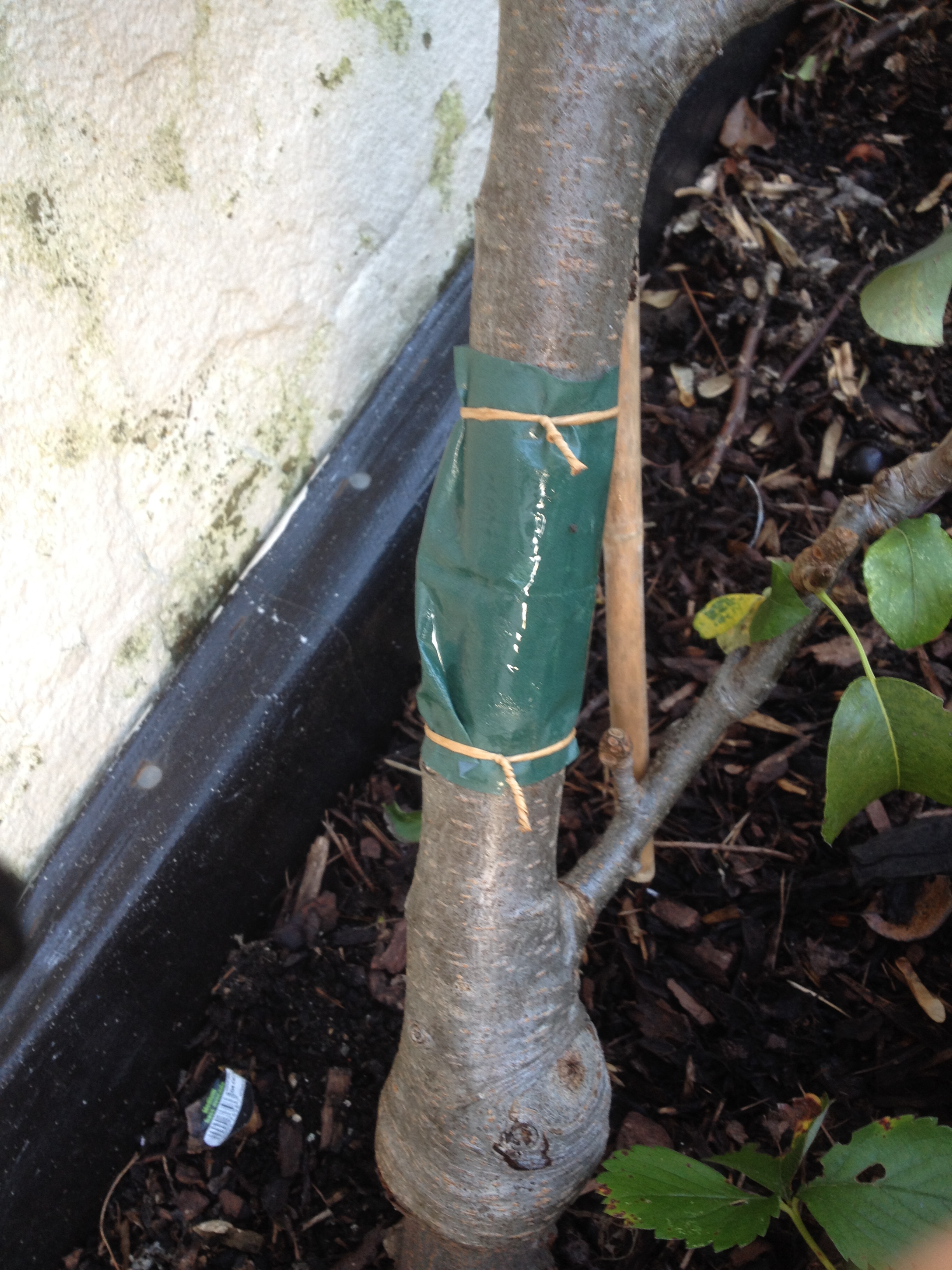
IMG_4408It should have been an easy mechanical fix: attaching grease bands around the bottom of the trunks of our fruit trees. These are supposed to trap winter moth caterpillars and maybe also ants which ‘farm’ the aphids which have so badly infested our mini-orchard these last two years.

I used pre-greased bands, basically a sticky strip that you open out and wrap around the trunk. Simple … except the sticky stuff stuck to my fingers, then to the wrong bit of the tree, then to the scissors I was using to cut the band, and finally to the bands themselves (like micro-wrestling with Sellotape, only worse). You need to bind the bands around tightly so the beasties don’t just sneak underneath, but tree trunks have bumps and crevices to get in the way. I was doing this with cold, sticky fingers on a very windy day: you can imagine …

I have the funny feeling that the final score will be: ants and moths 1  human ingenuity 0, but at least any success on my part should be visible in the form of squished ants and moths stuck on this infuriating glue. Satisfying … if it works.

I explained the principles of this to one of our regular young visitors on her way home from the local primary school, but she had no sympathy for my difficulties: “That’s SO cruel to ants!” Rather indignantly I pointed out that ants enslave aphids to suck juices from the leaves so that they (sneaky old ants) can get the honeydew secreted by the aphids. “Yes”, said a passing dad, warming to the theme, “they even dismember ladybirds which might otherwise eat the aphids. And they eat the legs, dissolving them in acid.” By this time,  several other children were staring in horrified disbelief and I felt it best to move on to the topic of winter washing.

In my best teacherly voice, I explained that I’d just sprayed the trees: “trees can’t wash, so before they go to sleep in the winter, and we have to wash them down, so they’re clear of insects”. I showed them the sprayer. They were intrigued and successfully distracted. No trapping, no melting of limbs … they were ready to sing the trees a lullaby. But then they asked what was in the ‘Winter Wash’. I said I thought it was seaweed.

I’ve just checked on the RHS site: it’s concentrated plant oils … so far so good … which “block the breathing pores of small insects and mites”. Oh dear: so basically … winter washes are about suffocating ants and aphids. I think I’ll stick with the seaweed explanation.

For those who want them, here are the gory details of looking after fruit trees :

Autumn treatment

Spring treatment

Summer treatment

  • Inspect trees for aphids and ants
  • Squish aphids and ants between thumb and index finger
  • Spray with soapy solution or organic  pyrethrum spray
  • Foliar feed
  • Replace grease bands

A good site for natural solutions to aphids on fruit trees is Natural Living Ideas but the most comprehensive ‘no-holes-barred’ presentation of pests and diseases on fruit trees is http://www.fruitwise.net/pestsanddiseases.html . It might need a ‘parental guidance’ warning, though. Here’s a flavour: “Companion planting, biodynamics or singing to the trees does no good-if you have rosy apple aphids, death is the answer-kill them all”.


Posted in Edible growing, Pests and diseases, Uncategorized | Leave a comment

Harvest supper 2015

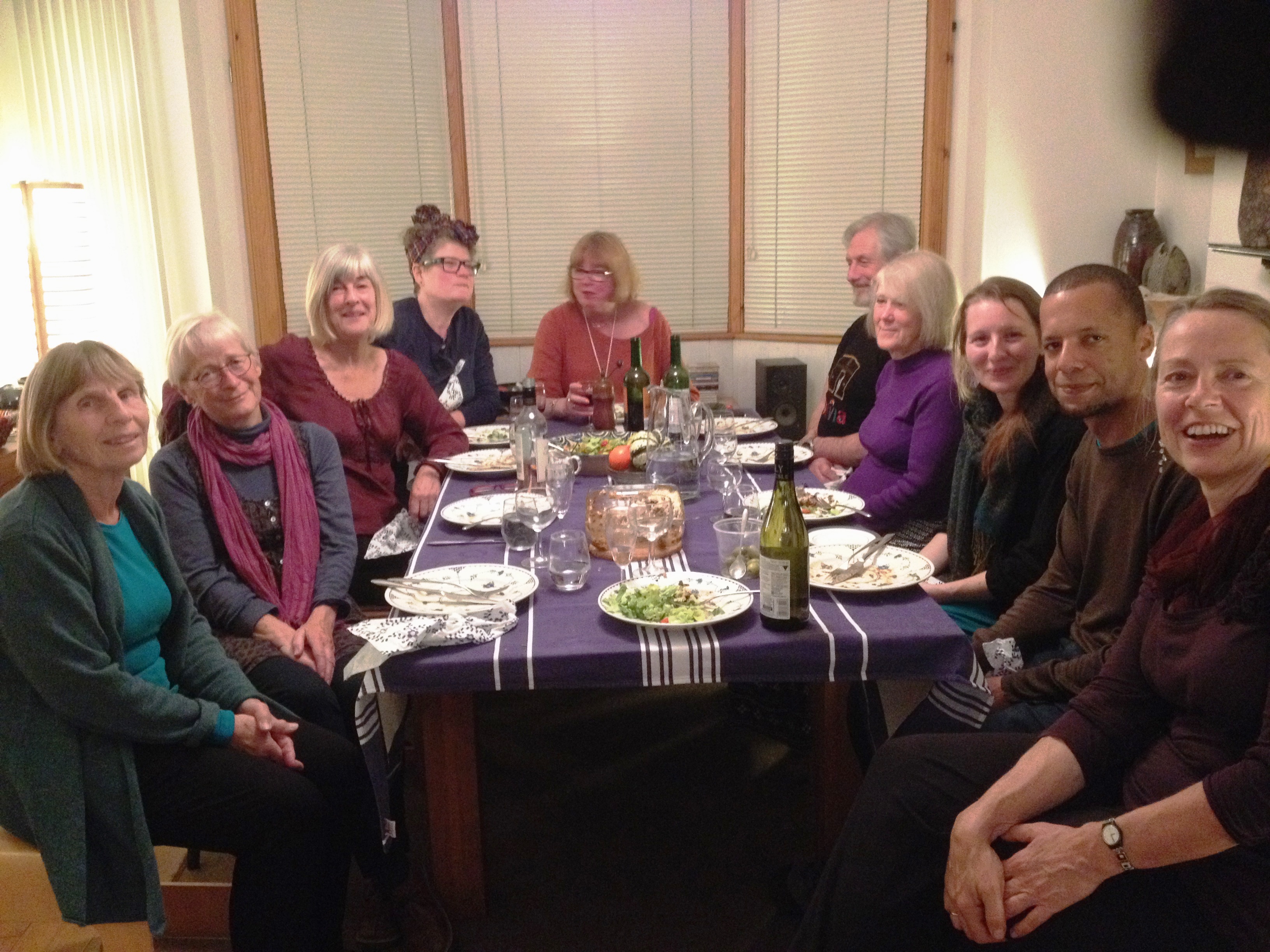
IMG_3948Our fifth harvest supper! Like last year, our harvest was relatively early and much of our produce was finished by the end of September. But this year we did have leeks – funny little green wisps in March, huge fat stems by September.

We started with two great leek soups: a smooth leek and potato soup followed by a spicy leek and sweet corn soup. We would have used the sweet corn from the garden, but that was finished by early September. Then a tasty vegetarian moussaka, made using our courgettes rather than aubergines, a salad of home grown tomatoes and lettuce and to finish, a lovely pear and apple crumble with our wonderfully aromatic fruit and a verbena water ice. Again Chris’ pinwheel wholemeal bread with a filling of basil (from the garden of course) and cheese was a delicious accompaniment.

Sweet corn and leeks – two things we tried this year for the first time and which were really successful. Our raspberries weren’t great this year – they probably got too dry – and the tomatoes outside in the station garden just didn’t ripen, though the greenhouse tomatoes were good. Courgettes were OK, but they went spongy pretty quickly. Pears were very good, but the apples and plums were a little disappointing: maybe it was the aphids. No two years have been the same …


Posted in Uncategorized | 1 Comment