Propagating

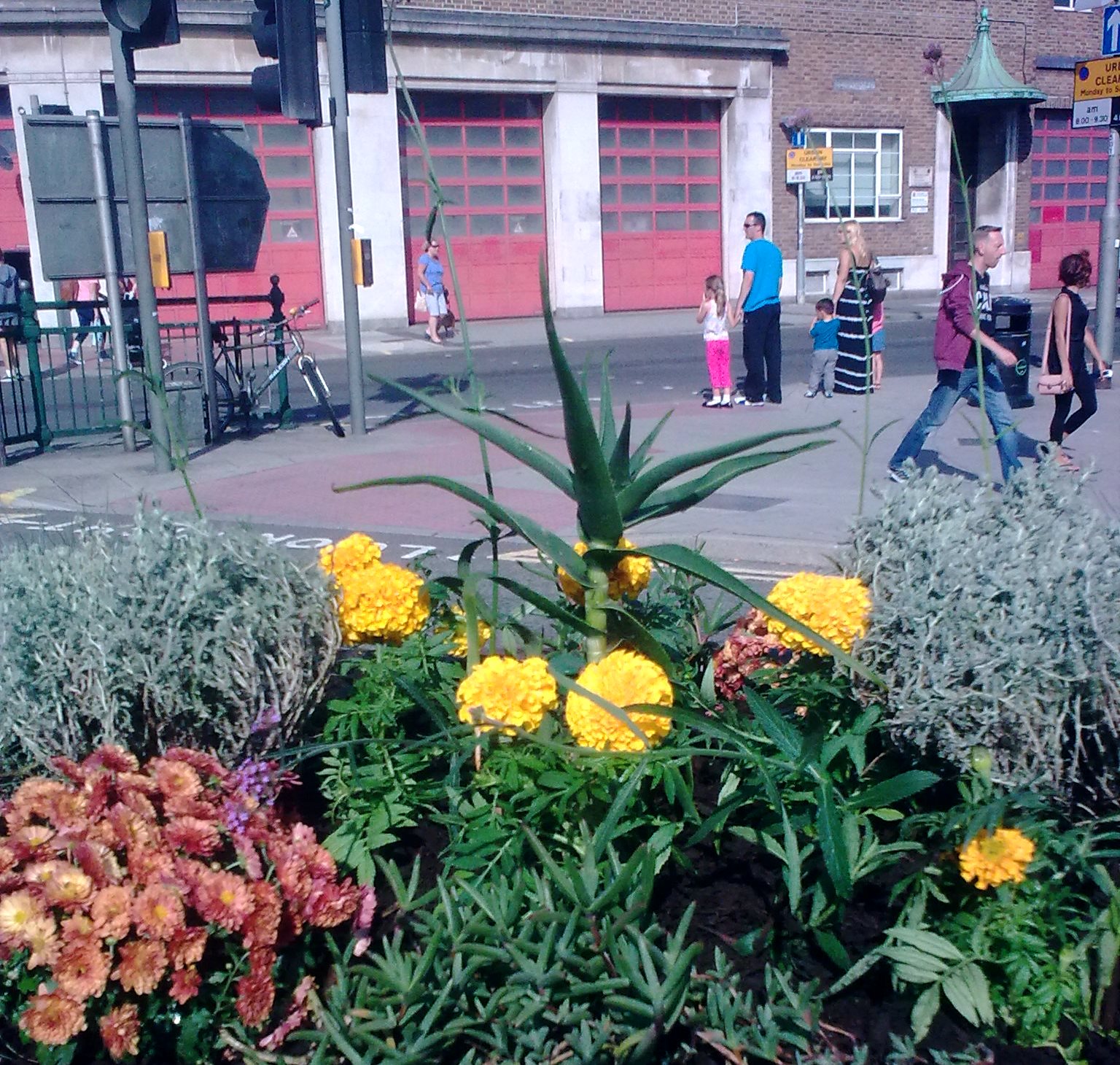
Late summer, and it’s time to propagate plants for next year. We’ll be doing some propagation this afternoon with rosemary and lavender from the station garden, pinks from the Preston Circus planters and perhaps even the dark begonias that we invested in for the shady triangle earlier this summer.

Like quite a few of our number, I love propagation. It’s a sense of getting something for nothing, but also about ‘real’ interaction with plants and the growing cycle, rather than just getting them from the garden centre and putting them in with a bit of compost. And propagation is clearly key for a community garden where funds are limited, and sustainability is key. AND it’s just a fun thing to do.

There is an instinctive side to it. Heucheras, for example, get leggy and seem to cry out for you to cut off one of the legs to create a new plant. Our sedums have similar behaviour. Then there are the plants like mint and what I call lambs’ ears that you can just put in water, wait, and they send out roots. Pinks, lavender and rosemary are also pretty straightforward: you just take a healthy shoot that hasn’t flowered and use that as your cutting. Pinks are amazing: just pull, and they’ll give you a propagatable cutting.

So today, we’ll go through the following process:

  • 1) clean our 9cm pots, last used for seedlings earlier in the summer
  • 2) mix up our potting compost, using vermiculite and peat-free compost (probably 2 parts compost to 1 part vermiculite, with some grit mixed in for lavender and rosemary
  • 3) take cuttings and prepare, cutting the tip just below a bud or a node (from where the roots will sprout)
  • 4) dip in hormone rooting powder or perhaps a vitamin C tablet in water???
  • 5) push the cuttings into the compost around the edge of the pot
  • 6) water well, and place somewhere warm (probably my greenhouse) but not TOO warm

Plants for cuttings

  • Station garden: rosemary, lavender, perhaps heuchera
  • Preston Circus planters: pinks, sedum, geranium (pelargonium)

More on propagation


Posted in Uncategorized | Leave a comment

Late summer pruning

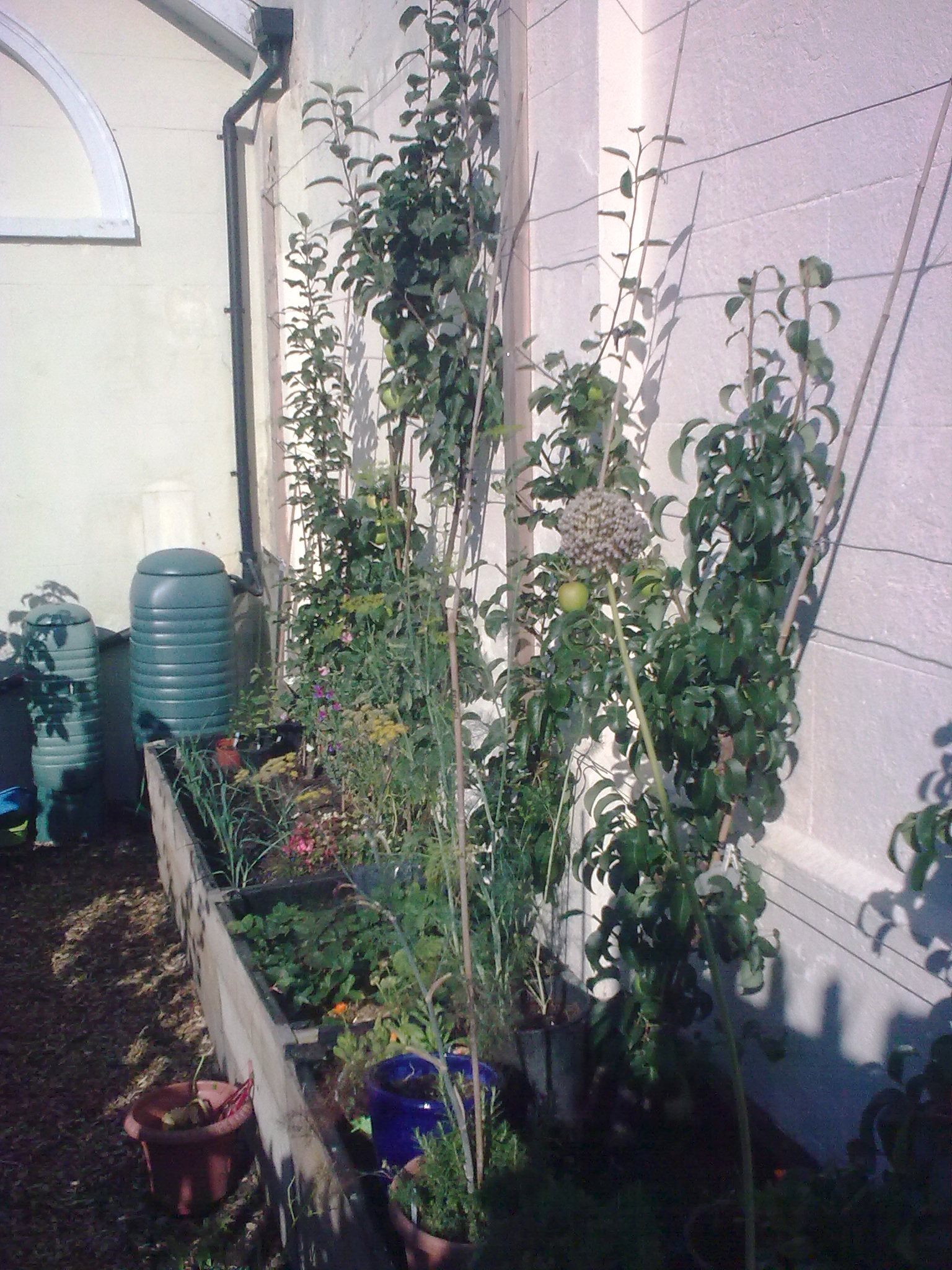
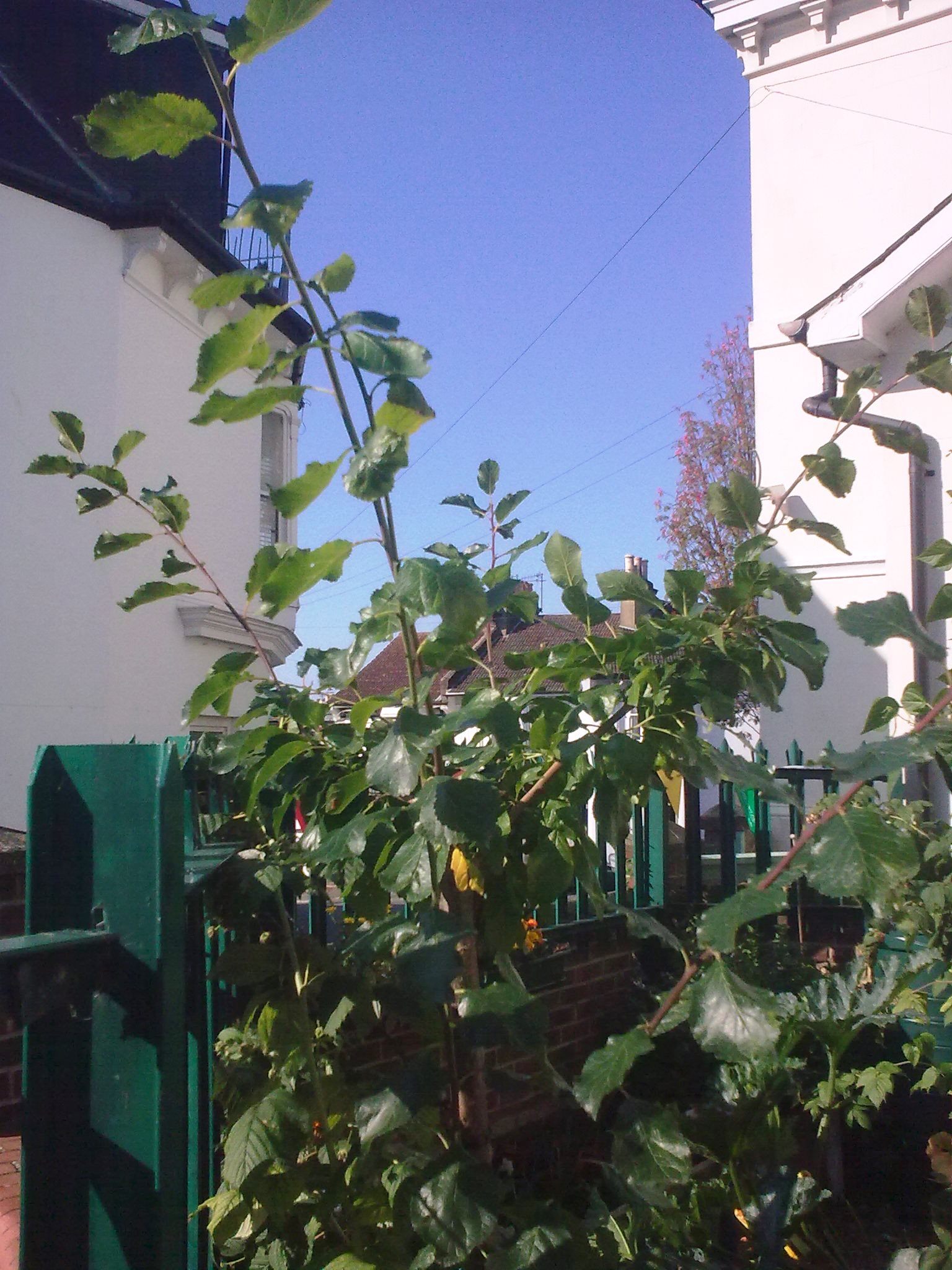
Pruned orchard 8.13 wideOur fruit trees are looking like shorn sheep – fresh and sprightly, relieved of their season’s over-exuberant growth. Bryn Thomas from Brighton Permaculture Trust visited last week as part of our fruit tree project. For the apples and pears, it’s been a case of pruning the side shoots, back to about five leaf points from the main leader. We’ve got beautiful fat apples on Tinsley Quince and Mannington’s Pearmain, and a few lovely pears fattening up on both pear trees. The trees still look beautiful, with dark green leaves despite aphid infestations throughout the summer.


Pruned plum 8.13For the plum, however, it’s been a radical change of character. She – as she’s a Marjorie’s Seedling, I always think of her as a she –  was tall and willowy when she was planted in a dustbin (how undignified!) in March 2012. She has grown happily ever since, but forever stretching upwards.  Now, the main leader stem has been cut right down. She’s going to be a lovely, rounder, more goblet-like, tree as she matures, but I confess to missing her idiosyncratic stem reaching for the sky over our fencing.

Following Bryn’s example, I think I’ll have to take the secateurs to my young miniature plums and cherries, which have been quite unruly in their growth over the summer.


Posted in Edible growing, Uncategorized | Leave a comment

Short listing

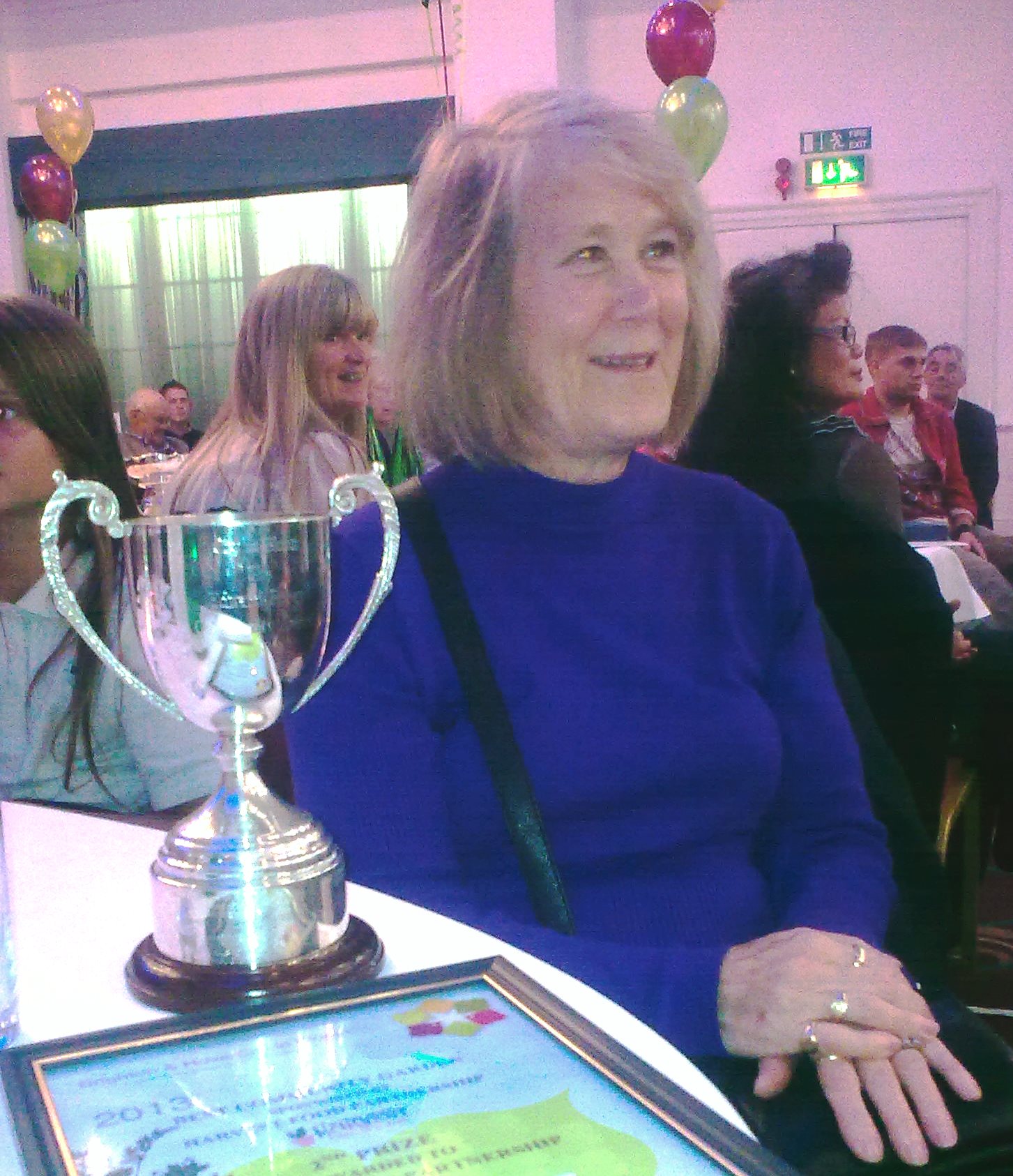
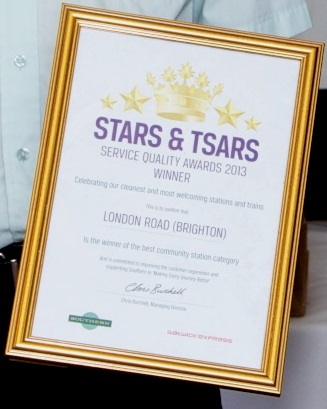
A brief post – as I can’t keep up. We’re thrilled to have been shortlisted for two awards this summer – hoorah!

We’re one of three stations shortlisted for Southern Railway’s ‘Tsars and Stars’ awards for ‘best community station’. Madeleine will be going to the award-ceremony lunch in Lewes on August 23rd.

We’ve also been shortlisted for Brighton & Hove City in Bloom ‘best community garden’. The award ceremony, along with tea and cake, takes place on September 26th.

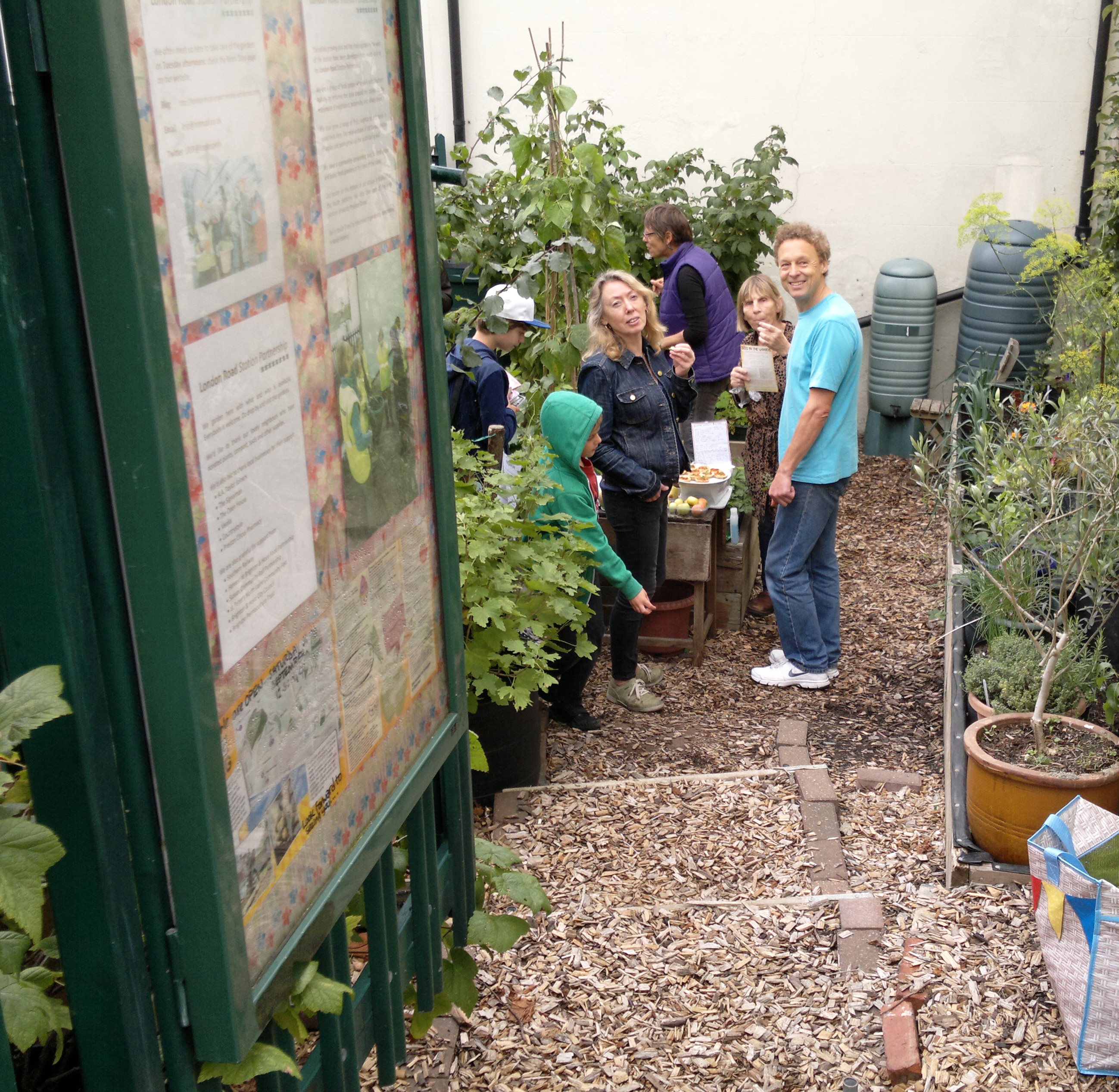
We should also find out mid-September the results of our ‘judging’ for the RHS South/South East in Bloom ‘It’s Your Neighbourhood’ scheme. We had an enjoyable visit from Ruth Growney back on July 18th and spent nearly two hours showing her the gardens and talking about what we do … while trying not to get sun-burned. The temperatures at the station were over 30C.

With RHS IYN 'judge', Ruth Growney

With RHS IYN ‘judge’, Ruth Growney

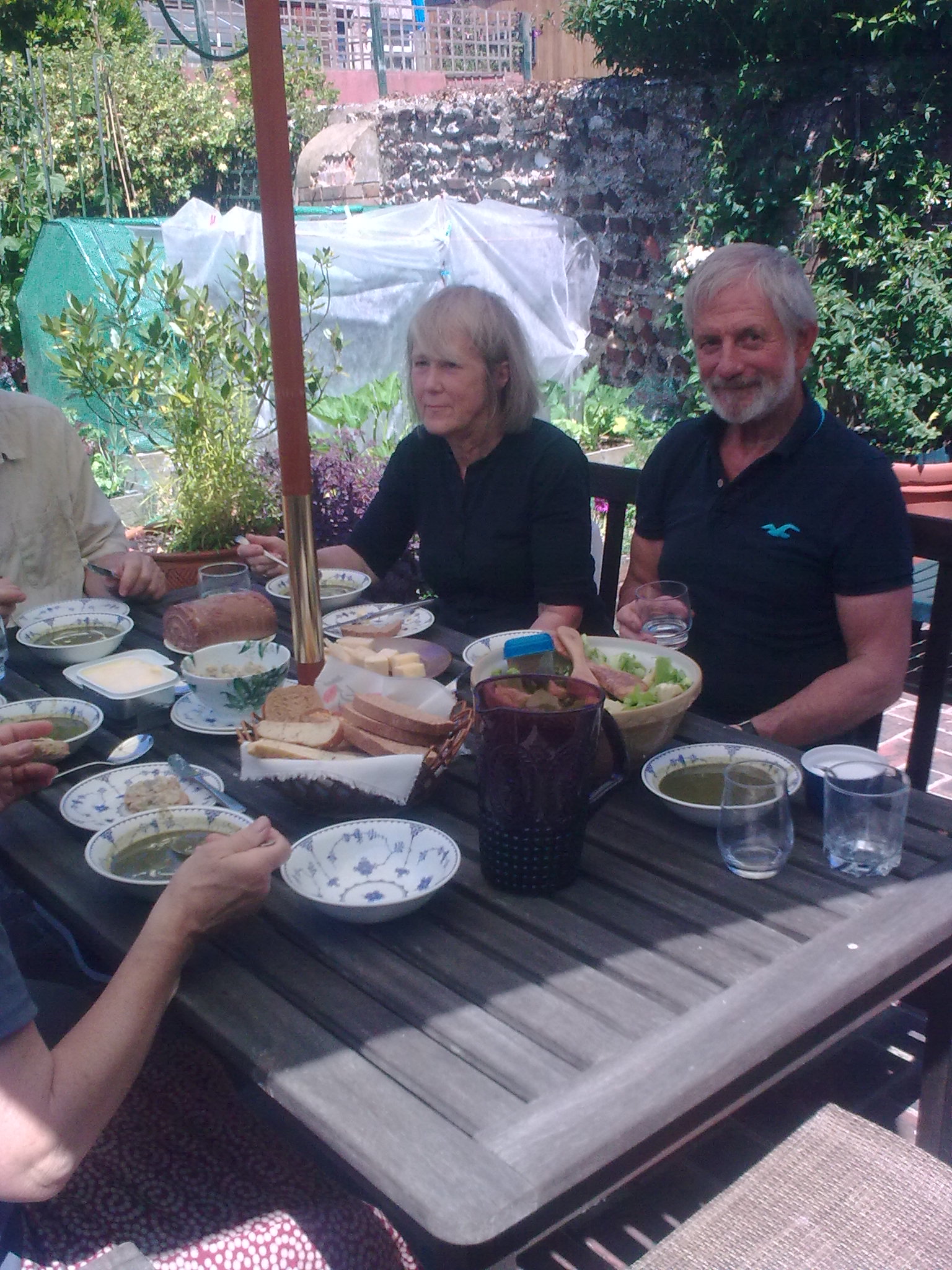
Summer leaf soup after the 'judging'

Summer leaf soup after the ‘judging’

Posted in Uncategorized | Leave a comment

You win some, you lose some …

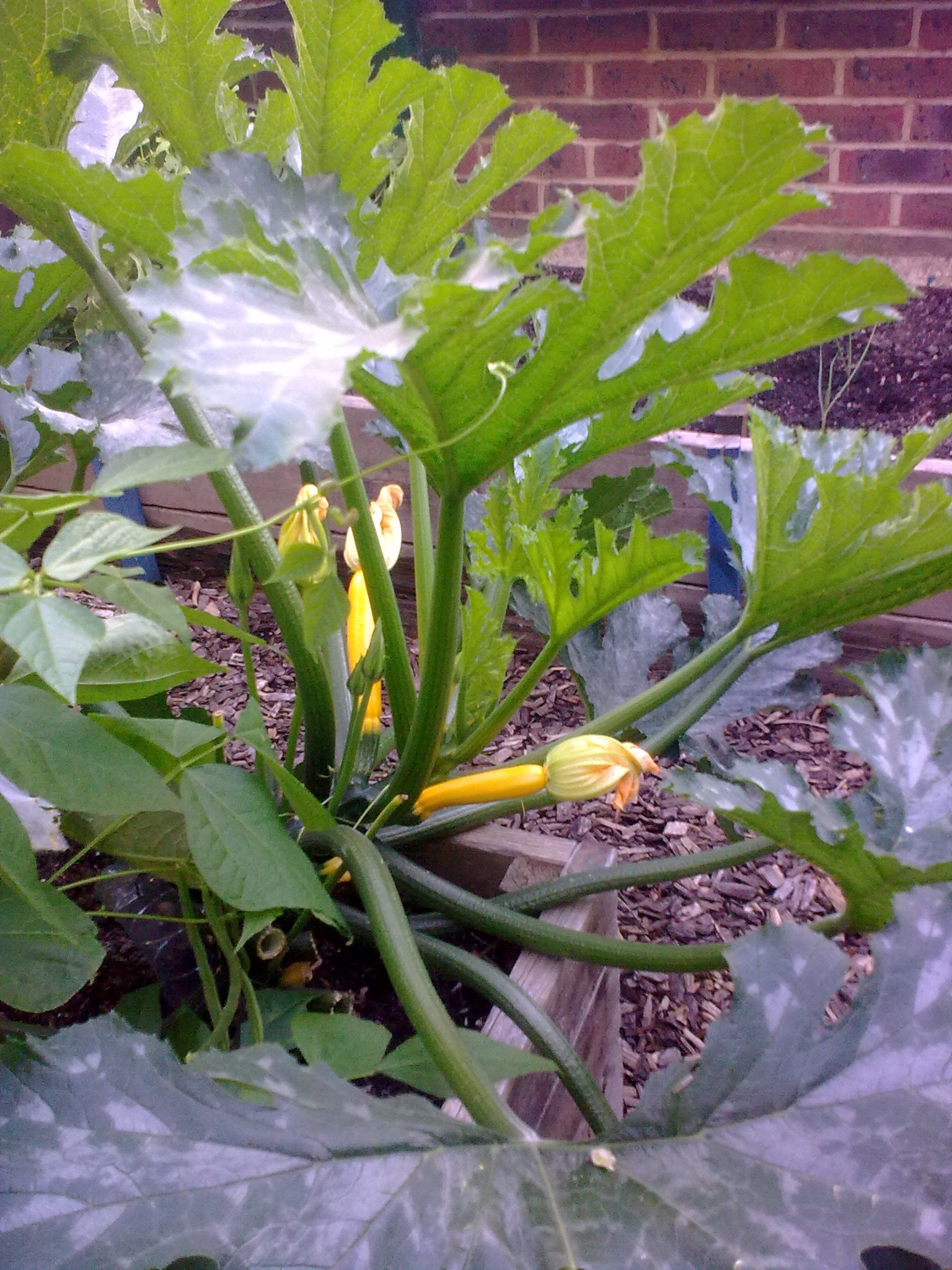
Yellow courgette 8.13
Yellow courgette 11.8.13

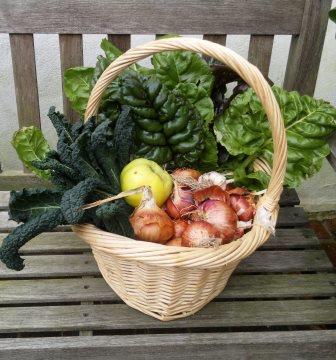
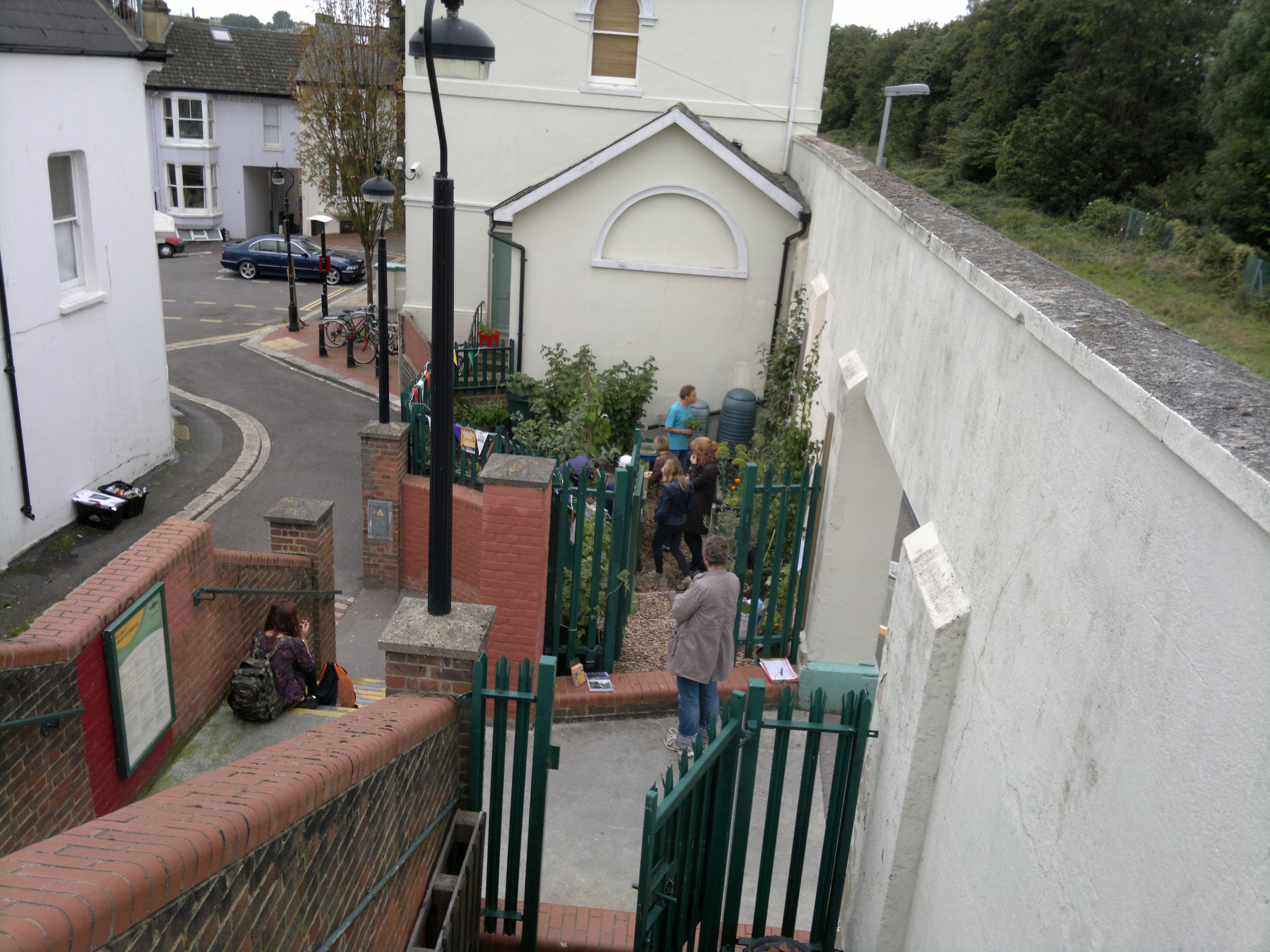
We’re now into harvesting at London Road Station garden. We have climbing beans, yellow courgettes, raspberries, chard and sorrel, along with various herbs – sage, rosemary, oregano, chives, tarragon, thyme, dill and mint. Our beans are again towering up above the fencing, our very fragrant mint is spectacular (and held in check in a window box planter) and the yellow courgettes we were worrying about a month or so back are now are expansive after all the rain. We’ve had some currants, black and red. We’ve had some strawberries. We’ve got onions and garlic  drying in the conservatory. We were proud of our ‘cocktail carrots’, grown in a window box. I’m still not convinced that carrots are actually a good use of the space and compost, but we were thrilled that they grew and produced something edible.

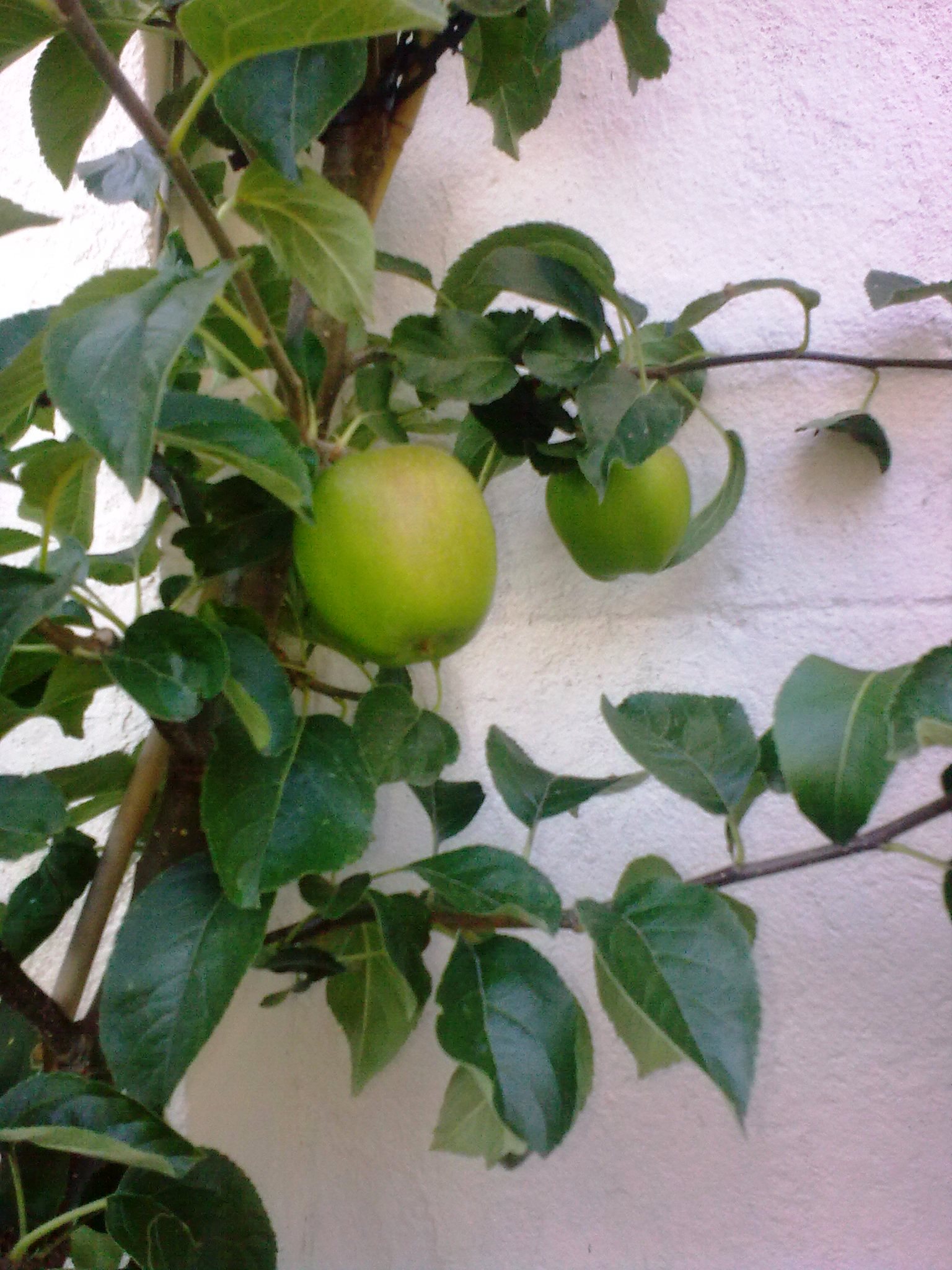
Saltcote Pippin 11.8.13

Saltcote Pippin 11.8.13

Meanwhile, our young fruit trees have some fruit: the earlier apples – Tinsley Quince and Saltcote Pippin – have big green apples. It’s received wisdom that you should remove fruit on very young trees as it saps their growing energy, but I couldn’t bring myself to cut them  off. They are not due to ripen until early October, though they look deliciously edible right now. We even have some pears – well, one on each of the trees, Beurre Hardy and Concorde, but that’s enough to be proud of.

Beurre Hardy 11.8.13

Beurre Hardy 11.8.13

We did have salad leaves of various kinds in both the shady leaf bed and underplanted in the orchard beds, but the very hot weather encouraged them to bolt, and there’s only so much you can do with bitter scruffy lettuce. We cleared the final remains a couple of weeks ago to get the beds ready for planting … the leeks.

We’ve also not managed to keep the cabbage white butterflies away from the cavalo nero and kale. It’s looking sad: nibbled, crawling with caterpillars, with tough leaves. Brassicas are a real challenge in a small garden, and they need to be netted.

We’ve also not be brilliantly successful with the ‘climbing courgettes’ (Black Forest) nor with our tomatoes. Two courgettes and three tomatoes are growing in grow bags. I think they may have dried out during our three weeks of very hot weather. I tried to revive them yesterday by giving them a real soaking and sinking bottle-reservoirs in the soil, but they are not looking at their best. I think we may need to build another raised bed up in our sunny corner: grow bags have their limitations when the weather is really hot.

So, our WINS for 2013? I think, for me, the onions, the yellow courgettes (grown from out-of-date seeds), the climbing beans, the mint (fantastic tea), the dill (it’s beautiful, just waiting to be added to smoked salmon or new potatoes), the raspberries and of course, the orchard. And we’ve done well with seeds this year: perhaps too well. There are still around 30 leek seedlings waiting to be planted … sometime, somewhere.

Our LOSSES? Hmm … cavalo nero, kale, possibly the climbing courgettes which certainly didn’t want to climb at the start, our grow bags generally which dried out. Oh, and basil …

We have now planted two basil plants in our public herb planters. It seems that people round here really like basil. The first plant was exhausted quicker than any of our other herbs. Our replacement basil seedlings then suffered from overheating/drying during the drought, but we managed to raise a few plants, one of which was planted last week in one of the herb planters …

When I checked yesterday, however, there was no sign of basil leaves, but just a brown stalk. This time, not our basil-loving neighbours, I think, but the natural vandals: slugs and snails, who thus far this summer have not been much in evidence. Unless of course, it is in fact this year’s enemy number one, the cabbage whites? I console myself that whatever the cause of the damage, it doesn’t look like the wilful vandalism of humans – and that is a good reason for optimism.

Posted in Edible growing, Uncategorized | Leave a comment

Watering and old tights

Currently in the London Road Station garden, water is the obsession. Our water rota seems to be working well, but it’s been hard getting enough water into our raised beds, the shady but dry ornamental garden, our herb planters and – most challenging of all – the planters at Preston Circus.

We’ve had no rain in Brighton for over three weeks (though allegedly, there was a sprinkling last night), and the temperatures have regularly been soaring above 28C. I registered 45C in my greenhouse ten days ago; even with shading, it was 38C.

The hot weather has been a fantastic boost to our plants after the cold and grey spring, but has required fairly intensive action to ensure reasonable growing conditions. We’ve had to refill our four water butts with tap water once already, and use a hose to drench both gardens.

We probably have as many water butts as we can site in the station gardens. We are working on getting a water butt sited near Preston Circus so we don’t always have to disturb the wonderful people at East Sussex Fire and Rescue.

The water butt in the shady garden has a tendency to produce smelly brown water even after a downpour. The water won’t damage our plants; it’s just a little unpleasant though the smell doesn’t linger for long. Our hunch is that the hopper through which the rainwater drains is clogged with leaves, and/or there is debris from the roof collecting in the down pipe. A great tip from the RHS: use old tights to filter water in the diverter.

In fact, old tights seem to be an essential piece of horticultural kit. I also use them for securing fruit trees to their posts, for tying in the wayward branches of climbing roses and other attachments where it’s important that branches do not rub hard against another surface, creating grazes which promote disease.

Posted in Edible growing, Preston Circus planters, Weather | 1 Comment

Variety – our tomatoes and courgettes

We’ve been wondering about the behaviour of our tomatoes and our courgettes, both of which are now doing well in the sun, but have particular, intriguing characteristics which have puzzled us. I’ve checked up on the varieties we’re growing to see if we can solve the puzzles.

Tomatoes

We have four tomatoes: two ‘Maskotka’ and a ‘Vilma’ in a grow bag, and a ‘Vilma’ in a 30cm pot. The Maskotka seeds we got free at the time of Big Dig Day, and the ‘Vilma’ I bought back in the dark days of February, and I have forgotten why.

All four plants are bushy, happy and producing lots of tomatoes, but most significantly not growing upwards. Do we need to do the usual pinching out of side shoots and staking? Looks unlikely: it turns out we’re growing special container varieties.

‘Vilma’

The Thompson & Morgan site gives this description: “Specially bred for growing in containers, Tomato ‘Vilma’ is a compact bush variety reaching 60cm (24″) tall. This compact plant produces a heavy crop of sweet and juicy, cherry tomatoes each weighing 20g (0.7oz) over a long picking period. Tomato ‘Vilma’ is easy to grow in the greenhouse or outdoors and will not require side shooting or training. Height and spread: 60cm (24”).”

‘Maskotka’

“A dwarf bush variety that has been specially bred for growing in baskets and containers, with cascading stems that fall gently over the sides of their pots. Tomato ‘Maskotka’ produces a heavy crop of bite sized cherry tomatoes weighing 25-35g (1-1¼oz) each, with a delicious sweet flavour. The fruits of this compact variety have good resistance to cracking whether they are grown under glass or outdoors.”

Courgettes: ‘Gold Rush’ = gold leaves?

We’re growing two types of courgette: ‘Gold Rush’ and ‘Black Forest’. Both have quite idiosyncratic characteristics. Both seem to be growing well now and both are producing courgette-lets. ‘Gold Rush’ has yellow fruits … and all our plants, both in the station garden and in my garden, have some bright yellow leaves. Funnily enough, they look healthy. There’s new growth and no sign of wilting or browning. It’s curious that in my garden, the ‘Gold Rush’ are growing alongside green courgettes, which don’t seem to have the yellow leaf problem.

Hmm … is this a mineral deficiency (magnesium? potassium?) or is it a characteristic of the plant? A quick flick through various web forums suggests that many other gardeners have this same ‘problem’. In both cases, the beds were manured in the autumn, so mineral deficiency seems a little unlikely. It may be a problem of take-up: something is stopping the plants taking up the nutrients in the soil.

The solution seems to be: 1) try tomato feed to increase potassium (we’ve started, but this could in fact be the problem) and 2) try a foliar feed of Epsom salts. This is used to promote more balanced take-up of magnesium, which can be compromised when plants are given potassium-rich feeds.

Posted in Edible growing, Uncategorized | 2 Comments

The art and science of watering

It’s suddenly got hot. Temperatures have now been going over 20C for about 10 days. The French beans and the courgettes have perked up. But we haven’t had much rain for about 10 days. On Tuesday, our four water butts ran dry.

We’ve had to fill them up from the mains with a hose pipe trailed from Madeleine’s house. We took advantage of this arrangement to try to give both gardens a good soak. The shady garden also needed a shower to rid leaves of the horrible sticky sap dripping from the overhanging sycamore trees. This led to much discussion about what ‘a good soak’ or ‘proper watering’ is, and where the water should be directed. Here’s the long and short of it.

How much?        LOTS REGULARLY, NOT LITTLE AND OFTEN

We often give too little water to each plant. A useful rule of thumb says ‘slowly count to 10when watering any plant. A passing spray is no use at all, and can be positively risky for the plant (see below). Shallow watering encourages roots to grow only on the surface of the soil, which will weaken the plant’s ability to withstand wind and limit its ability to find moisture and nutrients. So a ‘good soak’ regularly, rather than little and often.  Use the finger test: if the soil feels dry at the end of your finger when you press it into the soil, then it needs watering thoroughly.

Can we be more scientific on how much water a garden needs? Some websites suggest 1 inch per week; 60 gallons (that’s around 30 watering cans) for a 100 square foot/11-12 square metre garden.

When?                  EARLY MORNING

Obviously, for watering to be most efficient, it needs to be done when evaporation is least:  early morning or late afternoon. It looks like early morning is the best time, for two reasons: 1) damp conditions at night attract slugs and snails, and 2) damp foliage can promote the development of fungal diseases, so leaves should have time to dry off before night fall.

Where?               ROOTS NOT LEAVES

It’s the roots that need the water, not the leaves. Water needs to go into the soil with as little splashing onto the leaves as possible. Splashing increases the risk of water-borne pathogens in the soil infecting the plants; and again, damp foliage can be susceptible to fungal disease.

How?                    GENTLY

A dripping hose – i.e. a hose pipe with small holes in it – is probably ideal: water gradually drips into the soil over an extended period of time. But for us, that’s not really possible. Things to bear in mind are: 1) over-energetic watering, for example with a high-pressure hose setting or strong stream from a watering can, can badly  damage plant roots. On the other hand, 2) spray can be ineffective and if it splashes up from the soil, can promote infection. So regular and gentle, not disturbing the roots.

What to do with very dry soil

When soil dries out, it loses its ability to absorb water, thus compounding the problem of drought. Organic matter absorbs water so is crucial to the water-holding capacity of the soil. That’s why we incorporate compost, manure etc. And of course, mulches on the surface of the soil prevent evaporation.

If soil does dry out, it becomes rather like concrete and dust, and plants won’t be able to access anything from it. The best thing to do is to gently water with a fine rose and then return about 30 minutes later to water more thoroughly. The initial watering helps the soil to absorb water. Pots need to be placed in a container of water until bubbles appear on the surface.

Posted in Uncategorized | Leave a comment

Shady summer colours

shady triangle 11.6.13We’ve not paid the shady triangle a lot of attention so far this year. It’s coming into its own with lush green growth everwhere: the fatsia japonica is huge, the ferns are growing up high again, we had to cut back lamiums and green heuchera, and the clematis plants are growing strongly up our hazelwood pyramid.

It feels, though, like rather a lot of green. We’ve tried to encourage the bronzey-red heuchera, the purple aquilegia, but more recently, the foxglove, the antirrhinums from last year and the dusky pink ones we bought for this year have provided a bit of colour. Purples and dusky pinks seem to suit this area of almost full shade.

snap dragons 11.6.13

snap dragons 2 11.6.13

Posted in Uncategorized | Leave a comment

Season’s successes so far

The successes so far have mainly been salads and other leaves. We’ve been harvesting rocket and lettuce regularly, and our cavalo nero is growing beautifully with edible bouquets being picked each Tuesday. The Unwins’ mixed lettuce leaves and rocket, seeds which we received free from Harvest, have given excellent crops.

Mad carrotsAs for our experimental carrot crop this season, hmm … I’m not sure. The carrots in planters put on magnificent green plumage, and though the resulting roots are quite fat and tasty, they are very mis-shapen and require a lot of cleaning. I added some to a Vietnamese-style soup today. Nice bright colour, but not sure they are the most worthwhile use of our limited space.

Posted in Uncategorized | Leave a comment

Stanford Ave Community garden launch

Kids at Stanford Stanford 2 Stanford 3 Stanford 4 Stanford 5 Stanford 6 StanfordStanford Avenue Community garden had its official launch on Friday. Leeks, broccoli, a raspberry cane, strawberries and herbs from London Road Station will find a happy new home about half a mile up the road in this new community-run plot at the bottom of Stanford Avenue and Cleveland Terrace. Four of us went up to the launch, linked up with old friends and new, and wished the plot well!

Today, Sunday, the large raised bed was well-watered, and even more plants had been planted. It was great to see so many children on Friday really committed to helping the plants grow. I shall keep an eye on Aidan’s onion seeds when I pass by. All the very best to Stanford Avenue Community garden, and happy growing!


Posted in Events | Leave a comment