Compost restores optimism

It’s grey, it’s cold, the temperatures haven’t got above 5C in the last few days and it’s already March. We should be out there enjoying the longer evening light, but it’s freezing – literally. This is wrong, this is depressing – gardeners all over the country are suffering withdrawal symptoms. Just as I was about to give up (again – see June 2012 blog), our compost has restored my faith.

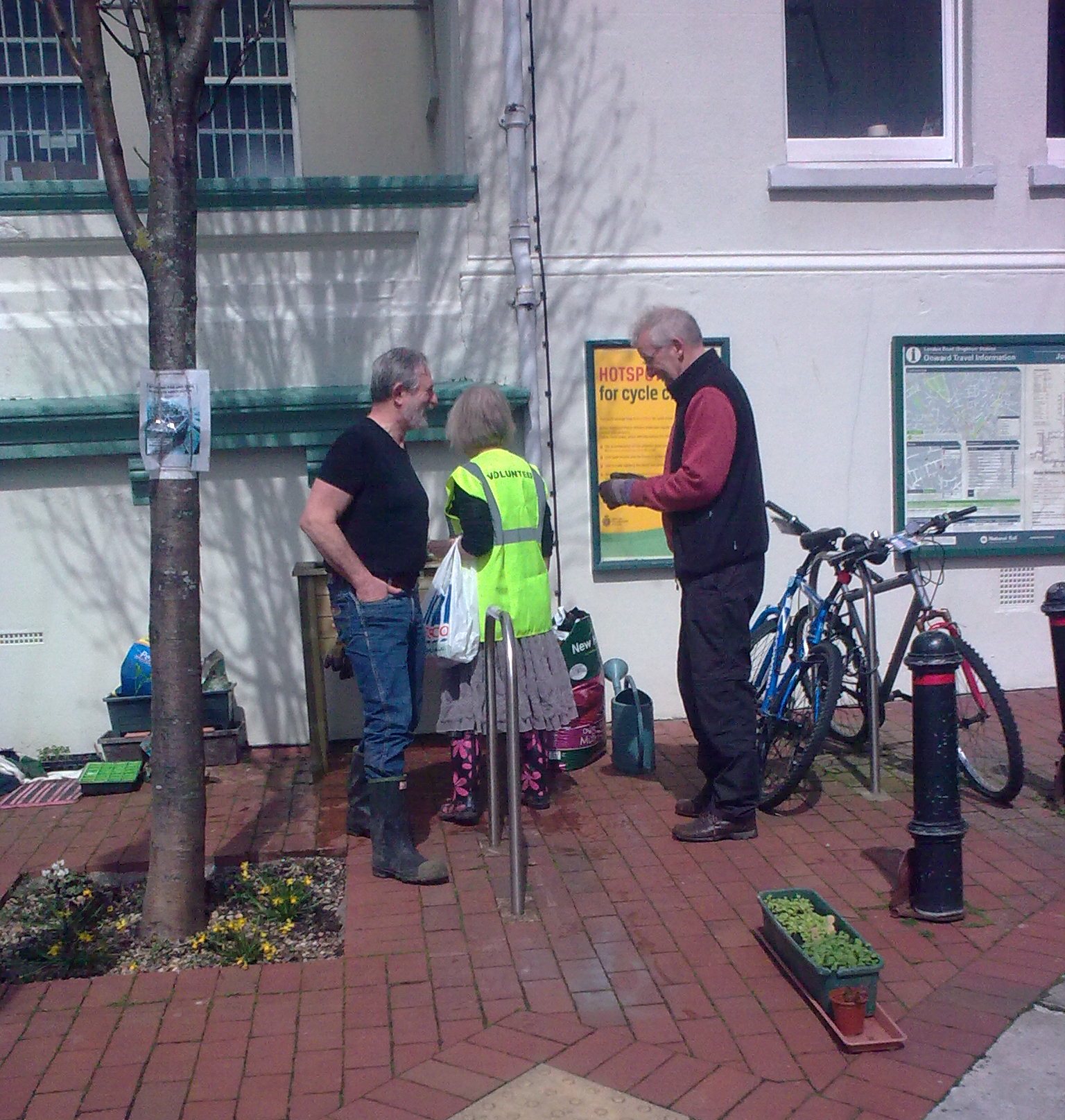
It was time to change bins yesterday, and bag up the more or less mature compost in the wooden compost bin. We’ve been ‘community’ composting since October 2011. There are probably now around 20 people registered to bring their kitchen waste to our compost bins in the practical small white caddies supplied by Brighton & Hove City Council.

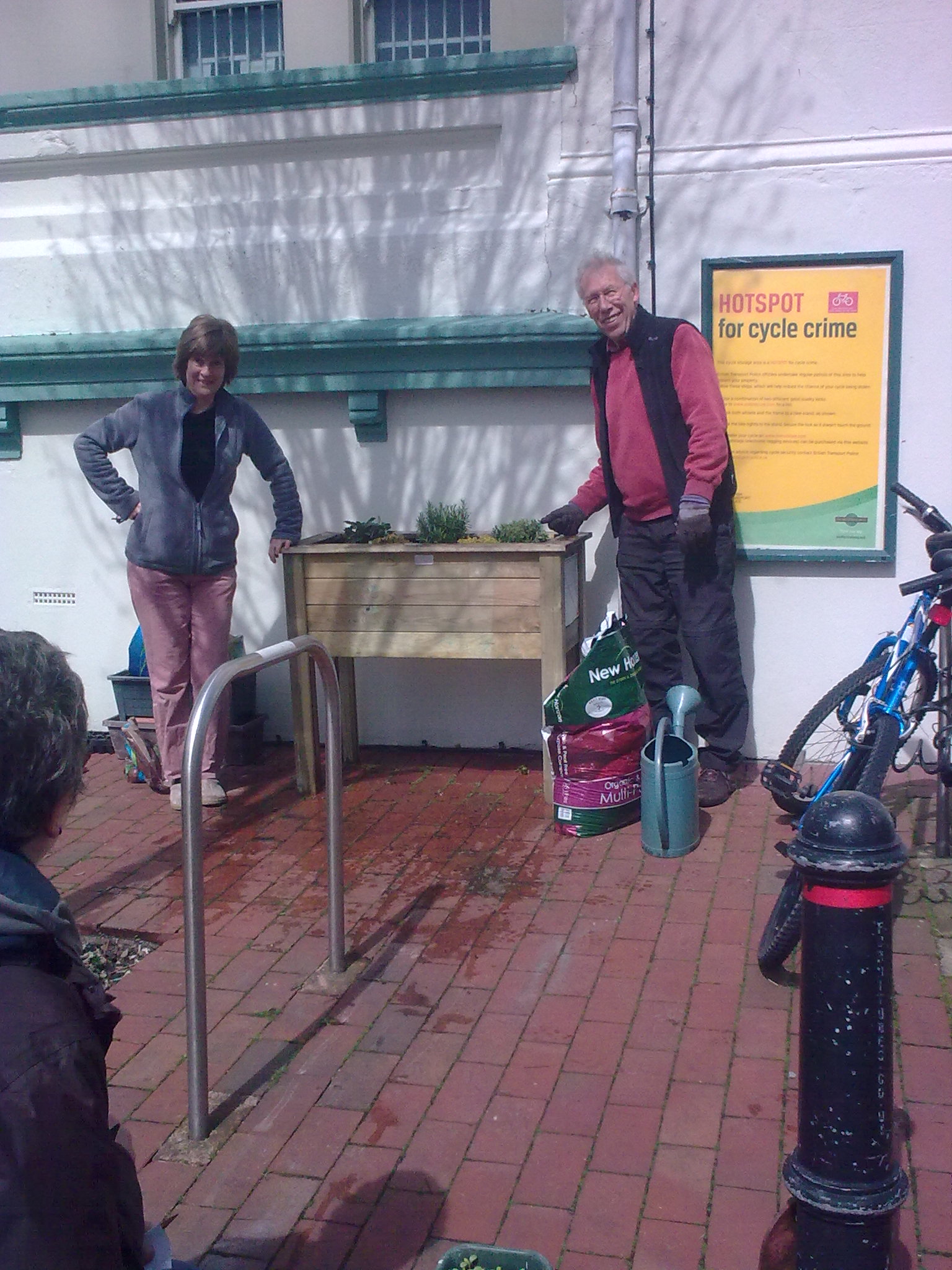
Each compost bin takes about six months to fill; we then leave it for another six months to mature. We unpacked our first mature bin in October 2012 and it looked delicious. We used it to mulch our raised vegetable beds and mini-orchard. This is the second load of compost; some of it will go into the mix for the planters at Preston Circus. Because it has had to mature over the winter months, it hasn’t broken down quite as much as the ‘summer’ compost, but it’s rich, crumbly and full of worms.

Last year, we had to re-home worms from my garden compost bin to set up an active colony. They’ve certainly taken over. Last year, we also had to de-home some small rodents who had burrowed into the compost bin from underneath. All it took was building a brick platform, raising the compost bin on a pallet and lining everything with chicken wire. This year, it’s been colder but no sign of unwanted guests.

We thought we might have problems with the wrong stuff being put in the compost, but we seem to have got a good balance; thank you everybody for following our composting guidelines. Our composting person, Mark, keeps an eye on it, and deposits a layer of grass cuttings or shredded cardboard if it doesn’t look healthy. We’ve put stable manure in there, some leaf mould and the spent compost from grow bags. It works – and then it’s about patience and trusting to nature. Very good for us; very good for morale.

Compost: nature just gets on with it, transforms waste into goodness and gives us something for nothing. Just wish the weather would now oblige …

Posted in Composting, Weather | 1 Comment

And climbing courgettes

Our raised beds have filled up quickly. The Harvest raspberries have taken over the sun-shade middle bed, our sunny bed is occupied with leeks and onions, leaving only a small space for climbing beans this summer.

Strawberries have established in our mini-orchard, in front of the fruit trees, and we’ve got three different kinds of garlic underplanting the fruit trees too!

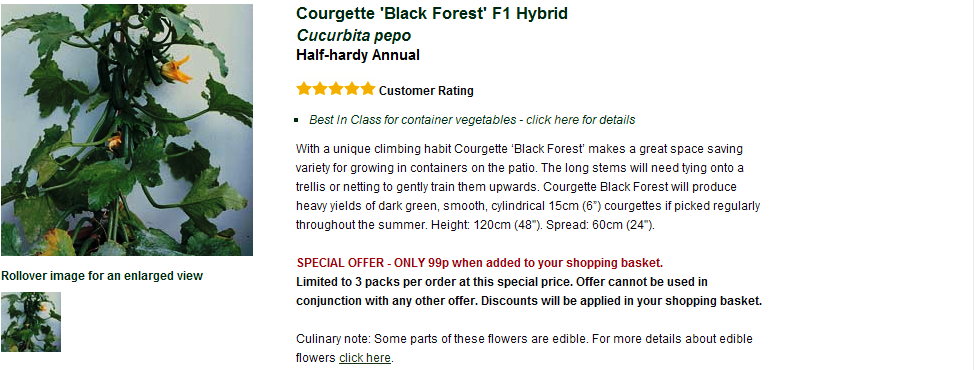
So where do we put sun-loving courgettes? Great vegetables, easy to crow, fairly reliable croppers, not susceptible to too many pests and delicious. One solution looks like Thomson & Morgan’s ‘Black Forest’, a courgette that is happy growing upwards, not outwards. We have walls (OK, there are fruit trees there, but they’re young and should tolerate the presence of an annual vegetable). Another experiment for growing in a small space.

Courgette


Posted in Uncategorized | Leave a comment

Carrots!

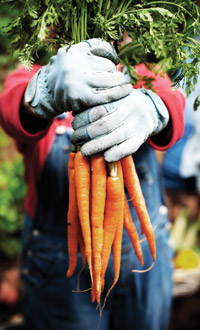
howto-holding-carrotsHow come we’ve neglected carrots?

The Raised Bed Gardener says carrots are ideal for containers and raised beds, they suit cooler climates, seed can be sown in containers at least 20cm deep  or raised beds in early March, they can be planted close together and they can be harvested in 12 weeks: what’s not to like? He also says that they can be intercropped (planted between other plants) and will tolerate a bit of shade. A perfect plant – yet I’ve never grown them and don’t think any of our group have.

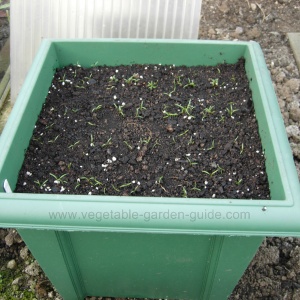
OK, so here’s the downside, it seems. Carrot fly: the seedlings need to be carefully protected with horticultural fleece or you can try and distract the fly with the overpowering smell of onions. Container grown carrots sound a bit like tomatoes, though more tolerant of cold: they need lots of water and feeding with potassium-rich tomato feed. And of course, they require a crumbly not a clay or stony soil as otherwise you get forked carrots. So we need

  • a container at least 20cm deep
  • planting compost mixed with vermiculite and some BFB (blood fish and bone)
  • to construct a ‘cage’ over our container and tightly attach horticultural flee
  • to raise the container at least 50cm above the ground if possible
  • to water well and feed regularly

The small, early varieties – Amsterdam carrots – seem to be most suitable for containers. We’ve been donated two packets of Amsterdam 3 carrots, one via the RHS The Garden magazine. Definitely time to try! The BBC weather forecast for Brighton promised sun this afternoon – no sign so far, but at least no snow (last week), no wind, no rain.

There’s masses of guidance on growing container carrots:

Posted in Uncategorized | Leave a comment

Gardening in a gale, singing in the rain


Big dig 16.3.13 on terracesCaroline L Big Dig 16.3.13

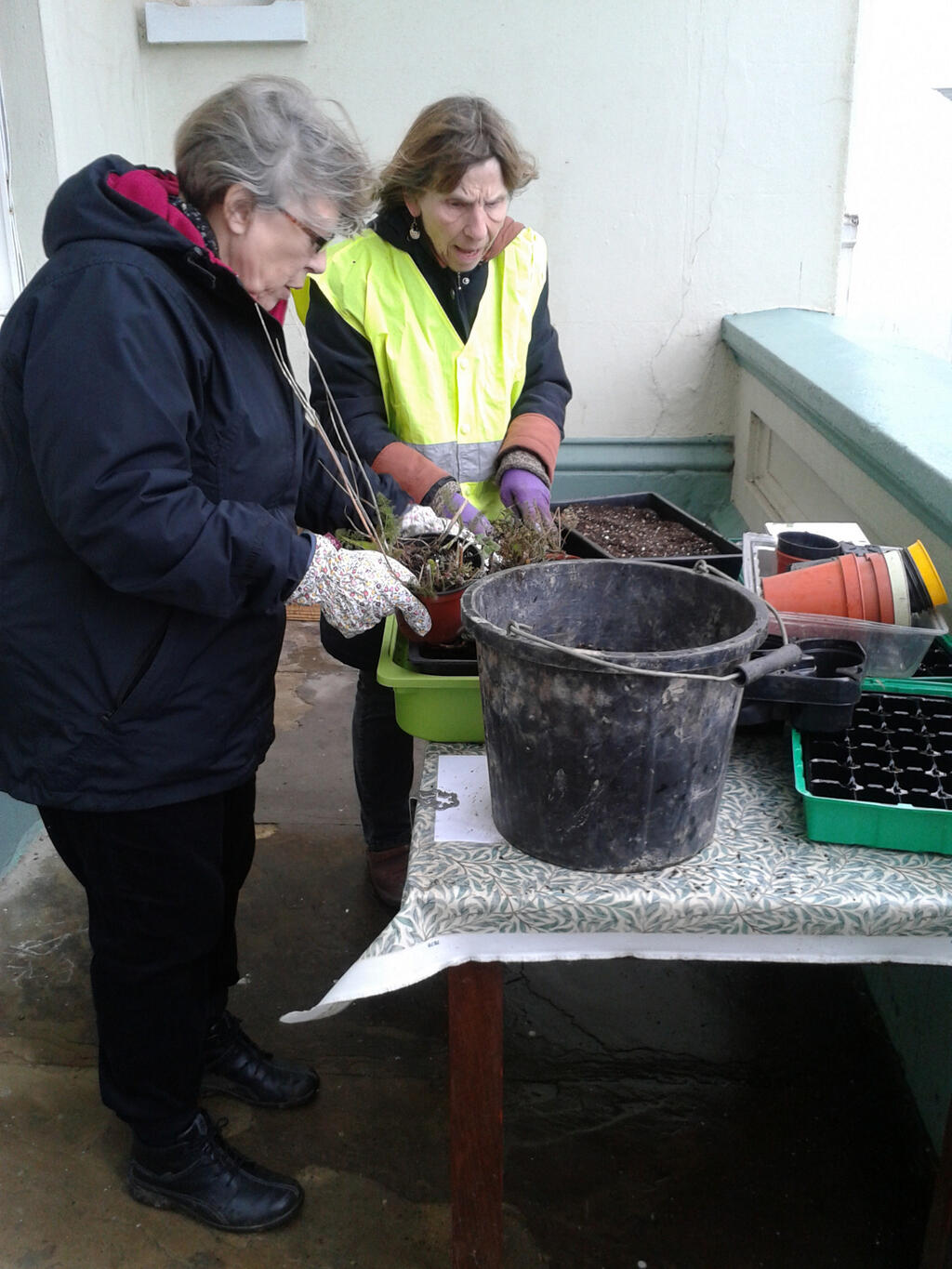
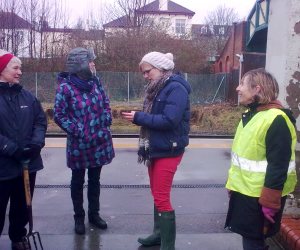
Big Dig Saturday March 16th at 11am was probably the maddest time to be out gardening. Icy rain, 33mph blustery winds, the garden paths turning to mud: but as Mary tweeted, ‘it’s not about poor weather, just poor choice of clothing’. Cowering in anoraks, waterproofs, hats and scarfs, we were out there on the terraces of London Road Station trying to plant seeds and repot herbs, while the wind howled and blew the seed trays away.

Sue and Diane bravely managed to sow sweet peas in toilet rolls and ‘Matsoka’ tomatoes, together with a tray of ‘Dazzle’ lettuce and another with a mixed sowing of parsley, onion, nasturtium, lettuce and spring onion.  We managed to plant three herb pots with rosemary, thyme and fennel.

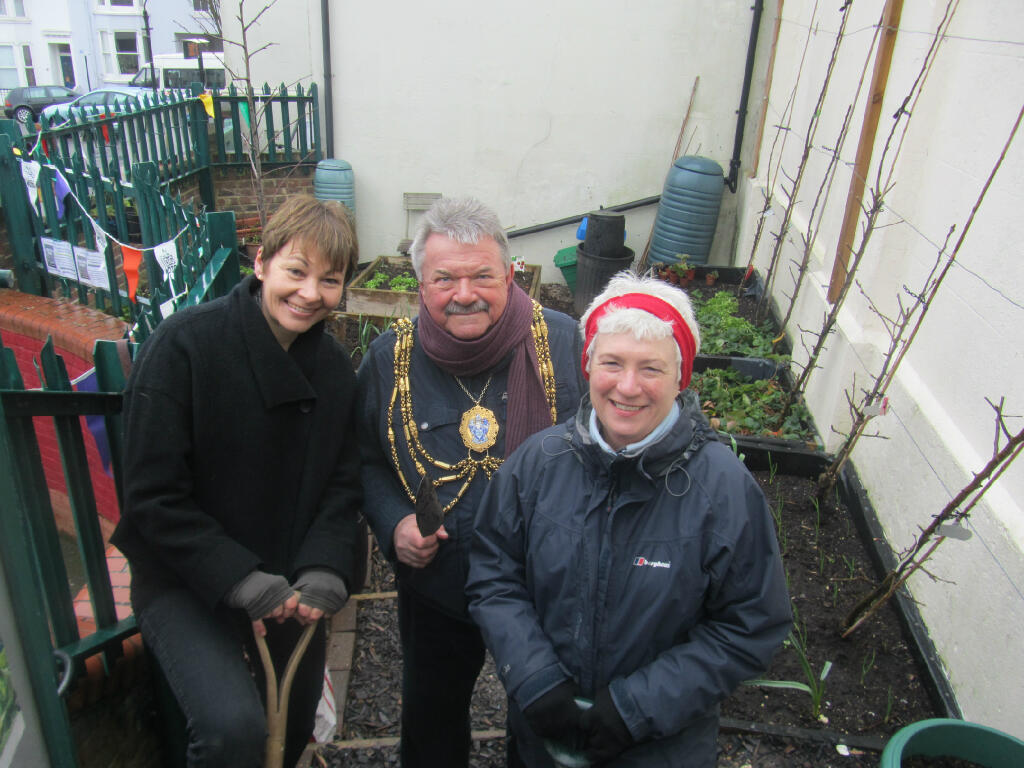
Roberta and Vic from Brighton & Hove Food Partnership arrived to ‘launch’ the Big Dig Week with our Mayor, Bill Randall, and MP and neighbour, Caroline Lucas. Sam Bryant from SCRP, who helped us set up the station partnership two years ago, joined us along with Karen Barnes from Southern Railway. I tried to encourage a bit of gardening by giving Roberta a pair of secateurs to trim an overgrown mint, and Sam a pot and some tomato seeds, but fingers were getting cold …

Big Dig 16.3.13 S, VE, RE, DH

Big Dig 16.3.13 in stdation


Rosemary in snow 12.3.13We took shelter in the cosy station building while Chris provided tea, and we ate rosemary biscuits made with rosemary from the LRSP garden that a few days earlier had been covered in snow. We had to remind ourselves that there will come a time when the garden will produce again. Hard to imagine that in a couple of months’ time, we will probably be worrying about getting enough water on the soil for our crops. 

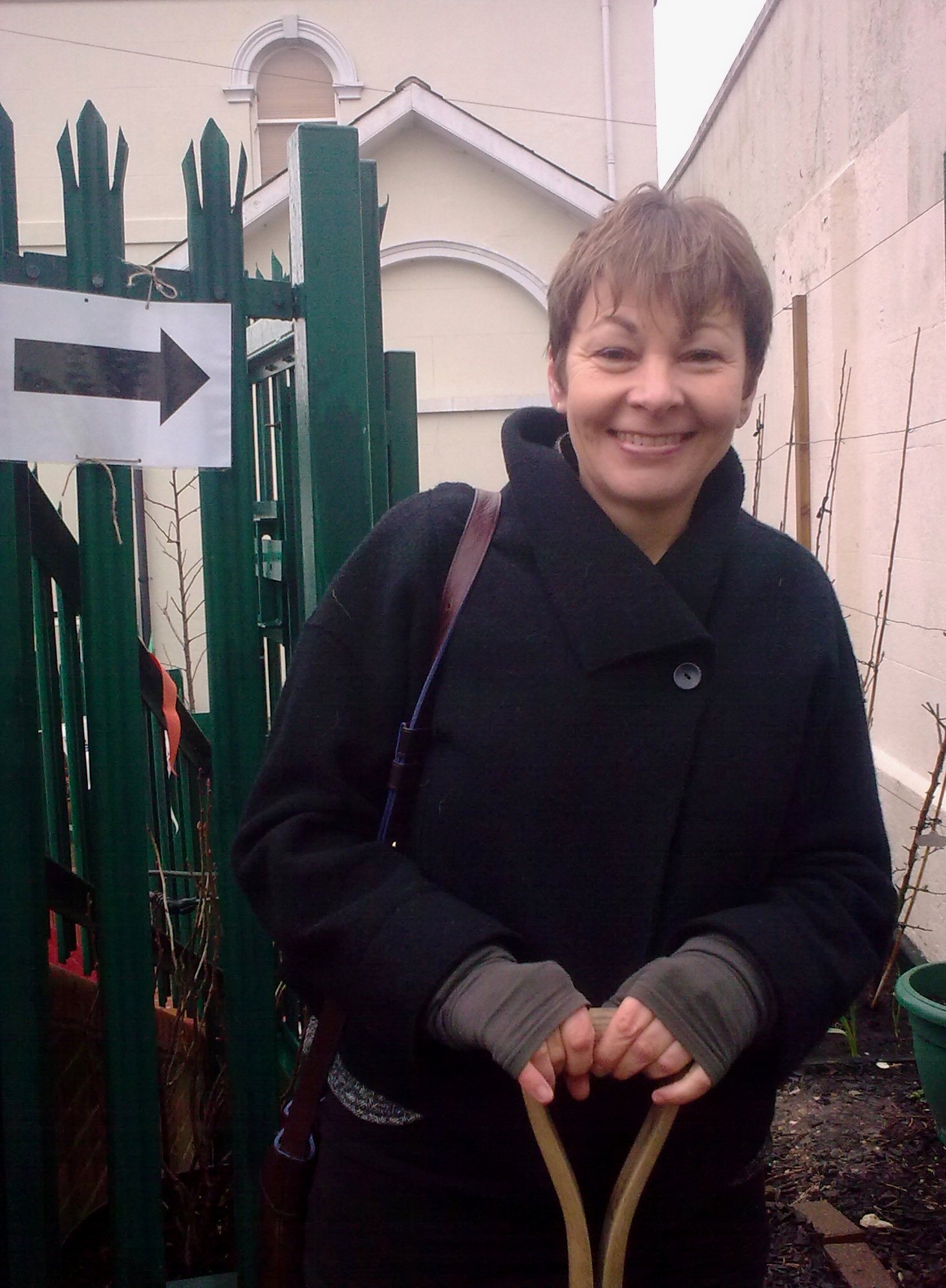
Big Dig 16.3.13 CL BR SThen outside again for photographs, and a chance for Caroline to revisit the pear tree ‘Beurre Hardy’ which she planted in the garden a year ago.

We honestly didn’t get much gardening done, but then that is not atypical of our ‘work’ sessions. We chatted to neighbours and station users, Angie showed two families around the garden, Chris took visitors to see the shady triangle where the daffodils are looking cheerful despite last week’s snow, I discussed pruning fruit trees with a neighbour who has just planted a cordonned mini-orchard, inspired by last year’s event, Audrey read up on compost and Anna shared tips about planting parsnips in drain-pipes.

Our newest volunteer gamely ended up posing for photos (thank you!)  rather than big digging, but she did get to see the compost heap and take home a table-top caddy. ‘Proper’ gardening may resume on Tuesday afternoon, weather permitting. Perhaps we should rename it The Big Chat – The Big Dig is ‘just’ a focus for all those lovely conversations. ‘Just’? Around twenty people turned up to our Big Dig day on a vile Saturday morning, inspired by the idea of getting together to grow things.


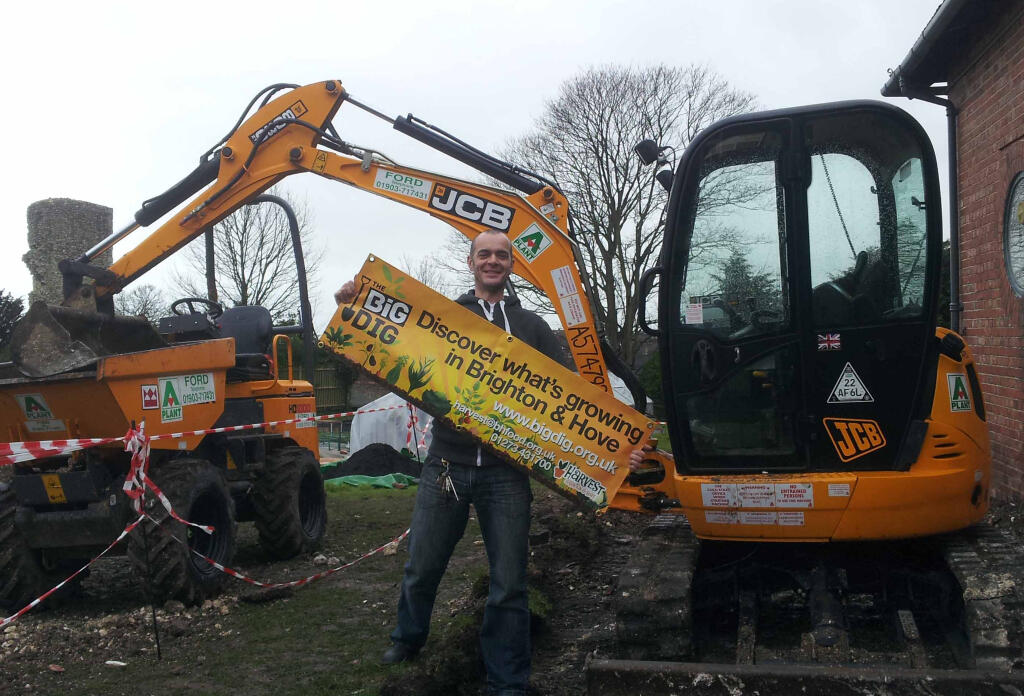
Bulldozer at Emmaus'  new Greenhouse plot, Portslade

Bulldozer at Emmaus’ new Greenhouse plot, Portslade

And  in other food growing plots around the city, there were lots of other wonderful things going on. It is about opportunities to share: ideas, skills, fun, food and crazy experiences like trying to mix potting compost and sow seeds in a gale.  Let’s hope the weather starts behaving properly soon, though, and we can soon do a bit of big digging. Well, not quite that big …

More on Storify: http://storify.com/amarystevens/brighton-big-dig-launch.

Do join us at London Road Station gardens on Tuesday 19th March from 2pm, weather permitting. Check ‘Workdays’ page above.

Big Dig 16.3 soup afterwards

Having soup and keeping warm after the event 


Posted in Uncategorized | Tagged , , | Leave a comment

Big Dig Day Saturday 16 March

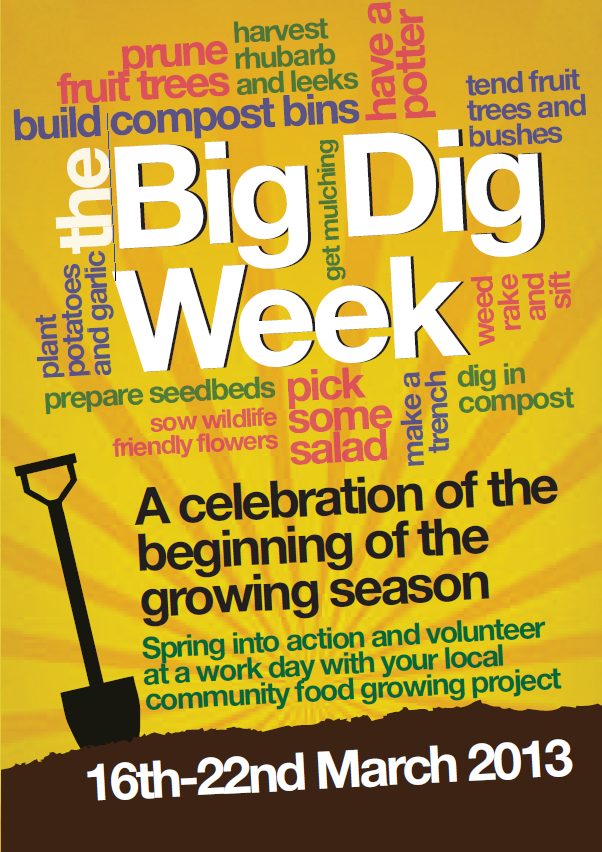
Big Dig MarchIt’s Big Dig Day on Saturday 16th March. To celebrate the national campaign to get more people involved in community food growing, we’ll be open between 11am and 2.00pm. Click here for Brighton Big Dig flyer. More on Big Dig http://www.bigdig.org.uk/

Come along and get involved in the fun of community veg gardening! All welcome.

There’ll be opportunities to get your hands dirty – literally (H&S note: plenty of gardening gloves provided). We’ll be sowing seeds, turning over our compost heap (lovely!) and mulching our raised beds with compost – all the great stuff you have to do to start off the season. There will be lots to do, free seeds to give away and maybe – just maybe – some biscuits using herbs from the garden.

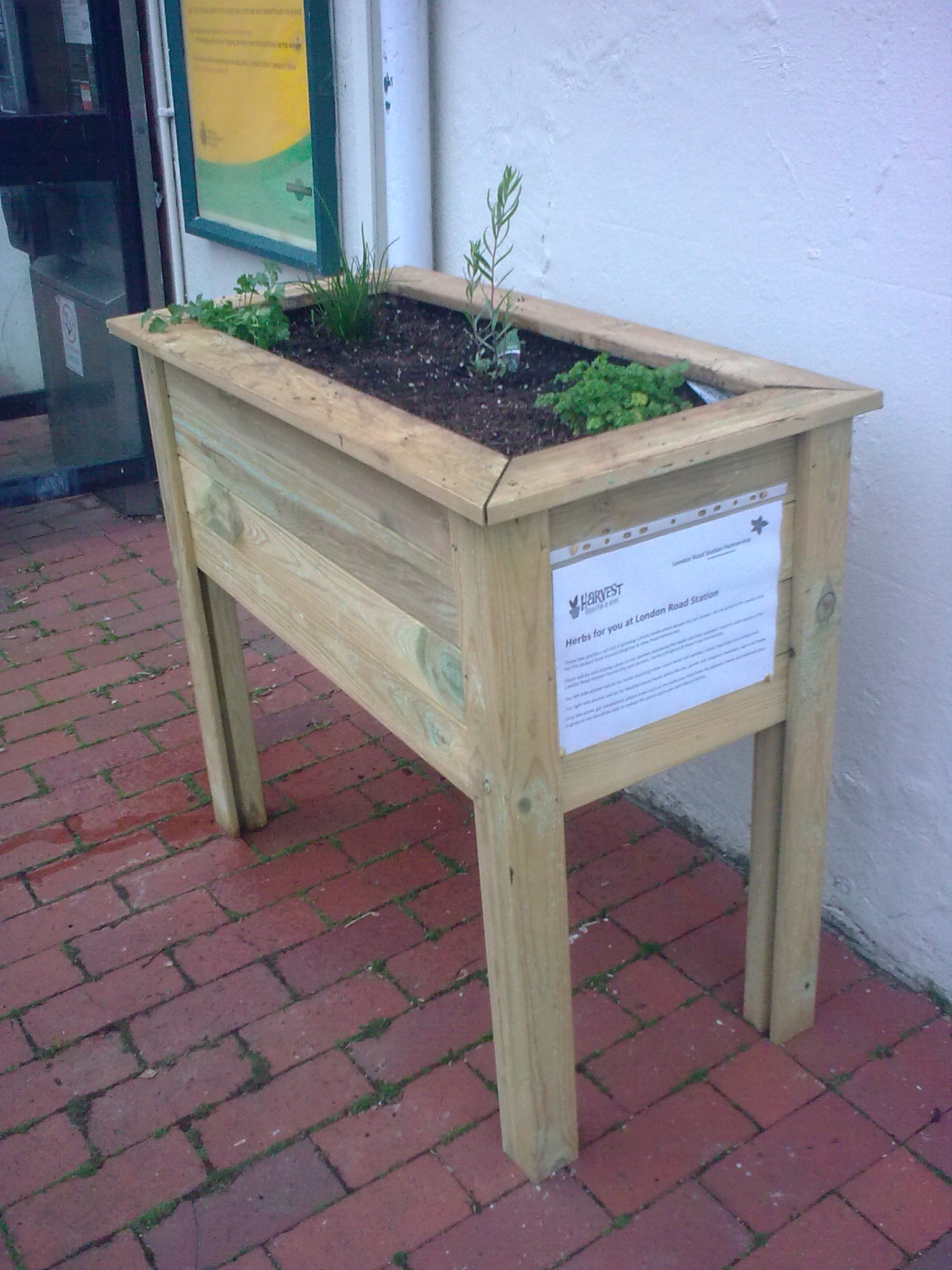
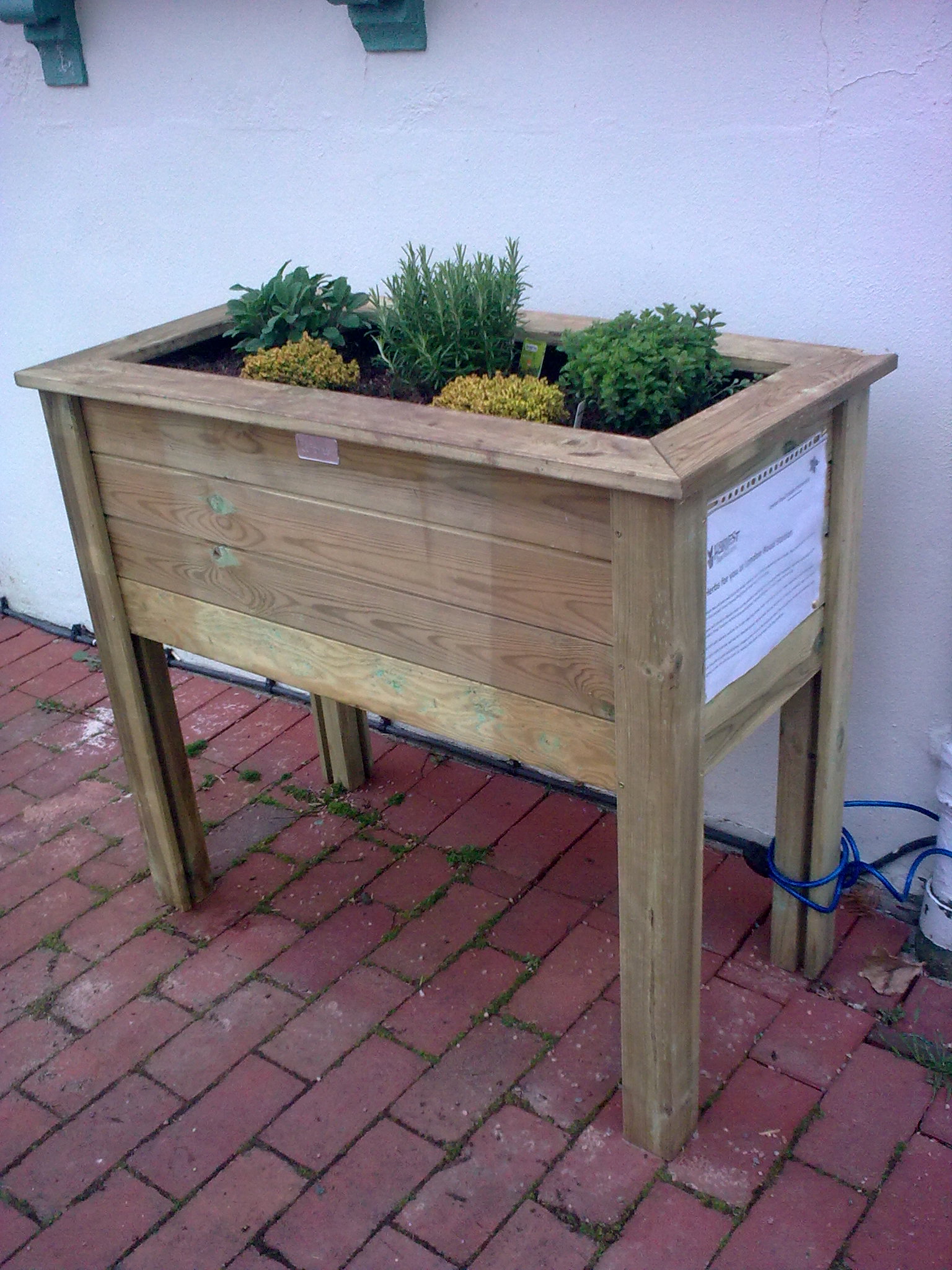
We’ll be checking up on our mini-orchard and our raspberry canes, cutting back mint, reviving our frisee lettuce, encouraging our weedy leeks and showcasing our planting plans for 2013 (see February blog). In particular, we’ll be deciding on herbs for our planned public herb planters, where passers-by can pick up the herbs they might need for the evening meal. Come along with interesting recipes that require fresh herbs that grow well in our climate: rosemary, thyme, mint, sage, bay, parsely, basil, marjoram … and other ideas for what we might grow.

Brighton’s Big Dig week is being launched from our garden, with visits from our MP Caroline Lucas and Mayor Bill Randall.

Posted in Composting, Edible growing, Events, Uncategorized | Leave a comment

At last – the season begins

Heuchera_mix_largeAt last, it looks like the gardening season can begin. It was around 8C this afternoon, though colder when I came in at 6pm. But no rain, no icy wind and no snow. We’re already the beginning of March and there’s only now the merest hint of spring flowers opening. I’ve been reluctant to wake up from winter hibernation. It’s easy to start gardening too early. Last week, for example, temperatures fell below zero and we had a dusting of snow on the ground. Finally today, though, even the white cloud lifted so we saw blue sky and felt the sun. We should be out in the station garden on Tuesday.

I was out clearing my own garden, cutting back overgrown climbing roses and digging up an ancient lavender. Thinking of the shady plot at the station, I propagated some heuchera. We already have five planted at the lowest corner of the triangle, which I propagated a year or so back. They have wonderful leaf colour and bring interest to a shady space.

In fact, I think I’m probably a heucheraholic. Just the names of some of the varieties are enough to whet your appetite: Brown Sugar, Caramel, Cafe au lait, Plum Pudding, Electric Lime and my favorite, Licorice.

Heuchera can be propagated instinctively. Once the stems get woody, they break off, almost shouting ‘plant me’. It’s just a case of cutting the stem to live wood, cutting off the mature leaves and planting up in moist potting compost until the roots take. That’s worked for me. There are two excellent videos to give a bit more detail, one from Richard Loader and George Lasch from the Northwest Perennial Alliance in the US. As a bit of warmth promotes the root growth, preventing the plantlet from rotting (Richard was propagating in June), I think I need to bring the plantlets inside for March.

They’ll be competing for space on a south-facing window sill with the vegetable seeds we’ll probably be planting soon for the edible growing garden (see February post on our planting plans).

Posted in Weather | Leave a comment

The wider picture (video)

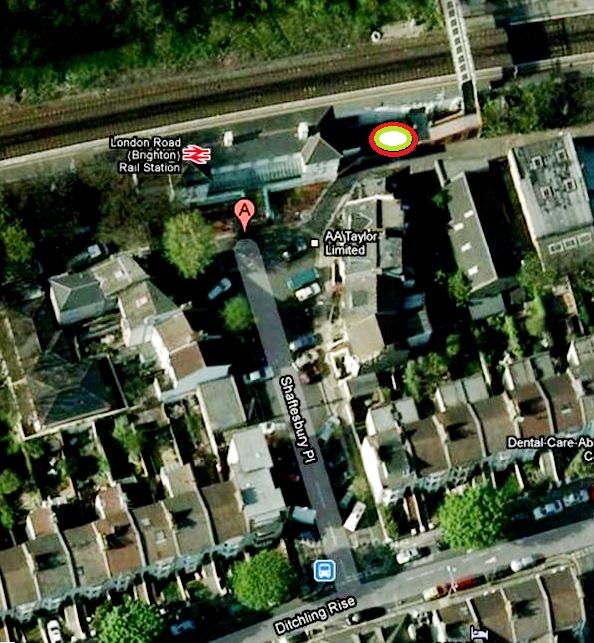
LR Station map w LRSPThe London Road Station Partnership, Brighton, developed out of our local residents group, Ditchling Rise and Area Residents Association (DRARA). We still report back to DRARA meetings so that the neighbourhood more generally knows what we’re doing. Madeleine’s video, produced for DRARA’s AGM last week, gives a real flavour of our neighbourhood.

Shaftesbury Place, where London Road Station is situated, is a focus for our neighbourhood. Our edible growing garden is the red and green blob by the railway bridge.

Currently, DRARA is working with the Council and the railway to  improve some of the facilities there, such as opportunities for cycle parking and easier crossing of the railway bridge for bikes.

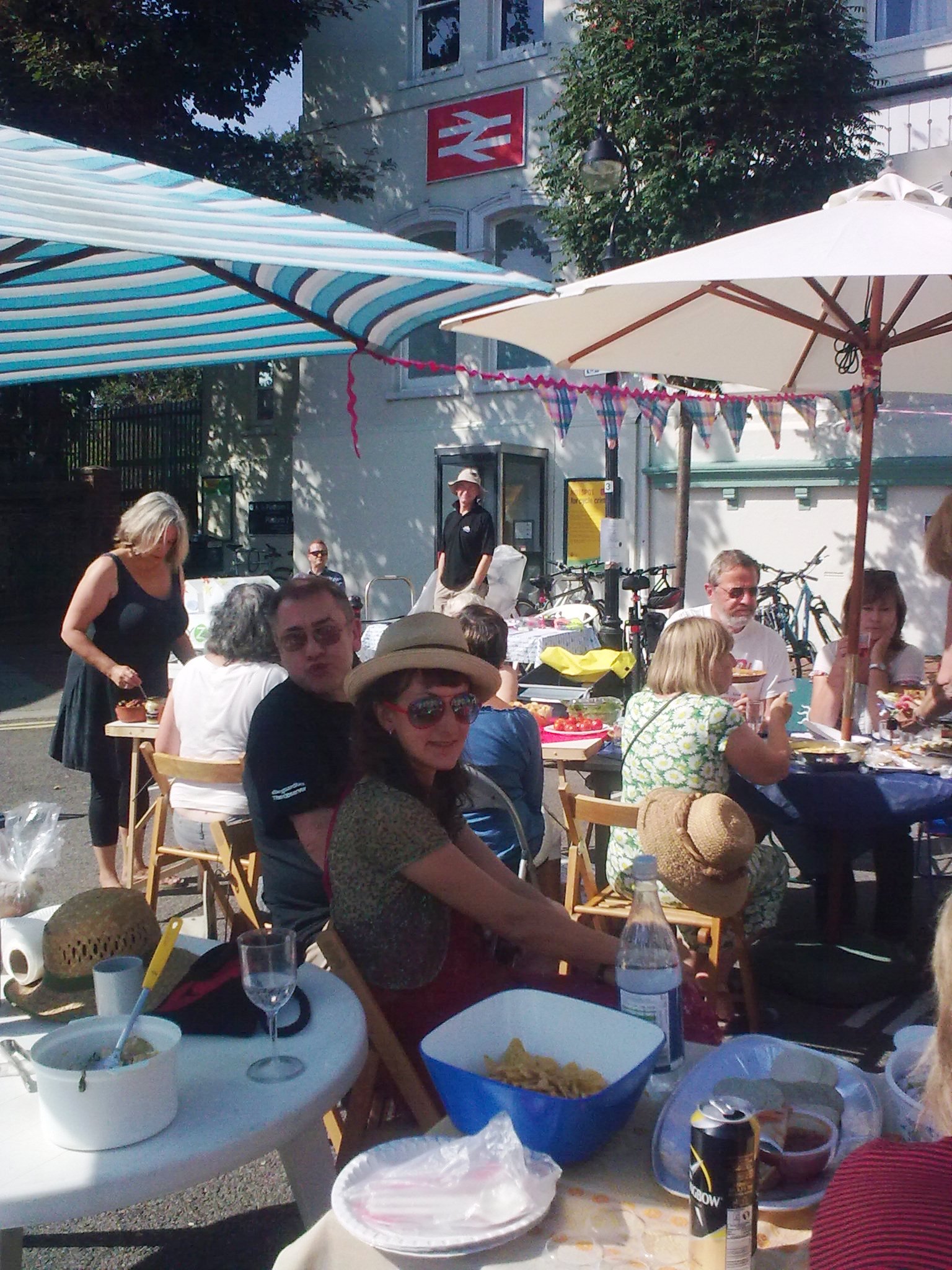
Street party 2012 5 umbrellas

You’ll see Chris Collin’s arrival at the garden for the RHS photoshoot and Bill Randall’s visit on Big Dig Day. And how the beautiful London Road Station building makes a superb backdrop for our street parties.

Posted in Video | Leave a comment

Planting plans for 2013

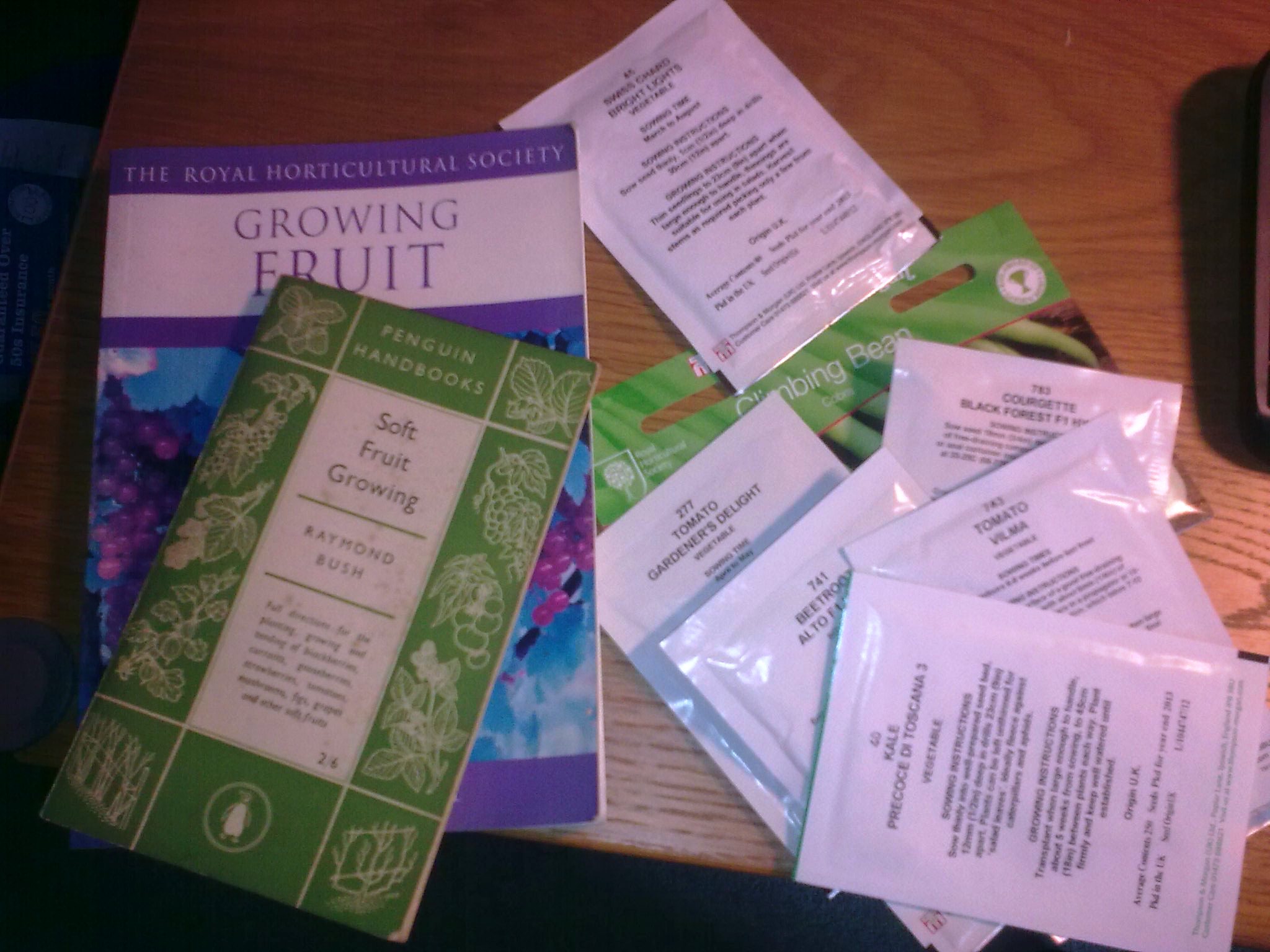
SeedsThis page is dedicated to Daphne who loves raising seed and now has some extra south facing window sills.

I’m pretty useless at it, and I’m an anxious germinator. I love the moment when you see minute disturbance in the soil and you know the green shoots are pushing upwards, but I’m not very patient. But here are some ideas for us to think about for the next season which is fast approaching.

We’ll be getting some free seeds as part of the RHS Britain in Bloom ‘It’s Your Neighbourhood’ scheme: Chives, parsely, coriander, dill, garlic chives, thyme, fennel, redfrills mustard, nasturtiums, marigold, radishes, carrots, spring onions and spinach. We’ll be sowing them as part of the ‘It’s Your Neighbourhood’ events on Sunday 14th April: come along and help!

But once we’ve germinated all these seeds, where are we going to put them? And can we do effective crop rotation in our tiny gated plot? I’ve been thinking about our plans for 2013, looking back at 2012 – and checking the seed catalogues. Here are some ideas:

Raised bed 1. The salad bed

  • Bed for leaves
  • Partial shade
  • Needs moisture, but not too wet, and high nitrogen
  • Also needs protection from slugs, snails and caterpillars!

Early last year, we were picking cavalo nero and chard regularly from the salad bed. We planted more cavalo nero (a favourite ever since Jo from Shaftesbury Road left us some odd seedlings in 2011) chard and kale, but the garden suffered a major caterpillar attack in the summer which wiped out our brassicas. Meanwhile, the mint plants have run riot.

So the salad bed needs a bit of attention. It’s in partial shade, sheltered by the south facing wall. As Colleen Vanderlinden says “… a good rule to remember is that if you grow a plant for the fruit or the root, it needs full sun. If you grow it for the leaves, stems, or buds, a little shade will be just fine.”  As a leaf bed, it will require relatively high nitrogen and good moisture.

We mulched with manure in the autumn, which should help moisture retention and nutrients, but we’ll need to check both the soil structure and nutrient levels, as the saturation may have leached nutrients from the soil.

Ideas for planting

  • Chard ‘Bright Lights’
  • Cavalo nero ‘Nero di Toscana’
  • Lettuces: e.g. ‘Cos Freckles’ – read Naomi Shillinger’s wonderful blog on this  – and ‘Nymans’, a beautiful red variety. The frilly lettuces seem to be less slug prone.
  • We can also plant parsely, chives, radishes and spinach in this bed

Raised bed 2. The bean bed. 

  • Our most sunny central bed

The climbing beans worked well in 2012, producing a fairly good crop despite dismal sun. We also planted onions and courgettes in this bed. The onions produced a fantastic crop and the yellow courgettes were worthwhile.

We’ve already planted up this bed with onions (where the beans were) and leeks. I wonder whether we can place our bean wigwams where the courgettes were, at the south end of this bed? Courgettes are such reliable plants, it would be a pity to give up on them, but perhaps this year we could try growing them vertically, beside the cordonned pear trees? The variety Black Forest F1 produces dark green 6” fruits and needs to be trained, like a cucumber (see below).

Ideas for planting

  • Climbing French beans , e.g. ‘Cobra’ which grows to 1.80cm, at the opposite end to last year.

Raised bed 3. The raspberry bed

  • Partial shade, dominated by raspberry canes

Well, the raspberry canes have truly established themselves, sending out runners which we may need to dig up and pot up. We had kale in the raspberry bed last year. Beautiful though it was, it got infested by caterpillars. This bed gets a bit more sun than the shady leaf bed, so perhaps we could try beetroot on the opposite side to the raspberries?

I’ve found an interesting beetroot ‘Alto‘ which is more root than ball and is billed as a space-saving variety which is very sweet, and it has the RHS AGM. If it works, that’s just what we need.

Ideas for planting

  • Beetroot ‘Alto’

Mini-orchard beds

Our fruit trees are growing vigorously, as are the strawberries we’ve underplanted. We also sowed garlic in the sunnier bed, which appears to be growing well. So, these beds are  already spoken for, apart from odd spaces which will appear when we harvest (or give up on) the overwintering frisee lettuce. We can plant shallow rooting leafy veg seedlings  here throughout the season, depending on what we have spare.

Sunny area towards the gate

We tried tomatoes, chillis and peppers here in pots and grow bags, but 2012 really was not a fantastic year. I’m sure we’ll try tomatoes again. They are wonderful, but unless we have a good sunny summer, it’s quite hard getting them to ripen outside of a greenhouse. Perhaps we could try the vertical courgettes, planted in a large container (needs to be at least 18 in./45 cm in diameter)?

This is also where we would place pots of coriander, thyme and basil – the sun-loving herbs. We are also getting carrot and spring onion seed from the RHS. John Harrison in Vegetable, Fruit and Herb Growing in Small Spaces suggests sowing carrots and spring onions together in a trough to try to deter carrot root fly: they love the smell of carrots, but hate the smell of onions. He suggests that this is entirely suitable for container growing. We’ll need to cover it with horticultural fleece to protect from those flies who hold their noses against the onions. The only question is … where do we put the container?

Wonderful websites for advice, ideas, descriptions, inspiration
Posted in Edible growing | Leave a comment

Pruning the mini-orchard

Bryn pruning day 1 cBryn Thomas visited the garden to demonstrate winter pruning to LRSP members and the  group taking the Brighton Permaculture fruit growing course.

Our six cordoned trees – four apples, two pears – have been pruned and the position of the leader shoots has been adjusted.


side pruningThe stronger the leader growth, the more angled it can be: the angle slows down the growth.

Our trees are growing particularly vigorously, so no need to feed them – any nitrogen-based fertilisers to be avoided. What is important is watering.

The laterals have also been pruned – always to an outside or downward facing bud with an angled cut – to ensure a good shape for the trees’ second season.

Our plum tree, however, has not been pruned. This takes place from mid-May, to avoid bacterial infection.

Bryn pruning day offering secateurs Bryn pruning day 2 c on beds


pruned trees cThe orchard looked shorn and bare when pruning had finished. This winter pruning will, however, stimulate growth – and it looks like we may get a few pears this summer.It was cold in the garden, but there is a sense that the new season is just around the corner.

Ready for their new spurt of growth, I cut back last year’s shoots of our autumn fruiting raspberries right to the base. The autumn fruit is carried on the new green shoots which are already sprouting through the soil.

We also need to prune a red currant and a black currant, both in large containers.

With black currants, the aim is to remove between a quarter and a third of the oldest wood by cutting back to a strong shoot at the base. The young shoots carry the fruit for the next season. Here’s a lovely video of Markus from the Swiss horticultural grower, Lubera, explaining how to do it. Cut out the older – thicker, darker – stems, and leave the young ones. Cut out also the branches b

The same principle applies to red currants. The aim is to create ‘a goblet-shaped’ bush with an open centre. This improves air circulation, which reduces the risk of pests and diseases. The main idea is to cut out old shoots crowding the centre. As Markus says, ‘when we took away [the long branches], we always let a bit of the stem’ from which the new wood will grow. Then the remaining leader shoots can be cut back by half.

Monty Don also presents red currant pruning, with useful commentary on cutting out canker. He says not to prune black currants in the winter, but immediately after fruit in late summer and early autumn. The RHS book Growing Fruit, however, says ‘Prune in early autumn or at any time in the dormant season until March’. Hmm … Another gardening conundrum.


Posted in Edible growing, Events | Leave a comment

Fruit tree pruning Sat 2nd Feb 1.15pm

Orchard 1.13 snow cIt’s time for winter pruning of fruit trees. Our cordons are growing well, but the leader stems are reverting to upright. While they are dormant, we’ll probably need to adjust them by attaching them to the diagonal canes. We’ll see …

Bryn Thomas from Brighton Permaculture Trust is out and about, planting and pruning. There’s a fruit tree planting course happening in Preston Park on Saturday 2nd February.

After that, Bryn’s visiting us at the LRSP garden (by the south side of the railway bridge) at around 1.15pm to show us winter pruning techniques on the mini-orchard we planted with him last March. Find out more on Brighton Permaculture’s site.

Everybody is welcome to come along. I know that at least two neighbours have planted cordon fruit trees since we planted our mini-orchard last year. My neighbour and I had already planted minarette fruit trees (plums and cherries) in our front gardens. It’s wonderful to think we’ll have mini-orchards up and down the Ditchling Rise. This should attract the bees to come and pollinate.

Here’s what the RHS advises on pruning of cordons and minarettes

Winter pruning oblique (45 degree) cordons

  • Neither the leader nor side shoots are normally pruned in the winter, except where the tree has grown a lot since summer pruning or you need to renovate a neglected tree
  • When the cordons reach the top wire they may be lowered from 45 degrees to not less than 35 degrees (as there is less risk of the stem breaking). This will increase the length of stem, and so the amount of fruit produced.  Once the cordon has reached the final length, prune back the leader to 1cm (½in) each May
  • Over-long or complicated spur clusters should be reduced to two or three fruit buds

Summer pruning an oblique cordon (at 45 degrees)

Summer pruning is carried out in August, or in areas where growth is strong, such as wet parts of the country, delay summer pruning until September.

  • Look for sideshoots over 22cm (9in) long, which grew earlier in summer directly from the main stem, and cut them back to three leaves. Those stems that grew from existing sideshoots or spurs can be pruned harder – to just one leaf beyond the cluster of leaves the base of that stem
  • Leave shoots less than 15cm (6in) long until mid September and then shorten to one leaf beyond the cluster of leaves the base
  • Prune growth that forms after summer pruning in September (or October if pruning later)

Encourage the lower buds to break on maidens by shortening the leader by one-third of its height each winter until it reaches the top of the stake


Posted in Pruning | Leave a comment