Old Sussex apples and pears

No, not some local variety of Cockney rhyming slang, but the mini-orchard we’re planning for our raised beds at London Road Station …

With the help of Brighton Permaculture Trust, we plan to plant three apples and two pears as cordons growing up the south-facing wall. The old Sussex varieties are being brought back into circulation by Brighton Permaculture. They’ve been working with schools and community gardens all over Sussex to plant them in small-scale plots. We hope to be organising a Fruit Planting Day on Sunday March 11th from 12.00 midday at the station garden, Shaftesbury Place. Come along if you can.

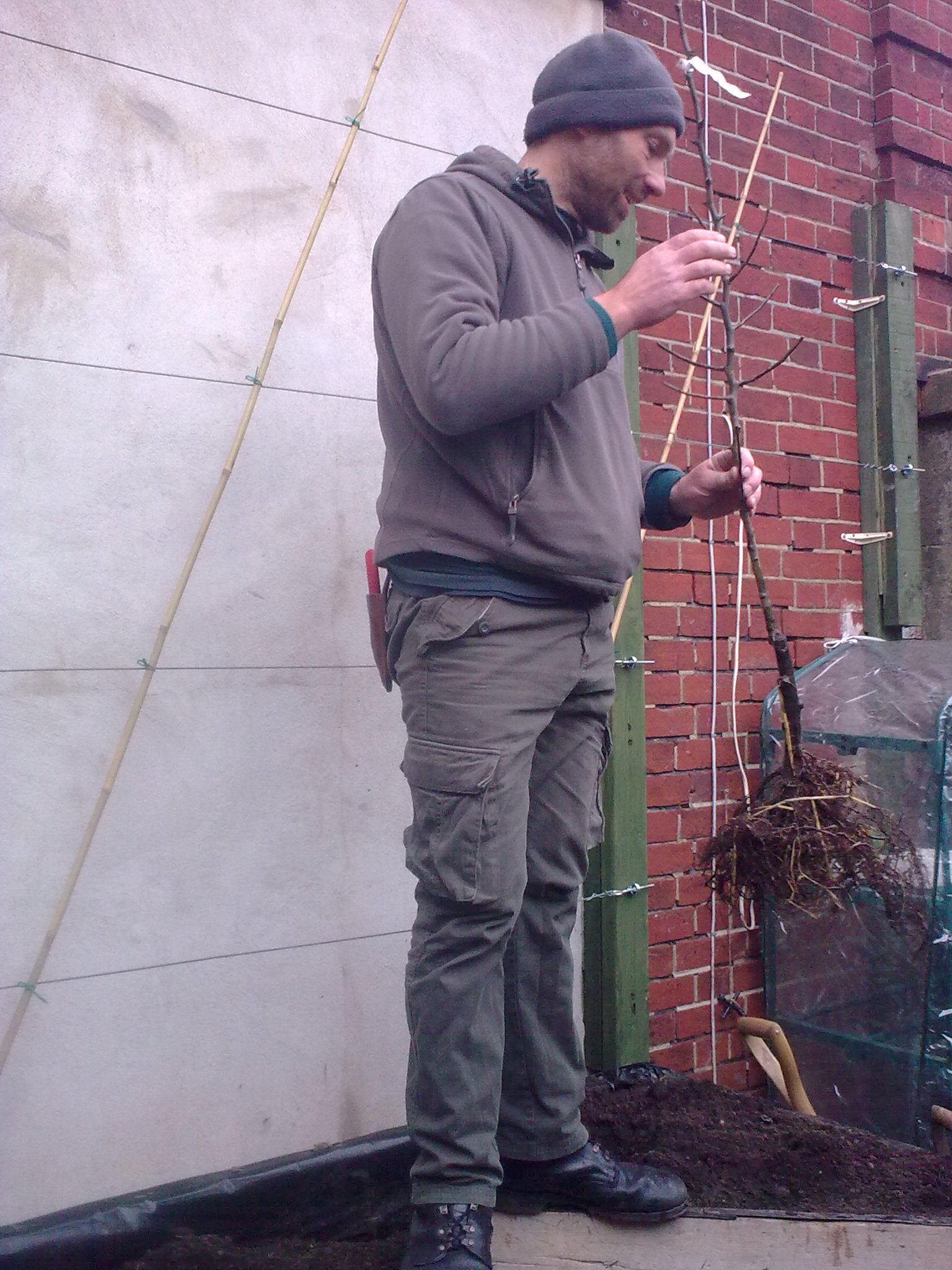
Today Angie, Madeleine and I attended another mini-orchard launch at the Phoenix Community Centre in Brighton. Their garden is very similar to ours – a small enclosed plot with raised beds – so it was useful to look at what they had done. We were all particularly impressed by their triangular shaped deep beds, interlocking with lower square beds.

We observed explanations about how to tie in new trees at an angle and how to prune them, and then hovelled compost over the roots. The only addition to the good soil was Rootgrow Mycorrhizal fungi.

After the planting, we ate a wonderful apple-based lunch prepared by Robin of Community Chef: apple and squash soup, flatbread with goat’s cheese and various apple-based relishes, then a winter pudding from brioche with apple and blackberry. It was good to meet up with other community gardeners and talk about forming a Brighton network.

The event we’re planning to run on Sunday 11th March around lunch-time will be similar to that at the Phoenix Centre. Do get in touch if you’d like to come along.

Posted in Edible growing | Leave a comment

2012 planting plans

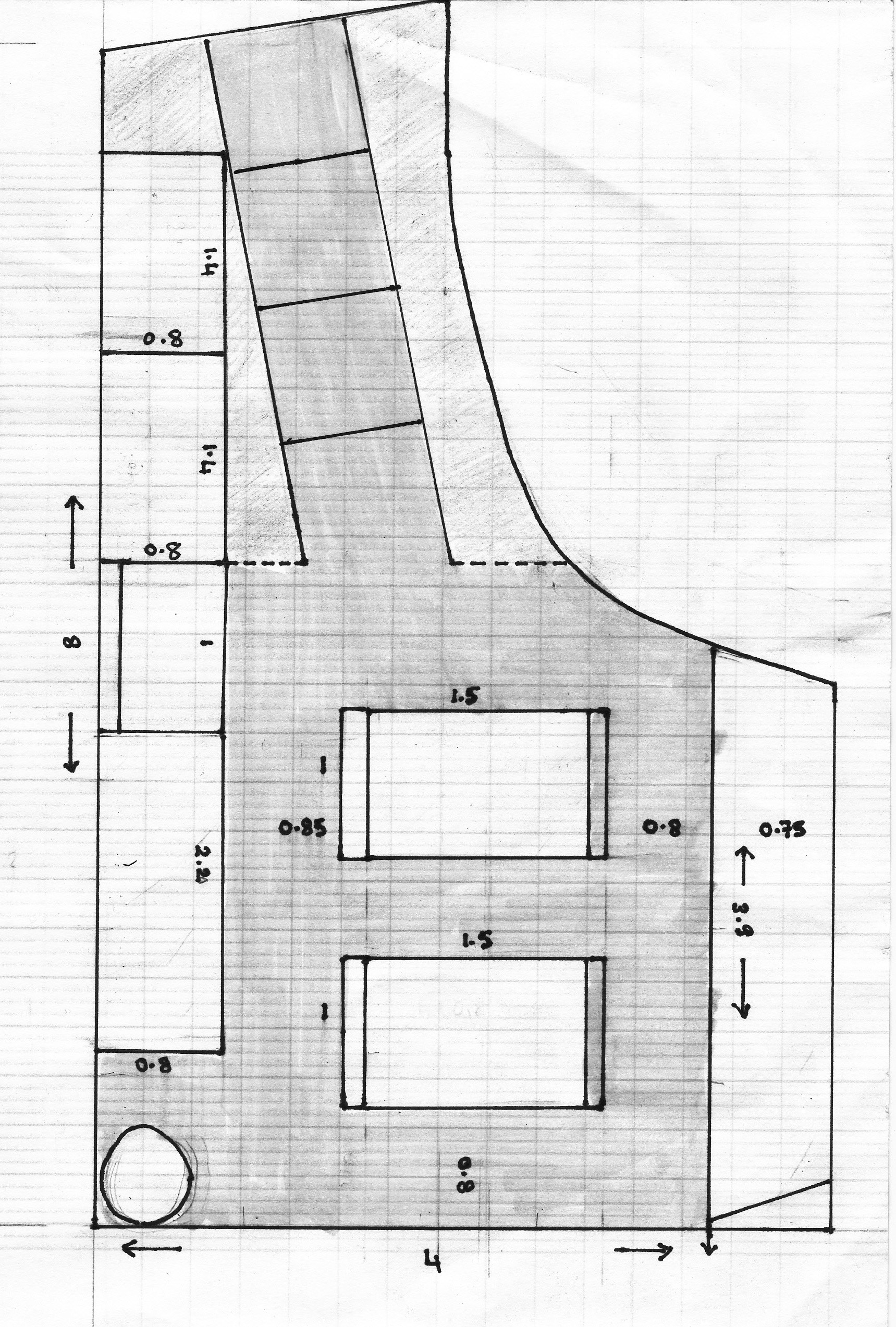
Plan of gated plot

We’ve been been thinking for some time about what to plant in the gated plot where we grow edible plants. We were proud of last year’s two mange-tout, but the mange-tout and the runner beans were not very productive. We did harvest two beautiful squashes, but squashes take a lot of space. Perhaps we can experiment this year with growing squashes and courgettes upwards rather than outwards?

The main change for this season is that we now have four raised beds. Below are some suggestions for what we might grow in each. I’ve indicated the beds with numbers; but why don’t we call them after people who’ve been closely involved with them? I’m sure Bed 1, for instance, would be better known as ‘Jim’.

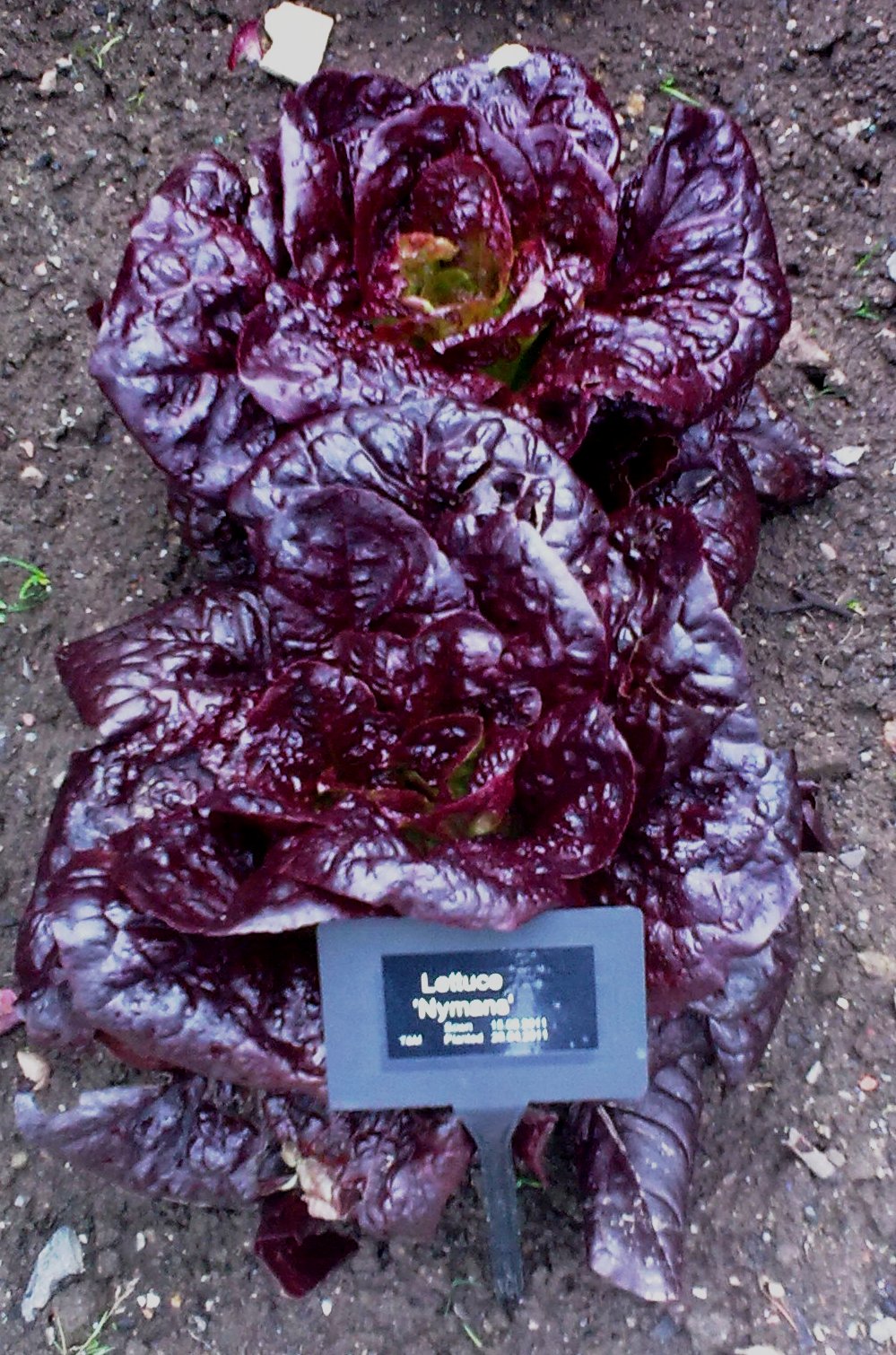
Raised bed 1. The salad bed.  Our long thin bed underneath the wall seems to have proved its value as a bed for leafy vegetables. We’ve successfully grown chard ‘Bright Lights’ and lettuces from seed there. It’s in partial shade, with the wall sheltering it from harsh winds but also from the late afternoon sun.  We can be adventurous by growing interesting varieties of salad leaves. I was amazed by how well mizuna worked last summer, and the deep red lettuce ‘Nymans’ is stunning (see below). Cavalo nero has done well, and is easy to grow from seed.

Click here for detailed plan: Raised bed 1 Leafy veg

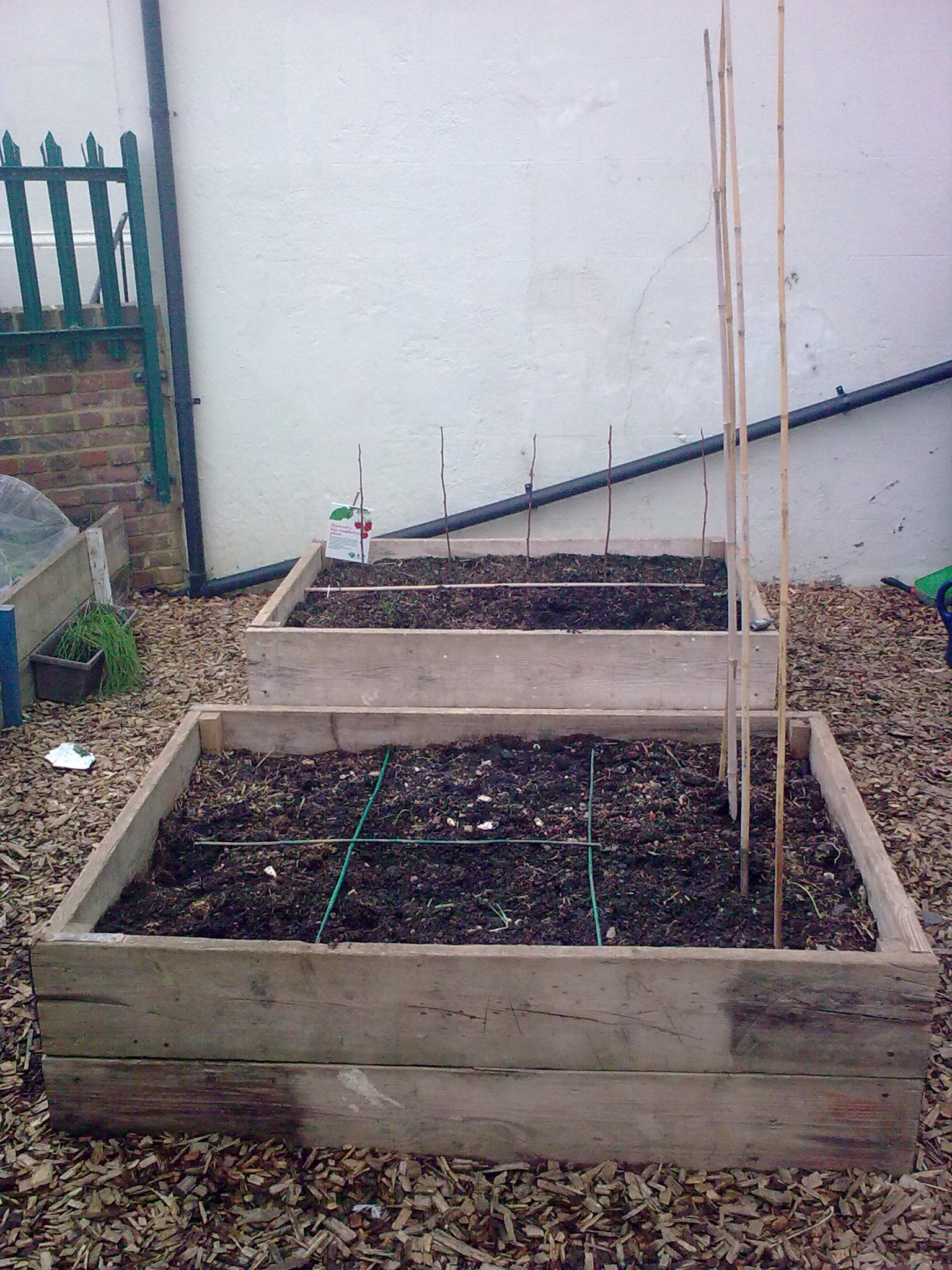
Beds 2 and 3

Raised bed 2. The bean bed. I think everybody likes the idea of growing green beans, both climbing and dwarf. Dwarf varieties have worked incredibly well in my garden these last two years. Green beans need warmth and sunlight, so maybe we can devote the front central bed which gets most sunshine to these, with two wigwams of six beans, and perhaps a bush courgette on the corner and some onions at the back. We could try a standard green climbing bean and perhaps a purple one as well.

Click here for detailed plan: Raised bed 2 Bean bed

Raised bed 3. The raspberry bed. In the back central bed, we’ve planted the raspberry canes. At the front of the bed, I was wondering about planting beetroot. I think it likes similar soil conditions to raspberries and it will tolerate some partial shade. And it’s such a wonderful vegetable: grated into a summer salad, cooked, cooled and then chopped with apple and walnut, or roasted and served with sour cream or crumbled goats’ cheese. Then we might have room for a dwarf courgette on the inside corner where it will get most light.

Click here for detailed plan: Raised bed 3 Sun-shade bed

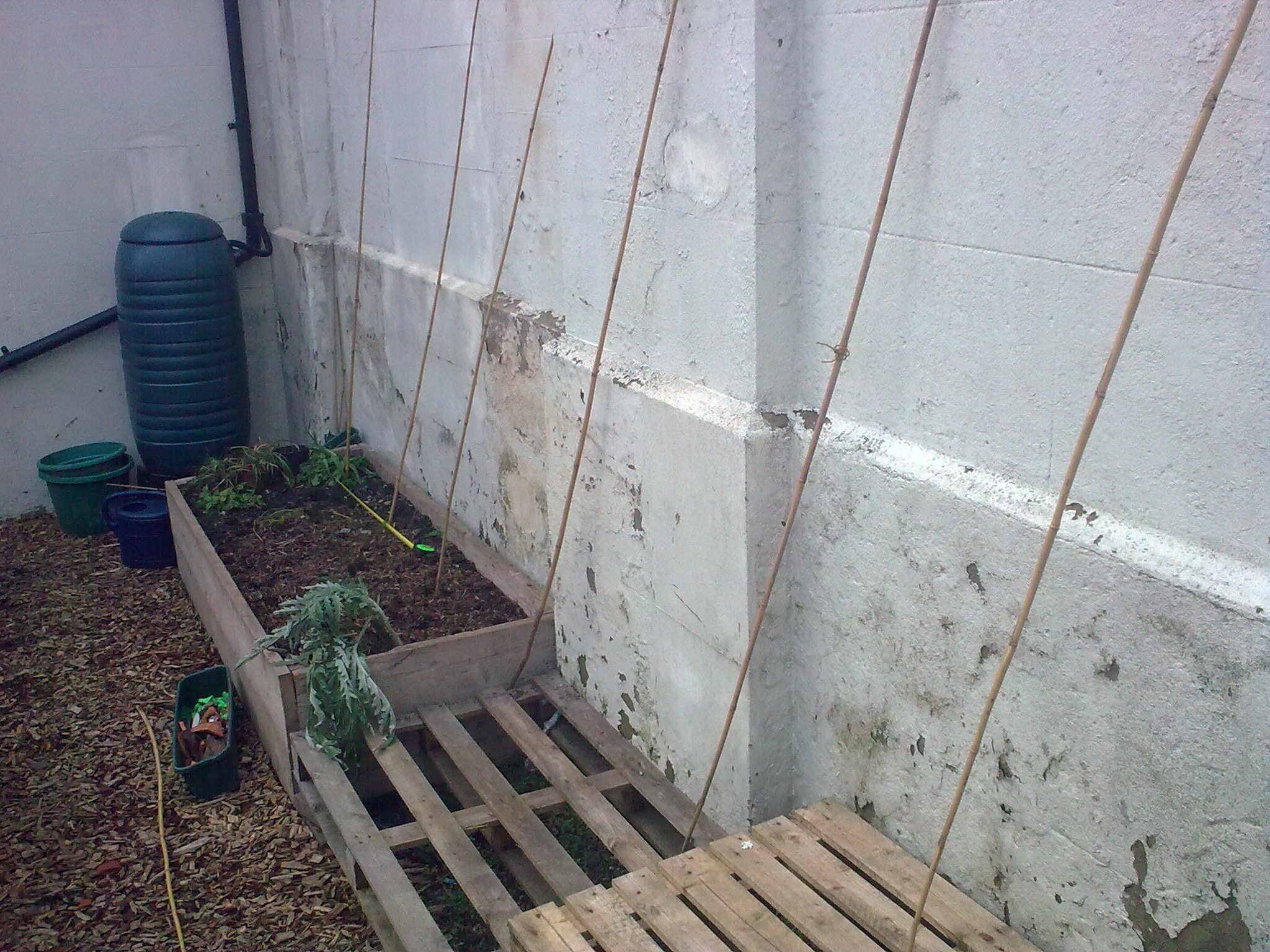
Bamboo canes standing in for cordons

Raised bed 4The apple tree bed. Brighton Permaculture are helping us to create a mini-orchard. We plan to plant three Sussex varieties of apple in our north-side bed and grow them as cordons up the south-facing wall. That would leave us with a bit of room to do some ‘underplanting’ that would not disturb the fruit tree roots or drain too much in the way of nutrients from the soil. Strawberries seem to work well. I’m trying this in my front garden, and last year’s new plants produced quite a few plantlets that we can transplant to the station garden. We could also try growing some herbs and more leafy crops such as rocket.

Click here for detailed plan: Raised bed 4 South facing wall

Tomato pots: We’ve got room on the pallet platform nearest the gate for about six tomato plants. We can probably also find room for pots with chilis and sweet peppers which love the sun; the advantage of growing in pots is that we can move them around to get the most light.

'Nymans' lettuce at RHS Rosemoor

Further ideas? I remember someone mentioning how lovely the Preston Park demonstration garden looked with its companion plants of golden marigold and deep blue cornflower. What with wine-red ‘Nymans’ lettuce, yellow and blue flowers, scarlet chillies, and the crimson and yellow stalks of chard ‘Bright Lights’, we should manage a colourful display.

Posted in Edible growing | Leave a comment

Replanting Preston Circus planters – get involved!

Echinacea purpurea

The Preston Circus planters need you …

I finally met up with Alan Griffiths from Cityparks last week to talk about the four Preston Circus planters. He’s pleased that there is some interest in ressurrecting the planters, and agreed that Cityparks would be able to provide the growing medium for them.

What we now need, people of Viaduct Rise and Preston Circus, is a group of inspired volunteers to transform the planters into something beautiful that brings neighbours together: get involved by e-mailing lrsp@hotmail.co.uk and send in your ideas on the planters through this blog (below).

The planters will need a soil based compost – something like a John Innes 2 or 3 – which will ensure greater retention of water and nutrients than a soil-less base. In his view, watering is going to be the big challenge. So one of the first things to do is to find a water source. It may be that one of the businesses or the cinema could help. It may also be that there’s a suitable place somewhere near to install a water-butt.

Then the planters need digging over to find out what’s actually in them at the moment. Nobody knows what kind of drainage material was used when the planters were first planted up, or what state the existing soil is in. We also identified about six lavendula stoechas plants which can be saved, if last night’s snow hasn’t done for them. 

The reconstruction of the growing medium cannot start before April, so there’s a bit of time to try to get as many local people involved as possible. But how? Deliver leaflets to local residents and businesses to invite them to get involved with ressurrecting the planters? Knocking on doors? A stand in front of the planters one Saturday in March, inviting ideas for plants and encouraging volunteers?

And then the exciting part: what do we plant? Sustainability and impact are probably the key factors. Plants need to be eye-catching, happy in full sun, drought tolerant, not sensitive to frost or salt-laden wind, preferably low-maintenance, easy to propagate and easily available. They also need to be tolerant of pollution – Preston Circus still suffers from higher than average levels of nitrogen dioxide. .

And all that that’s before we start thinking about a detailed design. There are various design styles for planters: we could look at a mix of annuals and perennials and shrubs, we could emphasise grasses, we could look at just shrubs, we could even go for beautiful vegetable plants such as multicoloured chard and runner beans, but pollution makes the edible idea less attractive. There are advantages and disadvantages to all of these ideas.
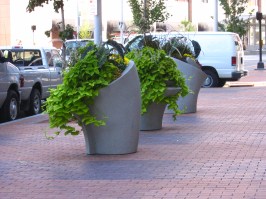
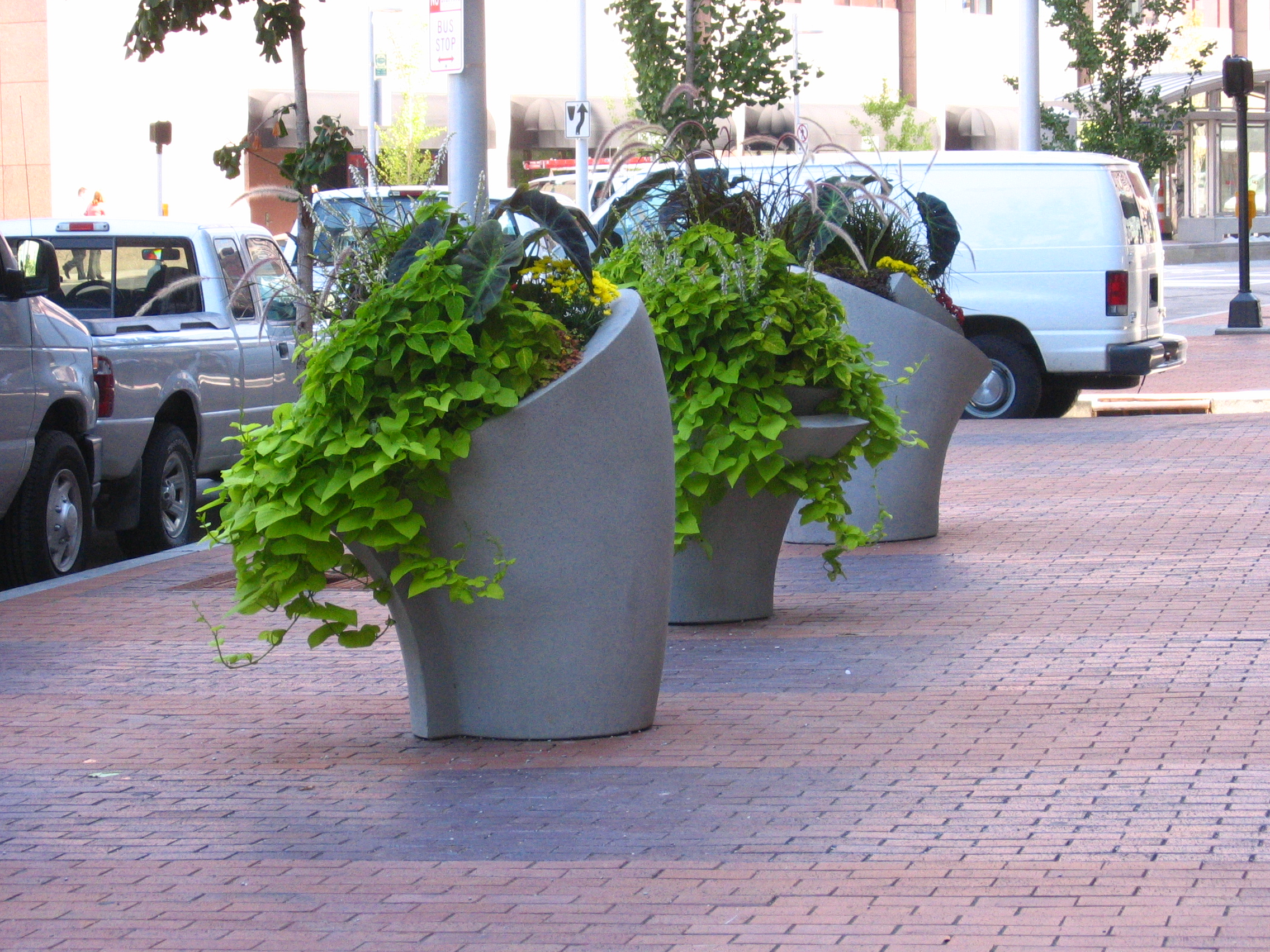
Planters by Mark Reigelman II in Cleveland, Ohio. Photo by Steven Litt

Before we get bogged down in the challenges, it’s good to start with inspiration. I loved the cascading bright greens in these planters in Cleveland, Ohio. The Project for Public Spaces has the best gallery of photos of public planters across the world, though perhaps Preston Circus shouldn’t seek to rival les Jardins du Luxembourg in Paris or Broadway? I was really inspired by planters in New York, but small French towns and villages also manage stunning diplays. Sarah Raven in The Telegraph gardening blog comments on their use of Gladiolus murielae, trailing plargoniums ‘Barbe Bleu’ and Euphorbia hypericifolia ‘Diamond Frost’.

On plant choice, Gardeners’ World suggests, among others, Skimmia japonica and the purple fountain grass Pennisetum setaceum ‘Rubrum’ as reliable plants for planters, while the eHow suggests thinking about different categories: tall dramatic plants such as the purple coneflower, Echinacea purpurea, and day lillies, Hemerocallis;  lush plants such as phlox, sedum, catmint and lamb’s ears; and finally, cascading plants such as periwinkle Vinca Major, Lantana Montevidensis and Helichrysum petiolare. A Gardening Which? trial found that Gazania ‘Kiss’, Pelargonium ‘Evka’, Begonia ‘Nonstop Mocca Deep Orange’ and the ivy Hedera helix ‘Goldchild’ looked good even after two weeks of summer neglect. 

Meanwhile, the Vegplotting blog  had some interesting reflections on public planting, you can read about alternative artistic approaches to planters in Toronto, while the RHS offers comprehensive advice on all aspects of container gardening.

There’s a wealth of inspiration and advice available … and Cityparks would be happy for us to discuss ideas with them. I’m convinced that there are also lots of local people out there with an interest in the planters, with ideas of what you’d like to see. Get in touch with your vision …
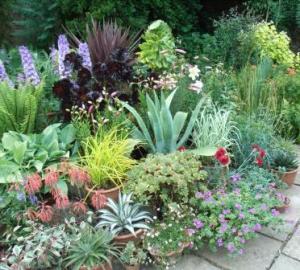
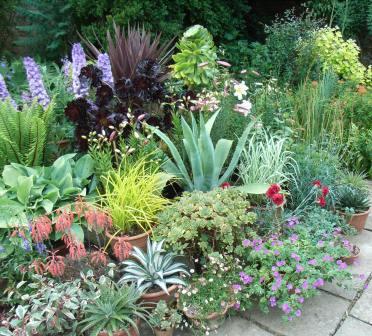
Inspiring display of drought-tolerant plants in pots at Great Dixter
Posted in Preston Circus planters | 3 Comments

Snowy and shady

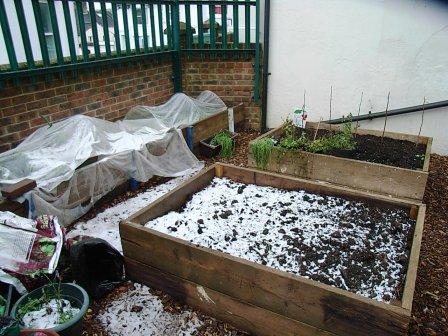
It finally snowed overnight, just a white dusting that’s fast turning to slush. As I suspected, the gated plot where our edible plants grow in raised beds is significantly more exposed to the elements than the shady garden where we grow ornamentals.

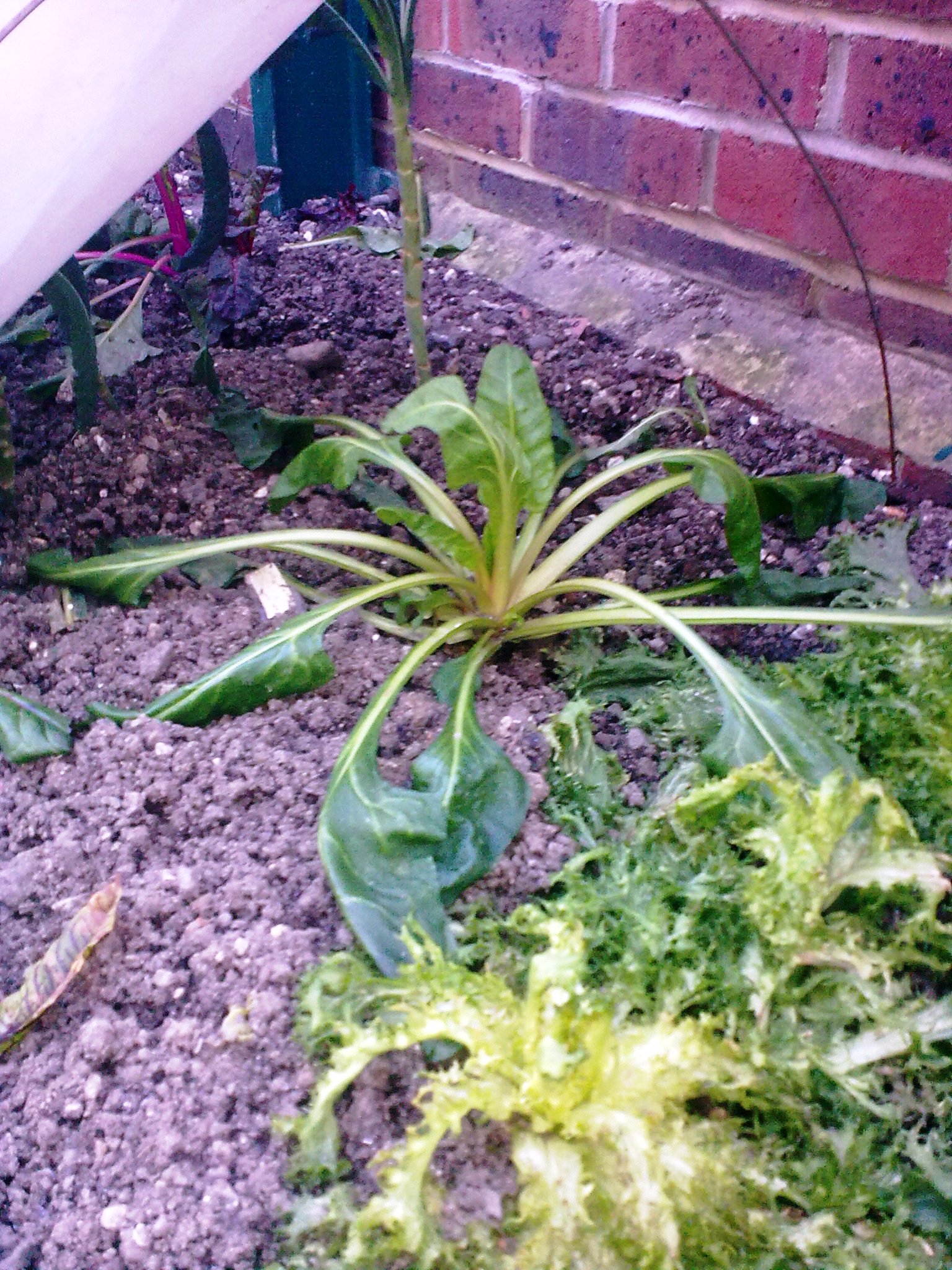
There was still snow on the gated plot when I visited mid afternoon. The temperatures have risen and there’s a dripping dampness in the air. The soil is no longer frozen. The leafy veg bed, under the wall and covered in fleece and plastic, seems to be surviving under the wet covering. I’m expecting the frisee lettuce to surprise us all with rich spurts of lacy greenery in March. The chard (left) will be fine: it always is.

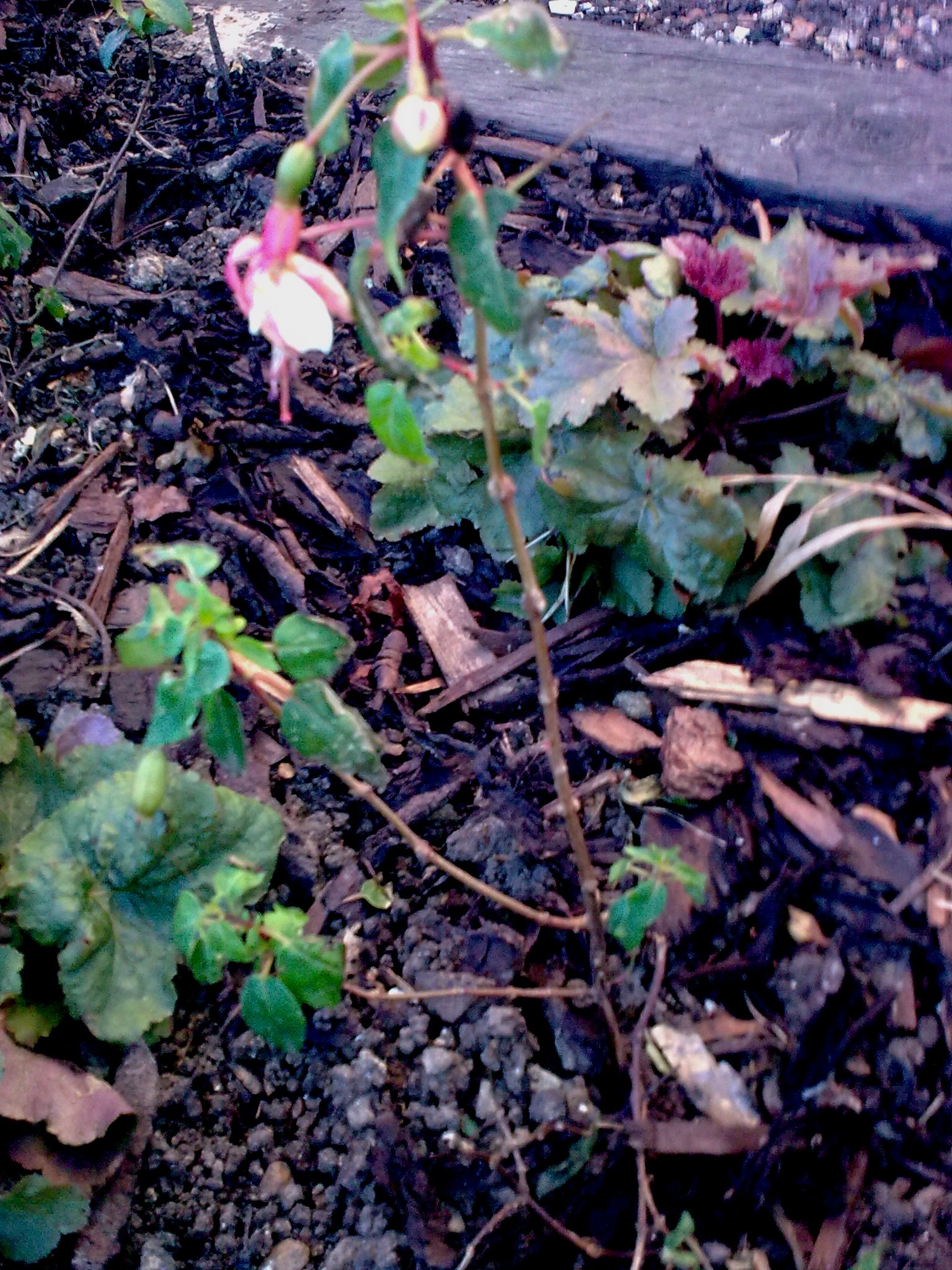
To the west of the station building, the shady plot is clearly sheltered by the overhanging trees and the corrugated iron wall of the scaffolding business next door. There was no evidence of snow whatsoever. My hunch that this area is fairly well protected proved right. I’m confident that our bulbs, already pushing up through the soil, will survive. The fuchsias, however, will probably have succumbed. Their leaves were grey green and soggy. I place my hope now in the cuttings we took in the Autumn.

Posted in Weather | Leave a comment

It’s very cold …

I was sceptical, I thought it was all hype … but no, it really has turned very, very cold. Here in coastal Brighton, the temperatures are below freezing. It’s certainly the coldest it’s been this winter. I was out in the station garden late afternoon to talk to Bryn from Brighton Permaculture about fruit trees. The sky was brilliant blue and the sun was shining, but when I came in, I couldn’t feel my fingers.

I first checked on the fuchsias in the shady garden. They look tired, but alive. In fact, though the garden was clearly a little put out, it looked more resigned to being cold than seriously deflated. The gated plot was more exposured to the biting, icy breeze. The moisture between the wood chip had frozen into white chinks of frost. I nudged the water butt and nothing moved.

The fleece I had replaced last week had blown down, exposing some of our leafy winter crops. They were looking flattened: drooping cavalo nero and chard, lettuce on a bad hair day. I’m just hoping the beautiful variegated sorrel Mary planted last week will survive.

Frisee lettuces in my garden survived last year’s snow under a rudimentary plastic cover, coming back strongly in the spring so I’m confident the chard and the cavalo nero will perk up again once it gets warmer. I’m pleased I picked two bunches of diverse leaves last week. They made a great addition to a winter soup. Which is what I need now, as I sit here still in my coat, hat and scarf.

Posted in Uncategorized, Weather | Leave a comment

The big raspberry plant

On Friday we’re getting five raspberry plants from Harvest, Brighton & Hove’s Food Partnership. Harvest are promoting raspberry growing in public spaces and community gardens all over Brighton & Hove because once they get going, they produce wonderful fruit which is easily accessible and shared. For fruit which costs a fortune in little plastic supermarket punnets, raspberries are very, very easy to grow. As a contributor to a US forum put it: “I don’t seem to be able to kill raspberries, which makes them my kind of plant

Our canes will be autumn fruiting varieties, as these don’t need so much support as the summer fruiting varieties. This just means that we cut them back to the ground in late winter, and they fruit on the new growth from late August through to October.

I think they’ll probably be best in one of our central raised beds where they’ll be visible from the gate. We’ve already incorporated lots of well-rotten manure – which raspberries like – and they’ll get a good deal of sunlight from the south, while not shading other beds too much. At least one website positively advises growing in raised beds as it means you can get the ph. level of the soil right. Raspberries like a fairly neutral ph. of 6. In our area, they can suffer chlorosis (yellowing around the veins of the leaves) because of chalky soil.

Raspberries are ridiculously easy to propagate. I have a couple of small raspberry plants growing on in my greenhouse which were originally prunings planted in the soil to defend last summer’s vegetables from local cats. Last March, a friend gave me some unlikely looking twigs cut from her raspberry canes.  I planted them and they bore small amounts of fruit in September and are now well-established . All it takes is a twig …

Raspberries do need a good supply of nutrients in the soil, and an even supply of moisture. Last summer, I went walking in the Auvergne, France’s central area of extinct volcanos and lakes. We stuffed ourselves with handful after handful of raspberries growing wild along the paths through the pastures. Why were raspberries so plentiful there? Rich mineral soil, fairly constant levels of humidity and plenty of cattle to provide manure. It’s not quite the ecosystem we’re offering our Harvest raspberry canes at London Road Station, but they should find a conducive habitat in our well-manured raised bed.

Here’s what the RHS say about looking after raspberries.


Posted in Edible growing, Uncategorized | 1 Comment

It’s going to be cold

Is it? Just as we had got used to cold winters again, it looks like January 2012 is going to be the second warmest since records began. The weather at London Road Station has been positively spring-like; the bulbs are coming up, the pansies are flowering and the chard is flourishing. But the BBC weather forecast is warning about a sudden cold spell this weekend …

The detailed forecast for us, a mile or so from the sea, doesn’t suggest yet that it’s going to go much below freezing point. I’m intrigued to see whether either of the London Road Station gardens do suffer any frost as they both seem quite protected. Neither is what you might call ‘open’ ground. The shady triangle is covered by a tree canopy. The raised beds in the gated plot are sheltered by high walls. Nevertheless, today I covered our leafy vegetables in fleece and polythene, just in case. 

However, I left the fuchsias in the shady triangle unprotected. Amazingly, they are still in flower: perhaps I have been taken in by their apparent tenacity.

Posted in Uncategorized, Weather | Leave a comment

New year, new shoots

Happy New Year!

The change of year was not white this year, but more typically wet and windy. Today the damp clouds have lifted but there’s an irritating high wind. I checked the gardens and the compost site – my first visit this year.

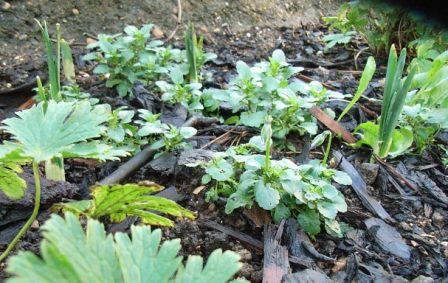
In the shady triangle, there is evidence of the bulbs we planted in the Autumn: yipee! Green shoots are pushing through at the apex to the triangle and along the back of the garden nearest the station platform. These must be the areas that get the most light.

The compost is looking like compost should post-Christmas: lots of trimmings from sprouts, winter vegetables such as potatoes and parsnip, and mandarine peelings. So far, no sign of uninvited guests from the wilder community overwintering. The squirrels however have been recasting the surface of our vegetable beds, which are now pitted with some deep holes.

In the gated plot, the frisee lettuce seedlings, the cavalo nero and the chard are all doing fine; the North facing wall must have protected them from the cold winds and the few light frosts we’ve had this winter. Astonishingly, the artichoke plant we inherited back in June is doing well, though the BBC advises cutting it back in winter and covering the crown with bark chippings, and then mulching with well-rotted manure in early spring. All in good time … .

Posted in Uncategorized, Weather | Leave a comment

Dare to ask for hair

Ok, so if you’ve read some of the other posts, you’ll know this blog is a little obsessive about composting. You have been warned. The topic of this post is: human hair.

I did a socially challenging thing today: I asked my hairdresser if I could collect my hair (see Cindy Rajhel’s cartoon). She was predictably non-plussed. I quickly explained it was for a community compost project and pointed out that my hair had never been coloured or treated, so it was top of the range stuff for plants. She hesitated a moment and said that er, they didn’t often get asked for hair, but yes, it would of course be fine. Her fellow stylist offered his client’s hair (the cut-off bits on the ground) and soon we had a plastic bag of it.

Instead of talking about what I was doing at the weekend, my hair-dresser and I then engaged in a quasi-philosophical conversation about why we were so squeamish about our own hair. All those shorn locks on the floor: what a waste of nutrients! Yet we gleefully buy packets of ‘Hoof and Horn’ and ‘Blood, Fish and Bone’ to fertilise our gardens. Why do we shun our own stuff? She suggested I start a survey: on a scale of 1 to 10, how squeamish are you about handling human hair? (Do respond using the Comment tab below!)

Which then led me, following my hair-dresser’s scientific spirit, to check the nutrient value of human hair. Sure enough, in 2009, Science Daily reported a study in HortTechnology by Zheljazkov, Silva, Patel, Stojanovic, Lu, Kim and Horgan of Mississippi State University which found that yields in lettuce, wormwood, yellow poppy and feverfew ‘increased relative to the untreated control’; these yields were, however, lower than those where more conventional, inorganic fertilisers had been used. The problem with hair is it takes time – over one and a half years – to break down. Zheljazkov et al.’s conclusion: ‘once the degradation and mineralisation of hair waste starts, it can provide sufficient nutrients to container-grown plants and ensure similar yields to those obtained with the commonly used fertilisers in horticulture.’ So yes, hair is a good but slow-acting fertiliser, and therefore ideal for composting, if not for the commercial growing of lettuce.

The blogosphere is full of discussion about composting human and pet hair. My favorite, less academic, experiment was conducted by Dan Moore of Boulder Vermicomposting. He fed his worms human hair (I told you this post was going to be wierd). Unsurprisingly, they didn’t like it: it clumps too much, doesn’t absorb water and takes a long time to break down. His conclusion was don’t use it on its own to feed worms: you can add it to other compostable materials, just don’t overdo it!

Don’t worry, I won’t. I promise all other LRSP composters that they will not be able to see my hair. The alternative of course is simply to bury it neat at the bottom of one of our raised beds. Another blogger suggests that hair has an ‘amazing capacity for restoring support in soil that is somewhat deficient’. But, as yet another post points out, there is a potential risk: your fellow gardeners, in turning over the soil, may freak out if they believe they’ve uncovered a corpse.


Posted in Composting | Leave a comment

Preston Circus planters need help

Practise random kindness and selfless acts of beauty”. Can we rescue the planters at Preston Circus? Read on … and get involved!

Preston Circus is one of Brighton’s busiest and most polluted cross-roads, a short walk from London Road Station. It’s where Brighton’s major east-west and north-south roads intersect and it has a history of high levels of nitrogen dioxide pollution. But it is very much a ‘shared’ traffic space, with lots of pedestrians and cyclists crossing the five roads alongside the double lanes of cars, buses, coaches and lorries.

Some years back Brighton & Hove City Council installed four large planters at Preston Circus: two on the north-east side outside the Duke of York’s cinema, one on a central traffic island opposite the Circus Circus pub, and another on a south-side traffic island in the middle of the London Road. The planters are each about 125cm x 75cm at waist height – fantastic for planting that can be seen by car users, pedestrians and cyclists. I can’t actually remember what was originally planted in the planters, but I do remember one year experiencing that wonderful sense of surprise when something beautiful appears in an unexpected place. Someone must have looked after them lovingly at some time.

Sadly, they have now become bedraggled and miserable, hardly noticeable with their cigarette-butt covered soil and straggling plants, frequently covered in fly-posting and graffiti. City parks only felt able to provide minimal planting and concern was raised about them at the London Road LAT. There was some talk of traders and residents getting together to rescue them, but nothing has happened.

There was some replanting in the summer of 2011 which included lavender (lavendula stoechas) , but the plants have not thrived. A neighbour also told me she was the guerrilla gardener who planted the nasturtium, marigolds and lemon balm which have livened up one of the planters. But four planters require a concerted effort.

During this last summer, my eye has been drawn to some wonderful public planting, all the more uplifting because it was unexpected: French villages taking over their roundabouts with rich innovative planting of ornamentals and vegetables; Broadway in New York transformed into a space for humans, not just cars, by beautiful planters. If they can do it in New York, surely we can do it here?

I chanced very recently upon a lovely blog called Gardening against the Odds which talks about the magic of ‘unlikely gardening’, such as a beautifully-planted narrow strip of ‘no-man’s land’ on an unprepossessing housing estate. The author was Elspeth Thompson, and I instantly felt a sense of community with a namesake; Elspeths are a bit of a rarity in southern England. The sense of common cause was reinforced by her comment: ‘it [the no-man’s land garden] seems to me all the more beautiful for it being completely selfless – it reminds me of that old hippy tenet to “practise random kindness and selfless acts of beauty”.’ The old hippy in me shouted out for joy!

Sadly, Elspeth Thompson died shortly after writing this, but I discovered that her spirit endows a National Garden Scheme bursary – for ‘horticultural projects in unlikely places for the benefit of the community’. With just a short while before the submission date, I thought: Preston Circus planters! We’ve talked about getting involved with replanting them, so this seemed a wonderful opportunity. After an exchange with Simon Bannister, Brighton & Hove Environmental Improvement Officer, I completed a bid: you can read it under Docs above.

Planter on Broadway

The London Road Station Partnership group is just the starting point, as a number of us have wanted to do something about the planters for some months, and we’ve now had the positive experience of getting the station garden up and running. But I know there are others in the area – not least the neighbour who has already been trying to keep the planters going – who want to get involved.

We will hear in March whether the NGS bid has been successful, but be that as it may, let’s start thinking right now about how we can ‘create beauty in unlikely places’ like lovely, ugly Preston Circus!

Get in touch if you’re inspired and would like to be involved. Send in your ideas for the Preston Circus Planters, and whether the bid is successful or not, let’s try to get together to rejuvenate them. I’m hoping to meet soon with Alan Griffiths of City parks to discuss the planters. Updates soon …

Elspeth Broady, LRSP Coordinator   lrsp@hotmail.co.uk

Posted in Preston Circus planters | Leave a comment